


Sydney moves usually start the same way, with boxes stacked in the hallway, a couch that looked smaller in the old place, and a building manager reminding you the lift is booked for a narrow window. By the time the truck turns up, the actual problem is often not the furniture, it's the missed prep, the untidy access, and the services that aren't live yet. Good moving house advice is really about building a move-day readiness system weeks earlier, so the hard parts are already handled before the first box leaves the door.
That's why the smoothest moves don't rely on luck. They start with decluttering, then a proper inventory, then written quotes, packing, utilities, access, storage and specialist handling. Whether you're planning Removalists Sydney for a local apartment move, Home Removals Sydney for a house in the suburbs, Furniture removals Sydney for bulky items, interstate removals for a long haul, or office relocations for a business move, the sequence matters more than almost anything else. A specific removalist quote can also clarify the truck size, timing and services you need, which saves guesswork later.
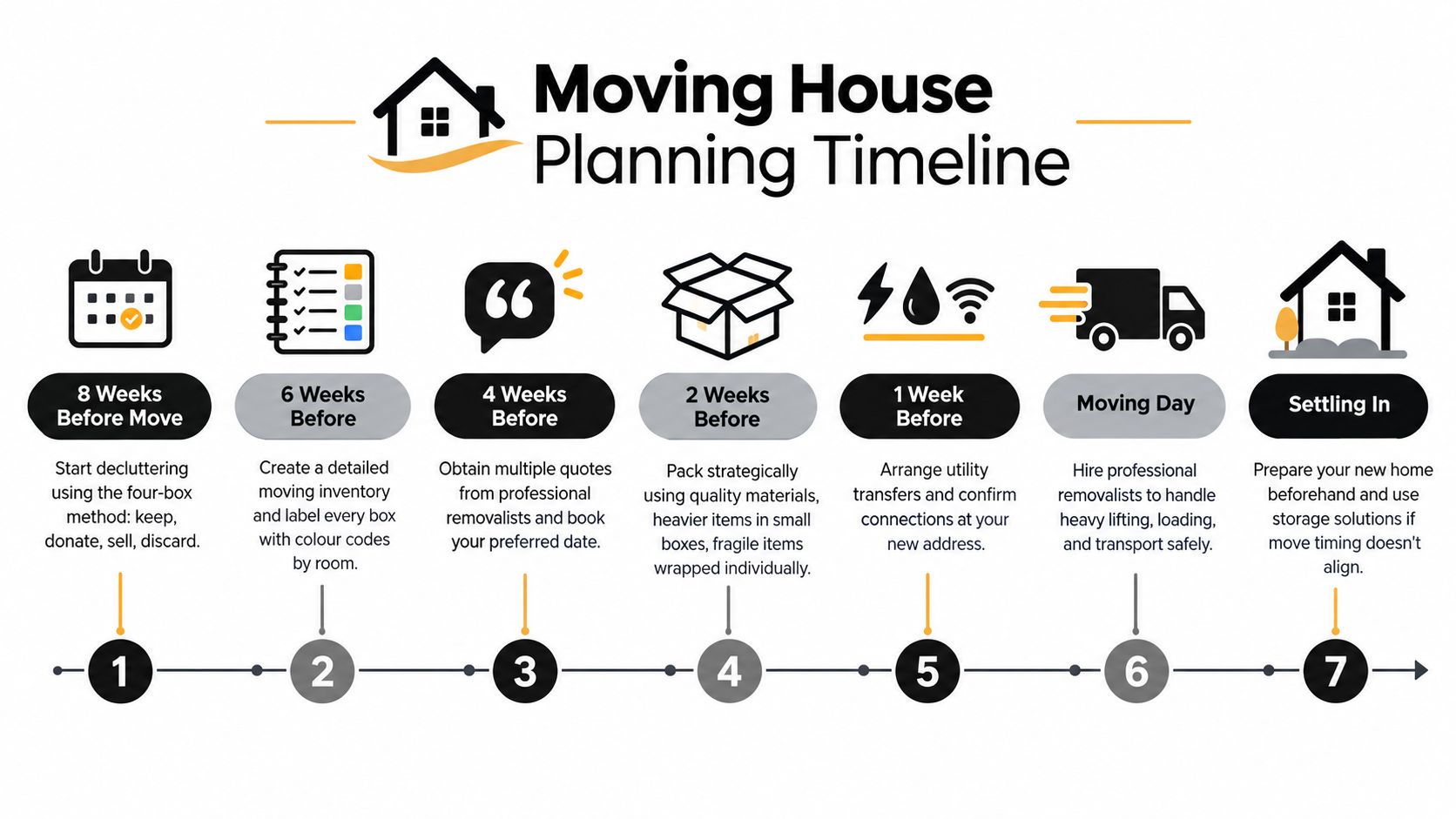
1. Start Planning and Decluttering at Least 6-8 Weeks Before Your Move
The easiest way to cut stress is to move less. Start with the rooms you use least, then work toward the high-traffic spaces, because that gives you the best chance to spot duplicates, broken items and things you've been storing out of habit rather than need. A simple four-box method, keep, donate, sell and discard, works well because it forces a decision instead of endless sorting.
A Sydney family downsizing from a larger house will usually find the volume drops faster than expected once they begin clearing out storage areas, linen cupboards and garage shelves. For businesses, early decluttering helps the team avoid shifting outdated files, old furniture and dead stock that only slow down the move. If you're heading interstate, check weight and size limits before you commit to large items, because some pieces are cheaper to replace than transport.
Practical rule: if you haven't used it in a year and it doesn't serve a clear purpose in the new place, it's probably taking up valuable move space.
The best time to list sale items is while they're still clean, photographed and easy to access. Keep a spreadsheet for anything you're selling, note the asking price, and schedule donation drop-offs before moving week so the unwanted pile doesn't creep back into the house. If you want a deeper room-by-room decluttering method, this guide on how to declutter before moving house fits neatly into the first stage of the move.
A final walkthrough a week before moving day catches the items that drift back into cupboards, sheds and under beds. That last sweep matters because the forgotten items are usually the ones that create arguments on the day, not the things already packed in boxes.
2. Create a Detailed Moving Inventory and Label Everything Clearly
A move gets easier when every box has a name and every item has a place. A proper inventory tells you what's moving, what's fragile, and what should arrive in which room, which is especially useful for home removals Sydney and interstate removals where nothing should be left to memory. Numbering boxes sequentially also gives you a simple way to check off the load as it leaves and arrives.
Colour coding works well in real homes because it's quick to read at a glance. Red for kitchen, blue for bedrooms and green for living areas is easy for the crew to follow, and it helps you keep unpacking momentum once the truck is unloaded. Put specific contents on the label too, not just “miscellaneous”, because vague labels turn unpacking into a scavenger hunt.
Keep the inventory list somewhere obvious, not buried in a box you won't see until night falls.
Take photos of valuable items before packing them, and record the condition if anything is already scratched or chipped. That gives you a cleaner paper trail if something needs to be checked after transit, particularly where a job involves long-distance travel or multiple handling points. Digital tracking can also help, whether you use a moving app or a simple spreadsheet on your phone.
Here's the part many people skip. Label boxes for where they belong, not where they were packed from. A kitchen box packed in the lounge room should still be marked kitchen, because the crew needs destination labels, not a diary of where your packing happened.
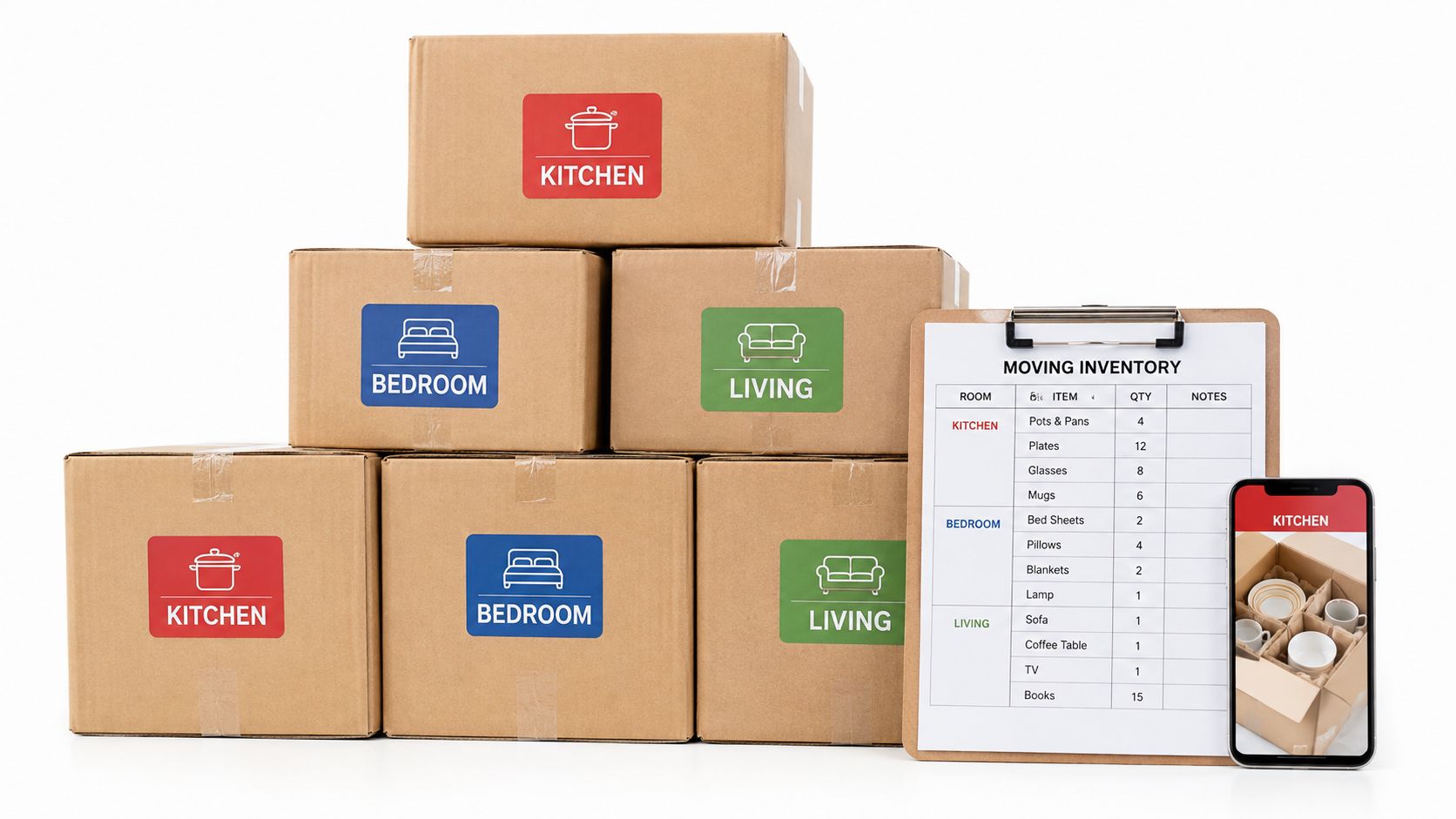
That distinction sounds small until you're standing in a new property with twenty boxes and no idea which one has the kettle charger, the documents or the bedding. Clear labels turn the first unpacking hour into progress instead of chaos.
3. Obtain Multiple Quotes from Professional Removalists Sydney
The quote stage is where good planning pays off. Reputable Removalists Sydney should give you a written estimate based on your actual load, access, stairs, parking and the services you want, whether that's standard household shifting, Furniture removals Sydney, office relocations or longer interstate work. Comparing at least a few written quotes helps you see what's included, what's excluded and where the true cost differences sit.
Sydney moving advice often gets too focused on headline hourly rates, but access and logistics are usually what change the outcome. A move into an apartment with a tight lift booking, long carry or tricky parking can take longer than a similar-sized house with clear entry, and that difference matters more than a bargain number on a quote. Ask each mover what's included for packing, assembly, storage and fuel so you're comparing like with like.
Written quotes also protect you from last-minute confusion. If one company is vague about stairs, waiting time or extra labour, that usually becomes your problem later. Ask for the insurance details in writing too, because coverage limits and claim processes are part of the value, not just the price.
A clear quote is worth more than a cheap estimate if it saves you from hidden extras on moving day.
If your move involves a mix of services, for example packing, storage and furniture assembly, make sure those items are listed separately. That's the only way to compare the actual value of different providers rather than just the cheapest opening figure. For a practical comparison, the best quote is the one that matches your timing, your access and your actual load, not the one that sounds easiest to accept.
4. Pack Strategically Using Quality Materials and Proper Techniques
Packing well is less about cramming boxes and more about protecting the load. Heavy items belong in smaller boxes, fragile items need cushioning on all sides, and empty space should be filled so things don't shift in transit. Quality materials matter, but so does the method, because a strong box packed badly still fails.
Use bubble wrap or packing paper for breakables, then add towels, blankets or clothing where they can act as padding. That reduces the amount of packing material you need without leaving items loose inside the carton. For valuables or awkward pieces, professional packing can be a sensible choice, especially when you want less handling on the day.
A sensible pack order also saves unpacking time. Kitchen items should be grouped by use, not by where they were stored, and the first-night box should stay separate from the main load. Keep essentials like toiletries, chargers, a change of clothes and medications with you, not buried in the truck.
Here's a simple rule that avoids most packing mistakes.
Pack by weight and fragility, not by room size.
The difference shows up fast. Books, tools and pantry items should go into compact boxes, while linen and lighter household goods can fill the larger cartons. If you're using Home Removals Sydney, ask for packing materials early so you're not scrambling the night before. The internal packing guide at how to pack for moving house is a useful companion if you want a cleaner sequence for each room.

A short checklist helps here:
- Use smaller cartons for dense items: Books, tools and pantry goods get heavy quickly.
- Wrap fragile items individually: Don't let glass or ceramics touch directly.
- Build a first-night box: Keep daily essentials out of the main pile.
- Ask for packing supplies early: Boxes, bubble wrap and paper should be on hand before the final rush.
Good packing doesn't make moving glamorous, but it does make unpacking possible without a pile of damaged plates and missing cables.
5. Arrange for Utilities and Services Transfer Before Moving Day
Utilities are one of the easiest things to forget and one of the most annoying to fix late. Electricity, gas, water, internet, phone and subscription services should all be lined up before the move, because the moment you're standing in a new home without power or Wi-Fi, the whole day feels longer. Notify providers well before the move so they can disconnect the old address and activate the new one in time.
The practical rule is simple. Don't leave your providers to the last minute, because delays often show up at the exact moment you need hot water, lights or a working connection. For billing, get final meter readings where relevant, and keep confirmation numbers on your phone so you can chase issues quickly if a connection doesn't happen as planned.
MyGov's moving-house process also matters here, because the address update isn't a single action. You update your details through your profile, then select the linked services you want to notify, which helps keep records aligned across the right accounts. That's the sort of admin that feels minor until an address mismatch creates delays with mail or verification.
The smoothest move is the one where the old address is closed off cleanly and the new one works from day one.
Australia Post redirection, bank details, insurance records and service subscriptions should all be reviewed alongside the physical move. Keep a short checklist in your phone and work through it methodically rather than relying on memory. That way the practical stuff, lights, Wi-Fi, hot water and mail, is already sorted before the boxes land.
6. Hire Professional Removalists Sydney to Avoid Injury and Damage
DIY moves look cheaper until somebody strains a back or chips a wall on a narrow turn. Professional movers have the gear and technique to handle heavy furniture, stairs, tight corners and awkward items without turning the day into a injury risk. That's particularly important for pianos, antiques and artwork, where one bad lift can become a very expensive mistake.
There's also a time cost that people underestimate. What takes a trained crew a few careful trips can swallow most of a day if you're improvising with mates, borrowed straps and a rented truck that's too small. Once the job becomes a drag, the cost shows up in fatigue, stress and damaged property, not just in dollars.
If you're comparing movers, ask directly who is insured, what fleet they use and whether extra labour can be added for heavy pieces. That matters for furniture removals Sydney, apartment moves with stairs, and businesses shifting equipment. A good crew should also be upfront about specialist handling for fragile or unusual items.
Here's a practical view from the floor, not the brochure.
Pay for the job that matches the load. Cheap help is expensive when it breaks furniture or slows the entire move.
A well-run crew also helps with assembly and placement, which shortens the period where boxes clutter walkways and furniture sits in the wrong room. If you need a point of reference for safe handling of heavy pieces, this article on prevent damage when moving furniture covers the mechanics clearly. If you want a move handled with flexible scheduling, clear pricing and insured support, Home Removals Sydney can quote for local, interstate and specialist work.
7. Prepare Your New Home Before Moving Day
A new property that's ready to receive furniture saves time and money. Clean it before the truck arrives, measure doorways and hallways, and decide where the big pieces are going so the removalists can place them without repeated repositioning. If access is tight, take photos and check whether there's an alternate route before moving day.
Furniture fit is one of the most common problems in Sydney homes, especially where apartments, older terraces or narrow entries are involved. A sofa that won't clear the doorway is a problem you want to discover with a tape measure, not with the crew halfway through the lift. Make sure utilities are already on too, because there's no point unloading into a dark or unpowered property.
It also helps to clear cupboards, storage areas and hallways before the truck arrives. That gives you a place to set down essentials, reduces trip hazards and keeps the crew moving in straight lines rather than weaving around obstacles. If there's parking pressure outside, sort that out early as well.
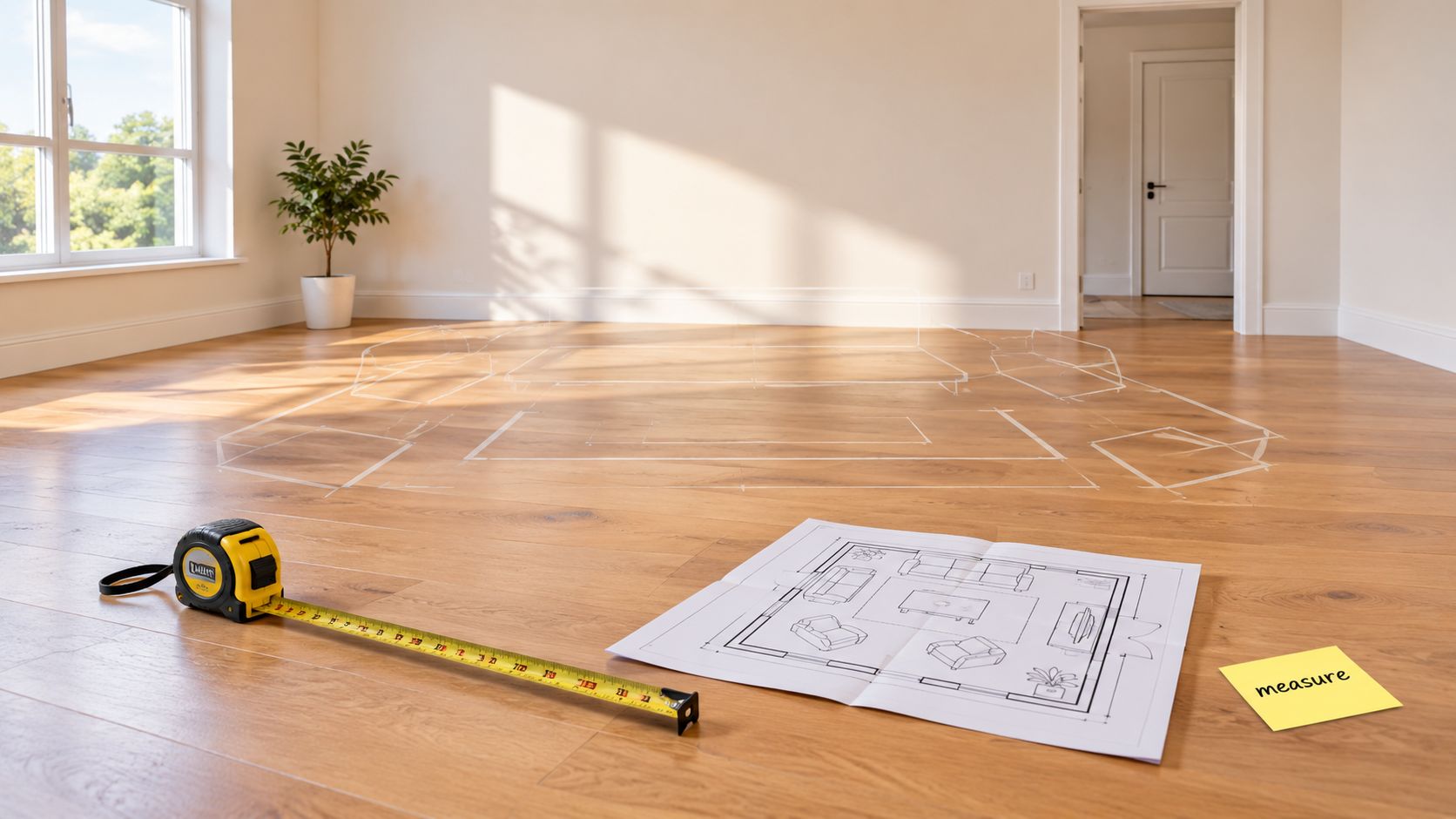
A few simple prep moves make a real difference:
- Measure key furniture and access points: Don't guess on sofas, beds or fridge clearance.
- Deep clean before arrival: A clean property lets you unpack properly from the first hour.
- Clear walkways and storage areas: Give the crew a direct path.
- Confirm parking and lift bookings: Delay often starts outside the building, not inside it.
If you want to organise the new home quickly, this guide on getting organised as a new homeowner pairs well with the final setup stage. A ready property keeps the move from turning into a furniture shuffle after dark.
8. Use Storage Solutions if Your Move Timing Doesn't Align Perfectly
Sometimes the dates don't line up. Settlement runs late, renovations overrun, or the new place isn't ready when the old one has to be vacated. Storage solves that gap without forcing you to cram decisions into one exhausting day, and it's often the cleaner option for complex interstate removals or staged home moves.
The best storage plan is simple and intentional. Pack stored items logically, label them clearly and keep a photo record so you know what went where. That matters because storage stops being useful the moment you can't find the items you need first.
Security and access matter just as much as space. If you'll need frequent access, confirm the hours before you commit, and if you're storing furniture or electronics, ask about conditions that protect them from damage. A storage solution should make the move easier, not add another unpredictable layer.
If the move dates are messy, storage is often the cheapest way to buy back breathing room.
Use the storage period to finish decluttering, not to postpone it. Stored clutter still needs moving later, and the cost of the second handling can outweigh the convenience if you haven't sorted what's worth keeping. For a practical service overview, removals storage is worth checking if your move needs temporary holding space.
9. Protect Valuable and Specialist Items Throughout the Moving Process
Some items need a higher level of care than standard boxes and blankets. Pianos, antiques, artwork, collectibles and high-value electronics should be documented before packing, then handled with the right materials and transport method. That starts with photos, valuations and condition notes, because those records help if anything needs attention later.
Specialist handling is not only about damage avoidance, it's about confidence. A crew that knows how to move a piano or wrap artwork properly will work differently from a general load-and-go team, and that difference matters more as the value or fragility increases. Insurance should be checked carefully too, especially where the item is hard to replace or impossible to repair cleanly.
If you're dealing with climate-sensitive or delicate pieces, ask about the packing method and the route the item will take through the property. Sometimes the safest option is to move a very small valuable item yourself, but that decision should be made item by item, not by habit. For larger specialist pieces, proper handling is the sensible call.
A few checks are worth doing before the move:
- Photograph each valuable item clearly: Capture condition from more than one angle.
- Record valuations where possible: Keep documentation together and accessible.
- Flag specialist items early: Don't leave pianos or artwork as a surprise on moving day.
- Confirm insurance cover: Make sure the policy matches the item type.
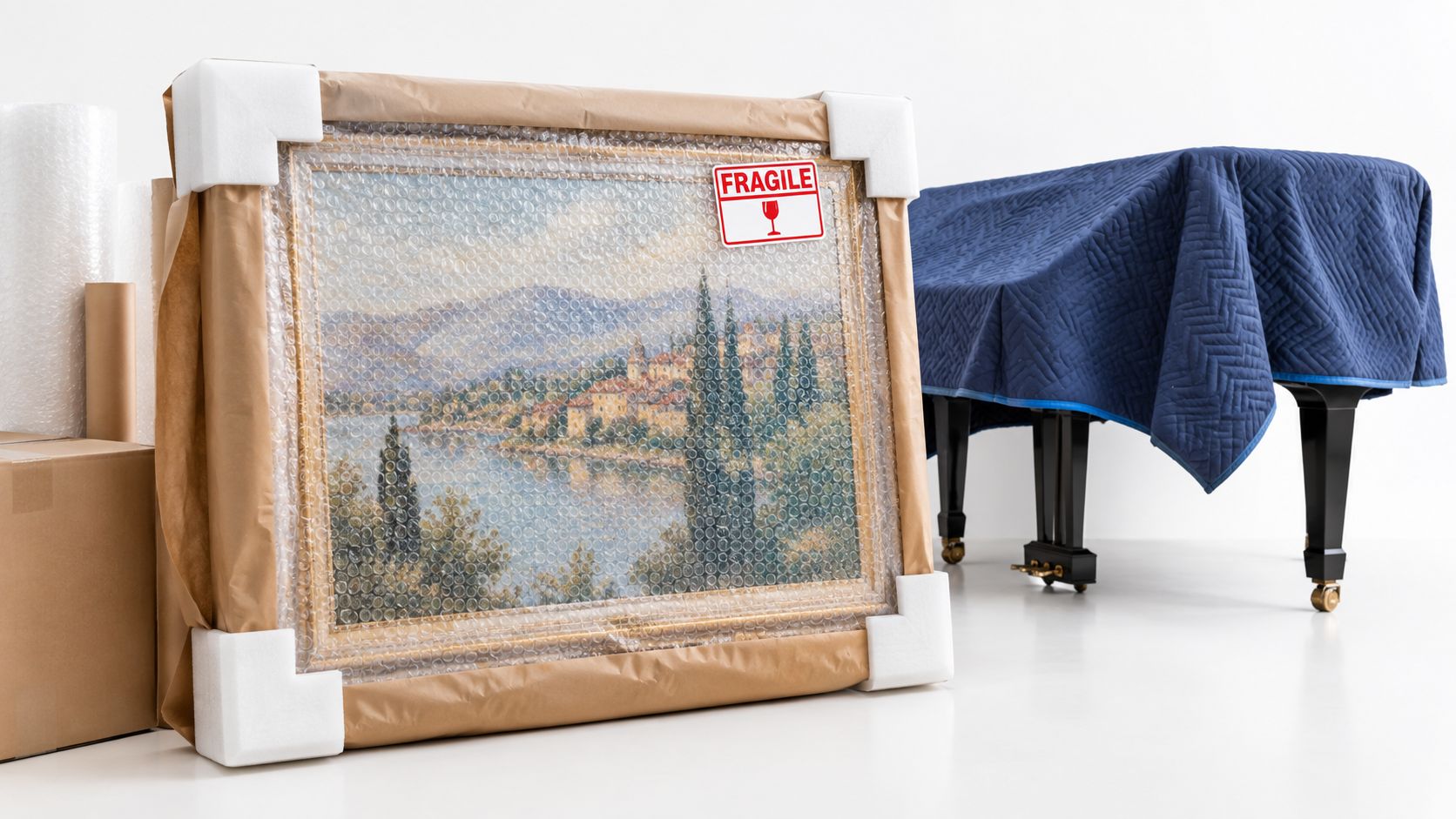
For homes with specialist items, a removalist that already handles pianos, antiques and artwork can save a lot of uncertainty. That's especially useful when you want the move to feel controlled rather than improvised.
10. Plan Parking and Site Access to Facilitate Smooth Removalist Operations
Parking and access are where a lot of Sydney move delays begin. If the truck can't get close, the crew has to carry everything further, which burns time and energy before the furniture even reaches the front door. In apartment buildings, narrow driveways, lift bookings and loading zones can change the whole pace of the day.
Start by checking the physical route from truck to room. Measure doorways, hallways and stairs, confirm gates and lifts are usable, and speak to building management or council if a permit or reserved space is needed. If you leave access to chance, the crew will spend more time solving logistics than moving furniture.
This matters for homes as much as offices. A corporate move with clear access can stay on schedule, while one with blocked loading can quickly fall behind, especially if the building has strict timing windows. Clear instructions help too, because removalists work faster when the access codes, parking notes and site contacts are sorted in advance.
Good access planning is one of the few ways to reduce both time on site and the risk of damage.
Keep the pathway clear on the day. Move bins, parked cars, bikes, pet items and anything else that might force the crew into awkward angles. If the move is in a complex with neighbours nearby, let them know early so there's less chance of blocked driveways or surprise conflicts when the truck arrives.
Top 10 Moving Advice Comparison
| Strategy | 🔄 Implementation Complexity | Resources (time / cost / materials) | ⚡ Speed / Efficiency | 📊 Expected Outcomes | ⭐ Ideal Use Cases & Key Advantages (💡 tips) |
|---|---|---|---|---|---|
| Start planning & decluttering 6–8 weeks before move | 🔄🔄, Requires sustained effort across weeks | Time: high (6–8 weeks); Cost: low; May need temporary storage | ⚡⚡, Slower prep but speeds moving day | 📊 Lower transport costs; less stress; fewer items to move | ⭐ Ideal for downsizing or large household moves; 💡 Use four-box method, tackle one room at a time |
| Create a detailed moving inventory & label everything | 🔄🔄🔄, Meticulous documentation & upkeep | Time: moderate–high; Materials: labels/apps; Low cost | ⚡⚡, Slows packing, speeds unpacking | 📊 Fewer lost items; faster unpack; supports insurance claims | ⭐ Essential for interstate & office relocations; 💡 Colour-code boxes and keep master list accessible |
| Obtain multiple quotes from professional removalists | 🔄🔄, Administrative effort to collect/compare quotes | Time: moderate; Cost: potential savings; Info required for quotes | ⚡⚡, Helps secure right-fit provider quickly | 📊 More transparent pricing; better value selection; reduced surprises | ⭐ Best when hiring movers; 💡 Get written, itemised quotes and verify insurance |
| Pack strategically with quality materials & techniques | 🔄🔄, Skill and time to pack correctly | Time: moderate; Cost: moderate (materials or pro service) | ⚡⚡⚡, Well-packed moves faster and have fewer incidents | 📊 Significantly reduced damage; easier/uniform unpacking | ⭐ Valuable for fragile items and general household moves; 💡 Use small boxes for heavy items, pack a 'first night' box |
| Arrange utilities & services transfer before moving day | 🔄🔄, Scheduling multiple providers | Time: low–moderate (calls/emails); Possible connection fees | ⚡⚡, Prevents service gaps on arrival | 📊 Continuous utilities; avoids duplicate billing and discomfort | ⭐ Applicable to all moves; 💡 Contact providers 2–3 weeks prior and keep confirmation numbers |
| Hire professional removalists to avoid injury & damage | 🔄, Low setup complexity (hire & schedule) | Time: low; Cost: high; Requires provider availability | ⚡⚡⚡, Fastest and most efficient for heavy items | 📊 Reduced injury risk; insured handling; faster completion | ⭐ Ideal for heavy, bulky or long-distance moves; 💡 Verify insurance, fleet size, and get tailored quote |
| Prepare your new home before moving day | 🔄🔄, Requires visits, measurements, cleaning | Time: moderate; Cost: low–moderate (cleaning/repairs) | ⚡⚡, Speeds placement and settling in | 📊 Fewer delays; furniture fits; faster unpacking | ⭐ Best for first-time occupancy or major furniture; 💡 Measure doorways, deep-clean 1–2 days prior |
| Use storage solutions if move timing misaligns | 🔄🔄, Booking and logistics for storage period | Time: low–moderate; Cost: ongoing monthly; Transport to storage | ⚡, Adds step but offers scheduling flexibility | 📊 Provides secure holding; reduces timing pressure | ⭐ Useful for settlement gaps, renovations, staging; 💡 Book in advance and confirm climate control & access |
| Protect valuable & specialist items throughout move | 🔄🔄🔄, Detailed documentation & specialist handling | Time: high; Cost: high (specialist packing/transport/insurance) | ⚡, Slower due to care but preserves value | 📊 Minimises damage/loss; preserves insurance claims validity | ⭐ Crucial for pianos, antiques, artwork; 💡 Photograph, obtain valuations, use specialist movers |
| Plan parking & site access for smooth removal operations | 🔄🔄, Coordination with council/building management | Time: moderate; Cost: possible permits/fees; Info gathering | ⚡⚡⚡, Can greatly accelerate on-site operations | 📊 Reduced moving time/costs; safer handling; fewer delays | ⭐ Vital for apartment/urban moves; 💡 Reserve loading zones, confirm lift access and provide access codes |
Turn Your Moving Plan Into a Confident Move
The strongest moving house advice is simple, but it works because each step supports the next one. Declutter early so you move less. Build a clear inventory so boxes don't disappear into the chaos. Compare written quotes so you know what you're paying for. Pack by protection level, not by panic, and keep the essentials box separate from the rest.
Then lock in the practical details. Confirm access, parking and lift bookings before moving day. Arrange utilities and service transfers early so the new address is ready when you arrive. Use storage when the dates don't line up cleanly, and bring in specialist handling where fragile or high-value items need it. That sequence is what turns a difficult Sydney move into a controlled one.
Sydney and interstate moves can vary a lot with volume, access and timing, so accurate details matter when you ask for a quote. A small apartment move with easy parking is a different job from a townhouse with stairs, a large office, or a property that needs storage and assembly. The more clearly you describe the move, the more useful the quote becomes.
If you want a removalist that can handle packing, furniture assembly, storage or specialist moving support, contact Home Removals Sydney for a custom quote. It's the easiest way to match the service to the actual move, not the version you hope it will be.
Home Removals Sydney provides expert support for local Sydney moves, interstate relocations, packing, furniture assembly, storage and specialist items like pianos, antiques and artwork. If you're planning a move and want the details handled properly, visit Home Removals Sydney to request a quote and organise the services that fit your move.
