

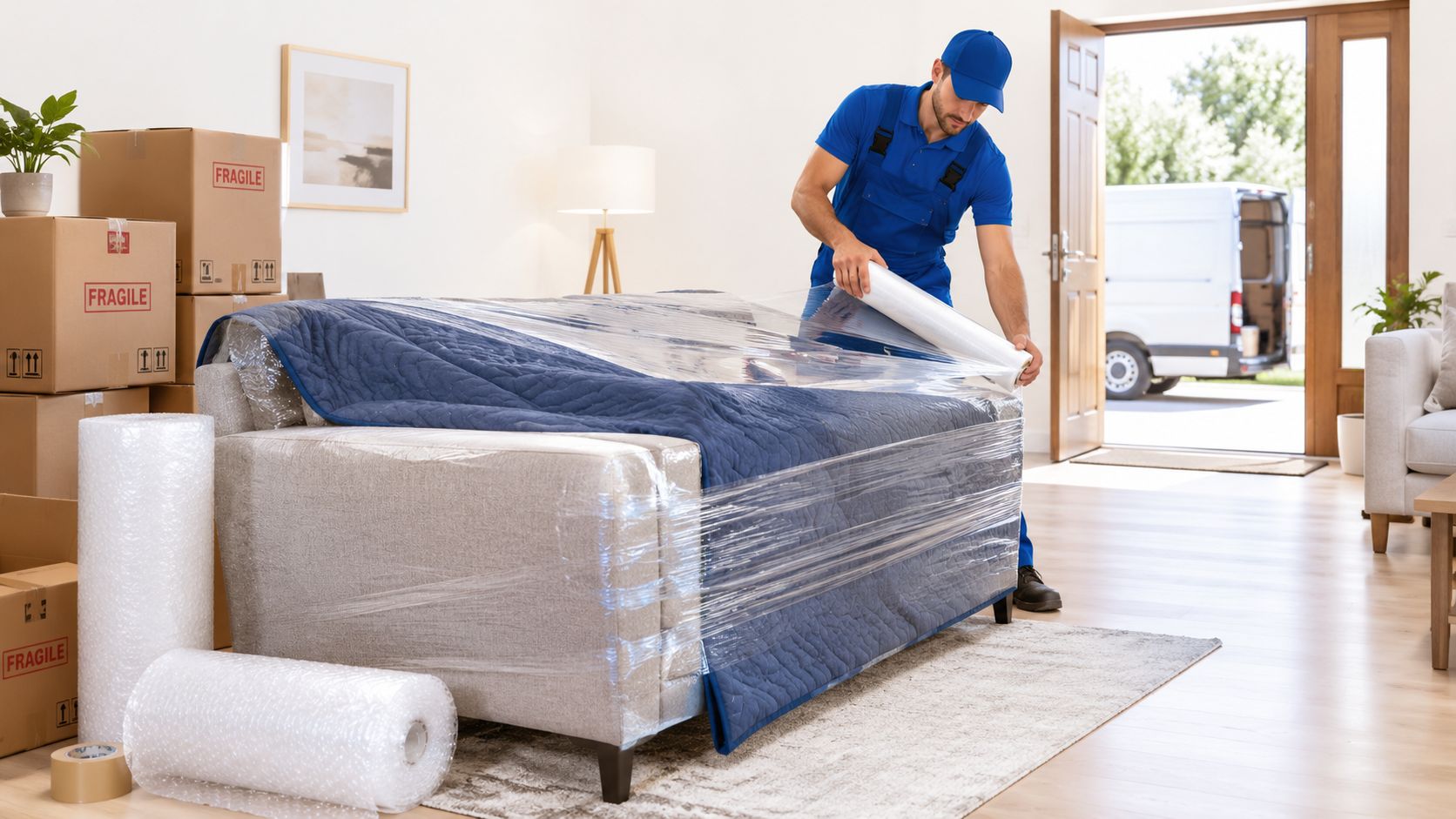
You're standing in the hallway surrounded by half-filled cartons, loose screws and furniture that suddenly seems too large for every doorway. The sofa is ready to go, but its cushions are exposed, the dresser drawers slide open, and the glass coffee table has nothing protecting its corners. That's how avoidable damage starts.
A reliable wrap and move process is less about covering everything in plastic and more about controlling movement. Secure each item first, cushion it second, then plan how it will travel through Sydney lifts, corridors, stairwells and loading zones. The method works for homeowners, renters, businesses arranging Office relocations, and families preparing for Interstate removals.
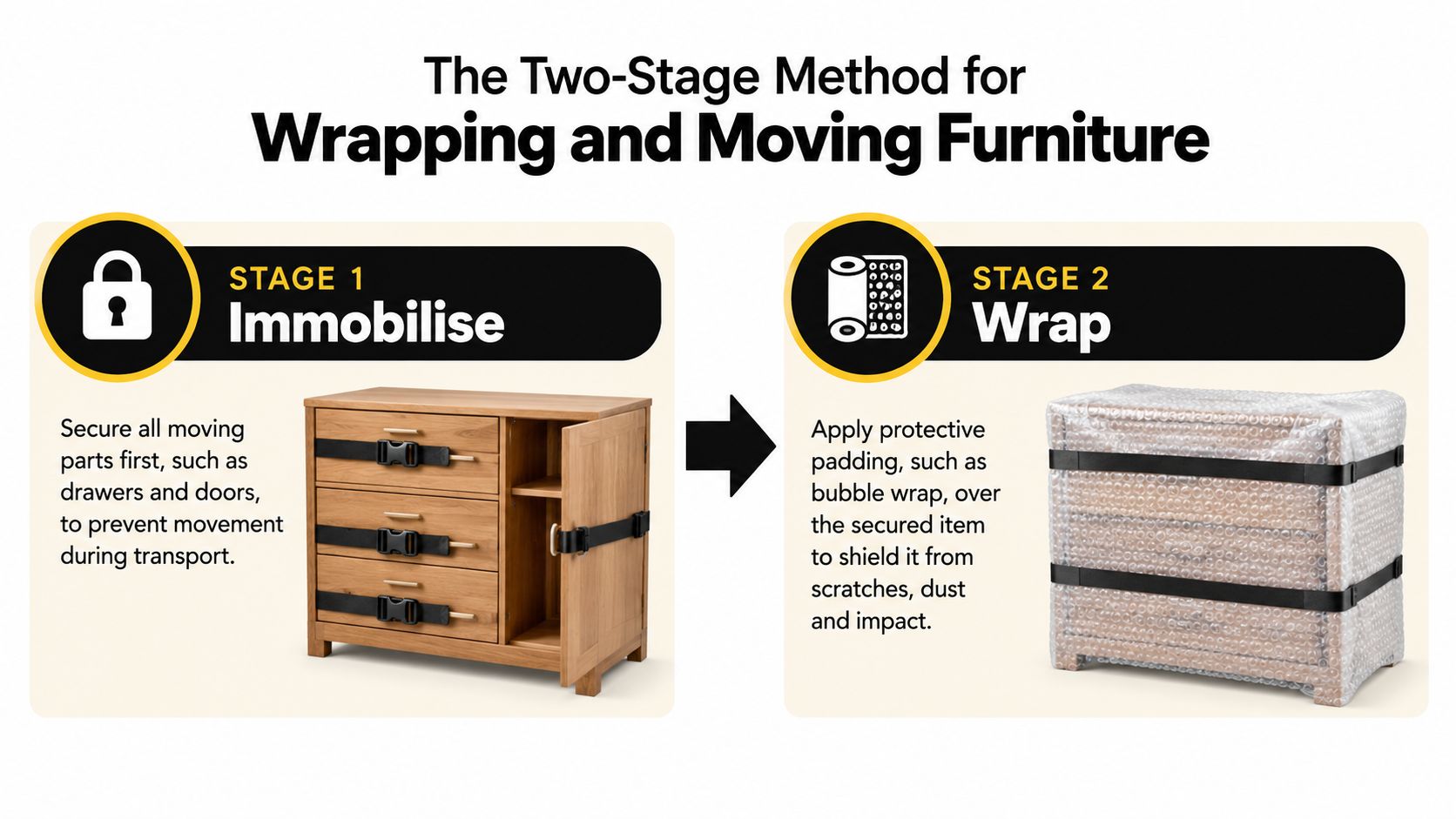
The Two-Stage Method for Wrapping and Moving Furniture
The most common mistake is wrapping a loose item before stopping its moving parts. A stretch-film layer around a dresser won't stop drawers sliding out, and bubble wrap won't prevent a cupboard door swinging into a wall. Plastic can contain a load, but it shouldn't be the restraint holding the load together.
The professional sequence is simple:
- Immobilise the item. Remove or lock drawers, doors, shelves, castors and detachable components. Use straps, ties or suitable tape where it won't damage the finish.
- Cushion and contain it. Wrap fragile surfaces individually, protect corners, fill gaps and apply blankets, bubble wrap or stretch film over the secured item.
Practical rule: If the furniture can move under its own momentum, it isn't ready to wrap.
Clean and dry the surface first. Dust trapped under a cover can rub against timber, laminate or glass during transport. Photograph furniture before disassembly, place screws and fittings in labelled bags, and check the wrapped dimensions against doorways and lift entrances.
Materials that earn their place
Use moving blankets for impact protection, cardboard sheets for hard flat surfaces, bubble wrap for fragile components, corner protectors for exposed edges and tie-downs for the load inside the truck. Stretch film is useful for holding blankets in place and keeping upholstered items clean, but don't apply it directly to delicate timber or leather where it can trap moisture or leave residue.
For cartons, select structurally sound boxes that suit their contents. Keep manually handled boxes at or below 16 kg where practicable, and mark heavier cartons clearly, following the practical benchmark described in Australia Post's domestic packaging guide. Close each carton securely, then label the room, contents, orientation and weight.
Even small finishing details help. If you're applying adhesive vinyl or another surface wrap, Quote My Wall vinyl wrap advice provides useful preparation principles. The same discipline applies to moving materials: prepare the surface, avoid trapping problems underneath and don't rely on the outer layer to solve poor preparation.
Wrapping and Protecting Household Items Room by Room
Every room creates a different risk. A living room usually combines bulky upholstery, polished surfaces and glass, while a kitchen contains many small, breakable objects packed close together. Treating the whole house as one packing job usually leaves the most vulnerable items until the end.
Living rooms and bedrooms
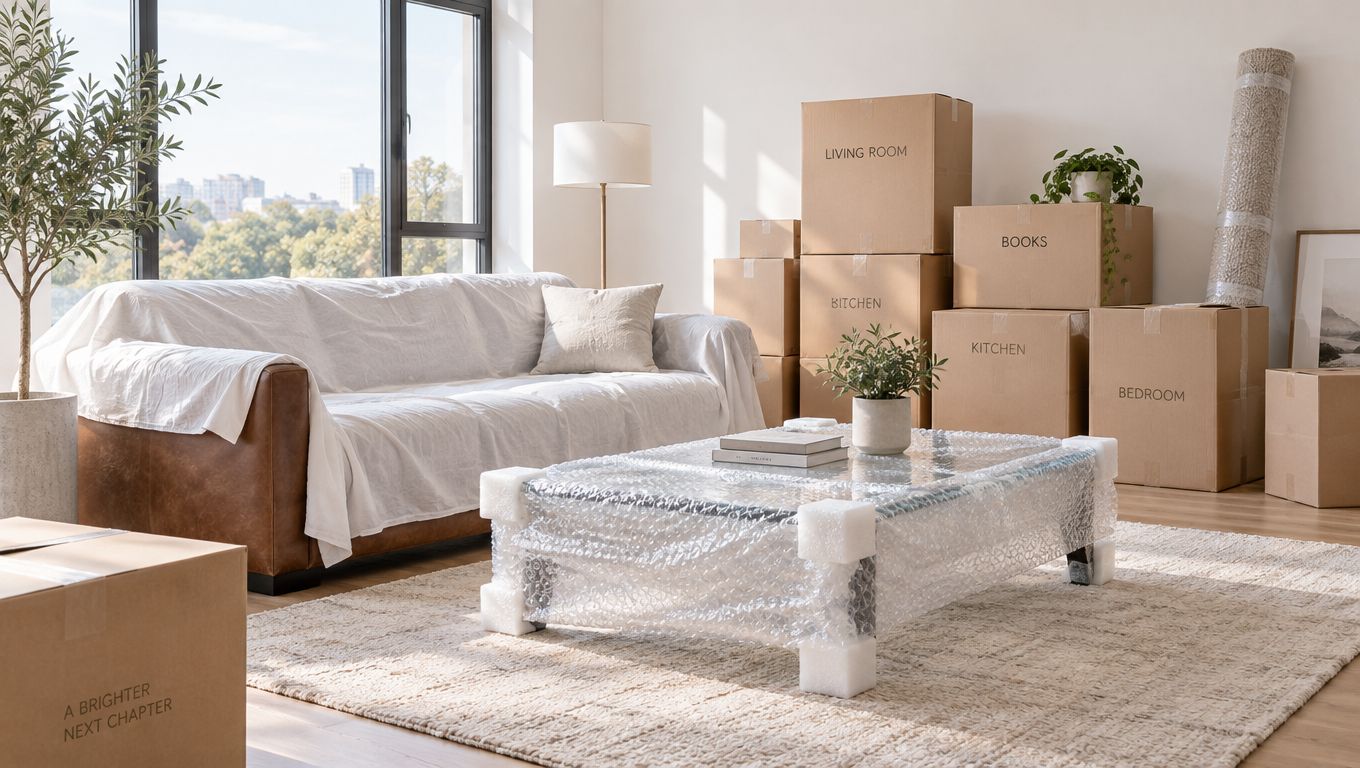
For a sofa, remove cushions and legs where possible, then cover the upholstery with a clean, breathable furniture cover. Leather needs particular care because it can mark, sweat or dry out under unsuitable plastic. Use dry moving blankets as the first protection and keep tape away from the leather.
Glass coffee tables should be treated as separate fragile components. Remove the top if the design allows it, wrap the glass surface with paper and cushioning, protect every corner and place cardboard on both sides. Don't put heavy cartons on top of glass, and carry the protected panel in a controlled, upright position.
Disassemble bed frames and wardrobes where practical. Photograph the fittings, tape or bag hardware by item, and protect wardrobe corners with cardboard or foam. Vacuum-compression bags are useful for linen because they reduce bulk, but they don't replace a proper mattress wrap. A mattress needs a clean protective cover that prevents tears, dust and stains.
For floors, sliders and pads can prevent scuffing while furniture is repositioned. This overview of the best furniture pads for hardwood floors is a useful reference when deciding between felt, rubber and padded options.
Kitchens, art and electronics
Wrap plates individually and use dividers so they cannot strike one another. Put heavier pieces at the bottom of a carton and fill voids so nothing shifts. A blender or food processor benefits from a box-in-box method, with cushioning around the original unit and a second layer of protection around the outside carton.
Wrap wine glasses individually in paper rather than pressing bubble wrap directly against delicate surfaces. Paper protects the shape without creating concentrated pressure points, while padding around the finished bundle absorbs movement. More guidance on choosing and using bubble wrap for moving can help you match the material to the item.
For artwork, separate the surface from hard packaging with suitable paper or foam, protect the frame corners and label the carton clearly. Electronics need anti-static protection for sensitive components, while heavy-duty foam is more appropriate for screens, printers and exposed edges. Keep cables and remotes in labelled bags rather than loose inside the main carton.
Safe Lifting and Carrying Techniques for Movers
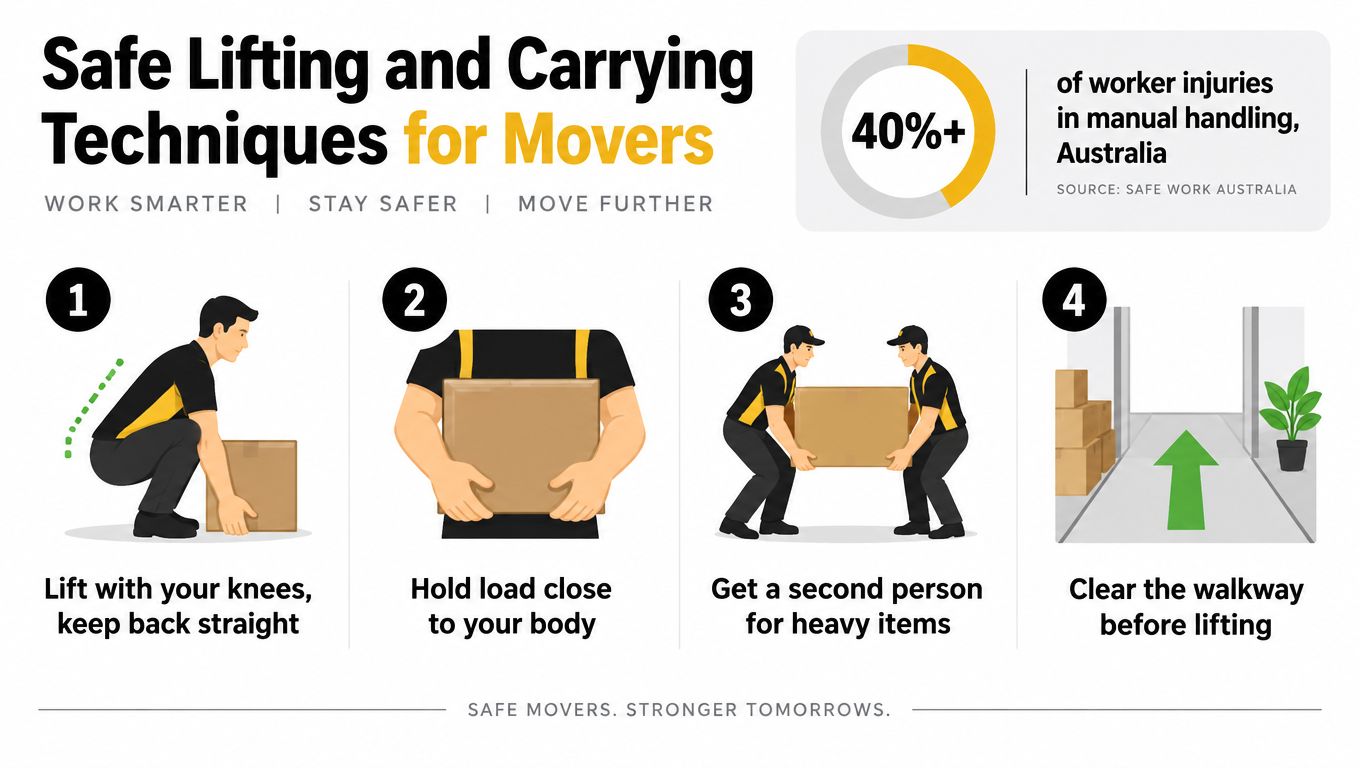
Good wrapping can't compensate for an uncontrolled lift. In Australia, more than 40% of worker injuries are attributed to manual handling, and NSW records approximately 17,000 serious manual-handling-related injuries or illnesses annually, according to EDHS manual handling guidance. The same source cites 18,790 injuries involving lifting, carrying and putting down objects in the national dataset.
Start with the route, not the furniture. Check stairs, narrow doors, slopes, wet surfaces, overhead obstructions and the distance between the property and the truck. Remove loose rugs, open doors fully and decide where the item will be placed before anyone lifts it.
Make the load predictable
Estimate the weight before lifting and divide heavy contents into smaller cartons. The 16 kg carton benchmark is useful for planning, but it isn't a universal legal limit. Overfilled boxes, awkward shapes and poor handholds can make a lighter object more dangerous than a compact, balanced one.
Use a trolley, lifting straps, ramp or other mechanical aid whenever the route allows it. Test a bulky item's centre of gravity by shifting it slightly before committing to the lift. If it tips unexpectedly, stop and change the grip or dismantle the item.
One person should direct the movement. Use clear commands such as “stop”, “lift”, “lower” and “turn”, and make sure everyone understands who is leading before the item leaves the floor. Team lifting only works when the object is stable and the route is controlled.
The safest carry is the one that avoids a carry. Roll, slide, dismantle or use mechanical assistance whenever that option removes unnecessary strain.
Never twist while carrying. Keep the load close, turn with your feet, maintain a clear path and put the item down gradually. If a doorway, stairwell or lift is too tight, don't force the furniture through. A pause to remove a door, reduce the item or change the route is cheaper than repairing a damaged wall or injured back.
For a more detailed approach to awkward loads, review this guide on moving heavy furniture before moving large wardrobes, safes, pianos or commercial equipment.
DIY Wrapping Versus Professional Packing Services
DIY packing can work well when the inventory is modest, access is straightforward and you have enough time to prepare properly. It becomes less attractive when the move includes antiques, artwork, glass, a large home, a difficult apartment access route or a firm interstate delivery schedule.
Professional packing costs more at the start, but the service can include suitable materials, systematic labelling, disassembly and protection for items that are easy to mishandle. DIY packing gives you control over the process and may reduce the immediate service cost, but it also leaves you responsible for selecting materials, judging risk and finishing before the movers arrive.
| Factor | DIY Wrapping | Professional Packing |
|---|---|---|
| Upfront spend | Usually lower if you already have time and materials | Higher because labour, materials and preparation are included |
| Control | You decide how each item is packed | The crew follows a planned packing and inventory process |
| Risk | You carry the risk of poor restraint, weak cartons or unfinished work | Experienced packers can identify awkward and fragile items early |
| Time | Requires sustained preparation before moving day | Reduces the amount of packing left for the customer |
| Special items | Suitable only if you understand the item and material | More suitable for artwork, antiques, glass and complex furniture |
| Storage or interstate travel | Requires careful preparation for longer handling | Packing can be planned around extended transport and storage |
A studio apartment with accessible parking may suit a mostly DIY approach. A family home with a full kitchen, multiple bedrooms and fragile furniture usually benefits from paying for help with the high-risk items, even if you pack clothing and books yourself.
The same decision changes for a business. An Office relocation or warehouse move may involve computers, shelving, stock, pallets and equipment that must be inventoried and handled in sequence. Splitting the work can be sensible: pack personal desks and low-risk cartons internally, then use professional support for heavy, fragile or operationally important items.
Insurance deserves separate attention. Transit cover isn't legally compulsory, and a removalist's liability isn't automatically the same as contents insurance. Contents policies may cover goods in transit only under specific conditions, while exclusions can include cash, some electronics, business stock, plants, chemicals and firearms. Read the policy disclosure documents, declare valuable items where required and check what changes when goods remain in storage.
For a custom packing option, professional moving and packing services can be compared with a self-pack plan item by item. The sensible choice isn't always “pack everything yourself” or “buy the full service”. Match the assistance to the items, access conditions and consequences of damage.
Understanding the True Cost of Your Sydney Move
A low hourly rate doesn't automatically produce a low final bill. The total can be shaped by access, preparation, volume, fragile handling, disassembly, waiting time, storage and the distance between the truck and the front door.
For Sydney homes, ask the removalist to account for:
- Access: Stairs, narrow corridors, lifts, slopes and long carries can change the labour required.
- Parking: A truck that can't stop close to the entrance creates extra handling and exposure.
- Preparation: Unfinished packing, unlabelled cartons and furniture that hasn't been disassembled can slow loading.
- Inventory: Fragile items, bulky furniture, pianos, artwork, appliances and large carton volumes need different handling.
- Destination: Local Home removals Sydney jobs have different scheduling needs from NSW regional moves or interstate transport.
- Storage: Goods remaining in storage need suitable wrapping, clear inventory records and an agreed access arrangement.
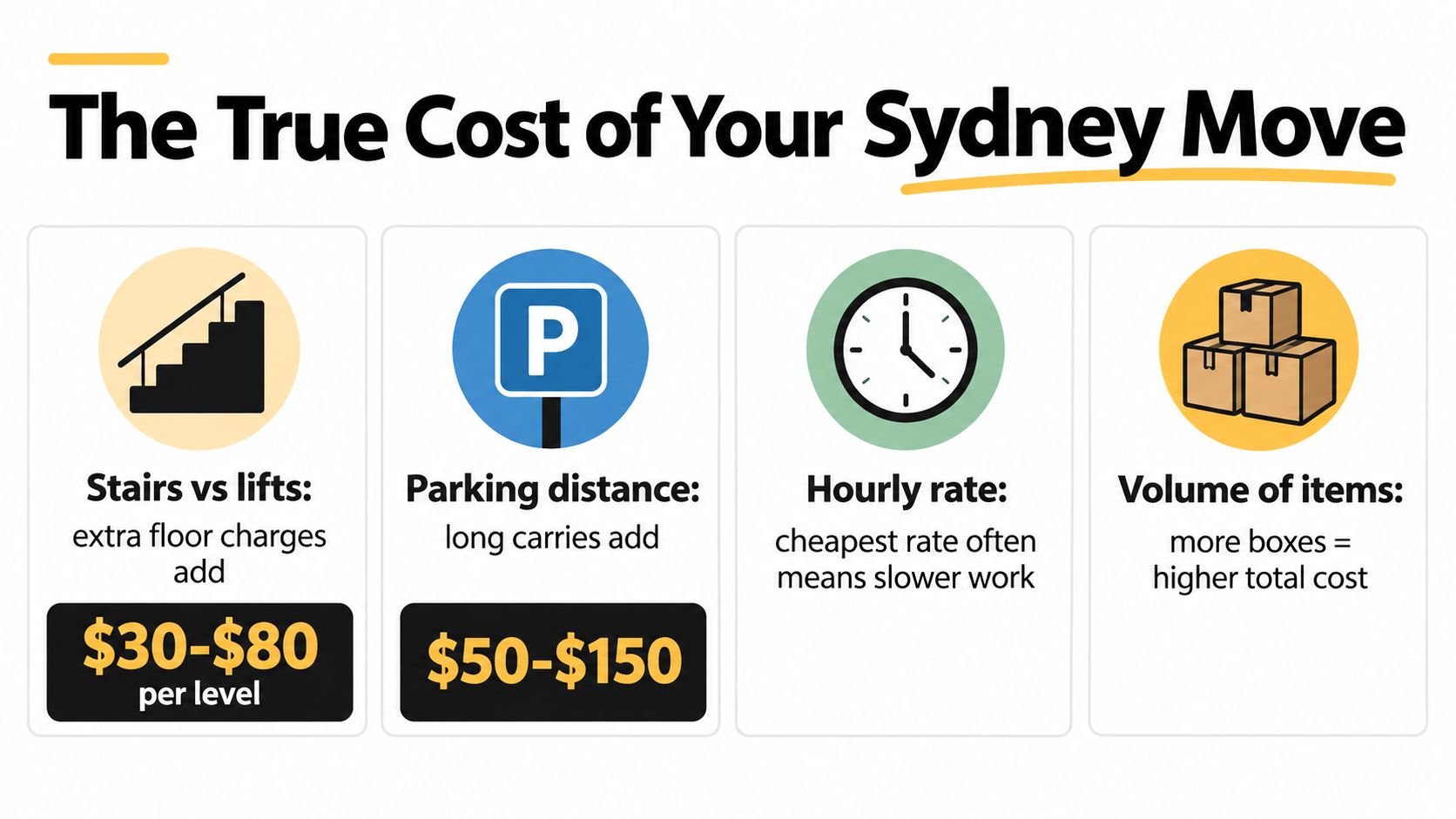
Australian moving guidance gives broad interstate ranges of roughly $300 to $10,000 for moves within Australia. It also gives examples of approximately $6,253 to Sydney, $6,572 to Brisbane and $9,112 to Perth, though the actual quote depends on the inventory and service assumptions. These figures appear in Budget Direct's moving house checklist, and they should be treated as planning context rather than a quote for your property.
Ask for a written quote that states what is included. Confirm whether packing, materials, disassembly, reassembly, stairs, lift access, storage, travel, waiting and insurance are included or charged separately. Compare the assumptions behind each quote, not just the headline hourly rate.
Sydney's interstate connection is substantial. In the five years before the 2021 Census, 10.9% of people who changed address moved interstate, and NSW recorded a net interstate loss of 102,227 people, while Queensland recorded a net interstate gain of 107,500. The ABS population movement analysis provides useful context for planning Sydney to Queensland routes and other interstate removals. ABS interstate migration estimates combine Census, Medicare and Defence records, so they describe broader movement patterns rather than a real-time count of every relocation.
Your Move Checklist and Consumer Rights in NSW
A calm move usually comes from decisions made before the first carton is taped. Create an inventory, photograph valuable or damaged items, record furniture condition and identify anything that needs specialist handling. Keep the inventory with the quote and use matching labels on cartons, furniture and hardware bags.
The final preparation list
- Confirm the service: Check the date, arrival window, origin, destination, access conditions and exact inclusions.
- Verify protection: Ask what transit and storage cover applies, what valuation method is used, what excess applies and which exclusions affect your goods.
- Prepare the property: Reserve lifts where required, arrange parking, clear walkways and measure tight access points.
- Finish the cartons: Close boxes, fill voids, mark heavy cartons and separate items that should travel personally.
- Update addresses: Service NSW allows eligible residents to update records such as a driver licence, vehicle registration, e-Toll account, electoral roll, concession and support cards, Opal card and pet registration through a MyServiceNSW Account. Follow the NSW moving-out process and add the relevant services before submitting the change.
- Keep essentials aside: Carry identity documents, medication, chargers, keys, valuables and important records rather than burying them in the truck.
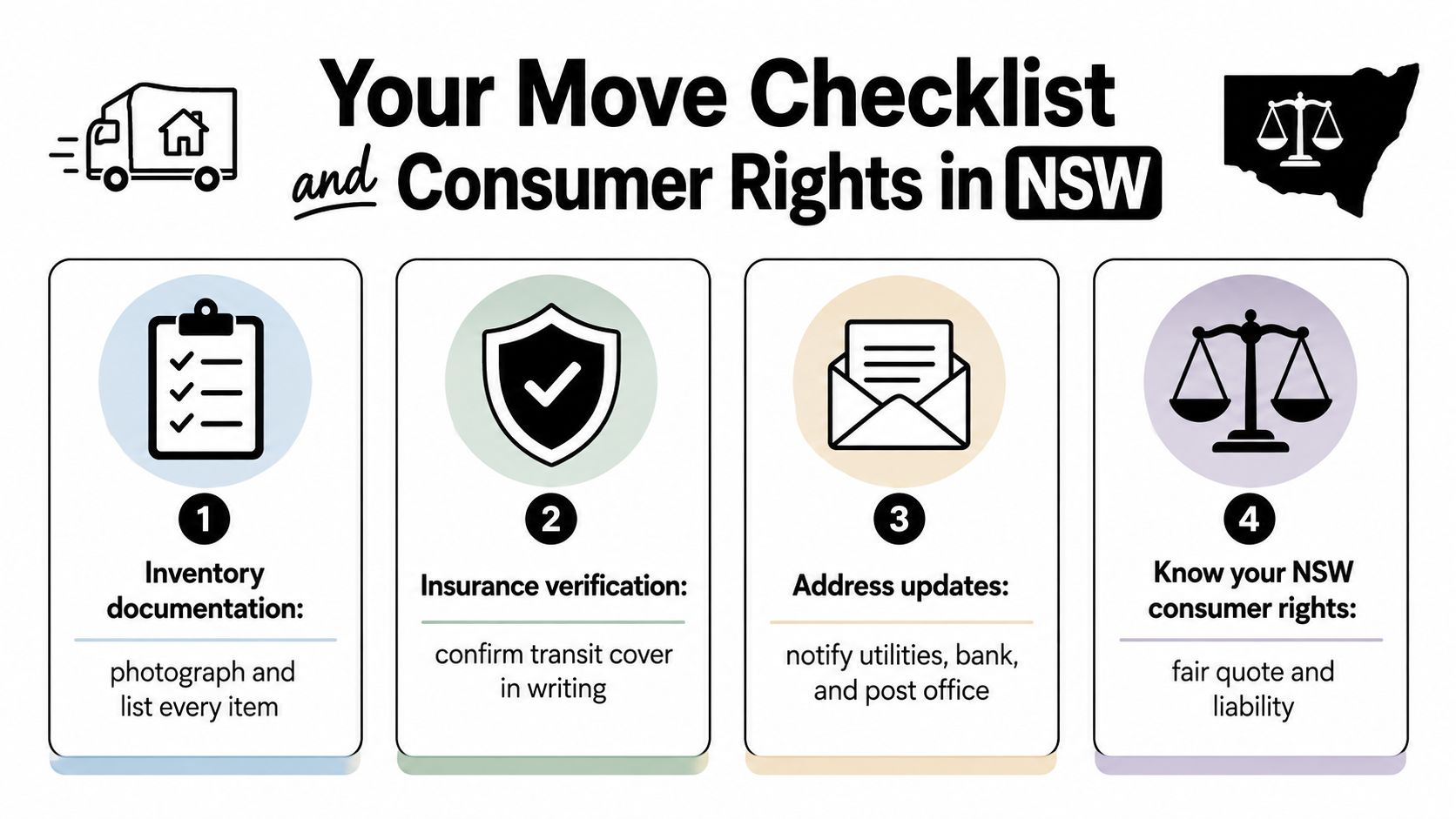
NSW Fair Trading confirms that Australian Consumer Law guarantees apply to removalist services. A removalist must provide the service with due care and skill, make it fit for any stated purpose and complete it within a reasonable time when no timeframe has been agreed. You're also entitled to proof of purchase, such as an invoice or receipt, as explained in the NSW Fair Trading removalist guidance.
If a service has a minor problem, the business generally must have an opportunity to fix it. If the problem is major or can't be fixed, you may be able to terminate the contract and seek a full refund or compensation for the difference in value. Keep the quote, photographs, messages, receipts and inventory so you can explain the issue clearly.
For broader planning prompts, these essential move-out planning tips can help you organise the administrative work alongside packing. A properly immobilised item, a clearly documented inventory and a written understanding of responsibility give you far more control than a last-minute layer of plastic.
Home Removals Sydney provides packing and wrapping assistance for furniture, household goods, offices and warehouse relocations, with materials such as boxes, bubble wrap and tape available. Visit Home Removals Sydney to request a personalised quote, explain your access and inventory requirements, and arrange help that matches your local Sydney or interstate move.
