

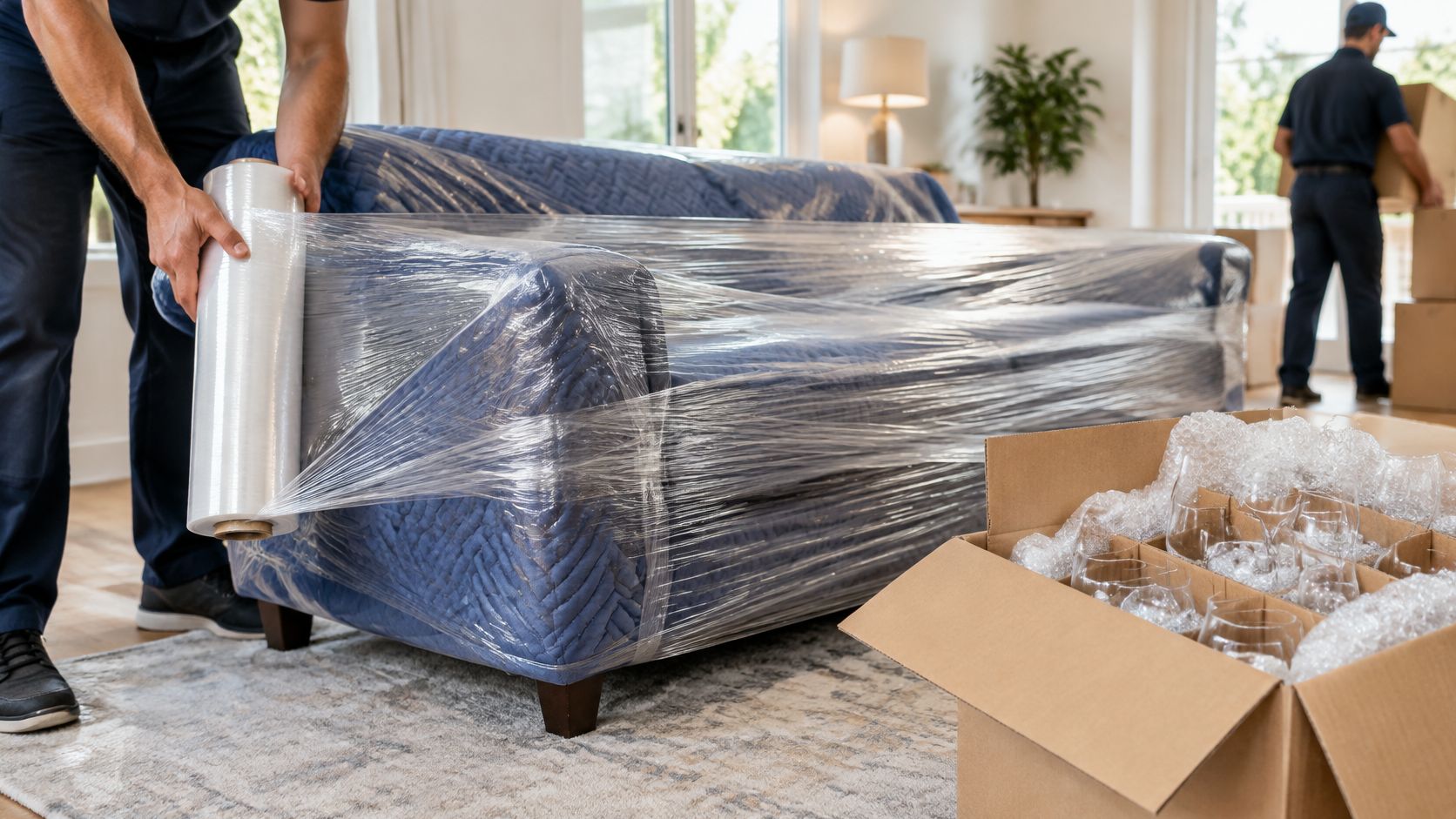
You've packed the cartons, the sofa is still by the door, and there's a roll of plastic film waiting beside it. Wrapping everything might seem like the safest option, especially when you're facing apartment corridors, a lift booking or a wet Sydney moving day. But more plastic doesn't necessarily mean better protection.
Shrink wrap for moving house is mainly a containment tool. Used selectively, it keeps protective layers in place and makes loose components easier to manage. Used indiscriminately, it can hide unstable loads, press against delicate finishes and leave you with a pile of soft plastic that can't go into ordinary recycling.
What Shrink Wrap Protects and What It Cannot
Shrink wrap binds loose parts, keeps dust off and holds grouped items together, but it doesn't cushion against impact. A wrapped table corner can still dent against a door frame, and a tightly wrapped glass panel can still break.
The roll commonly called shrink wrap in moving-house advice is usually stretch film, which grips as you pull it around an item. It isn't an invitation to apply heat to furniture. For a typical Sydney house move, choose protection according to the surface, the handling route and whether the item is going straight into a home or into storage.
Wrap, pad or leave bare by item type
| Item | Shrink wrap role | Better protection | Main risk |
|---|---|---|---|
| Mattress | Full cover against dust and external moisture once dry | Mattress bag where available | Trapped damp causing mould |
| Upholstered sofa or chair | Dust barrier after drying | Moving blanket beneath the film | Sealing in damp fabric |
| Timber dining table | Outer layer only, never touching the finish | Moving blanket and corner pads | Marking or dulling polished surfaces |
| Flat-pack furniture or boxed appliance | Keeps loose parts together | Original packaging or carton | Shifting parts inside the film |
| Glassware or artwork | Dust layer over padding only | Cardboard and bubble wrap | Film offers no impact cushioning |
| Palletised boxed goods | Load containment, two complete wraps at top and bottom | Corner boards and straps | Unstable stack that topples |
| Cabinet doors | Holds doors closed and steady | Corner protectors first | Film pressing on edges and finishes |
The pallet wrapping pattern follows Bunnings' packaging guidance, which specifies two complete wraps at both the top and bottom, with film covering all four pallet corners. That's a containment method, not a guarantee that a poorly arranged stack will travel safely.
For fragile contents, choose the cushioning before reaching for film. Our guide to bubble wrap for moving helps with that choice; for posters and other flat printed pieces, the Famous Movie Posters packing guide is a useful companion resource.
Match the protection to the move
Say you're leaving a two-bedroom flat in Sydney's inner west. The dry mattress gets a fitted bag or film cover, while the sofa gets blankets secured with film so its arms aren't exposed through the stairwell.
The glassware belongs in padded cartons, not in a plastic-bound bundle. A dining tabletop needs protected corners and a padded surface even if the trip is only across the suburb.
Practical rule: Film groups items and keeps them clean. Padding protects them against knocks.
How to Wrap Furniture and Pallets Step by Step
Prepare the item before opening the roll. Keep moving blankets, cardboard corner protectors, foam, a film dispenser and a marker within reach so you aren't trying to hold loose padding while searching for materials.
Use this preparation sequence before tightening the film.
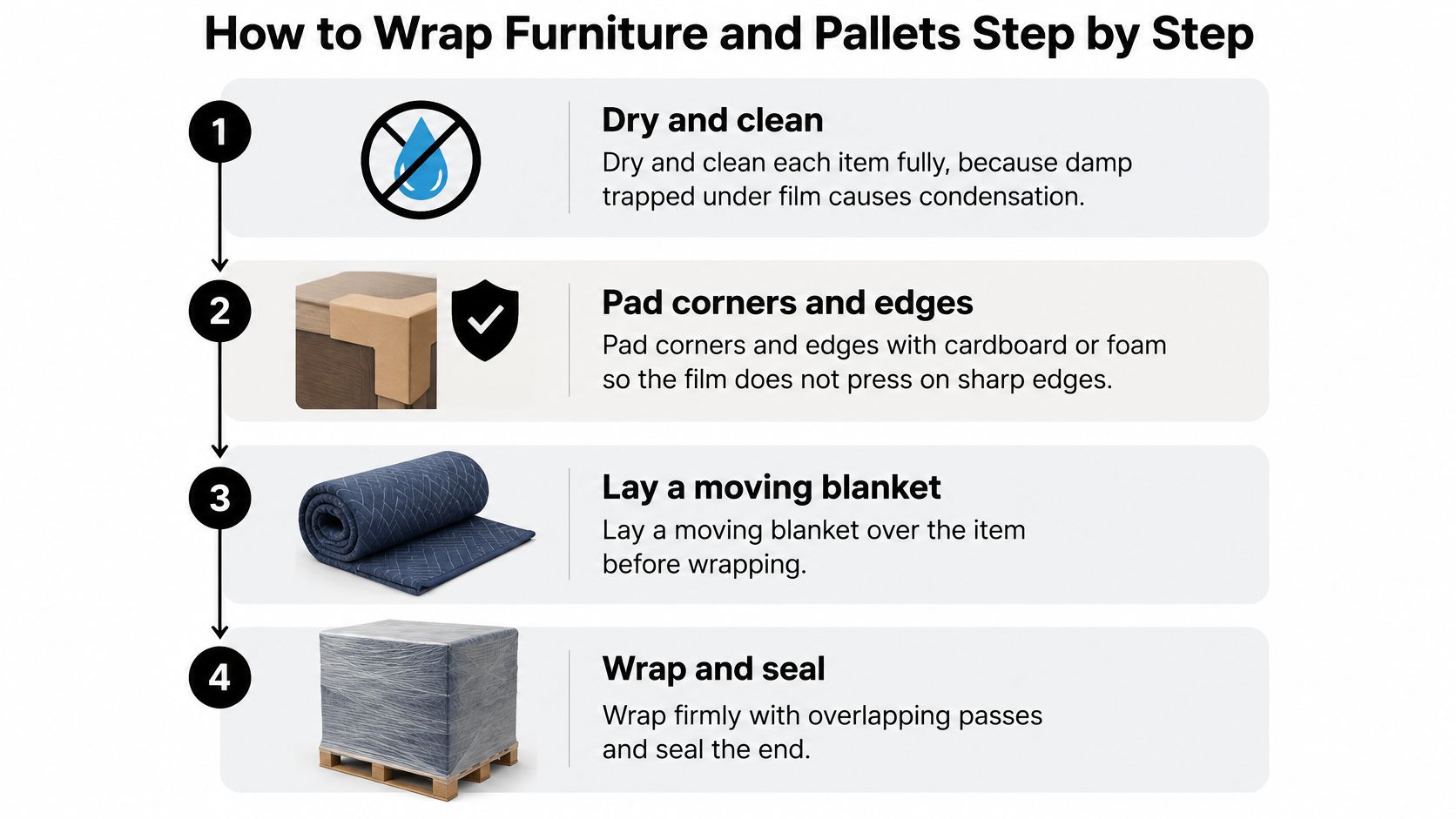
Prepare the surfaces and shape
Clean and dry the item fully. Vacuum upholstery and remove grit from hard surfaces before covering them. The common slip is wrapping straight after wiping or cleaning, while moisture remains in seams, fabric or joints.
Pad corners and edges. Fit cardboard or foam around exposed corners so tensioned film doesn't bear directly on a sharp edge. Don't assume extra film will stop a table corner from puncturing the wrapping.
Lay a moving blanket over sensitive surfaces. Cover the contact points, including arms, legs and lower edges, rather than draping a blanket across the top. Keep tape on protective materials, never directly on furniture finishes.
Square and stabilise the load. Align cartons, remove unsupported overhangs and secure detachable components in their own padded package. Bundling furniture into a larger, awkward shape creates a handling problem rather than solving one.
Apply film without hiding problems
Start at the base and overlap each pass. Keep the film tensioned and overlap by about half its width as a practical starting technique. Pulling harder isn't always better, particularly around soft upholstery, weak cartons or projecting trim.
Contain pallet loads properly. Use LDPE stretch film and the top-and-bottom wrapping pattern specified for palletised goods, carrying the film around every corner. Don't use the wrapping to conceal a leaning stack, and add appropriate straps or a stillage where the load requires them.
Keep handling points accessible. Leave handles, wheels, lifting straps, labels and necessary appliance access points unobstructed. A covered handle often becomes a last-minute temptation to grip the film instead.
Inspect before lifting. Check for internal movement, bulging, excessive height and awkward grip positions. If the contents shift or the unit requires twisting to hold, unwrap and reconfigure it rather than adding another layer.
Label and finish neatly. Mark fragile or heavy units on an outer label, secure the film end against itself and keep identifying information visible. During unpacking, retain clean, intact sheets rather than cutting every covering into scraps.
If you're comparing film types and dispensers, Material Handling USA's stretch wrap selection guide provides a useful reference. Select a manageable roll for the task rather than assuming a larger roll will make domestic furniture easier to wrap.
The video below provides a visual reference alongside the preparation checks.
A secure wrap looks snug, not crushed. There should be no loose folds to snag, no movement under a gentle stability check and clear access to every handling point; never perform that check by pushing a potentially toppling load.
When Wrapping Traps Moisture and Marks Finishes
Should you shrink-wrap everything? No. Film suits a short local move with clean, dry goods much better than an extended stay in a Sydney storage unit.
Duration matters because a covering that's removed after delivery may otherwise stay against the same surface through changing temperatures and humidity. Interstate transport in summer also calls for more thought than a direct trip between nearby homes.
Choose protection for the time enclosed
Damp upholstery or timber can remain damp beneath tightly sealed plastic. Freshly polished or painted finishes may mark where film touches them, while loose protection can rub against surfaces during transport.
The distinction between a covered item and a storage-ready item matters here.
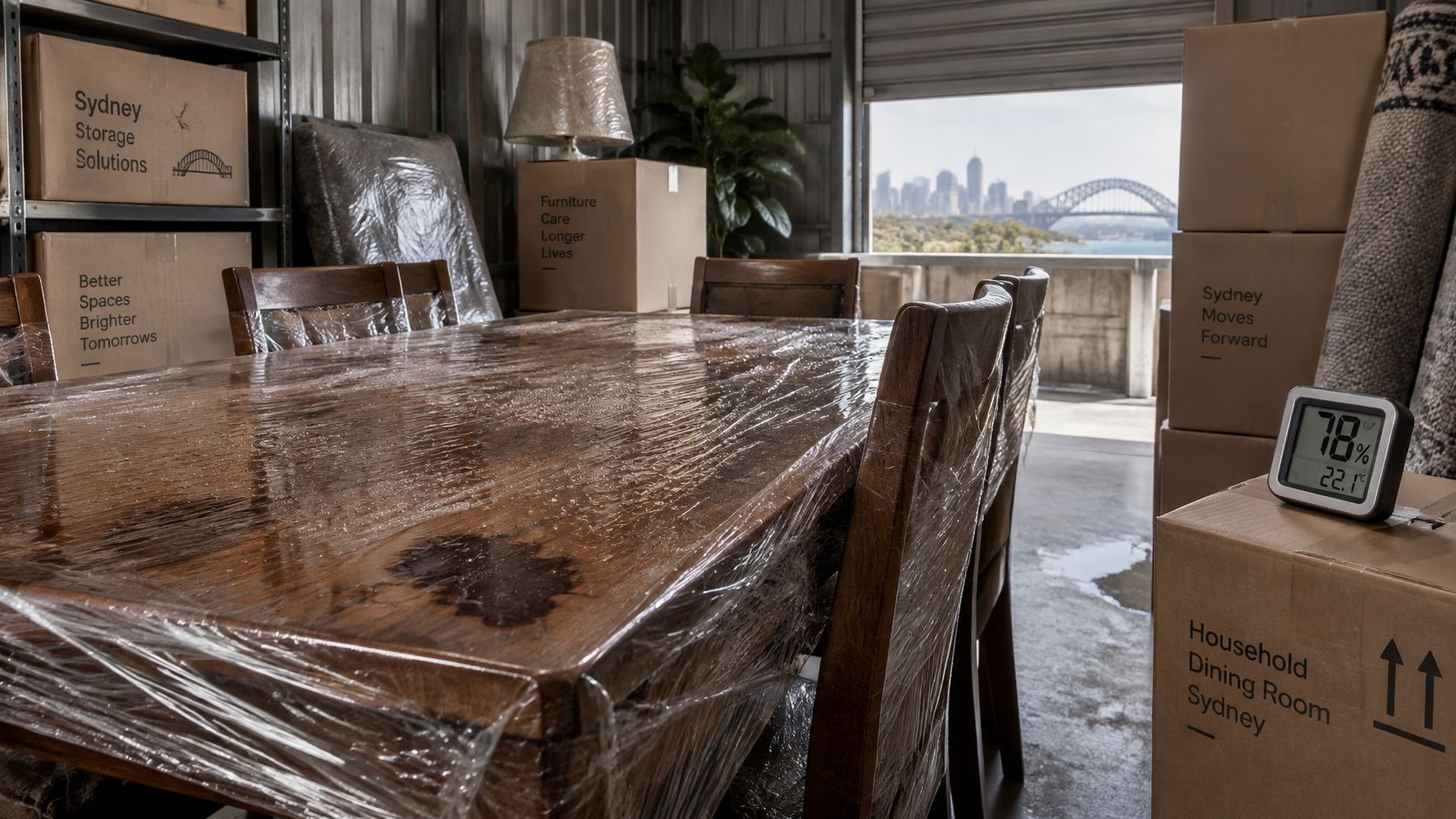
For storage, allow full drying, choose clean breathable contact layers and leave ventilation where practical. Ventilation gaps don't make damp furniture safe to enclose, and a blanket beneath an airtight film shell doesn't make the whole package breathable.
Shrink wrap against reusable protection
| Option | Best use | Moisture exposure | Disposal burden |
|---|---|---|---|
| Shrink wrap | Short local moves, grouping and dust control | Traps damp if applied to wet items | Single-use soft plastic |
| Moving blankets | Padding beneath film and direct contact with suitable finishes | Breathable when dry and not sealed inside plastic | Reusable across moves |
| Corrugated protectors | Corners and edges of furniture and cabinet doors | Absorb moisture and soften when wet | Reusable or recycled as clean cardboard |
| Reusable pallet covers | Long storage and palletised goods | Breathable when the cover design allows ventilation | Reusable across moves |
Straps can secure blankets without enclosing the whole item, but they need protected contact points and sensible tension. Reusable pallet covers also need checking: an impermeable cover without ventilation can recreate the same moisture problem as film.
Choose the covering for the storage conditions, not just for how tidy the furniture looks when wrapped.
For delicate timber, artwork or freshly finished furniture, don't experiment with direct plastic contact. Use suitable protective layers and a storage arrangement that keeps the item dry without sealing moisture inside.
Lifting Safety for Wrapped Household Goods
Wrapping holds items together; it doesn't make a heavy or awkward bundle safe to lift. Plan the carry before closing the film around anything, particularly when stairs, tight turns or an apartment lift restrict movement.
WorkSafe Victoria's hazardous manual-handling guidance identifies unstable, unbalanced and difficult-to-hold loads, high force, awkward postures and repetitive movements as hazards. Its controls include reducing load size, using mechanical aids and keeping frequently handled heavy or bulky items between approximately knee and shoulder height.
Plan each wrapped unit as a lift
Keep modules manageable. Combine lightweight cartons only when the finished unit has a secure grip and can stay close to the body. Separate furniture components that would otherwise make the bundle wider or unbalanced.
Arrange the handling height. Avoid repeated lifting from the floor or reaching above shoulder level where you can change the setup. Bend through the hips and knees, keep the load close and move your feet instead of twisting, but don't rely on lifting technique to compensate for an excessive load.
Use suitable assistance. A trolley, rated moving straps or a coordinated team may be needed for sofas, mattresses and appliances. Our guide to moving heavy furniture helps you plan the route and equipment.
Respect equipment capacity. Never join items whose combined weight exceeds the trolley, lifting aid or team's safe capability. Film doesn't reduce weight or correct a high centre of gravity.
Stop when the grip fails. If the team must pause halfway through a carry to readjust, set the unit down safely and reassess it. Split the bundle or change the equipment rather than attempting the same carry again.
Keep containment separate from vehicle restraint
Before loading, check that wrapping hasn't concealed handles or equipment access. Film should never become an improvised lifting handle.
For larger moves, the NSW Heavy Vehicle Drivers Handbook sets a maximum vehicle width, including the load, of 2.5 metres, with side projection no greater than 150 millimetres. Wrapped goods still require compliant restraint, accurate dimensions and any applicable permits.
That distinction matters for interstate removals and warehouse relocations. A neatly wrapped pallet is not automatically a secured vehicle load.
Disposing of Used Shrink Wrap in Sydney
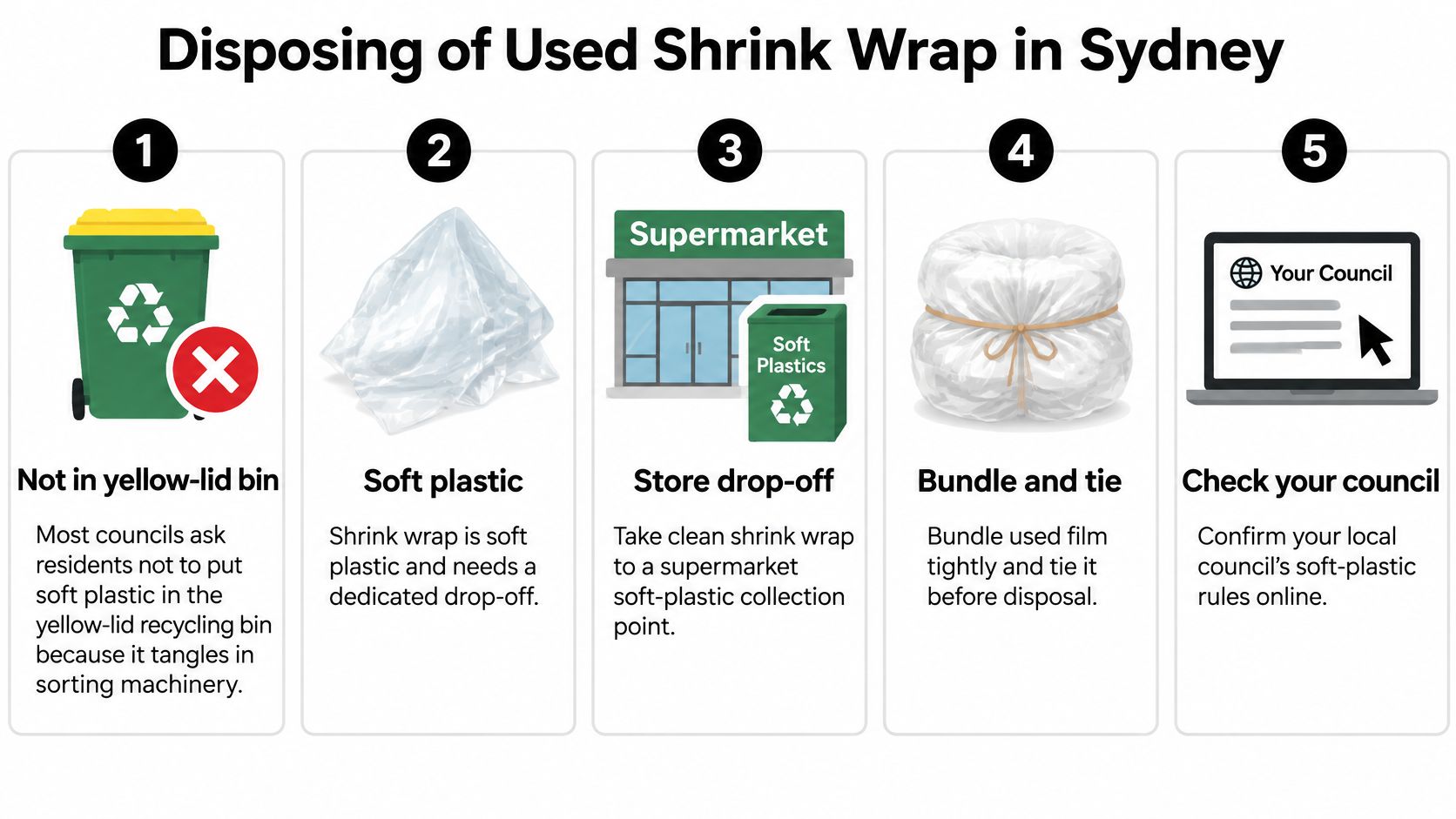
Putting used film in the yellow-lid bin is the wrong finish to an otherwise organised move. Shrink wrap is soft plastic, and Eurobodalla Shire Council's NSW disposal guidance says plastic film and cling wrap must stay out of yellow-lid recycling because they can tangle in sorting machinery and contaminate recyclable material.
The national recovery picture explains why separating it matters. Flexible plastics represented approximately 8% of packaging placed on the Australian market in 2022–23, yet only about 6% was recovered, according to national packaging figures reproduced in Clean Up Australia's submission to the ACCC.
Sort film as you unpack
- Reuse sound sheets first. Keep clean, intact pieces for suitable storage covers or another move. Don't retain dirty film that will transfer grit onto furniture.
- Separate the materials. Remove tape, labels, foam and cardboard wherever practical. Keeping film separate during unpacking is easier than recovering it from a mixed rubbish bag.
- Keep it clean and dry. Consolidate it in a contained bag or bundle so it doesn't blow around the driveway or loading area.
- Check the destination council. Confirm its current instructions and whether any nominated collection point accepts your film type, condition and quantity. Don't assume a supermarket has an operating soft-plastic collection.
- Use the accepted disposal route. Where no suitable recovery option exists, follow council directions for general waste. Never leave loose film on the kerb.
Use this checklist as a sorting reminder, but confirm collection availability before travelling.
Agree on commercial quantities before moving day
For office relocations or warehouse quantities, establish who will collect the wrapping, arrange an accepting facility and pay any disposal charges. A household collection point may not accept commercial volumes.
For home removals Sydney customers, nominate a place to collect film as each room is unpacked. For furniture removals Sydney jobs involving only a few pieces, keeping the wrapping separate is still worthwhile.
Disposal check: Recyclable material isn't necessarily material accepted in your yellow-lid bin.
Acceptance can change, so the destination council's current instructions should determine where the film goes, not an old recycling symbol or a collection point you remember using previously.
Check Insurance Before You Book Your Removal
Good wrapping is a damage-prevention measure, not an insurance policy. NSW Government consumer guidance on choosing a removalist says removalists aren't required by law to insure customers' property, and many companies only carry vehicle cover if an accident occurs.
Check the written contract before accepting a booking. It should identify the inventory, collection and delivery addresses, dates, times and payment terms, so there's a clear record of what the move includes.
Confirm the cover against your actual move
- Packing and transport: Establish whether the available transit cover applies while goods are being packed as well as transported.
- Storage: Confirm whether stored goods are included or require a separate premium.
- Scope and conditions: Read the applicable exclusions, excesses and claim requirements rather than relying on the word insured alone.
Our moving services are fully insured to protect belongings during transit, and we offer insurance options for customers' belongings. We also provide boxes, bubble wrap and tape, so the packing materials and cover can be considered together; review our removalist insurance information and obtain written confirmation of the options applying to your move.
Shrink wrap may reduce scuffing, dust and minor surface marks, but it doesn't change liability. Prepare an itemised inventory, identify fragile, large or heavy pieces, and request a wrapping plan that matches their handling and storage needs.
Home Removals Sydney offers packing and moving help for homes, furniture, offices and interstate relocations, with detailed quotes and insurance options. If you're comparing removalists Sydney residents can book for furniture removals Sydney-wide or interstate removals, visit Home Removals Sydney to request a quote, share your itemised list and discuss a wrap plan for your move.
