

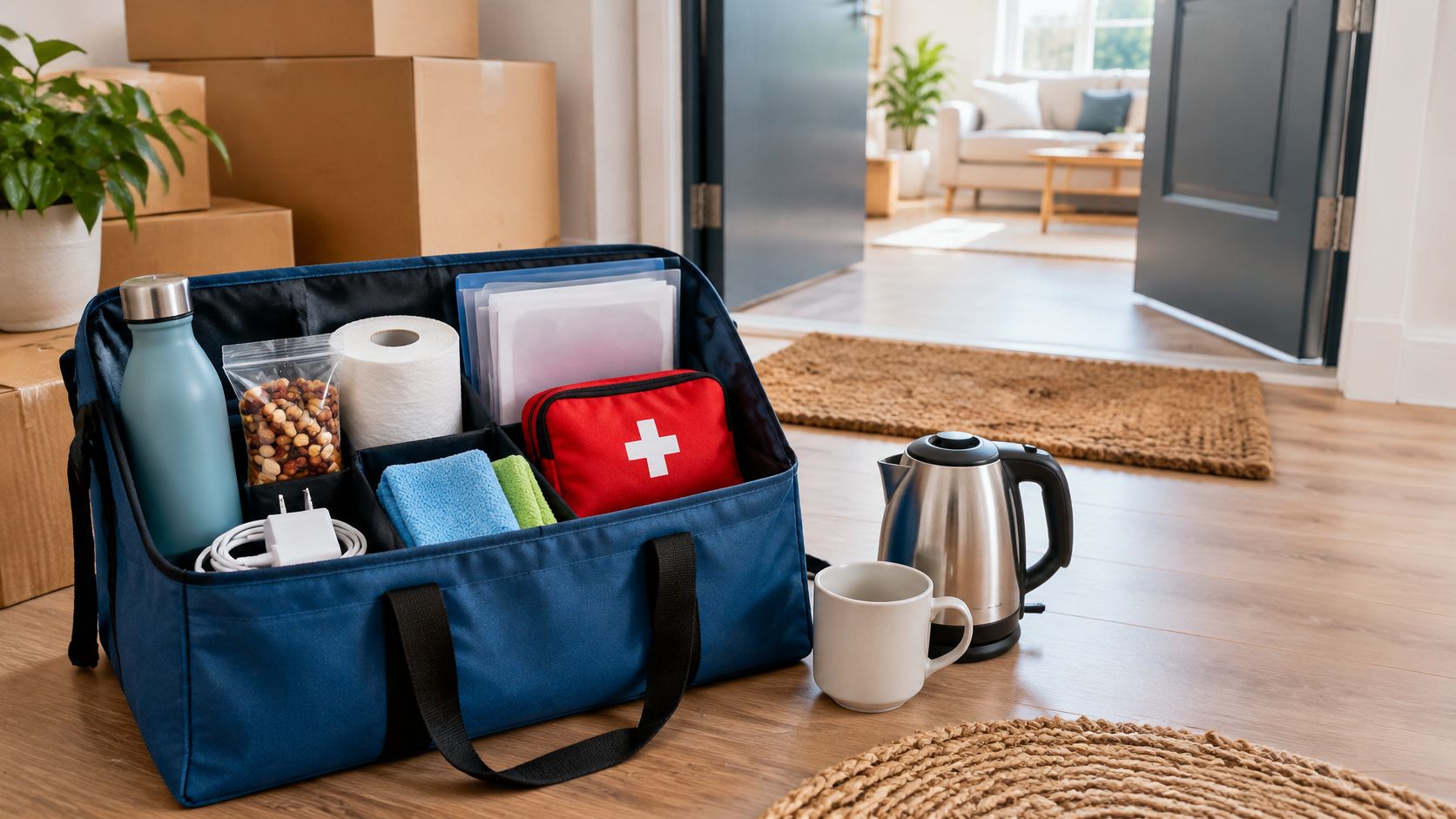
You're standing in a new Sydney apartment at dusk. The truck's unloaded, boxes fill every room, and the kettle, toilet paper and lease papers are buried somewhere you can't reach without opening half of them.
That scramble is exactly what a moving day survival kit prevents. It's not one magic box. It's eight groups of essentials, organised by when you'll need them, from packing day through loading to your first night at the new address.
Moving isn't rare, either. The Australian Bureau of Statistics housing mobility release reported that in 2019-20, more than 40% of Australian households had moved within the previous five years, and 1.14 million households, 12% of all Australian households, had moved at least once in the preceding 12 months. Renters move far more often than owners, so a kit you can reuse pays off quickly.
Pack by timing, not by category
Pack what seals and protects first, what you'll carry yourself last, and keep the two separate. You'll get through home removals Sydney wide, office moves and interstate removals with far less hunting, tearing open cartons and late night shop runs.
1. Heavy-Duty Moving Boxes
Start here, because weak boxes fail at the worst moment, halfway up stairs or stacked three high in the truck. I recommend double-walled cartons in small, medium and large sizes. They protect contents, stack squarely, and unload faster because nobody's reshaping crushed corners.
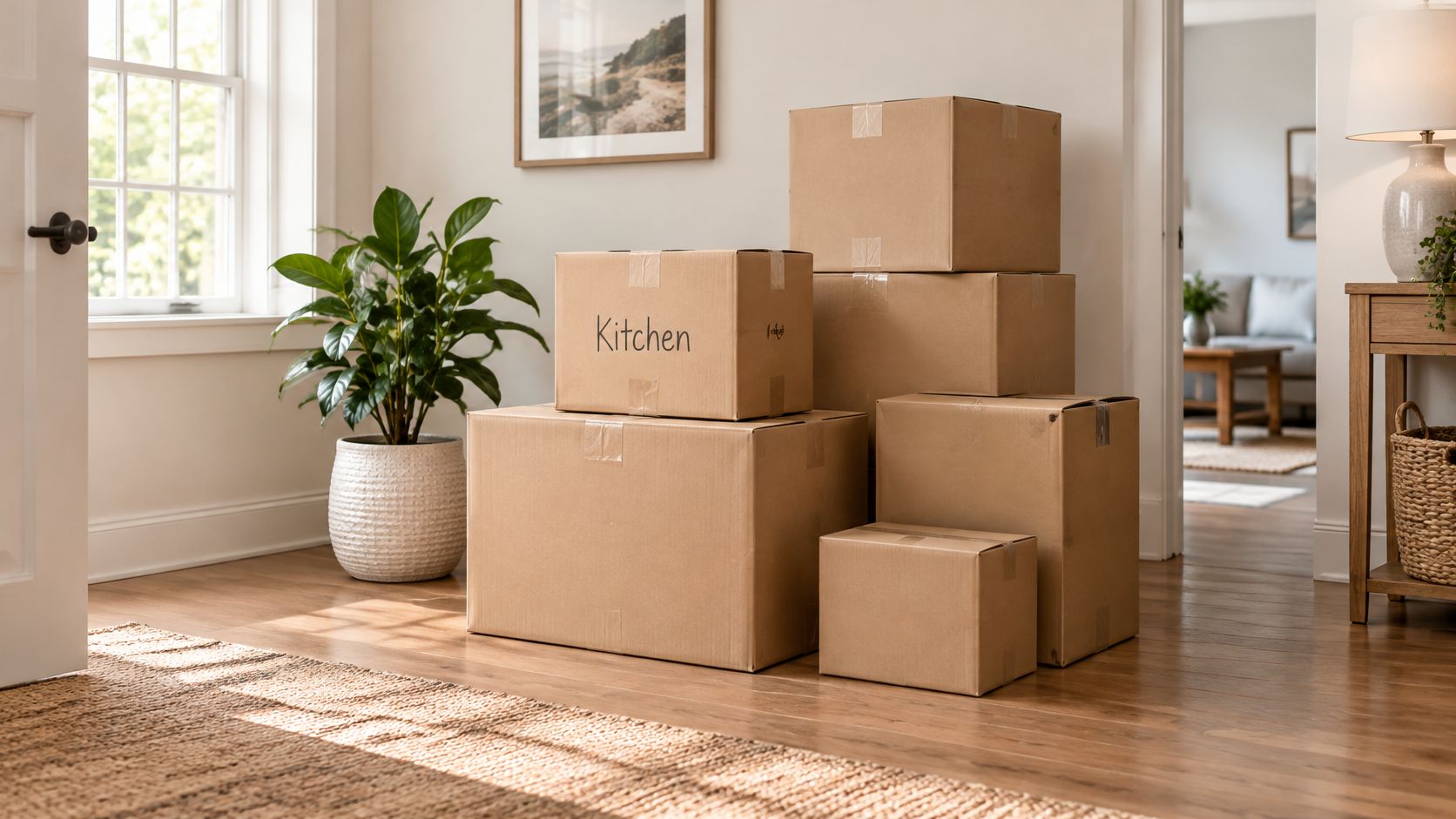
Keep the weight honest. Books and tinned goods go in small boxes, linen and lamp shades in large ones. A Parramatta family packing this way puts kitchenware in medium cartons marked Kitchen Fragile and heavy pantry items in small boxes, so Removalists Sydney crews aren't wrestling overloaded cartons through a lift.
These cartons ready for loading show why uniform sizes help.
What works in practice
- Small boxes for weight: Books, tools and pantry tins stay liftable and don't burst bases.
- Large boxes for bulk: Bedding, cushions and toys fill space without adding strain.
- Fill every gap: Crumpled paper stops contents shifting and denting each other in transit.
A Sydney office relocation using uniform archive boxes restacks files on the new floor in minutes, with no odd sizes toppling. Sort supply early with our packing boxes and materials so you're not scavenging supermarket cartons the night before.
Plan disposal as you pack. Australia's national waste stocktake report notes cardboard represents approximately 46-57% by weight of Australian household recycling bins. Flatten and bundle cartons as you empty them, rather than letting them block hallways.
2. Packing Tape and Tape Dispenser
Cheap tape is a false economy. It splits, loses grip in a warm truck, and lets lids pop under stacked weight. Buy wide packing tape with reliable adhesive and use a dispenser with a sharp blade. When you're sealing dozens of cartons, scissors and teeth slow you down and chew the tape end.
Seal bases properly. One strip down the centre is not enough for anything heavy. Run a cross pattern, one strip along the seam and one across it, then press it down firmly.
Practical rule: If you wouldn't trust the base held over concrete, add another strip now, not after it fails.
A Bondi renter moving to Marrickville reinforces every heavy box base with that extra strip, and nothing splits on the footpath. A Chatswood business goes further, using colour-coded tape by department, so finance boxes never end up in the sales office during office relocations.
Tape mistakes that cost you
- Tape on furniture: Adhesive lifts paint and damages timber finishes. Use blankets and stretch wrap instead.
- One dispenser for four people: Keep a dispenser at each packing station, or packing stalls.
- Sealing too early: Leave one or two cartons open for last minute items on moving morning.
Keep a spare roll in your car. You'll need it for the inevitable box you reopen to add a charger, then need to reseal properly.
3. Bubble Wrap and Packing Paper
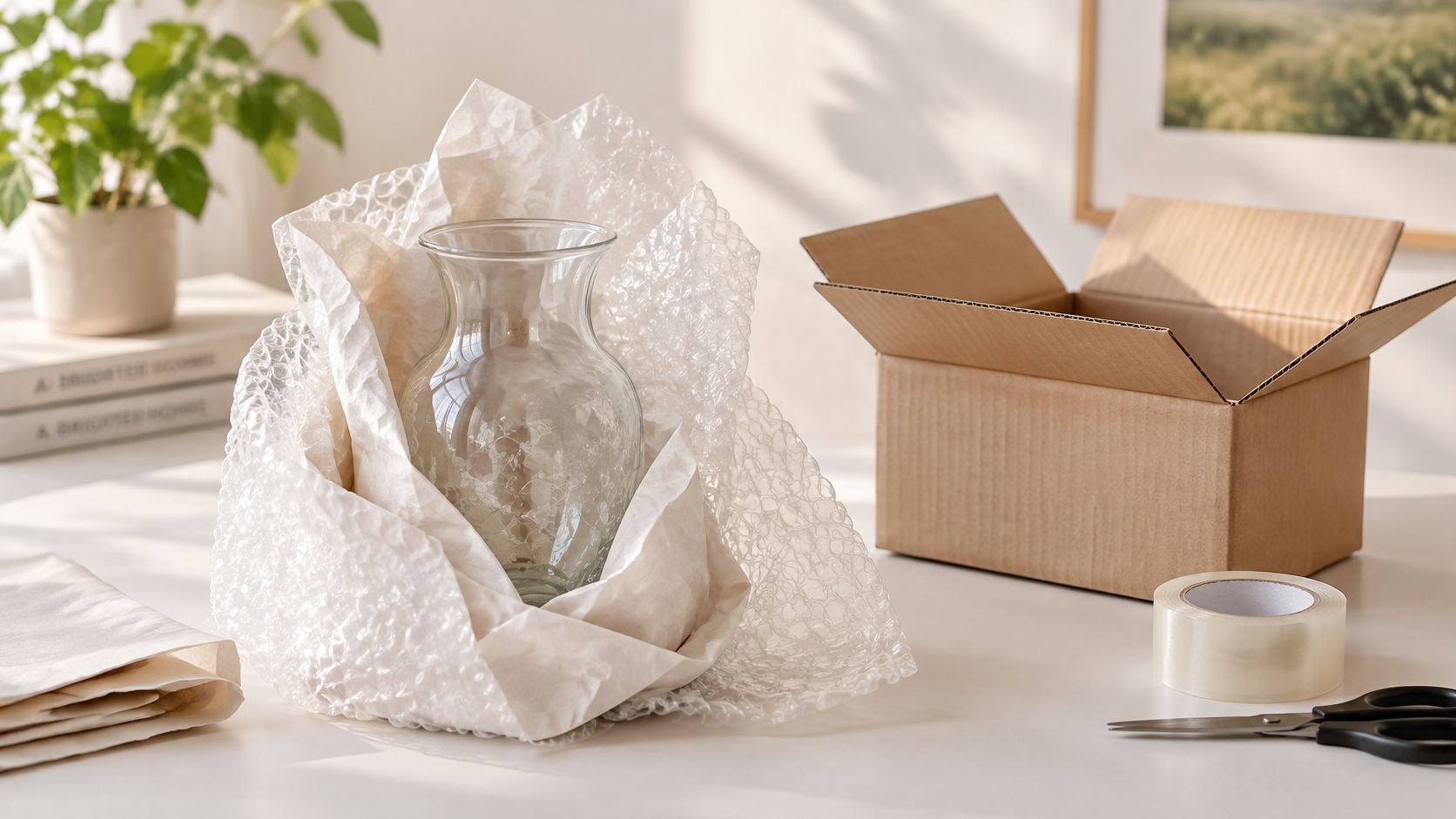
Wrap a wine glass badly and you'll hear about it at the other end. Packing paper does the close contact work, cushioning and separating surfaces. Bubble wrap adds the outer shock absorption for knocks and vibration in the truck.
A Northern Beaches family wraps each glass individually in paper, nests them upright, then lines the box with bubble wrap. Nothing clinks. A Surry Hills art collector uses acid-free tissue against prints, with bubble wrap outside only, because plastic directly on artwork can trap moisture.
This setup, with wrap kept beside the open carton, is the quickest way to work.
Pack so nothing moves
- One item, one wrap: Never bundle several breakables together in a single sheet.
- Shake test: Gently shake the sealed box. If you hear movement, add paper until it's silent.
- Mark it clearly: Write Fragile and the room on two sides so handlers see it when stacked.
Paper is also the smarter default for waste. The national product stewardship reporting reports approximately 68% of paper and cardboard packaging was recovered in 2021-22, compared with only 20% of plastic packaging. Use bubble wrap where it earns its place, on fragile items, and check our guide to bubble wrap for moving before buying rolls you'll throw away.
4. Furniture Blankets and Stretch Wrap
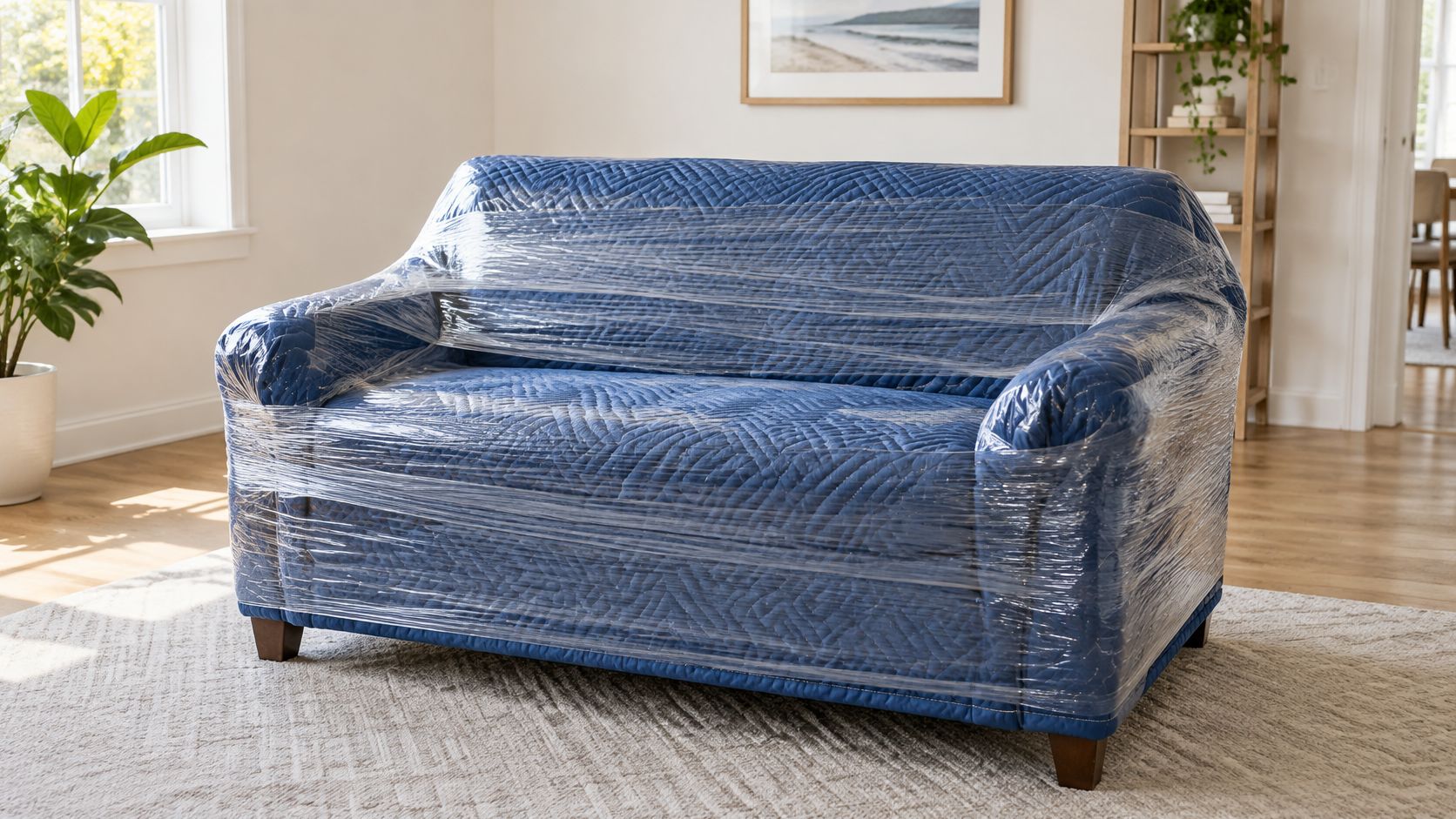
For furniture removals Sydney moves, scratches rarely happen in the truck. They happen on door frames, lift edges and tight hallway corners. Padded blankets absorb that impact. Stretch wrap then holds the blanket in place, keeps doors and drawers shut, and keeps dust and light moisture off upholstery.
Wrap in that order, blanket first, film second. Film straight onto polished timber can mark finishes in heat, and tape straight onto fabric leaves residue.
A wrapped sofa like this one can slide through a doorway without snagging.
Corners and fixings
A Fairfield homeowner blankets a timber dining table, adds cardboard corner protectors, and gets it to Penrith without edge marks. A Sydney warehouse relocation stretch wraps pallets of racking components so they stay clean, stable and counted as one unit.
- Protect corners first: Cardboard under blanket corners stops heavy pieces tearing the padding.
- Bag the fixings: Screws and drawer hardware go in labelled bags taped inside a drawer or to the frame.
- Tell us about access: Tight driveways and low clearances change which truck we send.
That last point matters more than people expect. Legal Aid NSW heavy vehicle guidance states the standard maximum width is generally 2.5 metres and the general maximum height is generally 4.3 metres for ordinary heavy vehicles in NSW. Mention height barriers and underground parking when you book.
Watch the wrapping sequence below before you tackle a lounge suite yourself.
If you'd rather not wrap large pieces yourself, our wrap and move service covers blanket wrapping and packing as part of the move.
5. Labelling Kit and Inventory List
Unlabelled boxes don't just slow unpacking. They put heavy cartons in the wrong room, fragile items under books, and everyone asking you where things go while you're trying to direct furniture.
Build a small kit and keep it at the packing table. You need thick permanent markers, coloured stickers, tape for labels on plastic tubs, and a simple inventory list, paper or spreadsheet.
A labelled carton like this tells the crew the room at a glance.
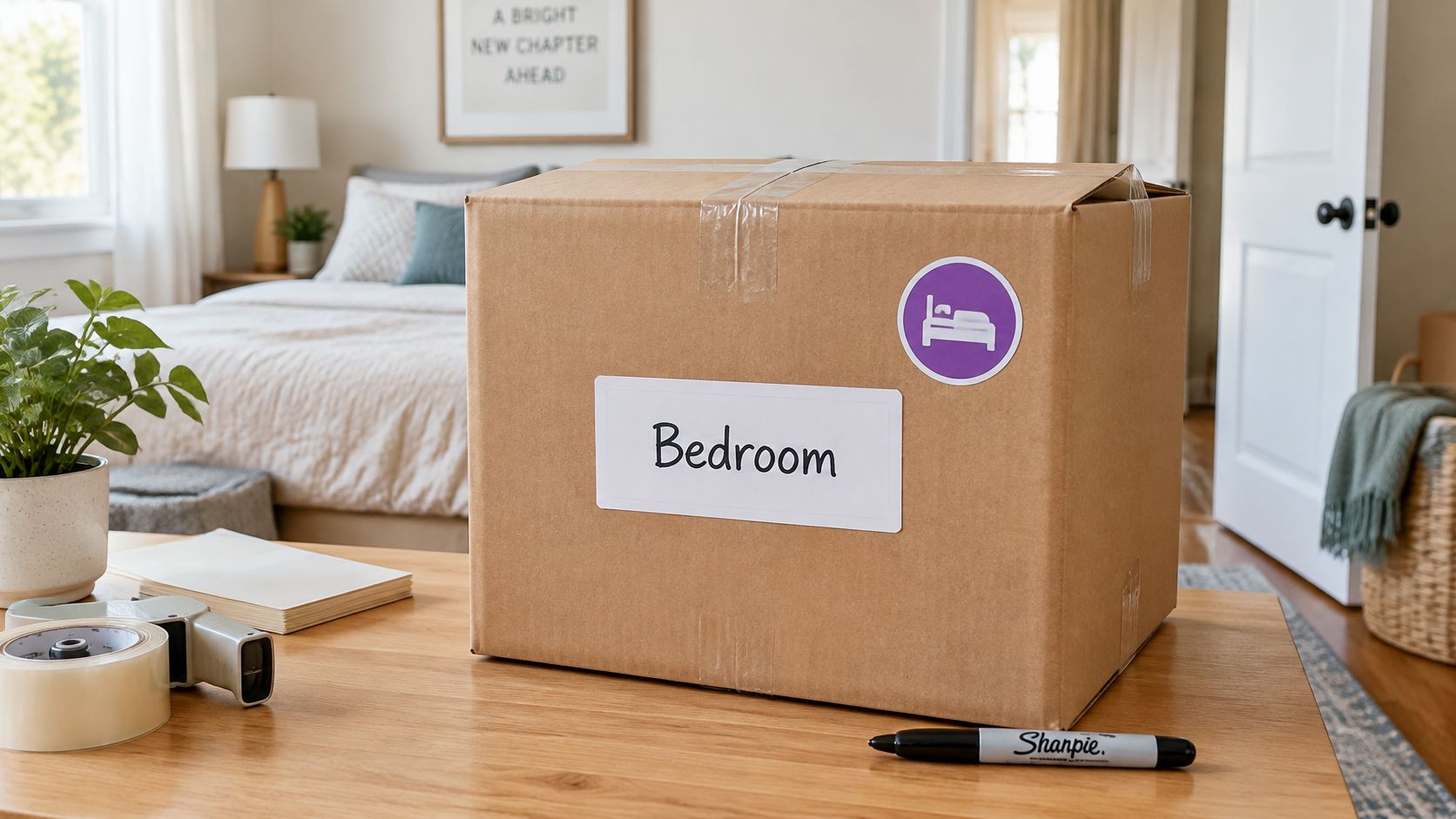
A system anyone can follow
- Colour by room: A Kellyville family moving to Wollongong gives each bedroom a colour, so beds and boxes land together.
- Number and record: A Sydney accounting firm numbers every box and logs contents in a spreadsheet, then restores files to the correct desks without opening everything.
- Write on two sides: Labels on the top disappear once boxes are stacked.
Photograph valuable items before packing and keep those photos with your inventory. Put a simple room map inside the front door at the new place so labels match actual rooms, which is vital when bedroom two becomes the study.
Keep the paperwork side too. NSW consumer guidance on choosing a removalist advises customers to retain written details of pick-up and delivery addresses, moving dates and times, agreed services and price, and notes the service must be provided with due care and skill. Your inventory and written quote belong in the same folder.
6. Basic Toolkit for Disassembly and Reassembly
Beds, dining tables and wardrobes rarely fit through doorways whole. A compact toolkit in your car, not the truck, means you can rebuild a bed on arrival instead of sleeping beside its parts.
Pack Phillips and flat screwdrivers, an adjustable spanner, an Allen key set, a rubber mallet, a utility knife and zip-lock bags with a marker. That covers most flat-pack and standard furniture without hauling a full workshop.
A Castle Hill couple dismantles a king bed frame, bags every bolt, tapes the bag to the frame, and reassembles it in under an hour. A CBD business keeps the same kit on site after its office move to tighten desk brackets and fix wobbly chair mechanisms.
Photograph each stage as you pull furniture apart. The photo you take in ten seconds saves twenty minutes of guessing later.
Keep fixings from vanishing
- Bag per item: One labelled bag per piece of furniture, never a shared tub of mixed screws.
- Tape bags to frames: Loose bags in a general box get separated from the item they belong to.
- Carry the kit yourself: If it's loaded first, you won't see it until the truck's empty.
For fiddly bolts in tight recesses, magnetic drivers stop dropped nuts rolling under furniture. There's useful DIY fastening advice from EZARC Tools on choosing them. We can also disassemble and reassemble furniture for you, so it's transported safely and set up where it belongs.
7. Essentials Bag for Moving Day
This is the heart of the moving day survival kit, and it never goes on the truck. It's one bag per household, plus a small bag per child, holding everything needed for the first 24 hours if unloading runs late.
Pack medication, phone chargers and a power bank, toiletries, toilet paper, a change of clothes, basic cutlery and mugs, snacks, water, and a small first aid kit. Add kids' comfort items and pet food, lead and bowls where relevant.
An open essentials bag packed like this keeps documents and daily items within reach.
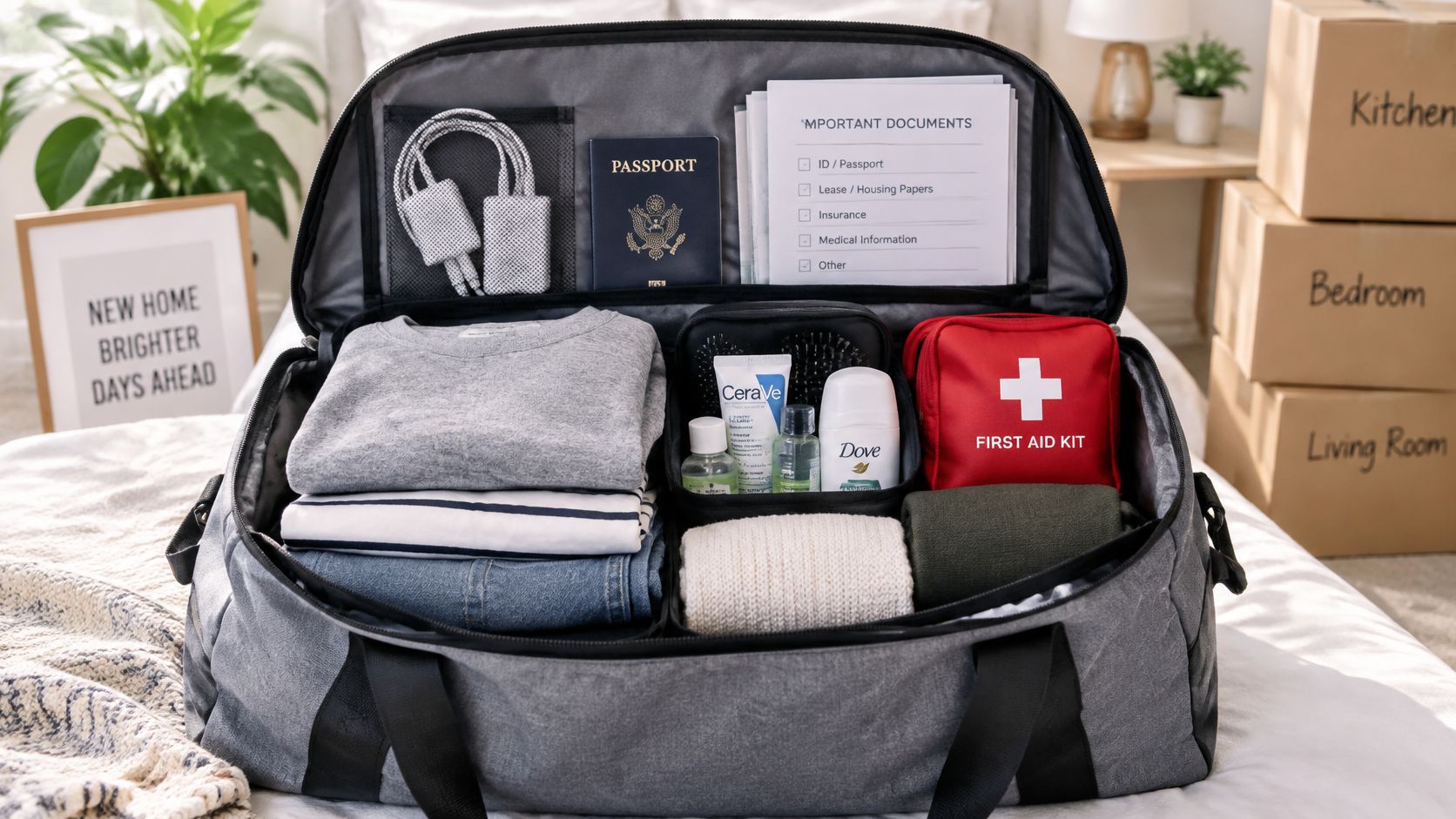
Add the paperwork most lists forget
A Parramatta renter carries spare keys, the lease and utility details in a folder inside this bag. A family travelling from Newcastle to Sydney keeps children's medication and comfort toys in a backpack in the car, ready the moment they arrive.
- Utilities sheet: Provider numbers, connection references and offline screenshots of confirmations.
- Meter evidence: Photograph meters, switchboards and existing damage before furniture blocks walls.
- Access details: Lift booking evidence, building manager contacts and parking permit where required.
That utilities folder matters because a home without power makes charging, refrigeration and lighting impossible. Australian tenant guidance on living in a rental notes renters may need to arrange electricity, gas, water and internet in their own name. Arrange connections before arrival, not from a dark hallway.
Don't treat heat as a summer-only problem either. The Bureau of Meteorology NSW seasonal summary reported NSW's winter 2026 mean maximum temperature was 17.7°C, 1.59°C above the 1961-1990 average. Carry refillable water bottles, electrolyte sachets, sunscreen, hats and pet water in this bag, and keep medication out of hot vehicles.
Ready to plan your move? Request a free quote from Home Removals Sydney through our fast 60-second online form, and receive a response within 30 minutes during business hours for a stress-free relocation across Sydney, NSW or interstate.
8. Floor, Surface Protection and Cleaning Supplies
The last items out of the old place and the first used at the new one are rarely glamorous. Rosin paper, floor runners and corner guards stop trolleys and boots marking timber and carpet. Cleaning supplies let you hand back a rental properly and wipe kitchen benches before unpacking food.
A Surry Hills renter lays rosin paper over floorboards and fits corner guards on doorways, protecting the property at lease handover. A North Sydney office runs floor runners down its main corridor so equipment moves without marking carpet.
Work top to bottom
- Test first: Try adhesive protectors on a small hidden patch before covering a whole floor.
- Clean high to low: Dust falls, so benches and shelves come before floors.
- Keep supplies with your essentials bag: Spray, cloths, bin bags and paper towel shouldn't be buried in a laundry box.
Set up a waste corner as soon as unpacking starts, one spot for flattened cardboard, one bag for soft plastic, one for general waste. The NSW EPA waste and recycling research found 91% of NSW residents used recycling services, yet rules vary by council. Check the receiving council's rules, keep food-contaminated cardboard out of recycling, and flatten boxes straight away so walkways stay clear.
Renters, photograph floors and benches after your final clean. Those timestamped photos, kept with your inventory folder, support your bond claim far better than memory.
How the eight moving day survival kit essentials compare
| Item | Key feature | Best for | Where to source |
|---|---|---|---|
| Heavy-Duty Moving Boxes | Stackable double- or triple-walled cartons in multiple sizes | Packing and transporting household or office belongings | Bunnings Warehouse; Officeworks |
| Packing Tape and Tape Dispenser | Strong adhesive tape with a dispenser for quick, secure sealing | Closing and reinforcing moving boxes | Sellotape; 3M Scotch |
| Bubble Wrap and Packing Paper | Lightweight cushioning for fragile items | Protecting glassware, ceramics, artwork and electronics | Sealed Air; Bunnings Warehouse |
| Furniture Blankets and Stretch Wrap | Padded, reusable blankets secured with stretch wrap | Protecting furniture from scratches, dents and dust | Uline; Bunnings Warehouse |
| Labelling Kit and Inventory List | Markers, colour-coded labels and an inventory sheet | Organising larger household and office moves | Sharpie; Officeworks |
| Basic Toolkit for Disassembly and Reassembly | Screwdrivers, spanners, Allen keys and a rubber mallet | Dismantling and reassembling furniture | Stanley; Bunnings Warehouse |
| Essentials Bag for Moving Day | Keeps documents, medication, chargers and other necessities accessible | Having first-day essentials on hand during and after the move | Red Cross Australia; Chemist Warehouse |
| Floor, Surface Protection and Cleaning Supplies | Floor runners, corner guards and basic cleaning materials | Protecting floors and surfaces and preparing properties for handover | Mr Muscle; Bunnings Warehouse |
Pack Your Kit Now and Book Your Removalist Early
A good kit is really a sequence. Boxes, tape and padding get you packed. Blankets, labels and tools get you loaded and unloaded without damage or confusion. The essentials bag, floor protection and cleaning gear get you through the first night and the handover at the other end.
Start this week, not the night before. Assemble the essentials bag and labelling kit first, because they're cheap, small and easy to forget under pressure. Then work room by room, sealing and labelling as you go, and keep one open carton for last minute items until the morning of the move.
Match the truck and team to the job
Tell your removalist about access early. Stairs, lifts, narrow streets, underground parking and long carries change crew size, timing and vehicle choice. Transport for NSW heavy vehicle guidance states a vehicle is legally a heavy vehicle when it has a gross vehicle mass greater than 4.5 tonnes. Larger trucks carry more in one trip, but they need suitable road access and loading space, so honesty at booking prevents delays on the day.
Costs depend on the distance, the volume of items, how many removalists you need, and extras like packing or storage. A clear inventory from your labelling system gives you a more accurate quote and fewer surprises.
First night test: If the truck were delayed until tomorrow, could you eat, wash, sleep, charge your phone and lock up securely with only what's in your car? If not, your essentials bag isn't finished.
If you'd rather hand over the heavy lifting, you can request a quote from Home Removals Sydney, a family-owned removalist in Fairfield. Use the fast 60-second online form at homeremovalsydney.com.au and expect a response within 30 minutes during business hours for home, office or interstate moves. Our team arrives promptly, loads carefully, and places belongings in the right rooms at the new home or office, with packing, unpacking and furniture assembly available on request.
Book early for weekends and month-end dates, when leases turn over across Sydney. You'll get your preferred timeslot, the right sized truck, and time to build your kit properly instead of throwing it together at midnight.
Pack your moving day survival kit this week, then let us handle the packing, loading, transport and careful placement at your new address across Sydney, NSW or interstate. Visit Home Removals Sydney to request your fast quote and book a team that can also supply boxes, wrap furniture and unpack on arrival.
