


You've got a Sydney departure date, a new address interstate and a long list of decisions competing for attention. The temptation is to pack faster and solve problems as they appear. That approach usually creates avoidable costs, missing documents, poor access planning and stressful delivery days.
A smoother interstate move comes from sequencing decisions, not rushing through boxes. Start with a six-to-eight-week calendar, then connect your quote, inventory, decluttering, storage, documentation, protection and communication plans. Sydney households need to think about building access, parking and state registration requirements. Businesses also need to coordinate staff, IT equipment, furniture, warehouse stock and operational downtime.
These interstate moving tips follow a practical eight-step workflow for homeowners, renters and businesses using Removalists Sydney, Home removals Sydney and Furniture removals Sydney services. You'll see where early booking helps, where cheaper options can create risk, which costs can change by route and how to prepare for the final 48 hours. Interstate moving remains substantial in Australia, with 368,000 interstate arrivals and departures in 2023–24, although that was 107,000, or 23%, below 2018–19 levels, according to the Australian Bureau of Statistics population movement release.
1. Plan Your Move at Least 6-8 Weeks in Advance
Interstate removals involve more than loading a truck in Sydney. You're coordinating a departure property, a destination property, transport availability, work commitments, state-border administration and potentially different parking or access rules. A six-to-eight-week runway gives you time to make those decisions in the right order.
Start with the moving date, then work backwards. A Sydney family heading to Melbourne in January might begin contacting removalists in October or November, especially if preferred dates are limited. An office relocation needs even more coordination because staff notices, IT disconnection, furniture handling and delivery access must line up without leaving the business unable to operate.
Create one shared calendar for the household or relocation team. Assign an owner to each task instead of leaving every decision with one person.
- Eight weeks out: confirm the destination, estimate the shipment size, begin decluttering and research Interstate removals providers.
- Six weeks out: request detailed quotes, arrange a pre-move inspection and start notifying banks, insurers, utilities and service providers.
- Four weeks out: confirm packing responsibilities, storage requirements, internet arrangements and any building or council access needs.
- Moving week: finish packing, separate essentials, confirm contacts and complete the final property inspection.
Practical rule: Book the transport date before you buy a mountain of packing supplies. A fixed date makes every later task easier to schedule.
The broader context supports early planning. The Australian Moving Report records 920,982 interstate movers during the 2021 Census reference period, while interstate movers represented 10.9% of people who changed address between 2016 and 2021. Interstate moves are common enough to require a structured process, but they still involve more distance and logistics than a local Sydney move.
2. Get Multiple Quotes and Compare Removalist Services
A low headline quote can become an expensive choice if it excludes packing, difficult access, specialty handling, storage, insurance or additional labour. Compare the service behind the price, not just the number at the bottom of an email.
Give each provider the same information. List the origin and destination addresses, property type, stairs, lifts, narrow driveways, parking restrictions, major furniture, fragile items and anything requiring disassembly. An accurate inventory helps the removalist calculate the transport requirement and identify potential accessorial charges before moving day.
Request a written breakdown covering:
- Service inclusions: Check whether loading, transport, unloading, furniture assembly and packing are included.
- Materials: Confirm whether boxes, bubble wrap, tape, mattress covers and furniture protection are supplied or charged separately.
- Specialty handling: Ask how the team will manage pianos, antiques, artwork, safes or unusually heavy furniture.
- Insurance terms: Confirm the applicable coverage, exclusions, claim process and limits for valuable items.
- Access costs: Ask whether stairs, lifts, long carries, restricted parking or shuttle vehicles can change the price.
- Tax and payment: Check whether GST, deposits, card fees and any route-related surcharges are included.
For a fast starting point, you can request removalist quotes online and then provide fuller details during the assessment. Online forms are useful for initial responses, but they shouldn't replace a proper inventory review when the move is large or complex.
A quote comparison should also test reliability. Ask for evidence of experience with interstate removals, read relevant customer feedback and check how the provider communicates delivery windows. For an office or warehouse move, request a named contact who can coordinate access, furniture placement and equipment handling.
3. Create a Detailed Inventory and Label Your Boxes Systematically
An interstate inventory is both a packing tool and a record of responsibility. If a box arrives damaged, a carton is hard to locate or an office item is missing, a numbered list gives you something more useful than a vague memory of what went into the truck.
Use a simple system that works for everyone handling the move. Number boxes consecutively, write the destination room in large lettering and add a short contents description. A label such as “Kitchen, cookware, Box 4 of 47, fragile” tells the crew where it belongs and tells you what to look for at delivery.
Take photographs before packing valuable belongings. Photograph the condition of artwork, electronics, antiques and furniture, including identifying marks and existing imperfections. Keep the images with your digital inventory rather than leaving the only record on a device packed in the truck.
A spreadsheet can include:
- Box number: Record the number and total count.
- Destination: Use room names at both properties, such as kitchen, main bedroom or server room.
- Contents: Describe the contents without writing an entire essay.
- Condition: Note existing scratches, dents or other marks.
- Handling instruction: Flag fragile, upright-only, heavy or specialist items.
- Priority: Mark boxes needed on the first evening separately from items that can wait.
The packing tips for moving house can help you organise materials and protect contents. For artwork, use specialist guidance such as these artwork packing tips from Colorado Art Services rather than treating a framed piece like ordinary household décor.
Keep passports, contracts, medication, keys, financial records, devices and irreplaceable documents with you. Don't put the items you need to prove ownership or make urgent decisions into an inaccessible carton.
A clear label also helps the delivery crew place boxes correctly, which reduces unnecessary handling. For offices, match box numbers to a spreadsheet and floor plan so staff can find equipment without opening every carton.
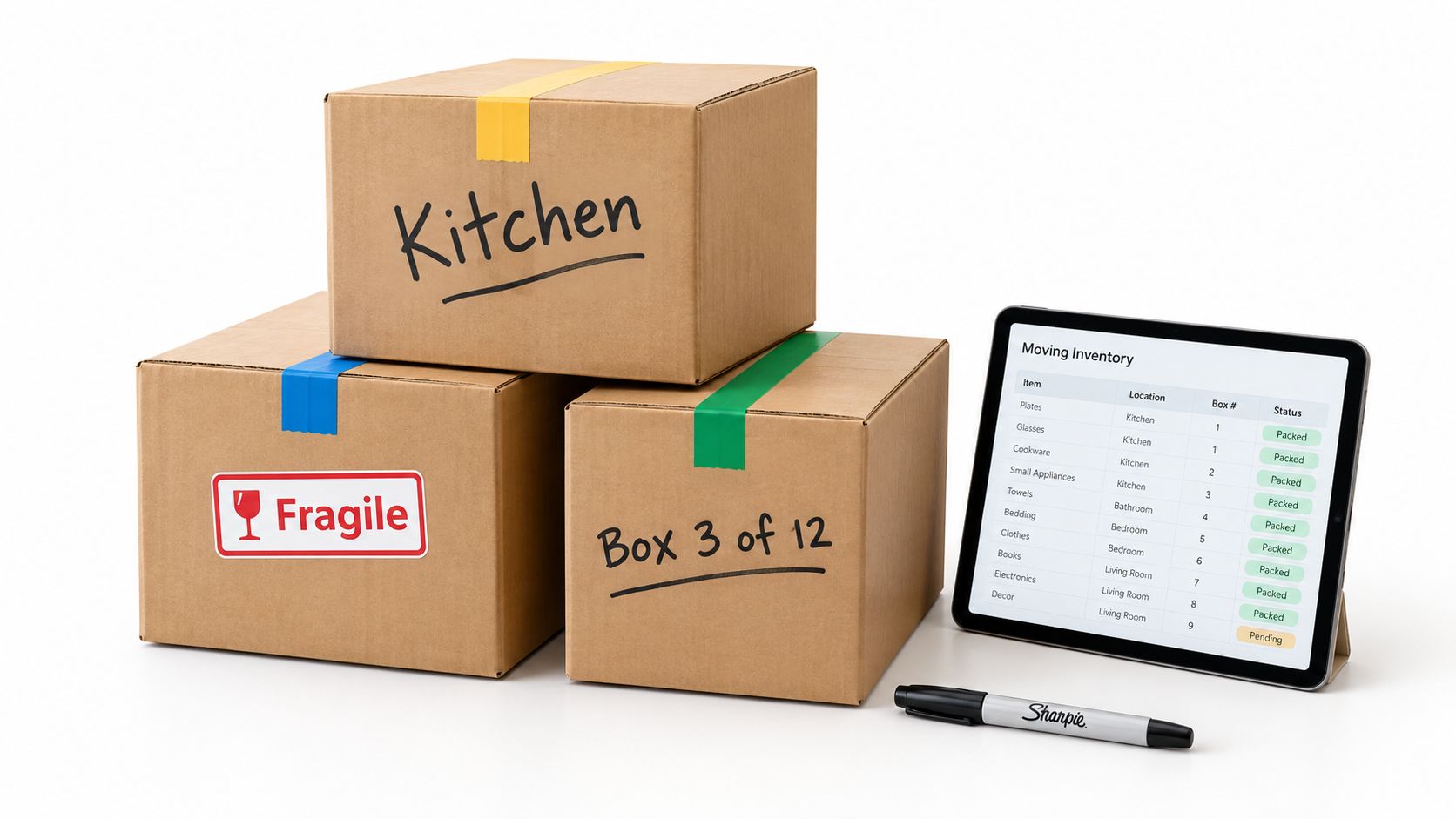
The inventory becomes especially valuable when a move includes storage or staged delivery. Update it whenever an item is sold, donated, packed, placed in storage or removed from the shipment.
4. Arrange Secure, Accessible Storage if Needed During the Interstate Transition
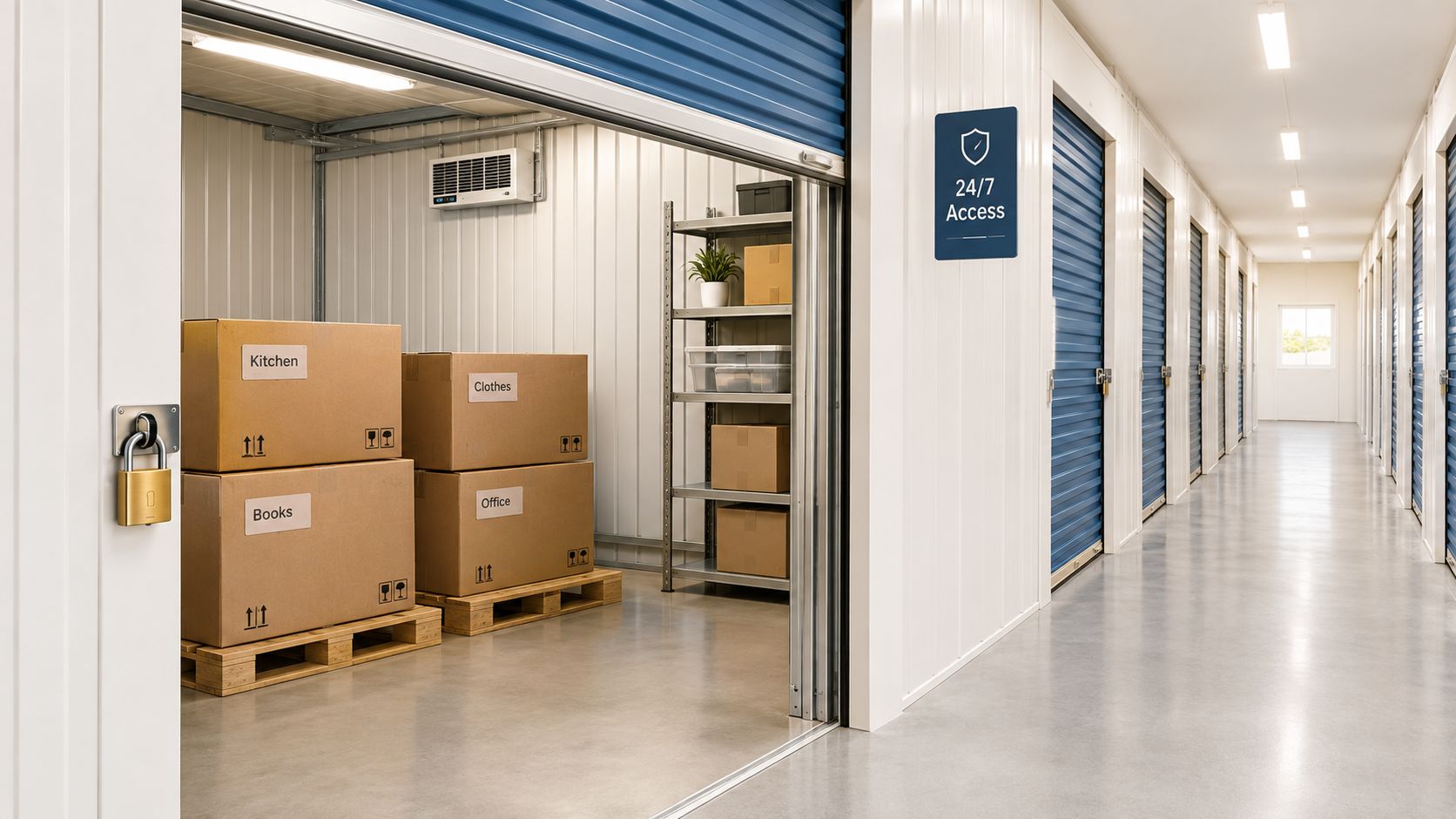
Storage should solve a defined timing problem, not become an unmanaged holding area. Common reasons include a delayed settlement, a lease ending before the next property is ready, a smaller destination home or staged delivery for an interstate office. Decide which items you may need during the gap and which can remain packed until delivery.
Ask providers about access hours, security checks, loading arrangements, insurance requirements, ventilation and climate control. Electronics, artwork, antiques, records and sensitive business equipment may require better environmental protection than standard boxed goods. For bulky or longer-term requirements, some movers also consider using shipping containers for storage instead of a traditional unit. Compare access, handling and transport arrangements before choosing.
A Sydney household waiting for a delayed property transfer might store furniture for several weeks. A warehouse relocating interstate could use palletised storage to keep stock grouped by destination or product category. In either case, retain the inventory system prepared before loading so the stored goods remain traceable.
Use a storage register covering:
- Unit or location: Record where each group of items is placed.
- Box numbers: Keep the original numbering system unchanged.
- Access priorities: Separate items needed during the transition from long-term contents.
- Condition records: Photograph valuable goods when they enter storage.
- Retrieval plan: Record authorised users and the order for removing items.
The removals and storage service may suit a move requiring transport and storage to be coordinated. A separate facility can also work. Confirm who loads and unloads the goods, and whether extra transport is required between the truck and the unit.
Storage works best when it supports a clear transition plan. It becomes costly and frustrating when nobody knows what is inside or when retrieval is urgent.
Book early during busy moving periods, then confirm the retrieval process before signing. Convenient access may justify a higher-cost option for household essentials. Restricted access can suit furniture, stock or equipment that will remain untouched until the destination is ready.
5. Notify Utilities, Authorities, and Service Providers Well in Advance
Administrative mistakes can follow you across state borders. A truck can arrive on time, but the move still feels unsuccessful if the new property has no internet, the old utility account remains active or important documents keep going to the Sydney address.
Build one notification list and separate tasks by timing. Utility providers, banks, insurers, employers, schools, medical practices, subscriptions and government services may all require different information. Ask each provider whether the request can be scheduled online, whether a final meter reading is required and when the account will close.
For a Sydney household, electricity and gas providers should be contacted ahead of the move so disconnection and final billing occur at the correct property. Internet connections need early attention because installation availability can affect the first days in the new home. Arrange mail redirection once the address is confirmed, then update banks, insurance companies, investment providers and regular services directly.
Vehicle and registration details deserve particular care. Check the requirements of the destination state for your driver licence and vehicle registration rather than assuming NSW arrangements continue automatically. If you're moving into the City of Sydney with a vehicle still registered interstate, an eligible applicant may receive an interim resident parking permit valid for 3 months, and the registration must change to a NSW address within 3 months of the move, according to the City of Sydney neighbourhood on-street parking policy.
For Sydney arrival logistics, check the address rather than relying on a permit from another area. The City states that permits apply only where the person lives or operates a business, so one permit shouldn't be treated as valid across different suburbs or councils.
Business relocations need a separate address-change register for the ABN, insurers, clients, suppliers, staff records, payroll, technology vendors and delivery partners. Assign one person to confirm each update and save the confirmation.
6. Declutter and Downsize Before Packing to Reduce Moving Costs
Every item you decide not to move reduces handling, packing, storage pressure or truck space. The saving isn't only about throwing things away. Selling, donating or responsibly disposing of unwanted belongings can also make the destination easier to organise from the first day.
Start room by room. Separate items into keep, sell, donate and discard, then complete each category instead of creating piles that remain in the way. Be honest about duplicate appliances, unused furniture, old office equipment and items that won't suit the new property.
A Sydney household moving from a larger home to a smaller apartment should measure the destination before deciding what travels. Oversized wardrobes, spare desks and surplus shelving may cost more to move than their practical value justifies. An office can sell redundant desks and equipment before the removal, then use the proceeds to offset some relocation expenses.
Use a clear decision process:
- Keep: Retain items that fit the new home or support the business.
- Sell: Photograph valuable furniture and electronics, write accurate listings and allow time for collection.
- Donate: Contact charities about clothing, books and usable household goods.
- Discard: Follow local disposal rules for damaged, hazardous or unsuitable items.
The Canstar guide to interstate moving costs notes that Australian consumer estimates can range from $2,600 to $5,850 for a three-bedroom interstate move, with some routes reaching $10,000 or more when distance and additional expenses are involved. Those figures are broad guidance, not a quote for your property, but they show why volume and route details matter.
The same source identifies additions such as ferry costs, insurance, flights, pets and utilities as factors that can affect the all-in relocation bill. Ask removalists to quote from your decluttered inventory, not from an optimistic guess made before the sorting is complete.
7. Arrange Appropriate Insurance Coverage for Your Interstate Move
Don't assume that the word “insured” explains everything you need to know. Removalist coverage can have limits, exclusions, conditions and different treatment for items you pack yourself. Your responsibility is to understand what protection applies to your shipment before the crew arrives.
Request the policy or valuation documentation in writing. Check how the provider treats fragile goods, electronics, antiques, artwork, pianos, self-packed cartons, items placed in storage and damage caused by inadequate preparation. Ask whether high-value belongings need to be declared individually and whether receipts, valuations or photographs are required.
A sensible documentation pack includes:
- Item photographs: Capture condition, serial numbers and identifying marks.
- Valuation records: Keep available appraisals or purchase documents for high-value items.
- Special handling notes: Record upright, temperature, access or lifting requirements.
- Policy details: Save the coverage terms, exclusions and claim instructions.
- Inventory references: Match each valuable item to a box or furniture entry.
Specialist items deserve a direct conversation. A piano may need a different crew, equipment and route plan from ordinary furniture. Artwork and antiques need careful wrapping, secure positioning and an agreed process for inspecting condition at delivery.
Insurance works best when the paperwork describes the item before something goes wrong. A photograph taken after delivery can't establish its pre-move condition.
Home contents insurance may not automatically cover goods in transit or storage. Ask your insurer whether the existing policy continues during the move and whether temporary storage changes the terms. If removalist coverage doesn't match the replacement value or risk profile of your belongings, discuss additional protection before booking.
For businesses, add equipment registers, serial numbers and downtime-sensitive assets to the documentation. Office relocations often involve computers, screens, servers, records and specialist equipment that need more than a general furniture count.
8. Confirm Logistics and Communication Plans Before Moving Day
The final check should focus on information the crew can't discover safely after arrival. Confirm the addresses, contacts, access routes, parking arrangements, lift bookings, stairs, narrow corridors, gates, building rules and destination placement plan.
Contact the removalist 24 to 48 hours before moving day to confirm the agreed details. Give the team a reliable mobile number for the departure address and destination. If someone else will supervise either property, provide that person's name and authority to make decisions about placement or additional work.
For a Sydney home, access may be the deciding factor. A truck might reach the street but not the driveway. An apartment may require a loading bay, lift booking or building manager approval. A house in Queensland or another state may have narrow stairs, tight corners or gates that affect how furniture enters.
Confirm:
- Arrival window: Ask when the crew is expected and how delays will be communicated.
- Access instructions: Provide gate codes, keys, lift details and building contacts.
- Parking arrangements: Confirm where the truck can stop and whether local permits or restrictions apply.
- Special items: Repeat instructions for pianos, artwork, antiques, safes and fragile equipment.
- Delivery plan: Identify which rooms receive priority items and where storage contents go.
- Payment details: Confirm the accepted method and when the final amount is due.
Businesses should include security access, alarm procedures, loading dock times, IT contacts and furniture placement plans. A relocation manager shouldn't be the only person who knows how to enter the new office.
Keep your essentials with you, including medication, chargers, identification, keys, documents, toiletries, a change of clothes and pet supplies. If pets are travelling separately, coordinate their arrangements with the same attention given to the household shipment, using practical pet transport planning guidance where relevant.
8-Point Interstate Moving Comparison
| Item | 🔄 Implementation Complexity | ⚡ Resource Requirements | 📊 Expected Outcomes | 💡 Ideal Use Cases | ⭐ Key Advantages |
|---|---|---|---|---|---|
| Plan Your Move at Least 6–8 Weeks in Advance | Medium, multiple coordinated tasks and timelines | Time (6–8 weeks), planning tools, early bookings | Higher booking availability, lower stress, more accurate quotes | Interstate moves, peak-season relocations, families & businesses | Secures preferred dates and reduces last‑minute costs |
| Get Multiple Quotes and Compare Removalist Services | Medium, request, review and compare detailed quotes | Time to collect quotes, accurate inventory details, communication | Transparent pricing, better value-for-money choice | Moves with variable requirements or high-cost items | Identifies best fit provider and avoids hidden fees |
| Create a Detailed Inventory and Label Your Boxes Systematically | High, thorough itemisation, consistent labelling and record keeping | Time, labels/markers, spreadsheet or app, photos for valuables | Faster unpacking, easier claims, reduced losses/damage | Long-transit interstate moves, high-value/large households | Improves tracking, handling and insurance support |
| Arrange Secure, Accessible Storage if Needed During Transition | Low–Medium, select facility and manage logistics | Storage fees, transport to/from facility, possible insurance | Flexibility in timing, protected belongings, staging options | Delayed settlement, downsizing, renovation or business transitions | Secure, climate-controlled holding with 24/7 access options |
| Notify Utilities, Authorities, and Service Providers Well in Advance | Medium, multiple organisations with different notice periods | Time, documentation, coordination with new landlord/agents | Continuity of services, regulatory compliance, no misdirected mail | Any interstate move requiring account transfers or registrations | Prevents service gaps and unexpected billing |
| Declutter and Downsize Before Packing to Reduce Moving Costs | Medium, systematic sorting and disposal/sale of items | Time, disposal/donation logistics, sales platform access | Reduced truck size/costs, faster packing/unpacking | Downsizing moves, budget-conscious relocations, businesses selling assets | Lowers moving costs and simplifies new-space setup |
| Arrange Appropriate Insurance Coverage for Your Interstate Move | Medium, review policies, obtain valuations and proofs | Insurance premiums, valuations, photographic documentation | Financial protection for loss/damage, clearer claims process | Moves with artwork, pianos, antiques or high-value items | Provides tailored coverage and peace of mind |
| Confirm Logistics and Communication Plans Before Moving Day | Low, final confirmations and information exchange | 24–48 hours of coordination, contact lists, access details | Fewer delays, smoother move day, quick issue resolution | Large crews, restricted-access properties, multi-stop moves | Prevents misunderstandings and enables rapid problem-solving |
Turn Your Checklist Into a Confident Move
The final 48 hours should be about confirmation, not major decisions. Recheck the inventory against the boxes and furniture that will travel. Photograph valuable items and packed rooms, place documents and essentials in your personal vehicle, and make sure the removalist has the correct destination address and contact details.
Confirm the departure property is ready for loading. Clear pathways, protect vulnerable surfaces where required and tell the crew about stairs, lifts, narrow access points, parking restrictions and items that won't be moved. Keep keys, remotes and access codes available. If you're leaving a rental, complete the final walk-through and record the property's condition after the furniture has been removed.
Your documentation folder should include the quote, service inclusions, insurance terms, inventory, payment details, storage information and contact records. Keep digital copies on your phone, but don't rely on a device that may run out of power. A charger or power bank belongs in your essentials bag, not inside a numbered carton.
For Sydney parking, check the applicable council rather than assuming rules are identical across the metropolitan area. City of Sydney information lists a residential visitor parking permit as taking about 5 days and costing $30, while a tradesperson visitor parking permit takes about 10 days and costs $80, according to the City of Sydney transport and parking information. Those are council-specific benchmarks, so confirm the permit type, eligibility and timing for the actual property.
Businesses need one more operational check. Confirm staff arrival instructions, IT disconnection and reconnection, security access, furniture placement and the location of critical equipment. If stock is moving into storage, match the delivery sequence to the inventory so the team can find priority items quickly.
On moving day, supervise the count at loading and unloading. Check high-value and fragile items before signing completion paperwork. Note damage or missing contents immediately and follow the agreed reporting process. Don't let a rushed departure turn a small documentation task into a difficult claim later.
The cost decision should reflect the full relocation, not just the removalist's base transport charge. In the 2026 Moving Report context, average removalist costs for moves over 250 km were $681 in Western Australia and $785 in Victoria, compared with short moves up to 25 km averaging $357 in WA and $307 in Victoria. The same report estimated that buying and moving home could cost $44,881 nationally, or $47,472 when lost time was included, with Victoria at $59,937 and the ACT at $39,259. These figures aren't a quote for a Sydney household, but they demonstrate why distance, state and lost time belong in the budget.
Use the eight steps as a working system:
- Plan early: Set the date and work backwards across six to eight weeks.
- Compare properly: Match quotes by inclusions, access, protection and service.
- Track everything: Number boxes and keep the inventory accessible.
- Use storage deliberately: Record locations and plan retrieval.
- Update records: Notify utilities, authorities, insurers and providers.
- Reduce volume: Sell, donate or discard before the quote is finalised.
- Protect valuable items: Document condition and confirm coverage in writing.
- Communicate clearly: Reconfirm access, contacts, timing and payment before loading.
Homeowners, renters, offices and warehouses all need the same basic discipline, but the details differ. A family may prioritise bedding, medication and kitchen essentials. An office may prioritise network equipment, access cards and desks. A warehouse may need pallet locations, staged delivery and equipment handling. A quote adjusted for each scenario should reflect those differences rather than treating every shipment as a standard move.
Home Removals Sydney can help coordinate Sydney and interstate moves involving home packing, furniture handling, office relocations, warehouse transfers and storage. Visit Home Removals Sydney to request a quote, share your inventory and access details, and start planning your move with the right services included.
