

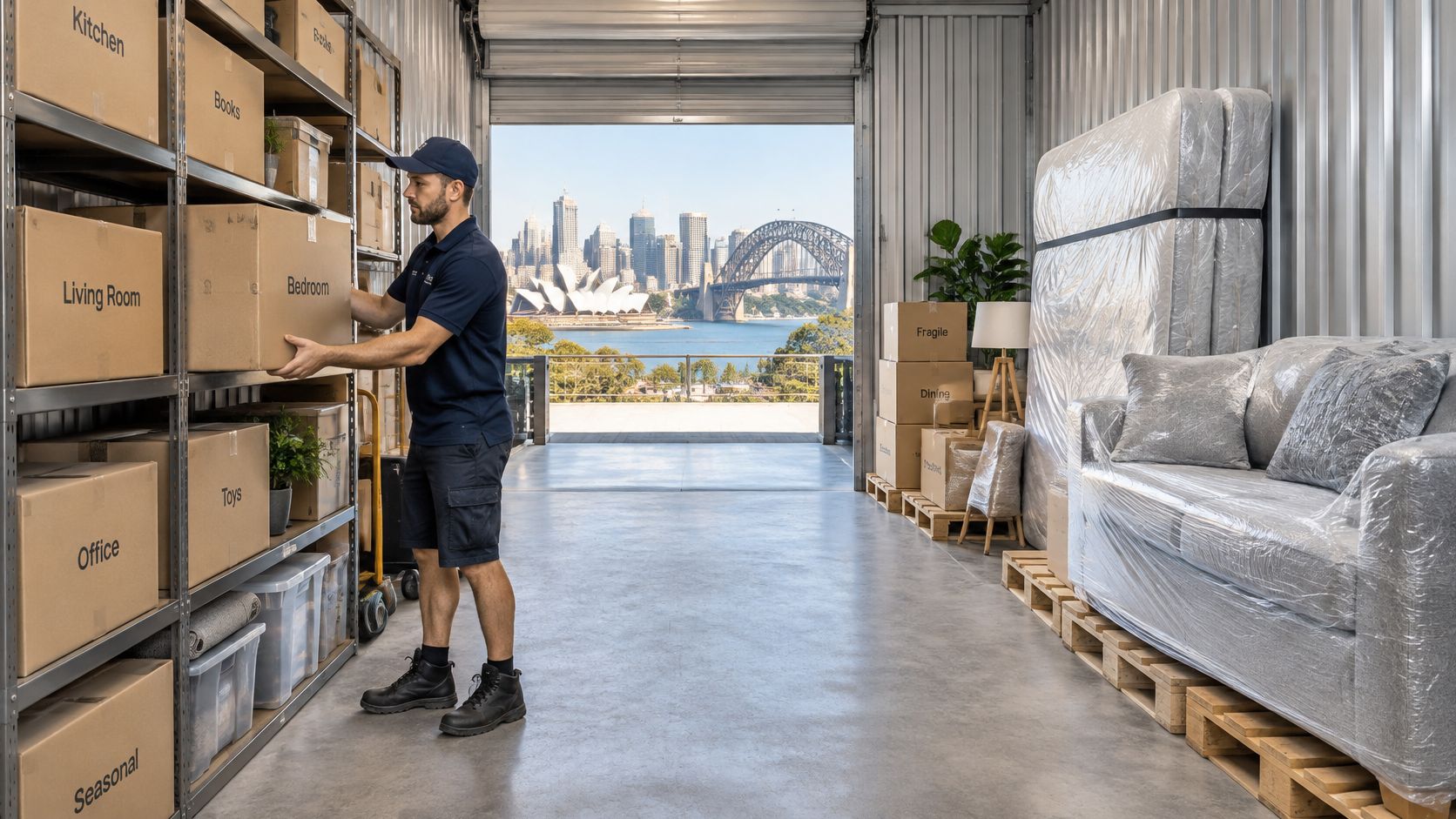
The roller door is up, the sofa is still on the driveway, and the unit already looks smaller than the listing photo. Winter clothes sit in an open carton, the mattress feels slightly damp from last night's rain, and the document box is somewhere under the kitchen gear. That's how a Sydney storage load usually goes wrong. The floor fills before anyone leaves a walkway, and the carton you'll need next month ends up at the back.
How to pack a storage unit well is a moisture, access and fire decision, not a race to fill the floor. I would rather keep a clear aisle, and leave a few boxes at home, than seal a room you can't open without restacking. The same habits cover a one-bedroom move, a small office relocation, and goods waiting between interstate removals.
Size the Unit to What You Actually Own
Match the unit to the inventory before the first carton is taped. A space that looks full before the last box is usually too small.
| Unit size | Typical contents | Practical access note |
|---|---|---|
| 3 m² | One mattress, a few boxes and a small table | Tight; one stack deep |
| 5 m² | Contents of a studio apartment | Narrow aisle possible with care |
| 10 m² | Contents of a one-bedroom home | Room for a walkway and a front stack |
| 15 m² | Contents of a two-bedroom home | Space to rotate items |
| 20 m² | Contents of a three-bedroom home or small office | Needs planned zones |
Three checks before you book
Measure the big pieces first. Note the height, width and depth of the sofa, bed frame, dining table and wardrobes. A sofa that clears the lounge can still jam a roller door if you only measured the room.
Count cartons by room, then cut the list. Set aside anything you'll sell or donate. Unsorted "misc" boxes are the ones that get reopened on the footpath.
Match what's left to a row, then keep a walkway. Allow about 60 to 80 cm so one box can come out without unloading the unit. A 1.5 m² locker suits a few boxes only. A 10 m² unit is the usual fit for a one-bedroom home. A 20 m² unit suits a three-bedroom home or a small office, but only if you plan zones instead of one solid wall of cartons.
Practical rule: If the last wardrobe has nowhere to stand upright, book the next size up. Crushed boxes cost more than the extra square metres.
Orange Box Self Storage's notes on how to choose a storage unit size are a useful cross-check when you're comparing locker footprints. For a Sydney furniture list, how much storage you need sets the same choice against volume rather than a guess. Write down the size and a room-by-room inventory before you book. That list is what the load plan hangs on.
Keep Hazards Out and Ask About Fire Safety
No petrol, fuels, solvents, gas cylinders or similar chemicals go into a household unit unless the facility explicitly permits them. The same ban covers food and perishables, rubbish or combustible waste, damp or dirty items, and anything whose contents you can't name.
Flammable goods don't stay in one locker. They raise the chance of fire moving into the units beside yours. Fire and Rescue NSW treats self-storage as a hard fire environment because the contents, quantities and hazardous nature of goods are often unknown or uncontrolled. It also warns that a lack of fire separation can let flames spread quickly, while partitions can restrict firefighter access. It recommends AS 2118.1 automatic sprinkler systems and fire hose reels in Class 7b self-storage facilities.
SafeWork NSW advises keeping storage and handling areas free of combustible waste and refuse, keeping at least 3 metres of clearance from combustible vegetation for outdoor storage, and keeping naked flames from maintenance work at least 5 metres from flammable or combustible goods. It also recommends a suitable portable fire extinguisher near dangerous goods, and ventilation immediately above spill containment.
A padlock is not a fire plan
CCTV shows who opened the door. It doesn't stop a solvent tin or a pile of cardboard from feeding a fire. Ask these questions, and get the answers in writing, before you sign:
- Sprinklers and hose reels: Are they installed in this building, not just somewhere on the site?
- Separation: What stops fire moving from the next unit into yours?
- Alarms and access: How are alarms monitored, and how do firefighters reach the aisle?
- Prohibited list: What does the facility ban, and will staff refuse a load that includes it?
If the reply is only "we have cameras", choose another facility. Keep the written answers with the contract.
Storage Conditions for Each Type of Belonging
A humid Sydney week, then a heavy downpour, and a carton of photographs that went in looking fine comes out spotted. Books, documents and photographs cause the most regret. Moisture, a blocked aisle and a dense fire load are packing decisions. They are not problems you sort out once the unit is already full.
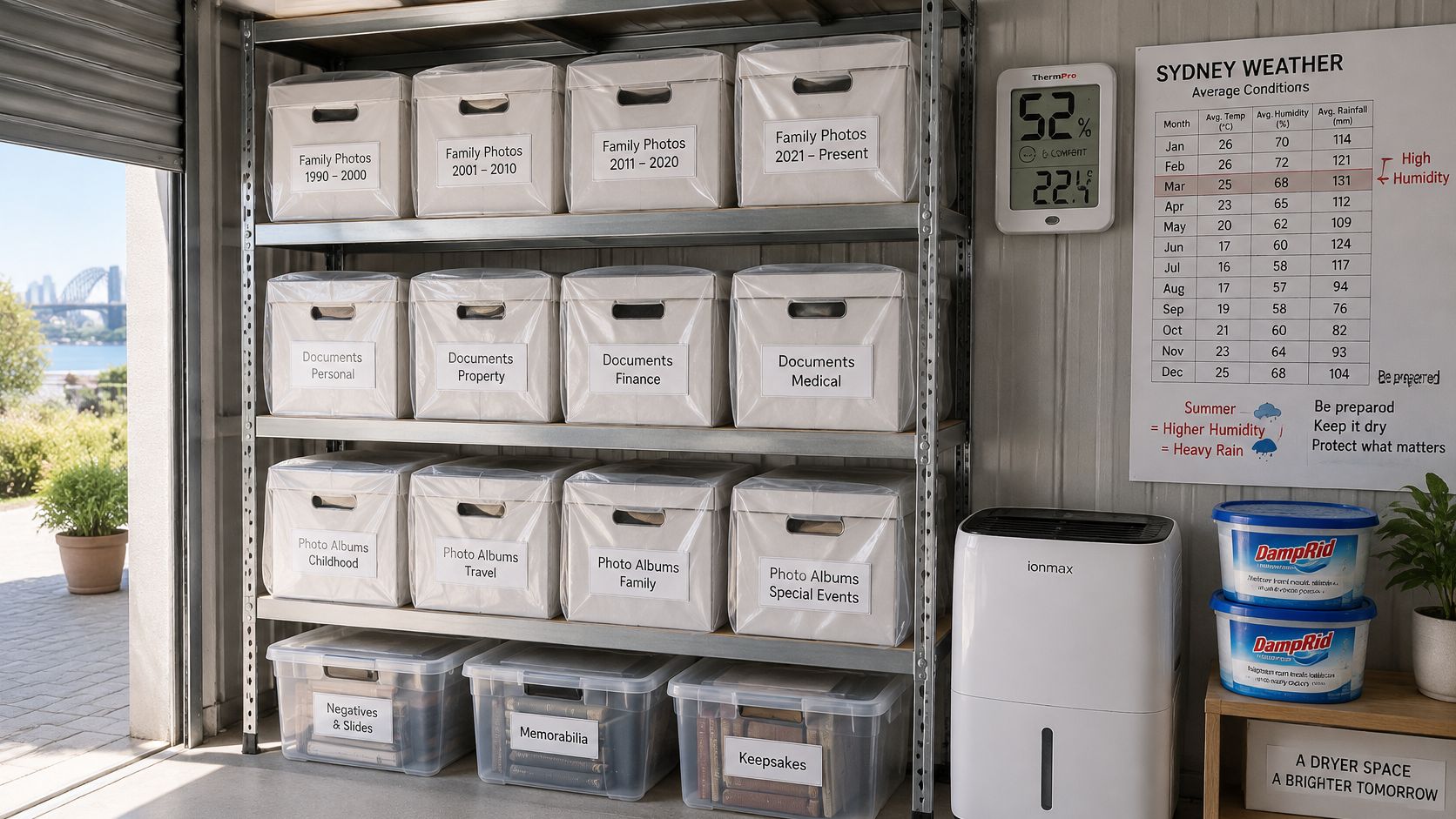
State Library of NSW collection-care guidance recommends stable conditions in Sydney of approximately 15 to 25°C and 45 to 55% relative humidity for paper materials, and notes that higher humidity can accelerate deterioration and mould growth. The National Archives of Australia advises keeping conditions stable at about 20°C with relative humidity below 60%, and warns that mould can develop when relative humidity remains above approximately 65%. A standard room will swing past those ranges. Pack so air can still move, and so you can reach the front of every stack.
Dry every item fully before you seal it. Plastic on a damp mattress traps moisture against the fabric. Tight cartons create stagnant pockets, so leave small air gaps. Keep boxes off the floor and clear of external walls. Moisture absorbers only supplement a dry unit. They will not rescue a wet load.
Inspect cartons and furniture for insects or soil, and keep cartons closed through shared loading areas. Raise furniture and appliances on pallets or plastic platforms so slab damp stays under the load. The Archives guidance recommends avoiding wooden storage equipment because wood can harbour insects and contribute to fire spread, and it warns against placing items on top of storage equipment where sprinkler water or ceiling-light heat can reach them. Leave a walkway wide enough to pull one carton without unpacking the aisle. A solid wall of cardboard hides mould and gives a fire more to burn.
A dry layout looks like this, with labelled cartons lifted clear of the slab and a dehumidifier doing backup work rather than hiding a wet load.
| Belonging | Main risk | Packing protection | Placement |
|---|---|---|---|
| Books, documents and photographs | Mould and humidity | Dry fully, use archival or breathable boxes, do not pack tightly | Off the floor and away from external walls |
| Upholstered sofas and mattresses | Mould and odour | Dry fully, breathable cover, plastic only once dry | Raised on pallets or platforms |
| Clothing and linen | Musty smell and moth damage | Clean and dry, sealed only when completely dry | Lifted off the floor with an air gap |
| Timber furniture | Swelling and insects | Breathable wrap, legs removed and bagged | Elevated, not against walls |
| Electronics and appliances | Condensation and heat | Dry completely, original packaging where possible | Upright, clear of floor water |
| Leather goods | Drying, cracking and mould | Cotton wrap, not plastic | Air circulation, not sealed boxes |
After the first humid week
Open the unit after the first humid week, and again after any heavy rain. Note a musty smell or spotting on paper, linen or timber, and take that item out to dry. Where documents and photographs are the core of the load, keep the unit as dry as possible and check it more often after wet weather. If that load cannot stay at home, secure short-term and long-term storage is worth asking about before you fill a room you cannot easily inspect.
Pack and Load the Unit in Eight Steps
Work in order. Each step has a reason, and each has a slip that shows up on the next visit. The sequence below is the one I would follow on a Sydney load-in.
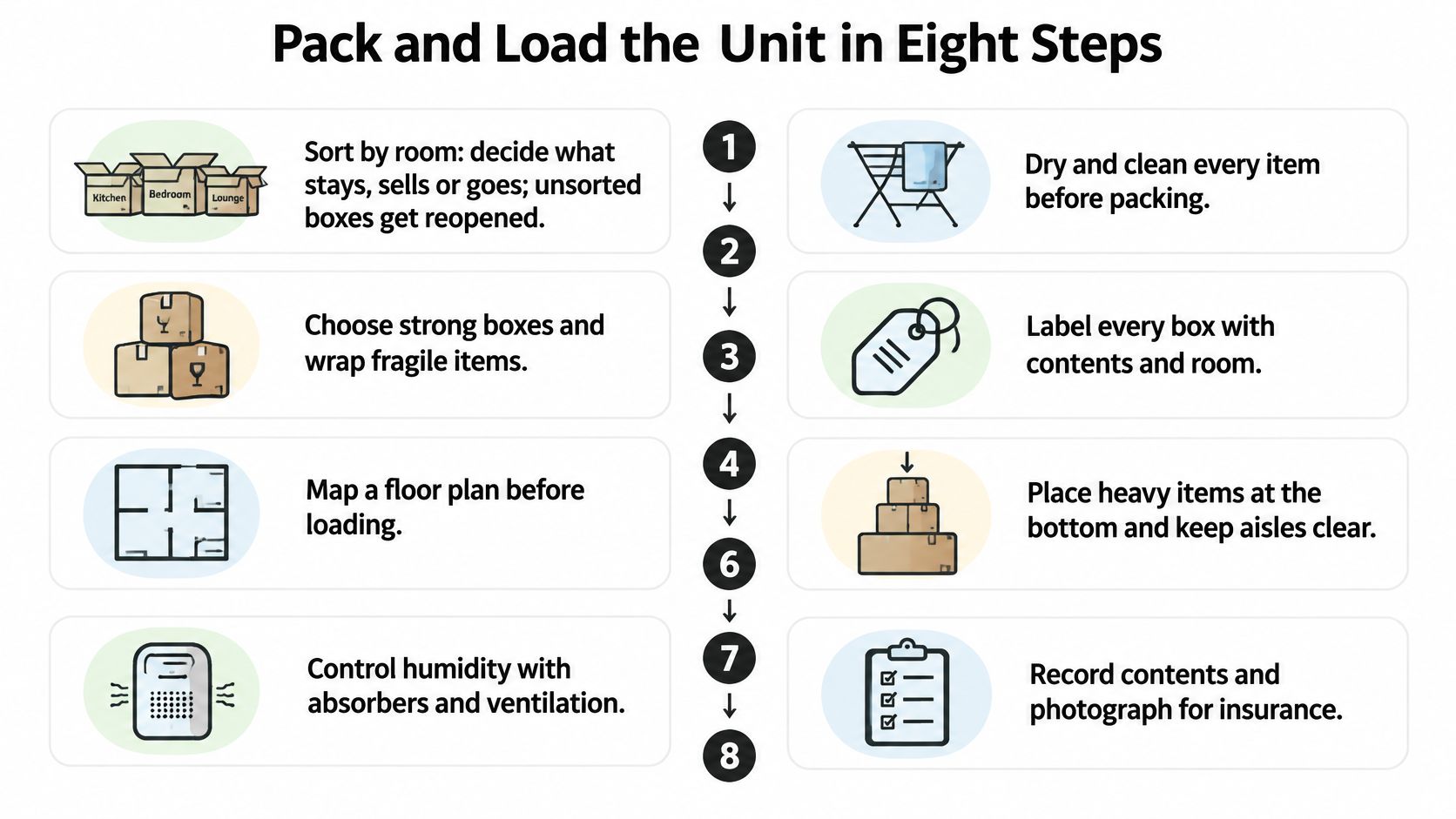
- Sort by room and decide what stays, sells or goes. Unsorted boxes get reopened. The slip is a "miscellaneous" carton that hides both the remote and a half-used tin of paint.
- Dry and clean every item before it goes into a box. Moisture sealed inside a carton is what you smell a month later. The slip to avoid is a mattress that still feels cool and is wrapped anyway.
- Box by room in strong cartons, marked with contents and weight. Safe Work Australia advises smaller containers, balanced packs, and packing material so contents can't shift. Keep routinely hand-carried boxes comfortably below 16 to 20 kg, because back-injury risk increases significantly above that range, and use mechanical assistance or a team lift above 55 kg. Never build an oversized book box. Label two sides plus the top, and write HEAVY, FRAGILE or THIS WAY UP where it applies. Use a trolley on long, level paths.
- Match carton size to density. Books, tools and other dense goods go in small cartons. Linen, cushions and other light items go in large ones. Fill voids with paper so nothing slides. The slip is a half-empty carton that collapses when the row above it settles.
Keep the heavy cartons where a person can lift them between waist and shoulder height. Climbing a stack to reach one box is how aisles get blocked and cartons get crushed.
A short video of a planned load-in makes the same order easier to picture before you start the back wall.
From the back wall forward
- Load furniture and packed appliances first, at the back, on pallets or blocks. The base has to carry every row above it and stay off a wet floor. The slip is a sofa flat on the slab with cartons piled on the cushions.
- Stack sealed cartons in interlocking rows, heaviest at the base. Flat tops stay put. A pyramid stack leans, and an unsupported overhang drops the first time someone brushes past.
- Keep the front aisle open and put frequently needed goods near the entrance, between waist and shoulder height. SafeWork NSW says awkward low, high or extended-reach storage is higher risk, and it tells you to avoid pyramid stacks, unsupported overhangs and fragile items under dense cartons. Those three slips are exactly how a "full" unit becomes unusable. For warehouse stock, know the weight of every pallet. SafeWork NSW treats the maximum unit load and the total rated capacity for each bay as limits that must not be exceeded.
- Photograph each finished stack, keep an inventory by box number, and check every stack for movement in the first week. Retrieval shouldn't mean dismantling the unit. The slip is a memory list that no longer matches the rows.
A well-packed unit has flat-topped stacks, a clear aisle and labels you can read from the door. Confirm the facility's permitted floor load before you start, then place the heaviest, most stable pieces low and toward the perimeter.
Confirm Cover and Request Your Storage Quote
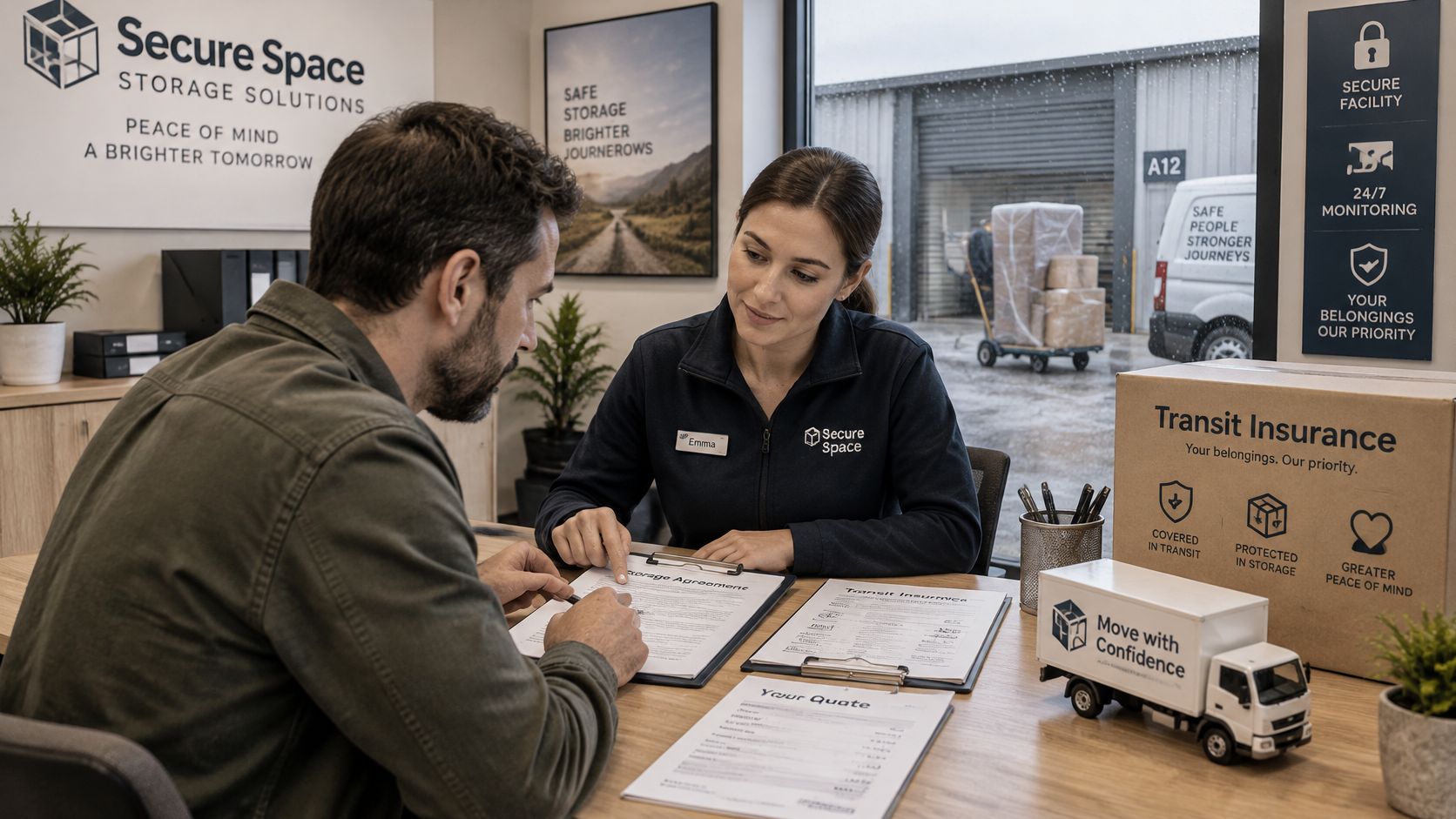
A tidy unit still isn't a covered unit. NSW Government consumer guidance states that removalists are not legally required to provide insurance for a customer's property during a move. Transit insurance can cover goods while they're packed and moved, including goods placed into storage, but extending cover for the storage period may require a separate premium.
Read the contract against your household inventory before the first box crosses the threshold.
Three checks to get in writing
- Ask whether protection continues after the unit door closes. Transit cover and storage cover are not the same sentence in most contracts.
- Check the exclusions and the excess. A low headline figure means little if water damage or mould is carved out.
- Confirm whether artwork, antiques or pianos must be declared separately. High-value pieces are the ones that fall outside a standard list.
Photograph the inventory and note estimated values beside each box number. Anyone booking removalists Sydney for home removals Sydney, furniture removals Sydney or an office relocation should have those answers before moving day. Our guide to storage with insurance sets out how cover is discussed at quote stage.
If the paperwork only describes the trip and goes silent once the padlock clicks, the storage period isn't covered yet.
All of our moving services are fully insured to protect belongings during transit. We also supply boxes, bubble wrap and tape, and we can disassemble and reassemble furniture, pack fragile pieces, and provide secure storage for short-term and long-term needs. Ask for the cover terms in writing with the quote, name the unit size you chose, and list any fragile or high-value items before the first carton is loaded.
Home Removals Sydney packs, loads and places household and office goods, then holds them in secure short-term or long-term storage while the move finishes. Tell us the unit size and any fragile or high-value pieces so cover is confirmed in writing before the first box goes in. Request a quote through Home Removals Sydney.
