

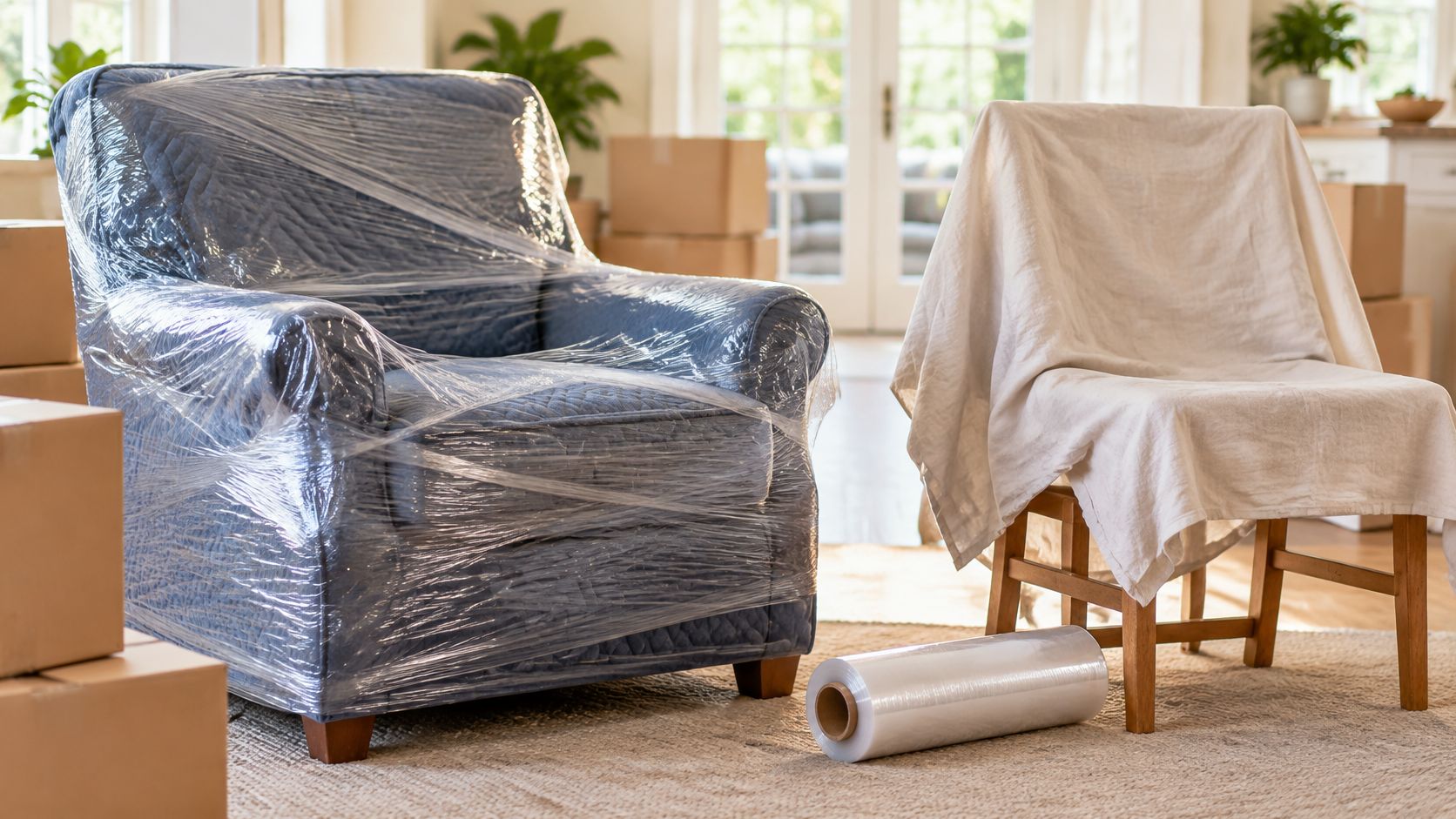
It's Thursday night, the truck arrives Saturday, and there's a roll of cling film on the kitchen bench next to a stack of flattened boxes. The lounge is still in the lounge room, the dining table has a dull patch where a vase sat for three years, and someone has told you that wrapping the lot in plastic will keep it safe. That advice is half right at best.
Plastic wrap moving furniture is a genuine part of a professional protection system, but it's the outer skin of that system, not the system itself. Wrap a damp timber sideboard in film, leave it overnight and you'll grow mould rather than protect a finish. Wrap it in a blanket first, film the blanket down, and you've got cheap, effective protection that comes off in seconds at the other end.
When Plastic Wrap Protects Furniture and When It Doesn't
The bottom line first. Film is safe on a dry, sealed surface for a short trip. The moment a piece is porous, damp or headed into storage, film becomes the wrong tool and something breathable takes its place. Here's how that plays out piece by piece.
| Furniture | Plastic wrap suitable? | Protect first with | Key reason |
|---|---|---|---|
| Glass or metal tabletops | Yes, for short transit | Cardboard corners or pads | Sealed, non-porous surfaces suit film best |
| Dry timber furniture | Yes, as an outer layer only | Moving blankets or furniture pads | Film must come off after delivery |
| Damp or humid-season timber | No | Breathable covers | Film traps condensation against absorbent wood |
| Upholstered sofas and armchairs | Yes, over padding | Furniture pads | Padding goes on first, then the film |
| Leather | Avoid sealed wrap in humid conditions | Breathable cover | Trapped moisture can affect the surface |
| Furniture going into storage | Yes, only if dry and inspected | Pads, each piece wrapped individually | Inspect every piece before long-term storage |
Stretch film is a barrier, and barriers work in both directions. On glass or a powder-coated steel frame there's nothing for trapped moisture to damage, so film keeps dust, grit and rain off during a short run across Sydney. On bare timber, leather or upholstery, the same film holds condensation against an absorbent surface and stops air moving across it.
Three variables decide the call: the material, how damp the piece is, and how long it stays wrapped. Overnight in a sealed truck is a different risk to three weeks in a storage unit through a humid February.
The sequence that works is always the same. Dry the timber and fabric first, cover porous pieces with a breathable layer, add plastic only as an outer temporary skin, strip it after delivery, and inspect before anything goes into long-term storage.
The quick test: if the piece is damp, going into storage, or moving through humid weather, choose a breathable cover instead of film.
If disposal is on your mind before you've even bought a roll, it's worth looking at eco-friendly cling film alternatives so the outer layer you choose matches how you'll deal with it afterwards.
Alternatives to Plastic Wrap and Their Trade-offs
The right protection depends on the surface and the journey. A breathable cover suits timber and upholstery, while a secured pad cushions polished or painted furniture. Corner protectors shield vulnerable edges, but they do not protect the whole piece.
| Option | Best for | Main trade-off | Reusable? |
|---|---|---|---|
| Stretch wrap | Glass, metal and short transit | Single use and hard to recycle | No |
| Moving blankets | Timber, upholstery and padding | Bulky to store and clean | Yes |
| Furniture pads | Polished and painted surfaces | Must be secured with straps | Yes |
| Calico or linen covers | Upholstered pieces and storage | Less water resistant than film | Yes |
| Cardboard corner protectors | Table edges and chair legs | Protects edges only | Sometimes |
Put furniture pads against polished or painted surfaces and secure them so they cannot slide. Moving blankets and calico or linen covers allow air to circulate around timber and upholstery. They offer less protection from water than film, so keep them dry during the move. Cardboard corner protectors cover exposed edges, but leave the rest of the furniture unprotected.
Stretch wrap works best as a temporary outer layer over a dry, padded item. Used directly against a porous surface, it can trap moisture. Reusable covers take up storage space and need cleaning and drying between moves, but can be used again.
Plastic disposal is another trade-off. Australian Government data records that more than 2.5 million tonnes of plastic were consumed in 2018–19, with only 9% sent for recycling and 84% to landfill. The Australian Government's household waste guidance says cling and bubble wrap are accepted at some supermarket drop-off points, though availability varies. Later reporting puts 512,000 tonnes of plastics recovered in 2024–25, a 15% increase on 446,000 tonnes the year before.
Use reusable padding where it suits the furniture, and reserve film for short-term outer protection. For alternatives to plastic cushioning, see these bubble wrap alternatives. If the move is also prompting a refresh, how to refresh a tired dresser covers a separate way to update its appearance.
Wrapping Safely to Avoid Back Strain and Accidents
Most wrapping injuries don't happen on the road. They happen because someone is holding a heavy film roll above shoulder height, twisting to get around a wardrobe, and dragging the piece into position at the same time.
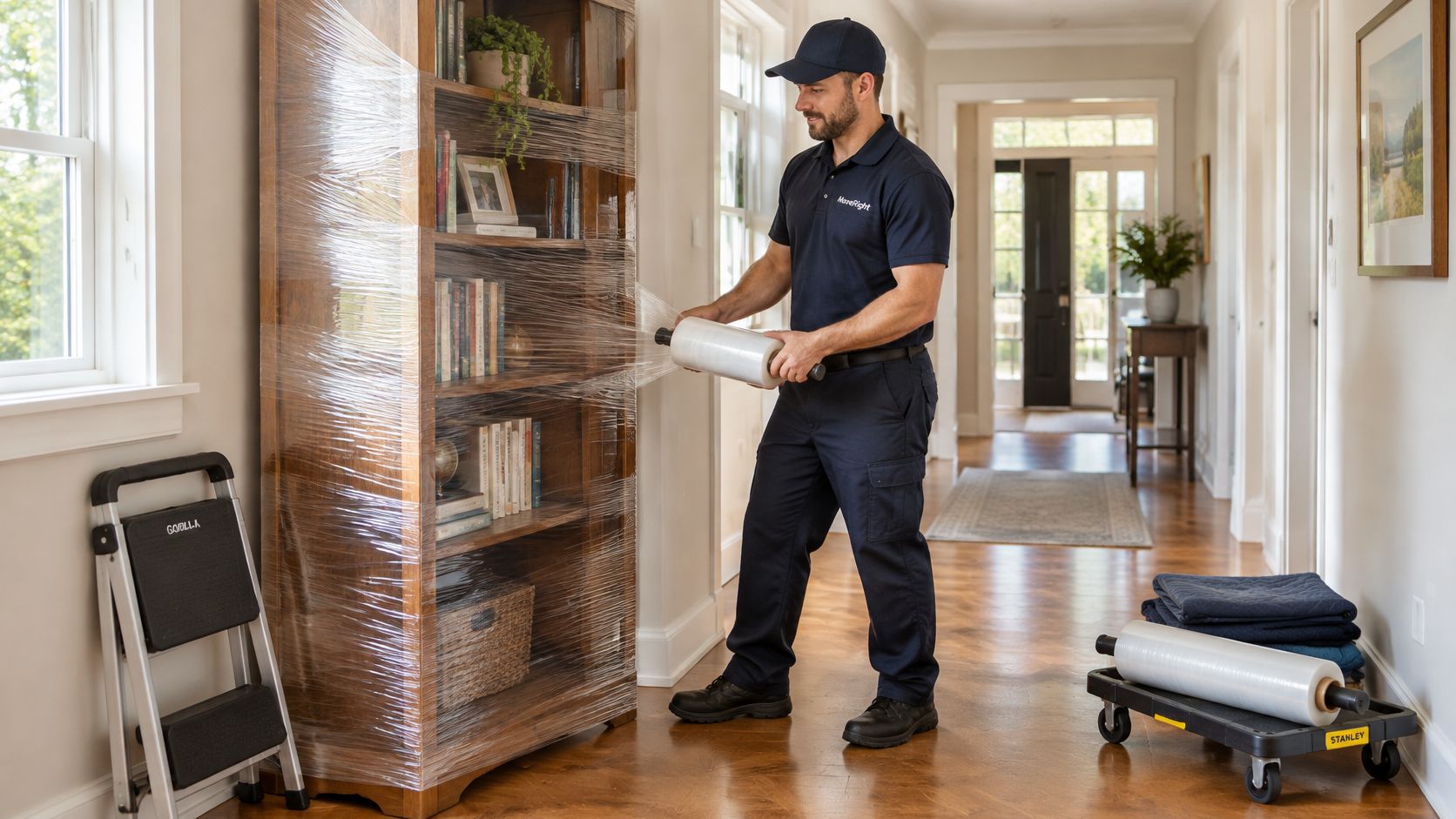
Safe Work Australia identifies lower-back strain from handling heavy rolls of plastic wrapping in awkward or twisted postures, particularly above shoulder height, and recommends design controls such as adjustable spindles and accessible loading positions, as set out in its model code on hazardous manual tasks. The same guidance pushes for smaller loads, mechanical aids and avoiding a manual lift wherever an item can be moved without one.
In practice that means:
- Dispenser at waist height. Film should pull off level with your hands, not from overhead.
- Narrower rolls for hand wrapping. A lighter roll you can control beats a wide one you fight.
- Rotate the task. If two of you are wrapping, swap sides and swap pieces every few minutes.
- Trolley or mechanical aid for heavy pieces. Film tension is not load restraint.
Position first, wrap second: hauling film around a standing wardrobe or sofa is how people overreach, twist and lose balance.
Sydney homes make this worse than the average job: stairs, narrow hallways, uneven garden paths and doorways that were never built for a three-seater. If a wardrobe has to come out of an upstairs bedroom, lay it flat on a blanket on the floor, wrap it there, then carry it. Our guide to moving heavy furniture covers the carry itself. Anything too heavy for one person gets two, without exception.
How to Wrap Furniture in Plastic Wrap Step by Step
Plastic wrap works best as a short-term outer layer over suitable padding. The order matters: film can hold protective layers in place, but it does not replace padding or secure furniture against movement during transport.
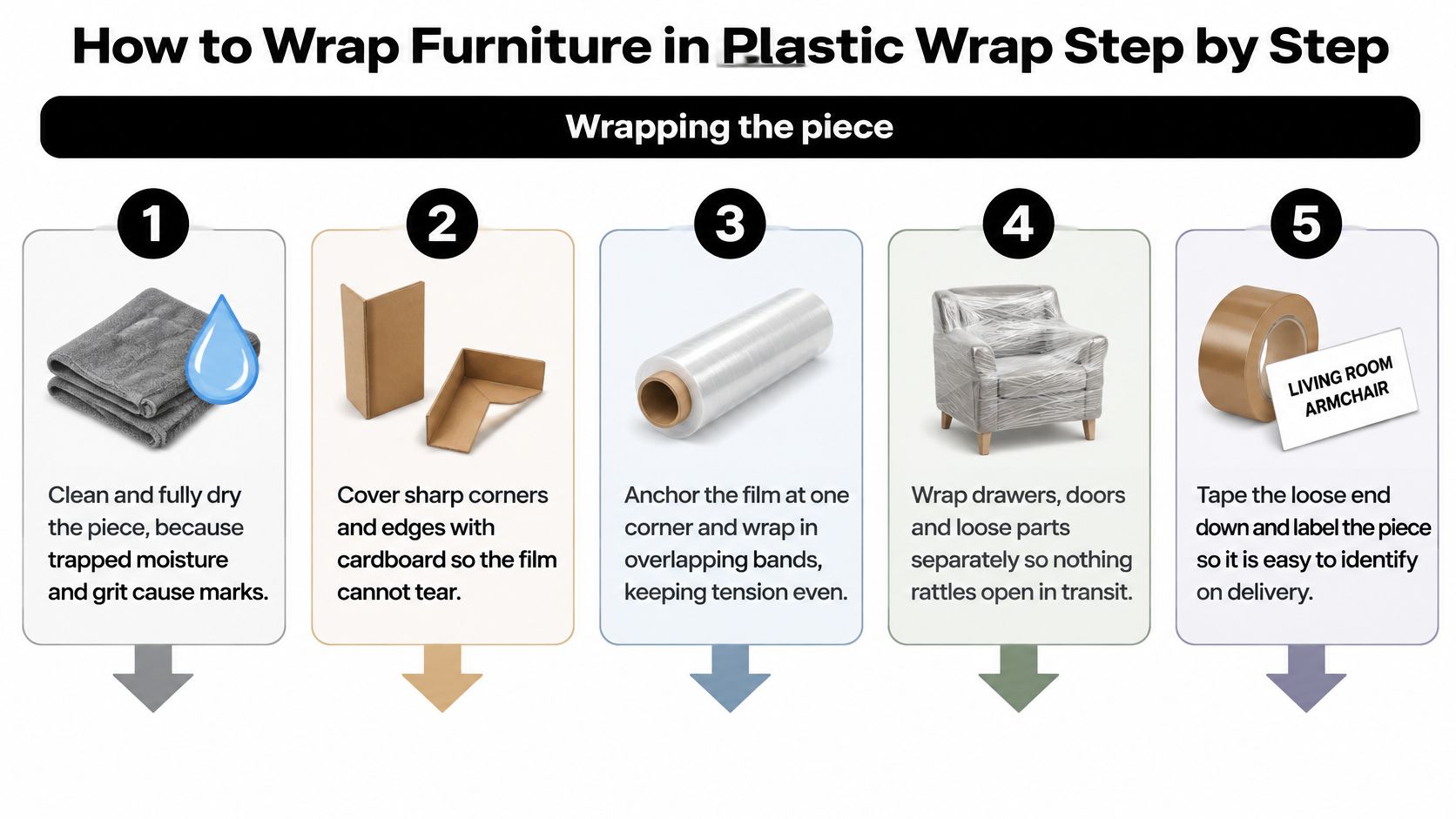
- Clean and dry the furniture. Wipe away dust and grit, then let the piece dry completely. Dirt trapped beneath padding can scratch a finish, while film over damp furniture can hold moisture against it.
- Pad polished, painted and upholstered surfaces first. The Australian Furniture Removals Association's 2024 recommended industry standards advise using furniture pads to protect these surfaces from scratches.
- Add a suitable cover. Use a plastic, calico or linen cover where needed. Choose a breathable cover for porous furniture that needs airflow.
- Apply the film over the protective layers. Overlap each band and keep it snug enough to hold the padding in place. Pulling it tight can compress upholstery or put pressure on timber.
- Add padding at floor contact points. The areas touching the vehicle floor need protection from contact and vibration. More film is not a substitute for padding.
- Secure the furniture against movement. Use suitable restraints such as webbing or tape straps. Plastic film holds layers together; it does not restrain a load.
- Remove the film once the furniture is delivered. It can protect the covering during handling and transport, but leaving it sealed around furniture for extended periods can trap moisture.
Furniture going into storage should be wrapped and padded piece by piece. Home Removals Sydney supplies boxes, bubble wrap and tape for moving. Customers can pair those materials with their own furniture pads and plastic film.
Check before moving the piece: If the furniture slides when nudged, it needs securing. If film touches a delicate finish directly, add a protective layer first.
Mistakes That Cause Mould, Scratches and Tears
The most expensive mistake in this whole process is sealing a damp timber piece in film overnight. Moisture has nowhere to go, so it sits against the grain, and by morning you've got a musty smell that no amount of polishing removes.
Most other failures follow a short list.
| Problem | Likely cause | Fix |
|---|---|---|
| Musty smell or spots on timber | Film sealed around damp furniture | Unwrap, dry thoroughly and switch to a breathable cover |
| Scratches on polished or painted surfaces | Film or grit pressed against the finish | Pad first and wipe the surface clean before wrapping |
| Torn or slipping film | Wrapped before positioning or onto sharp corners | Add corner protectors and wrap after the item is set down |
| Dents in sofa or chair fabric | Tight film pressing into stuffing | Pad first and keep the film loose and overlapping |
A musty smell or pale spots on timber are the first signals to act on. Unwrap the piece, get it somewhere dry with air moving around it, and swap film for a breathable cover before it goes any further. Leave it sealed and the smell becomes a permanent feature of the drawer interior.
Scratches on a polished or painted surface almost always trace back to one of two things: film applied straight onto the finish, or a dusty surface wrapped without a wipe. Neither is a wrapping skill problem; both are a sequence problem.
Torn or slipping film usually means the piece was wrapped while standing and then dragged, or a sharp corner went in unprotected and split the wrap on the way to the truck. Dents in upholstery come from pulling film tight across a cushion rather than padding the cushion and letting the film sit loose over the top.
On arrival, inspect corners, timber edges and upholstery before the film comes off. Note anything you find while the wrap is still in place, because that's when it's clear whether a mark happened in transit or was already there.
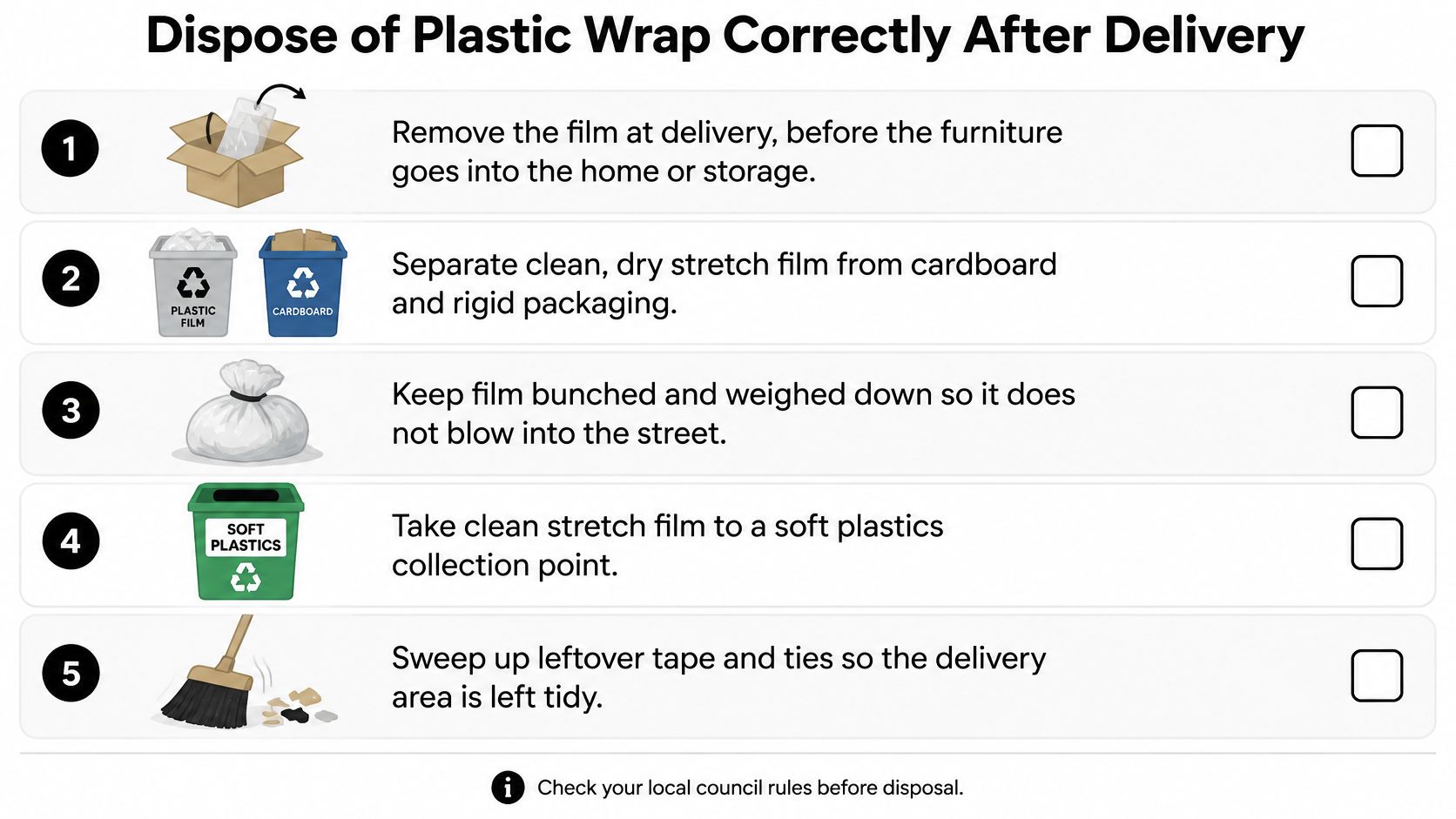
Dispose of Plastic Wrap Correctly After Delivery
Once the furniture is inside, the stretch film still needs a destination. Keep it separate from cardboard and rigid packaging, and don't put it in the yellow recycling bin.
- Remove the film after delivery and before storing it.
- Separate clean, dry film from tape and other packaging.
- Keep dirty or contaminated film out of soft-plastics collection.
- Check your council's guidance or an approved drop-off point, and confirm what it accepts.
- If the film is clean and intact, store it for reuse rather than taking it straight to disposal.
A 2024 NSW material-flow study found that only 4% of households had access to a kerbside service accepting polymer-film packaging, and that polymer films with poor recycling pathways made up 42% of the plastic-packaging stream, according to published material-flow research. Check local options before assuming used wrap can be recycled.
Clean, dry film kept aside for reuse is preferable to contaminated wrap in a collection stream that cannot accept it.
Request a Quote for Furniture Wrapping in Sydney
Match the protection to the material, pad before film, and take the film off after delivery. That's the whole method, and it's the difference between furniture that arrives as it left and furniture that needs a repairer before it's unpacked. If a piece is going interstate, the same rules hold, just with a longer window in which moisture can do damage.
We handle this as part of the move rather than as an add-on you have to arrange separately. Residential moves with us include packing and loading, transport and unpacking, and the team can disassemble and reassemble furniture so pieces travel safely and are set up properly at the new address. Every move is fully insured, and we supply the boxes, bubble wrap and tape so you're not hunting for a roll at 9pm.
An accurate quote comes down to your inventory, your timeline and anything unusual about the job. The fastest way to get an accurate one is to list each piece, note what it's made of (timber, glass, metal, upholstery or leather), say whether it's going into storage, and give your move date. That information changes the answer for a leather lounge compared with a glass tabletop.
If you're also managing the arrival end, this guide to how to prepare for furniture delivery is worth reading before the truck leaves.
Home Removals Sydney wraps and packs furniture as part of every residential move, padding the piece before film goes anywhere near it and unwrapping at delivery so nothing sits sealed in a hallway. Tell us what you're moving, what it's made of and when, and we'll recommend the right protection for each piece, from a single armchair to a full household or an office relocating across the city. Visit Home Removals Sydney to request your quote and get the wrapping sorted before moving day.
