

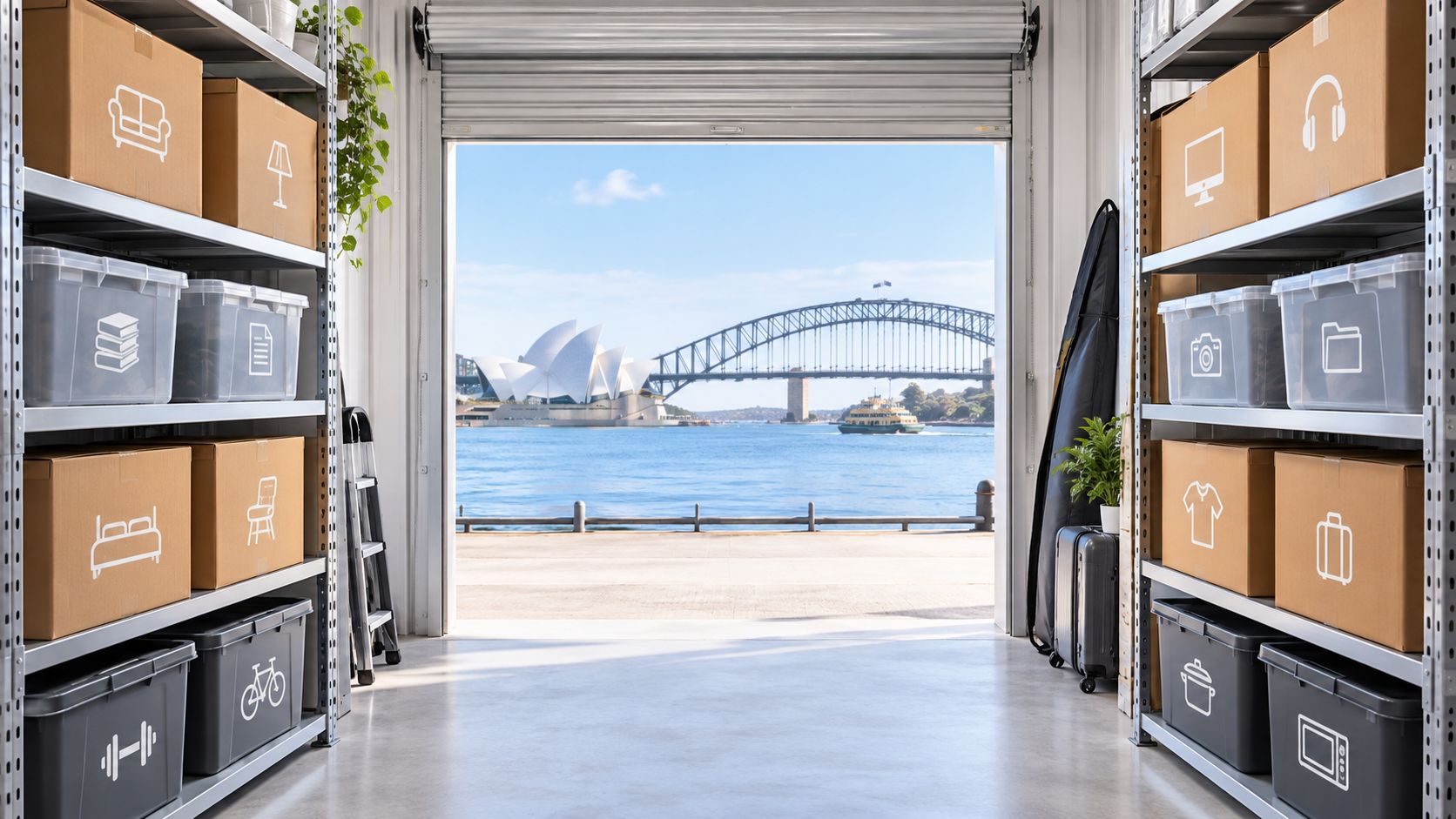
Long-term storage means keeping household or business possessions in a dedicated, secure facility for an extended period, typically months or years rather than the short gap between moving out and moving in. Australia and New Zealand have 3,380 self-storage facilities, providing approximately 7.5 million square metres of storage area, with average occupancy of 85% and 9.2% of adults using self-storage, according to the Self Storage Association of Australasia's 2025 industry snapshot.
You might be between homes after selling in Sydney, waiting for an interstate property to settle, or clearing rooms before a renovation begins. Perhaps your office relocation is finished, but the new premises isn't ready for every filing cabinet, desk, pallet, or archived document. In each situation, storage separates ownership of your belongings from immediate access to a property.
That separation is useful, but it creates responsibilities. Items need suitable packing, controlled conditions, sensible insurance, clear labels, and a retrieval plan. A locked door alone won't protect a timber dining table from damp, or help a business locate an important record years later.
Introduction to Long Term Storage
A family in Sydney might sell a larger home and move into a smaller apartment, keeping selected furniture until they decide what will fit. Another household may move out while builders renovate the kitchen and living areas. For a business, an office relocation can leave computers, archived files, spare equipment, and furniture temporarily without a practical home.
In these situations, long-term storage is planned retention, not just leaving possessions somewhere for a while. You place furniture, documents, stock, equipment, or personal items in a dedicated facility for an extended period, then keep them protected and retrievable until you need them again.
The time period matters, but it isn't the only test. A few months can become long-term storage if you won't visit often, while a short stay may still need careful preparation when the items are valuable, fragile, or difficult to replace. The key question is whether your belongings are entering a managed pause rather than waiting for the next removalist truck.
A useful rule: if you won't remember exactly where an item is, how it was packed, or when you should inspect it, treat the arrangement as long-term storage.
Storage has become a normal part of household and business asset management. The SSAA reports roughly one storage unit for every 17 households, which illustrates how storage supports downsizing, renovations, interstate relocation, inventory holding, and business continuity. For Sydney customers comparing Removalists Sydney, Home removals Sydney, or Interstate removals, the storage decision should be made alongside the moving plan, not after the truck arrives.
This guide explains how self-storage, containers, and racked warehouses differ, when long-term storage makes sense, how to prepare common belongings, and which contract, insurance, and access questions deserve an answer before you commit.
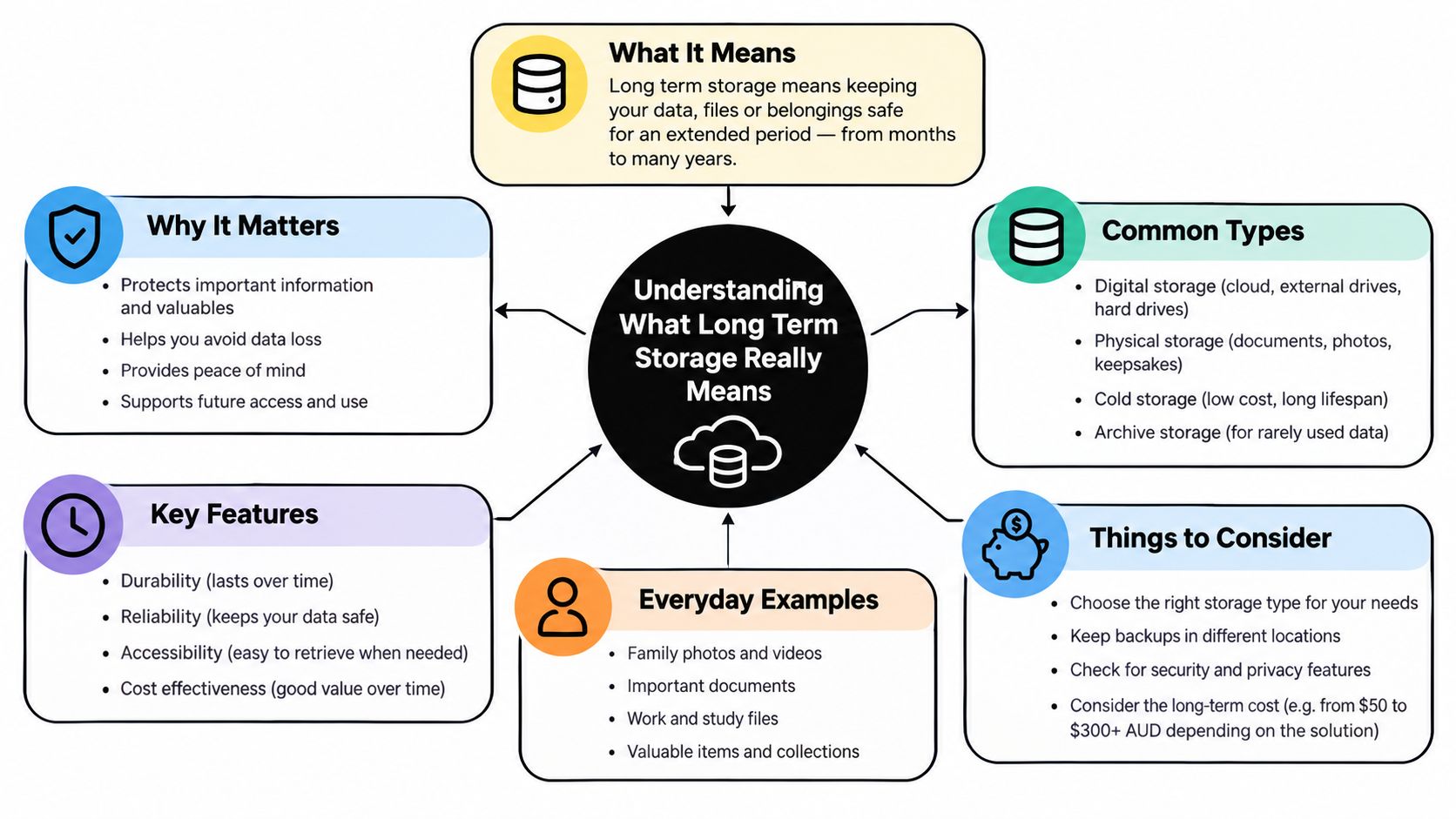
Understanding What Long Term Storage Really Means
Think of a storage unit as a managed pause button, not a forgotten cupboard. You press pause on using your possessions, but you still need to preserve their condition, know where they are, control who can access them, and decide when they should leave storage.
A short-term arrangement often covers a straightforward transition. You may access boxes frequently while moving between properties, and the packing may be temporary. Long-term storage needs more thought because repeated handling, environmental exposure, forgotten dates, and poor labelling create more opportunities for loss or damage.
Four questions define the arrangement
How long will items stay? Months or years require stronger preparation than a brief gap between leases.
How often will you visit? Frequent access favours a private unit with a clear walkway. Infrequent access makes labelling, an inventory, and safe stacking more important.
What condition do items need? Documents, artwork, electronics, timber, fabric, and appliances don't all tolerate the same environment or packaging.
What happens next? Set a review date. You may retrieve, sell, donate, digitise, relocate, or dispose of items later. Without a review, storage can become an expensive holding pattern.
The National Archives of Australia's guidance on retaining and managing data recommends storage methods and facilities that protect integrity and keep information accessible. Its approach includes unique labels, documented retention or review dates, retrieval records, and redundant copies through replication and backup for digital records.
A simple working system
Label each box with a room or category, a short description, a priority, and a review date. Keep an inventory on paper and digitally, then record anything removed or returned. Photograph valuable items before packing and keep serial numbers with the inventory.
If you're storing a few lounge pieces while a renovation finishes, you may need only a practical household system. If you're holding business records or stock, use a more disciplined catalogue. In both cases, long-term storage means preserving access and usability, not merely reducing clutter.
Comparing Self-Storage, Containers, and Racked Storage
Sydney customers usually choose between three broad arrangements. The right option depends less on the label and more on how often you need access, how goods are packed, and whether you're storing household belongings or commercial inventory.
Self-storage units give you a private space that you can generally access according to the facility's hours. They suit furniture, cartons, personal possessions, and smaller business equipment. If you expect to collect a lamp, file, or box during the storage period, walking directly into your unit is convenient. You can compare practical features through easy storage units in Sydney.
Container storage places goods in a sealed container, often after a removalist loads them. This can be efficient for a household storing most of its furniture during a renovation or property gap. The trade-off is access. If the container is stacked tightly or stored off-site, retrieving one item may require more planning.
Racked warehouse storage suits palletised stock, office equipment, trade supplies, and warehouse transfers. Goods are placed on shelving or racking rather than spread across a private room. The National Archives provides a large-scale example of this principle, holding more than 45 million items across almost 380,000 metres of shelf space in environmentally controlled conditions on shelving suited to each format, as described in its collection preservation information.
| Storage type | Best suited for | Access | Typical duration fit |
|---|---|---|---|
| Self-storage unit | Household furniture, cartons, personal goods, small business items | Direct access according to facility rules | Short to long term |
| Container storage | A complete household load or grouped furniture | Less convenient when items are tightly packed or off-site | Medium to long term |
| Racked storage | Pallets, stock, equipment, and business inventory | Usually arranged through the warehouse | Long term and ongoing business use |
A family renovating a terrace may prefer a unit if it needs occasional access. A warehouse relocating interstate may prefer racked storage for labelled pallets. Someone keeping a full household untouched until a property settles could find container storage practical, provided the contract explains retrieval arrangements.
When Long Term Storage Makes Sense
Storage earns its place when your belongings still matter, but your current property cannot hold them safely or conveniently. The decision often begins with a change in circumstances rather than a desire for extra space.
A downsizing household may keep a solid timber table, bookcase, or guest-room furniture while deciding what belongs in the new home. Storage creates breathing room. The family can move into the smaller property without making every disposal decision during an already stressful sale and removal.
Renovations create a different problem. Dust, trades, paint, and restricted access can damage furniture or make rooms unusable. Moving sofas, artwork, appliances, and cartons into storage lets builders work through the house while the owners keep their possessions together and protected.
An interstate move may leave a gap between leaving Sydney and settling into a new address. Rather than sending everything to a property that isn't ready, a household can store belongings, travel with essentials, and arrange final delivery when access is confirmed. That can be particularly useful when the move involves different removal schedules.
Extended travel or overseas work can also justify storage. You may not want to furnish an empty rental, leave valuable belongings with relatives, or sell items you'll need when you return. A planned inventory makes the arrangement easier to hand over or manage while you're away.
Businesses use long-term storage for archived records, excess stock, equipment, and furniture between premises. During office relocations, storage separates the old lease from the new fit-out. During warehouse moves, it can keep labelled inventory secure while staff reorganise receiving and dispatch.

The common thread is simple: storage separates possession from premises. Your goods remain yours and remain available, but they no longer need to occupy a home, office, or warehouse that is under pressure.
Packing and Protecting Items for Months or Years
Long-term packing starts with the item, not the carton. A clean, dry mattress needs different protection from an electronic device, and business files need a different system from a dining chair.
Sydney's humidity makes environmental control a practical concern. Australian archival guidance recommends roughly 18–20°C and 45–50% relative humidity for specialised storage, while general storage should remain stable and below 60% humidity. Sydney's long-term average morning relative humidity at Observatory Hill is about 69%, with monthly averages ranging from 61% to 74%, according to the National Archives guidance on preserving objects.
Prepare belongings before the truck arrives
- Dry appliances: Empty, clean, and dry washing machines, fridges, dishwashers, and other appliances. Leave doors slightly open where appropriate so trapped moisture can escape.
- Clean fabric: Vacuum and clean sofas, rugs, curtains, and mattresses before packing. Dirt and food residue can attract pests or become harder to remove later.
- Disassemble furniture: Take apart large tables, bed frames, and shelving where practical. Wrap parts, protect corners, and keep screws in a labelled bag attached to the relevant item.
- Use breathable covers: Fabric covers or purpose-suited moving blankets allow some air movement. Sealed plastic can trap moisture against timber, leather, fabric, or metal.
- Protect documents: Use clean, stable cartons, keep files off the floor, and create an index. Don't mix essential identity documents or medication into general storage.
- Treat electronics carefully: Clean devices, remove batteries where suitable, protect screens and ports, and record serial numbers. Avoid placing heavy items on top.
- Give artwork and antiques extra attention: Use suitable wrapping, avoid direct sunlight, and ask the facility whether its environmental conditions match the value and sensitivity of the item.
Before closing the door: raise cartons on pallets or shelving, leave airflow around stored goods, and place heavier boxes below fragile items.
Don't put cartons directly on a concrete floor. Leave a route to priority boxes, group items by room or category, and photograph the finished layout. Schedule inspections rather than assuming everything will remain fine. This matters after seasonal humidity changes, long transport, or a period when nobody has entered the unit.
For a practical furniture checklist, see how to store furniture long term. The preparation choices you make before storage often matter more than the label on the unit.
Costs, Contracts, Insurance, and Security
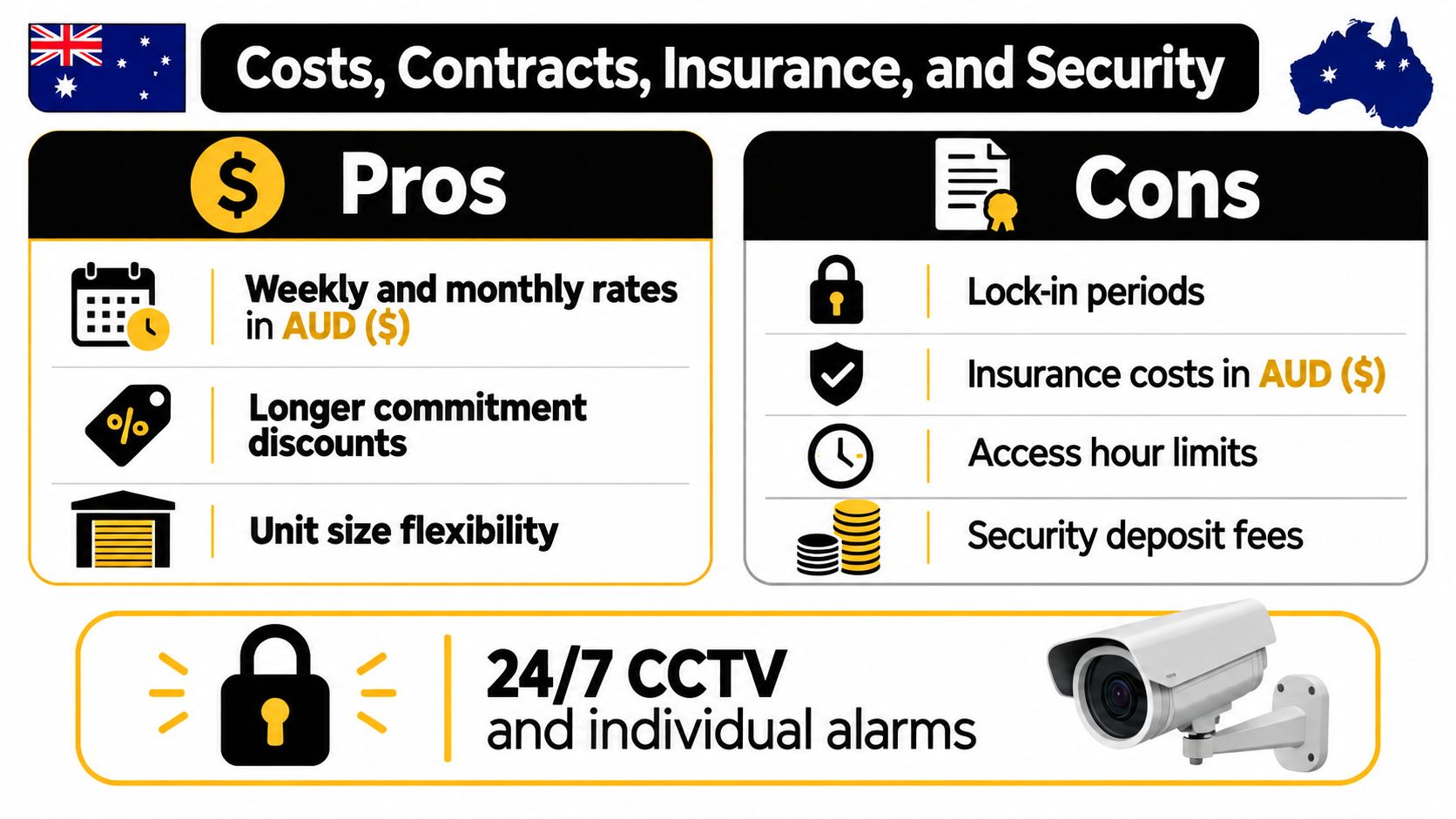
The monthly rate is only one part of the storage decision. Providers may charge weekly or monthly, offer different terms for longer commitments, and price units according to size, access, and included services. A smaller unit can cost less, but poor packing may force you into extra handling or a second space.
Ask for the complete arrangement in writing. Check the minimum term, notice period, payment method, access hours, move-out process, and any charges connected with changing unit size or arranging retrieval. If you need to visit early or late, confirm whether 24/7 access is available for your unit and what identification or pass-key rules apply.
Insurance needs equal attention. Your home, business, or moving policy may not automatically cover goods in storage, or it may exclude flood, mould, pests, accidental damage, or certain high-value items. Photograph valuable belongings, record serial numbers, and ask exactly which events the policy covers and which exclusions apply.
Australian public-sector guidance notes that mould can begin developing around 60% relative humidity, and that fluctuations greater than 10 percentage points in 24 hours increase risk. Before signing, ask whether the facility monitors climate conditions, how it handles water ingress, and what happens if goods are damaged. You can also review this security guide for self-storage for a broader explanation of access controls, surveillance, alarms, and facility security questions.
Look beyond the cheapest rate
The lowest advertised rate may not be the lowest total cost. Inaccessible packing can make every retrieval harder, an untracked inventory can consume staff time, and unsuitable humidity can damage items that are expensive or impossible to replace.
For a Sydney household, that might mean paying less for a unit but losing access to a child's furniture when plans change. For a business, it could mean searching through unlabelled cartons for a document or delaying work because equipment is buried behind stock. Compare storage costs in Sydney by considering access, protection, insurance, handling, and exit terms together.
Choosing a Long Term Storage Provider in Sydney
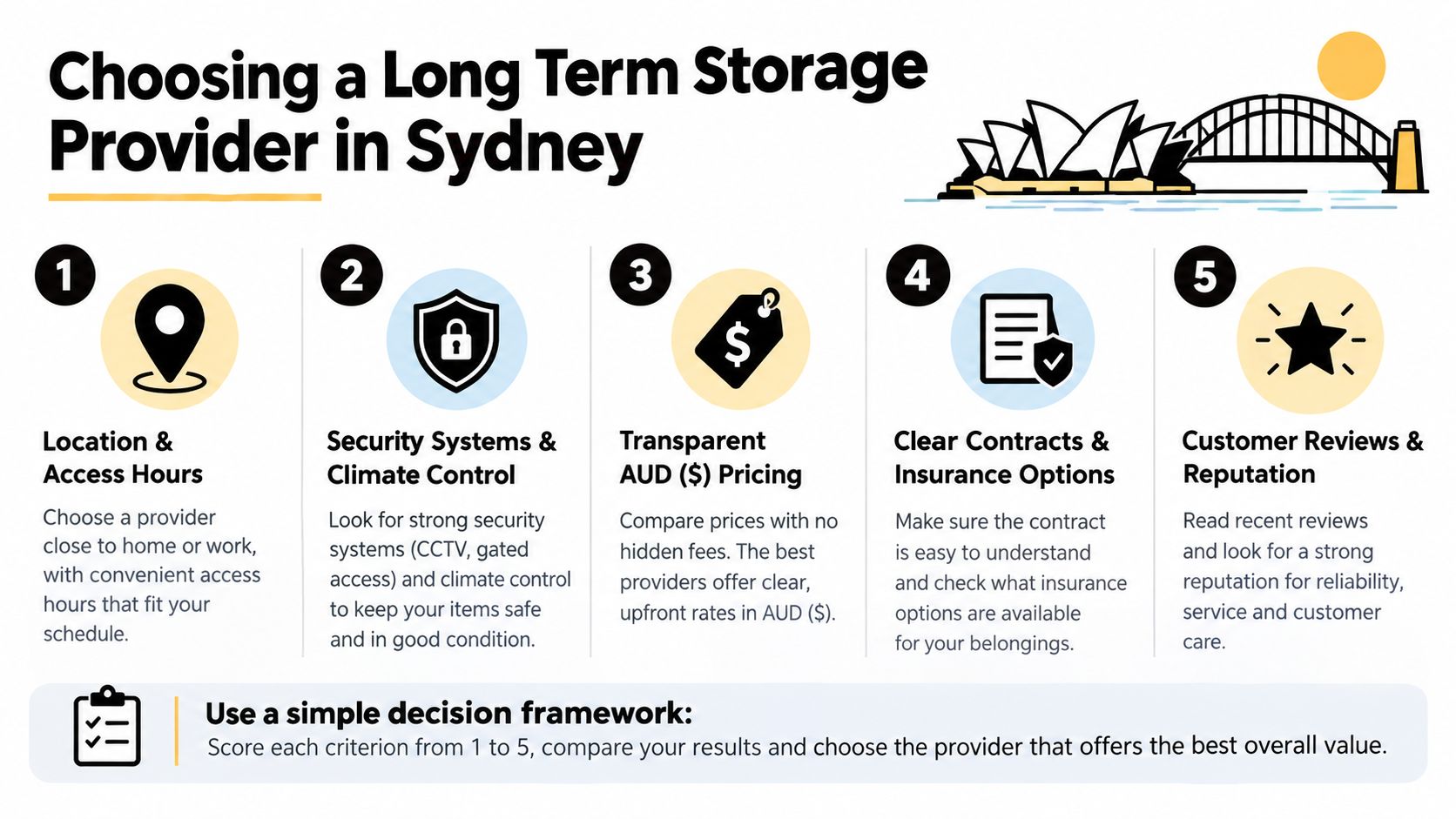
A good provider should make the storage arrangement understandable before you sign. Start with location and access. A unit near your home may suit frequent visits, while a warehouse farther away can work for goods you won't need often. Ask how access works, whether staff handle retrieval, and whether the opening hours match your likely routine.
Next, inspect protection rather than relying on a general promise of security. Look for controlled entry, surveillance, alarms, suitable shelving or pallets, clean loading areas, and an answer about climate control. Request transparent pricing that explains the unit size, payment cycle, deposit, access conditions, insurance options, and notice required when you leave.
Removal services can simplify the move when the same team packs, transports, and places goods into storage. For example, Home Removals Sydney offers home, office, warehouse, and interstate relocation services alongside secure storage with 24-hour access, so customers can ask whether one coordinated booking suits their timing. The important point is continuity: fewer handovers can make labels, condition records, and responsibility easier to track.
Business records need their own calendar
Sydney businesses shouldn't label every archive box with one disposal date. The Australian Taxation Office generally requires most business records to be retained for five years, with the period usually beginning from the later of when the record was prepared or obtained, or when the related transaction was completed, not when the box entered storage. The rule is explained in the ATO's overview of record-keeping requirements.
Some records need longer retention, particularly documents connected with assets, later tax returns, or particular regulatory requirements. Create a catalogue by record type, transaction, retention period, review date, and disposal approval. Keep digital backups protected and accessible, rather than treating the physical archive as the only copy.
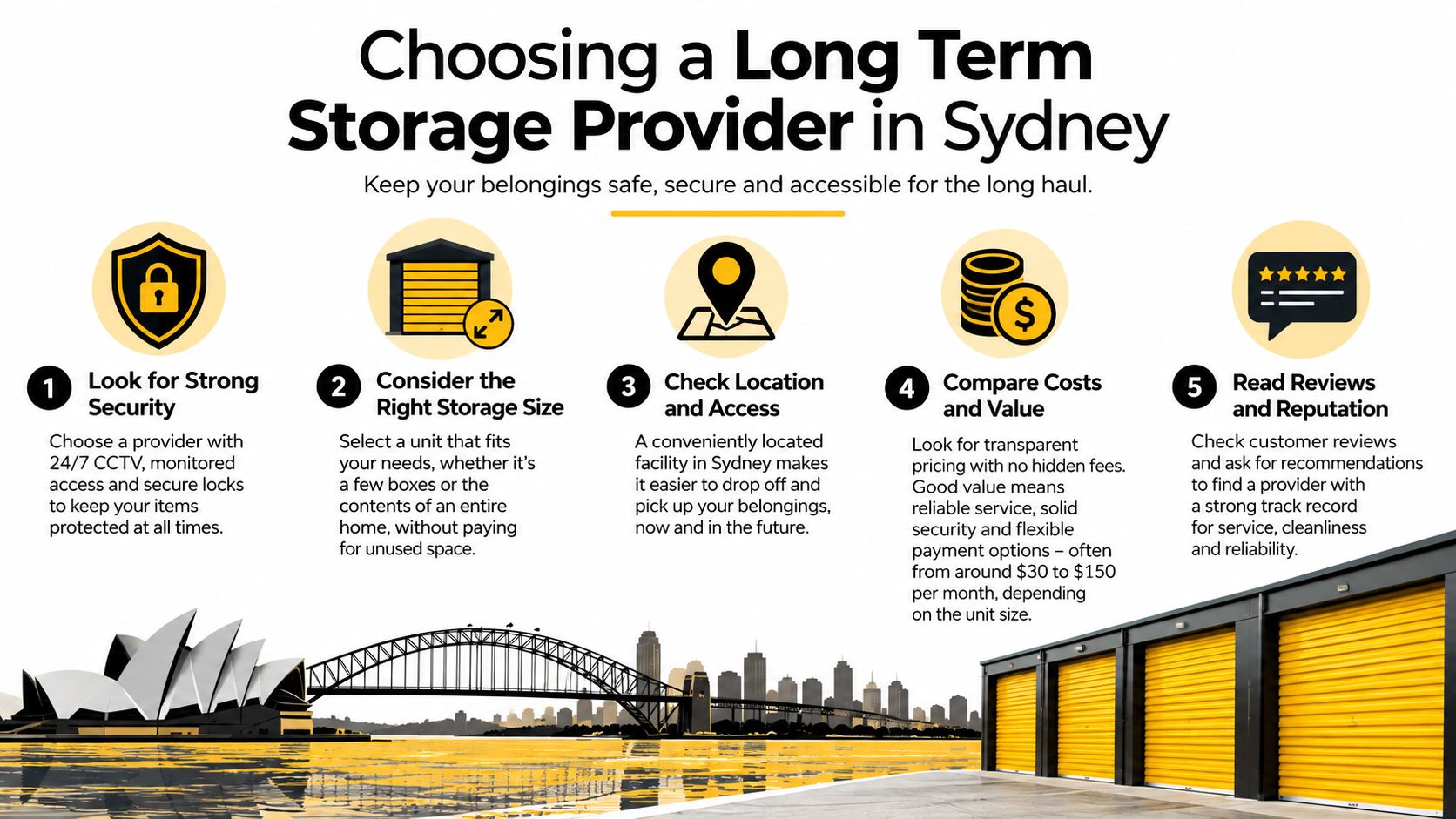
Before choosing, score each provider on five practical questions:
- Access: Can you reach priority belongings when you need them?
- Protection: Are security and environmental controls suitable for your goods?
- Pricing: Is the full cost clear, including access and exit terms?
- Insurance: Do the policy conditions match the risks you're accepting?
- Moving support: Can the provider coordinate packing, Home removals Sydney, Furniture removals Sydney, Office relocations, or Interstate removals?
Ask for a quote covering the complete journey, including collection, packing if needed, transport, storage, access, and final delivery. A fast, itemised answer is more useful than a low headline rate that leaves important details uncertain.
Home Removals Sydney can coordinate secure long-term storage with home moves, furniture removals, office relocations, warehouse transfers, and interstate removals across Sydney and Australia. Visit Home Removals Sydney to request a quote, explain what you need stored, and arrange a fully insured move with an experienced local team.
