

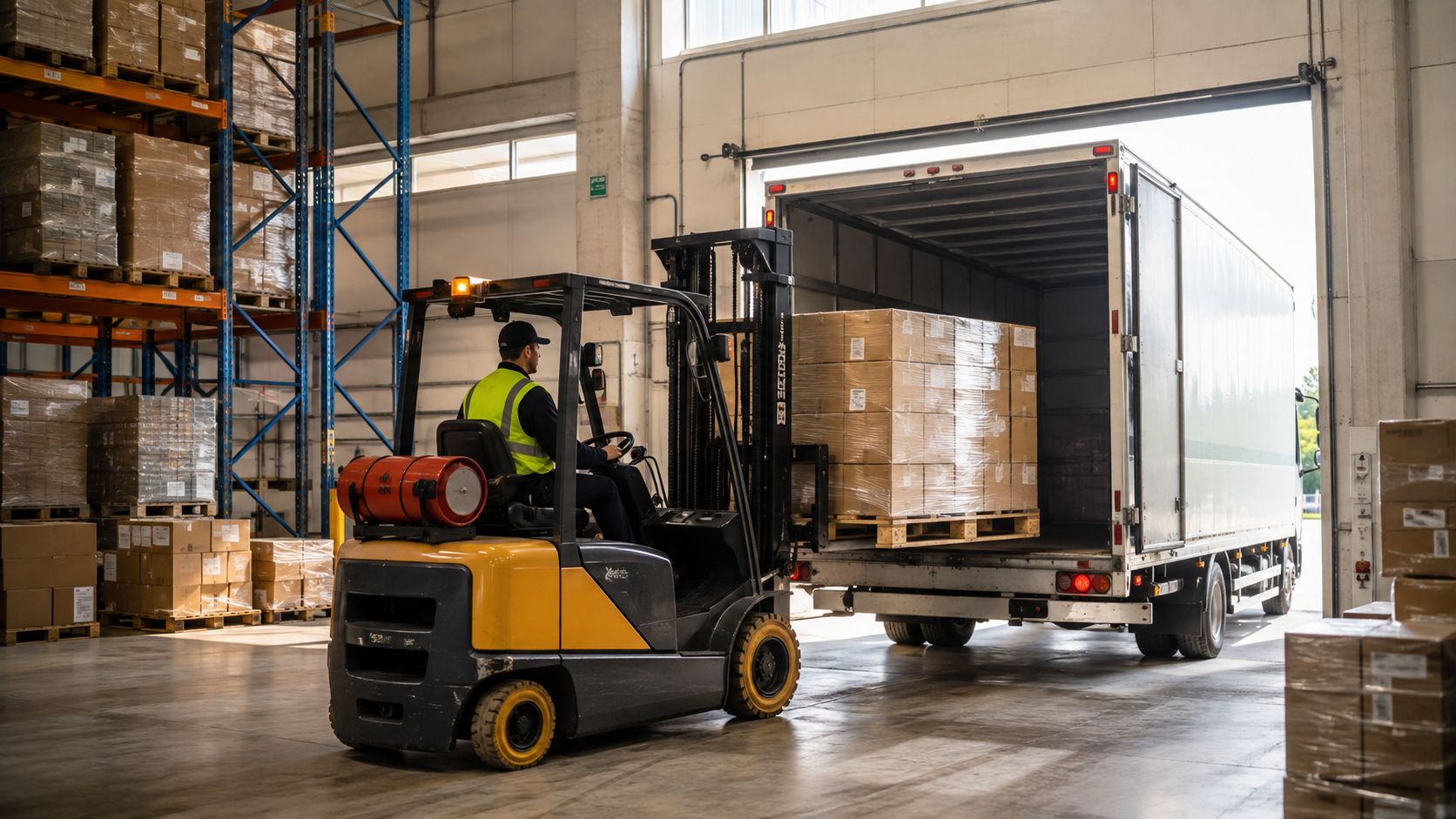
You can get a warehouse lease notice, a truck booking, and a racking installer lined up, then still lose days because the move wasn't built around the site, the stock profile, or the pace of Sydney freight. That's the part many teams miss. Warehouse relocation services aren't a bigger version of home removals, they're a controlled operational transfer where inventory, equipment, labour, compliance, and IT all have to land in the right sequence.
In Sydney and across NSW, that matters even more because industrial space is tight and the clock is usually against you. Savills reported a national industrial and logistics vacancy rate of just 1.6% in Q3 2024, with Sydney at 2.0% and other major cities also low, which means businesses often have to move in stages, not all at once. Savills also said e-commerce made up 21% of warehouse space demand and logistics and distribution 49%, a reminder that most warehouse occupiers are dealing with fast-moving stock, not static storage (Savills market data). For operators comparing Removalists Sydney, Office relocations, or even large-scale Interstate removals, a warehouse move sits in its own category because downtime hits fulfilment, receiving, and dispatch all at once.

Why Warehouse Moves in Sydney Demand a Different Playbook
The warehouse manager who calls three weeks before lease expiry is already behind. I have seen that pattern in Sydney more than once. A business assumes the move is just transport, then discovers the actual work is clearing racks, keeping stock counts accurate, and getting the new site ready before the first pallet lands. In a city where spare industrial space is tight, that mistake turns into a compressed cutover and an expensive weekend.
Tight vacancy changes the move itself
Sydney's industrial vacancy sits so low that tenants often have to work to a fixed handover window rather than move at their own pace. That changes the service model completely. Instead of one clean load-out and load-in, the job usually needs temporary storage, staged transfers, and tight sequencing for pallets, racking, and machinery.
The scale of freight movement across Australia shows why these moves are transport-heavy as well as labour-heavy. The ABS reported 1.7 billion tonnes of freight moved in 2021–22, with road freight carrying 72.9% of the total, which matches the way warehouse relocations depend on trucks, docks, and timed arrivals (ABS freight data). A warehouse move plan has to be built around freight access, not around an office-style checklist.
Practical rule: if the receiving dock, forklift access, and racking plan are not sequenced before the trucks roll, the move is already half-disrupted.
For businesses comparing Home removals Sydney with industrial support, the difference is obvious on the ground. Furniture can sit in a hallway. Inventory cannot.
Industrial moving companies need to work to the rhythm of dispatch, receiving, and site readiness, not just the clock on move day.

Building Your Relocation Timeline and Inventory Strategy
Start early or pay for it later. The most reliable warehouse moves I've managed began 6 to 12 months before go-live, not because people love paperwork, but because scope, stock, staffing, and site constraints all need time to settle. That early window gives you room to decide whether the move is partial or total, which matters more than many expect.
Work backwards from go-live
A clean plan usually runs in layers:
- 12 months out, confirm scope: decide whether the move covers the full operation or only part of the stock, equipment, or value-added services.
- Around 90 days out, complete the inventory audit: reconcile what's moving, what's staying, and what can be written off or disposed of.
- Around 30 days out, finalise zone mapping and staff training: people need to know where stock lands and how the new workflow works.
- In the final week, control transactions tightly: freeze or limit changes near cutover so the inventory record doesn't drift.
That sequence lines up with independent relocation guidance that recommends planning well ahead, auditing inventory before the move, and then training staff and validating processes before go-live (warehouse relocation planning guidance). The key isn't just scheduling. It's protecting master-data accuracy so the team doesn't spend the first week hunting misplaced cartons.
Stratify stock before anything gets loaded
ABC or Pareto-style prioritisation works because not every SKU deserves the same treatment. Fast movers should go first, slow movers can follow later, and awkward or low-turn stock can be staged with more flexibility. That's how you preserve fulfilment capability while the move is still in progress.
I've also seen projects stall because item data was messy. Standardising dimensions, weights, handling classes, pack hierarchies, and replenishment parameters before the first load leaves the site saves hours at the receiving end. It also reduces the kind of mis-slotting that happens when the new warehouse is treated like a blank box instead of a live operation.
Use this cubic metre calculator when you need a rough check on volume before you book trucks and storage. It won't replace a proper audit, but it does help stop underestimating how much space the move will really consume.
The best warehouse moves don't try to move everything equally. They protect the stock that pays the bills first.
Validating the New Facility Before Moving a Single Pallet
A new warehouse can look ready and still fail the first live load. The mistake I see most often is people checking the building visually, then assuming the operational details will work themselves out. They won't. Floor loading, clear height, dock setup, and workflow design all determine whether the site can safely function from day one.
Check the structure before the stock
The validation gate must be strictly enforced. Confirm that the floor can handle intended racking and forklift traffic, that the clear height suits the rack design, and that dock doors match the equipment you're using. If column spacing or aisle width forces a compromise, slotting strategy changes with it.
That is why the facility inspection has to happen before any transfer starts. A rack layout that looks efficient on paper can become unworkable if the load paths, turn radii, or receiving zones don't line up with the actual building. Skipping that step creates a chain reaction, stock lands in the wrong place, handling time rises, and the team starts reworking the layout under pressure.
Test the systems, not just the room
WMS readiness is just as important as the building shell. Scanners, network points, receiving workflows, and user access all need to be tested before cutover. If the team can't receive, confirm, and replenish properly, the new warehouse becomes a storage shed with a barcode printer.
A practical site-check list should cover the following:
- Floor load and racking fit: confirm structural capacity against the planned rack and forklift use.
- Dock and access points: verify dimensions, height, and vehicle access.
- Utilities and systems: test power, lighting, fire suppression, and network coverage.
- Workflow layout: confirm picking, replenishment, receiving, and despatch paths.
- Operational sign-off: only move stock after the systems have been tested and the team knows the process.
If the receiving workflow isn't ready, the relocation isn't ready.
The broader lesson is simple. A warehouse move isn't complete when the truck unloads. It's complete when the site can process inventory without improvisation.

Packing, Palletising, and Coordinating Road Freight
Once the site is validated, the physical move has to be prepared like freight, not like house contents. Cartons, components, and machinery should be packed for fast identification and safe lifting, because confusion at unloading costs real time. If pallets aren't labelled clearly, the team ends up sorting freight in the yard instead of placing it in the right zone.
Build freight for sequence, not just protection
Good palletising starts with consistent load shapes. Heavy items should sit low, fragile or high-value items need extra restraint, and mixed pallets need clearer labelling than is often expected. When racking components, mezzanine parts, or machine elements are involved, separating by install sequence is more useful than grouping by department.
That's where road freight planning matters. Sydney motorway access, depot time windows, and interstate corridors all affect how load-outs should be sequenced. A truck arriving too early can create congestion. A truck arriving too late can stall the whole wave.
Home Removals Sydney can handle warehouse packing, wrapping, transport, and setup as part of a single move workflow, which suits projects where multiple freight types need to arrive in order rather than all at once. That kind of coordination is what keeps the receiving dock from turning into a sorting floor.
Match trailer capacity to the actual load
I've watched teams book one oversized truck and still end up under pressure because the load mix wasn't considered properly. A smarter approach is to match vehicle type to freight type, then sequence the move so the first truck carries the items needed to restart the operation fastest. That's where careful trailer planning beats rough volume estimates.
Specialised equipment needs particular attention. Forklifts, conveyors, mezzanine components, and oversized racking should be restrained to prevent movement in transit, and they should be offloaded in the exact order needed for reassembly. That reduces double handling, which is one of the fastest ways to burn labour hours and damage confidence on move day.
Managing Labour, Safety, and Phased Move Execution
Big-bang warehouse moves look efficient on paper. In practice, they usually create too much pressure at once. A phased move gives the crew room to control risk, preserve some fulfilment capability, and solve problems without shutting the whole site down.
Why phased waves beat one massive switch
Warehousing and storage work is physically demanding, and injury risk is real. The U.S. Bureau of Labor Statistics reported 4.8 total recordable cases per 100 full-time workers in warehousing and storage in 2024, with 4.1 cases involving days away from work, job restriction, or transfer (BLS warehousing data). That's U.S. data, but it still shows why move week needs proper labour planning, safe handling methods, and enough crew on the floor.
A phased move spreads the load. One wave can cover fast-moving stock, another can handle racks and slower inventory, and the final wave can take care of equipment and residuals. That structure helps the site keep dispatching while the new location comes online.
Build safety into the roster
Shortcuts tend to appear when a team gets tired. The response is not more urgency, it's better sequencing.
- Allocate crew hours realistically: include teardown, transport, reassembly, and receiving, not just lifting time.
- Brief the crew daily: use toolbox talks to reset hazards, access routes, and task ownership.
- Hold contingency labour: people call in sick, trucks run late, and lifts take longer than expected.
- Freeze inventory changes near cutover: this protects stock accuracy while the new site catches up.
- Scale up only after verification: don't push to full throughput until the systems and receiving process are stable.
For a practical reference on team-side safety management, the safety compliance KPIs playbook is a useful framework for tracking workplace controls during a move. It's especially helpful when you need clear accountability across multiple crews.
The right move plan doesn't try to eliminate every disruption. It controls the size of each disruption so the business keeps operating.

Navigating Insurance, Compliance, and Cost Factors
Insurance and compliance often get treated as paperwork at the end of a quote comparison. That's a mistake. In warehouse relocation, they're part of the risk model, because one missed permit, one uninsured lift, or one unclear liability line can cost far more than the move itself.
Treat cover and compliance as one decision
A proper quote should clearly address goods in transit, public liability, and workers' compensation. Before anything gets signed, confirm that the removalist's cover is current and suitable for the kind of freight being moved. Warehouses are not the place to assume standard moving cover is enough.
NSW compliance can also involve workplace health and safety obligations, traffic management for loading zones, and council requirements for oversized vehicles. Those items aren't administrative extras. They affect whether the truck can legally park, unload, and move through the site without interruption.
For a fuller view on risk transfer, the article on why you need insurance for your warehouse relocation is worth reading before you compare providers.
Quote structure matters more than headline price
Transparent pricing should tell you what's included, what isn't, and where additional labour or specialist handling gets added. Home Removals Sydney's pricing starts at $120/hr + GST, which is a useful anchor when you're comparing service scope and crew levels. The comparison is not just the hourly rate, it's how much planning, equipment, and coordination you get for that rate.
| Key Cost Factors in Warehouse Relocation Quotes | What It Covers | Typical Impact on Quote |
|---|---|---|
| Distance | Local Sydney moves, regional NSW, or interstate transport | Affects travel time and fuel planning |
| Volume | Pallets, cartons, racking, machinery, and ancillary items | Drives truck size, crew count, and loading time |
| Specialist equipment | Forklifts, trolleys, lifts, restraints, and handling gear | Raises labour and equipment charges |
| Packing materials | Wrap, cartons, labels, tape, and pallet protection | Adds consumable and prep costs |
| Additional labour | Teardown, reassembly, staging, and after-hours work | Increases crew hours and scheduling complexity |
A good comparison asks one question. What needs to happen before the first pallet can safely leave, and what needs to happen before the first pallet can safely land?
Post-Move Setup and Optimising Your New Warehouse
The move isn't finished when the last truck leaves. The first days in the new warehouse decide whether the operation settles quickly or spends weeks fixing avoidable errors. What matters now is verification, not momentum.
Stabilise the site fast
Within the first 48 hours, reconcile stock, inspect damage, and confirm that racking has been installed to specification. If anything is missing or out of sequence, it's far easier to catch it now than after the warehouse has been repopulated. The same applies to scanners, network points, and WMS functions, which should already have been tested before cutover but still need an early live check.
A post-move audit should cover the physical and the procedural:
- Inventory reconciliation: confirm items received against the move list and the stock record.
- Equipment checks: verify calibration, racking torque, and lift equipment condition.
- Workflow validation: test receiving, putaway, picking, and replenishment in live conditions.
- Team debrief: capture what slowed the move and what should change next time.
- KPI review: watch the first month closely for bottlenecks and repeated handling errors.
For a deeper look at spotting mechanical or layout-related issues, diagnose failure modes in logistics offers a useful way to think about post-move defects and equipment checks.
Optimise the new layout, don't just accept it
A warehouse move is one of the few times you get to rethink pick paths without stopping the business for a separate project. Revisit replenishment rules, tighten slotting where fast movers now sit, and train the team on the new travel routes. If the new facility has better dock flow or clearer zoning, use that advantage rather than rebuilding the old layout inside a new shell.
First 7 days, focus on accuracy and safe operation. First 30 days, focus on throughput and exception handling. First 90 days, treat the new site as a live optimisation project, not a finished job.
If you're planning a warehouse move in Sydney or interstate, Home Removals Sydney can help with the packing, transport, storage, and setup that keep inventory moving while the new site comes online. Visit Home Removals Sydney to request a quote and get the relocation scoped properly before move week starts.
