

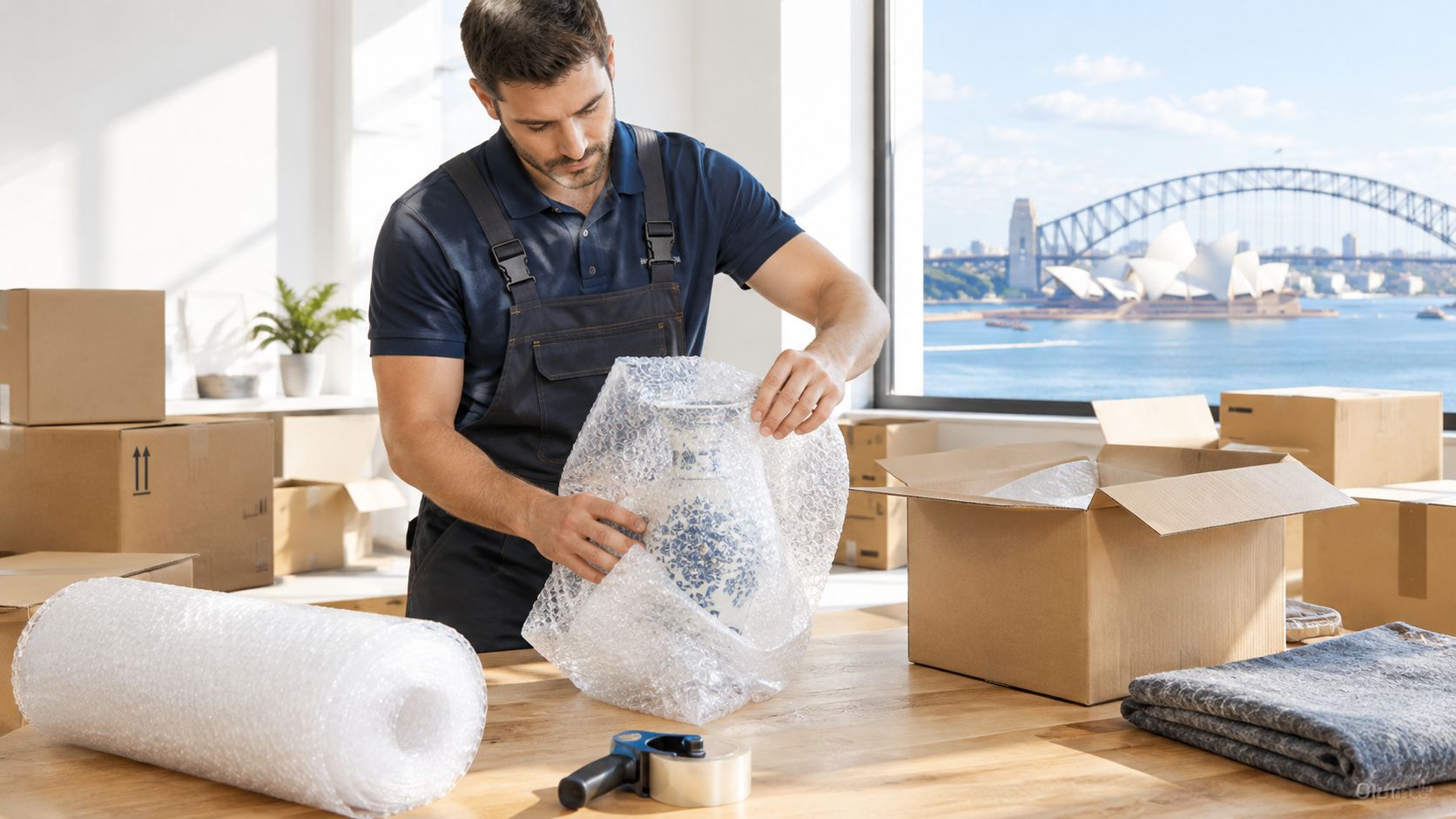
You've found a removalist, booked the truck and started sorting the spare room. Then you open the garage and see cartons, furniture parts, fragile belongings and stock that still needs to be identified, protected and loaded in the right order. For a Sydney household moving interstate, that's where picking and packing services become more than a convenience. They connect inventory control with careful relocation logistics, so the right items leave the right place in a condition suitable for the journey.
Picking and packing also matters beyond household moves. It supports Home removals Sydney, furniture relocations, office transitions and warehouse transfers, where a missed item, unstable carton or unclear label can create delays and unexpected costs.
What Are Picking and Packing Services
A family in Fairfield might be preparing to move to Brisbane. Their dining table is in the living room, winter clothing is in a cupboard, documents are in a home office and several boxes of kitchenware are already stored in the garage. Before the truck arrives, someone needs to identify what is moving, gather it from different locations and make sure each item belongs to the correct move.
That first activity is picking. A picker locates, checks and gathers items from a home, office, storage area or warehouse. In a household move, this might mean collecting labelled cartons from several rooms. In a warehouse relocation, it can mean finding palletised inventory, checking product or location details and preparing the correct goods for transfer.
Packing begins after the items have been selected. The packing team chooses suitable protection, wraps fragile pieces, fills empty spaces, balances cartons and prepares each package for handling, loading and transport. A vase might need cushioning and a rigid carton, while a bookshelf may need furniture blankets, corner protection and careful placement on the vehicle.

Why the distinction matters
Picking answers, “Have we found and verified the right items?” Packing answers, “Have we protected those items for the move?” Combining the two creates a controlled handover between the property and the removal vehicle.
This is useful for a local apartment transfer, but it becomes even more important for interstate removals. A Sydney family may have several delivery destinations, temporary storage or a long gap between collection and delivery. Clear labels, an inventory record and consistent protection make it easier to identify priority cartons and handle exceptions.
Australian warehousing already includes dedicated roles connected with receiving, storing, selecting, checking, packing and dispatching goods. The Australian Government Jobs and Skills Atlas overview of Warehousing and Storage Services recorded 122,300 people employed in the industry in February 2026, with employment projected to reach 115,200 by May 2035. That context shows that picking and packing is part of an established logistics workforce, not an improvised add-on to moving day.
For households, the service can reduce the pressure of packing every room alone. If you're comparing materials, the guide to packing materials for moving can help you understand which supplies suit different belongings.
How Picking and Packing Works in Sydney Moves
Professional teams usually separate the process into controlled stages. That makes responsibility clear and gives the customer a better view of what has been collected, packed and loaded.
The picking stage
1. Plan the collection. The team confirms the addresses, rooms, storage areas, access conditions and items requiring special attention. A piano, artwork, server cabinet or mixed warehouse pallet needs a different handling plan from ordinary cartons.
2. Locate and verify. Staff find the agreed items and compare them with the move list, labels or inventory records. Where barcodes are available, scanning can confirm the item at the point of selection. A useful explanation of barcode labelling and inventory identification is available in this barcode labels for inventory guide from Evright Industrial.
3. Sort by destination and handling needs. Items may be separated into rooms, delivery addresses, storage groups or priority categories. This prevents a carton intended for the new office from being mixed with household furniture.
The packing stage
4. Select protection. The packer chooses cartons, bubble wrap, dividers, furniture blankets or other materials based on the item's shape, weight, fragility and movement risk. Contents should be prevented from shifting, and cartons should be balanced rather than packed with all the weight on one side.
5. Label and prepare for loading. Each carton should show its destination or room, handling instructions and, where appropriate, an inventory reference. The loading team can then place heavy, stable items low and protect fragile goods from avoidable pressure.
Safe handling needs to be built into the layout, not left to individual strength or technique. Safe Work Australia's manual-handling guidance recommends positioning frequently handled goods between approximately mid-thigh and shoulder height, with heavy or high-turnover stock around waist height. Trolleys, pallet jacks, lift tables and task rotation can reduce bending, overhead reaching and repetitive strain.
Practical rule: A carton that shifts during loading may need to be lifted, steadied or repacked. Good packing protects the contents and reduces corrective handling.
The same discipline applies to a household move and a warehouse relocation. Picking confirms what should travel. Packing controls how it travels. Loading then completes the chain.
Service Types for Homes, Offices, and Warehouses
The right service depends on what's being moved, how it's organised and what must happen after collection. A family home, a working office and a warehouse may all need cartons, labels and transport, but the risks are different.
Residential moves
For Furniture removals Sydney customers, picking often starts room by room. The team can identify what belongs in the move, separate items staying behind and prepare cartons for the destination rooms. Packing may include kitchenware, books, clothing, mirrors, artwork and furniture components.
Special handling becomes important when belongings are heavy, fragile or difficult to replace. Pianos need controlled movement through doorways and stairs. Artwork needs protection against knocks and pressure. Furniture may need blankets, wrapping and disassembly so it can pass safely through tight access points.
Sydney's online purchasing habits also show why accurate fulfilment and careful delivery matter. Australia Post recorded 9.8 million Australian households shopping online in 2024, with total online spending reaching $69 billion. Its 2025 eCommerce Report also found that one in five households purchased online weekly in 2024, compared with 5% in 2018, and that nearly 8 in 10 online shoppers said delivery affects their satisfaction. The same principle applies when a household's belongings are being delivered to a new home. Accuracy and protection shape the experience.
Office relocations
An office needs a staged plan. Staff may continue working while departments are packed, equipment is disconnected and furniture is moved in phases. Labels should identify the destination room, workstation or department, while sensitive documents and technology need clear ownership.
Fair Work guidance says an agreed workplace relocation is more likely to be enforceable, but an employee may be entitled to redundancy pay if it's reasonable to refuse the move. Contract terms, changed responsibilities, public transport access and increased travel time can all matter. Physical logistics should therefore run alongside consultation and employment review, not replace them.
Warehouse and pallet moves
A warehouse relocation involves location data, pallets, equipment, loading access and delivery sequencing. The team may consolidate stock, group pallets by destination and record exceptions before transport. Forklift drivers, logistics clerks and despatch staff each have a role in keeping the move traceable.
Where equipment such as forklifts or telescopic handlers is involved, operators and managers should understand the relevant training expectations. The NSW telescopic handler guide from TP Training provides useful background for businesses reviewing material-handling arrangements.
Choosing the Right Service Level
A basic service may suit a small, straightforward move where the customer has already sorted and packed most belongings. A standard service is more appropriate when the removalist needs to pack rooms, protect furniture and maintain a usable inventory. Premium support suits complex relocations involving multiple destinations, fragile items, staged office work or warehouse stock.
The labels below aren't a universal industry standard. Providers may define them differently, so ask for each inclusion in writing before comparing quotes.
Picking and Packing Service Tiers
| Feature | Basic | Standard | Premium |
|---|---|---|---|
| Packing materials | Customer supplies some materials, with agreed protective items supplied for selected goods | Cartons, wrapping and furniture protection planned for the move | Materials selected and managed across fragile, bulky and specialist items |
| Picking process | Collection follows the customer's prepared list | Staff locate, sort and verify items by room or inventory group | Detailed item planning for staged, multi-location or mixed-destination moves |
| Scanning and records | Basic labels and written inventory where suitable | Barcode or item verification where practical, with clearer carton records | Structured digital inventory, exception tracking and documented handovers |
| Loading preparation | Standard loading sequence | Destination and handling categories guide vehicle placement | Detailed sequencing for priority goods, storage, staged delivery or complex access |
| Fragile and specialist handling | Selected fragile items prepared by agreement | Artwork, mirrors and delicate household goods receive planned protection | Pianos, antiques, sensitive equipment and unusual items receive dedicated planning |
| Response expectations | Suitable for a flexible local move | Suitable for a planned home or office relocation | Suitable when timing, communication and escalation need close coordination |
| Typical Sydney application | Small apartment move with organised cartons | Home removals Sydney-wide or a planned office transfer | Interstate removals, warehouse relocations or high-value mixed inventories |
Matching the tier to your move
Ask three questions. How many items need to be located and protected? How valuable or fragile are they? How much flexibility exists if packing or delivery takes longer than expected?
A simple local move may not justify a highly controlled inventory process. A warehouse transfer usually does. For an interstate move, the standard of labelling and exception management becomes more important because the driver, depot and delivery team may rely on records created at collection.
Cost transparency also depends on comparing like with like. A lower hourly rate may not include materials, specialist packing, storage coordination or the time required to sort unlabelled goods. Request a written scope that states what the crew will pick, what they'll pack, how items will be recorded and how changes will be handled.
Benefits and Cost Drivers Explained
A good picking and packing crew saves money in the same way a good loading plan saves space in the truck. It prevents small mistakes at the start from turning into delays, breakages or time lost at delivery. For a Sydney family heading to regional NSW or interstate, that overlap matters. The way items are selected, wrapped, labelled and staged affects both the move result and how clearly the quote reflects the actual work.

Behind every well-run move is a practical chain of work. Packers, forklift drivers, logistics clerks and despatch staff handle that chain in larger operations. A removalist crew has to reproduce much of the same discipline on a smaller scale inside your home or office. Because picking and packing is skilled work, quotes that leave it vague often shift the labour onto your own time, which is a hidden cost many customers only notice once the move is underway.
For a Sydney move, the main cost drivers usually come down to how much handling the job requires:
- Item volume: More cartons, furniture and loose goods mean more time to identify, wrap, label and load.
- Access and layout: Stairs, narrow hallways, lifts, loading zones and long walks from truck to door all slow the job.
- Special handling: Pianos, artwork, antiques, fragile appliances and business equipment need extra protection and planning.
- Distance and destination: A metro run is different from a delivery into regional NSW or an interstate route with depot handovers.
- Storage requirements: Storage adds another handling stage, another inventory check and a later delivery.
- Preparation level: Unsorted belongings take longer to pick and pack than grouped, clearly labelled items.
If you want a clearer idea of what may be included, this packing service cost guide is a useful starting point for comparing labour, materials and scope.
Safety sits inside the cost question too. Safe Work Australia's manual handling guidance advises considering weight, dimensions, repetition, posture, route and available equipment rather than relying on one generic weight limit. A carton packed properly is easier to carry, easier to stack and less likely to split open halfway to the truck.
Good providers also explain what happens when the plan changes. Ask how they handle a missing item, a damaged carton, a changed address or urgent access to a stored box.
The following video offers another visual introduction to packing and moving preparation:
How to Select a Picking and Packing Provider in Sydney
Start with the move itself, not the provider's advertising. A family moving from western Sydney to regional NSW needs different planning from a business moving equipment between two CBD offices or a warehouse transferring palletised stock.
Use this checklist during your first call:
- Confirm the scope: Ask whether the quote includes picking, packing, labelling, loading, unloading and unpacking.
- Describe difficult items: Mention pianos, artwork, antiques, safes, server equipment, gym machines and unusually large furniture.
- Check insurance: Ask what cover applies during packing, transport, storage and delivery, and request the terms in writing.
- Review experience: Choose a team familiar with your move type, especially for office relocations, warehouse stock or interstate removals.
- Ask about materials: Confirm whether boxes, bubble wrap, tape, furniture blankets and specialist protection are supplied or charged separately.
- Request the pricing method: A transparent quote should identify labour, materials, travel, access issues, storage and possible variations.
- Clarify communication: Find out who handles a short pick, damaged carton, address error or delivery delay.
- Check additional services: Furniture assembly, unpacking and short-term storage can reduce the number of separate contractors involved.
Customer references can help, but ask for examples relevant to your situation rather than relying on general ratings. A provider that regularly handles apartment moves may not have the equipment or process for a warehouse pallet relocation.
For practical information about preparing a move, the packing services for moving guide is a useful starting point. It also helps you identify which tasks you'll complete yourself and which ones you want the removalist to manage.
Before booking, confirm dates, access restrictions, parking requirements and delivery conditions. For a move from Sydney to another state, ask how the team records items and manages communication between collection and delivery.
Start Your Stress-Free Move with Professional Support
Picking and packing should make the move easier to understand. Picking prevents avoidable selection errors. Packing protects belongings during handling and transport. Clear labels and records help the loading and delivery teams place the right goods in the right location.
That combination matters whether you're arranging a small apartment transfer, a full family relocation, Furniture removals Sydney, an office move or a warehouse pallet relocation. It also gives you a more useful basis for comparing quotes because you can see what the provider is doing, rather than comparing hourly rates alone.
Home Removals Sydney offers packing and unpacking support, boxes, bubble wrap and tape, furniture assembly, removal services and storage for customers moving within Sydney or interstate. Its service covers household, office and warehouse relocations, with specialist handling for items such as pianos, antiques and artwork. The business operates from Fairfield, NSW, and provides custom quotes for customers who need a defined packing and transport scope.

Before moving day, prepare a list of rooms, storage areas, special items and destination details. Tell the removalist whether you need full packing, selected-room packing, inventory labelling, staged office work or pallet handling. Clear information at the start helps the crew plan the right materials, people and vehicle.
For an interstate move, confirm the collection window, delivery address, access conditions and any storage gap. For a business relocation, include workforce consultation and operational downtime in the plan. For a warehouse move, agree how pallets, equipment and exceptions will be recorded.
Home Removals Sydney can organise professional picking and packing for homes, offices and warehouse relocations, with protective materials, careful handling and transport planning for local or interstate moves. Request a customised quote through Home Removals Sydney and explain your items, addresses and preferred moving date so the team can recommend a clear service scope.
