

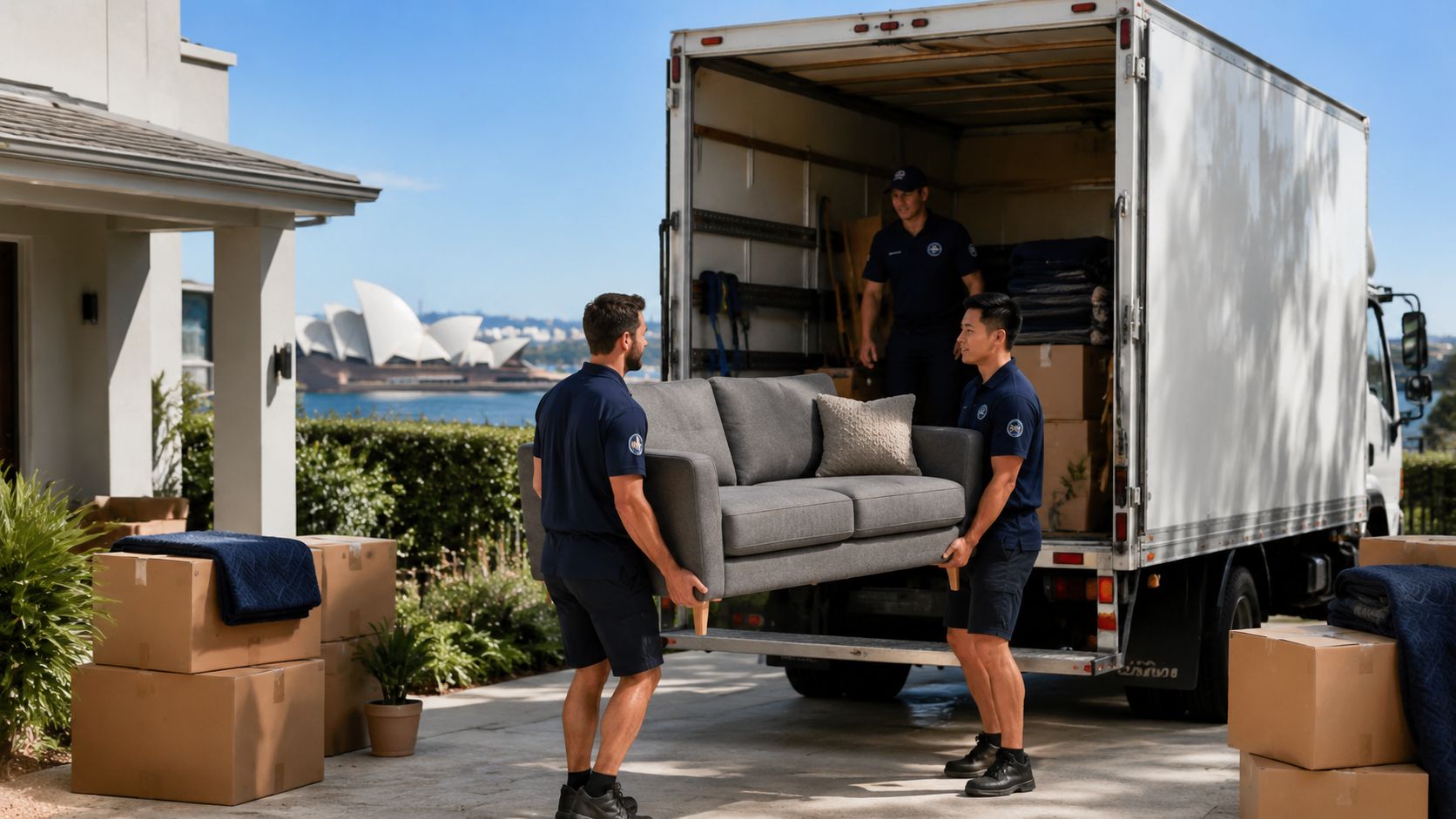
You've got a move booked, boxes are piling up, and three Sydney removalists have sent quotes that look similar until you read the fine print. One company says it's AFRA accredited, another says it's fully insured, and the cheapest operator just promises a “professional team”. The question is obvious: does AFRA accreditation really protect your move, or is it just another badge on a website?
For home removals Sydney customers, furniture removals Sydney jobs, office relocations and interstate removals, AFRA membership is one of the strongest quality filters available. It isn't a government licence, and it doesn't automatically insure your belongings. It does, however, indicate that the operator has entered a formal compliance system covering equipment, vehicles, premises and staff training. The distinction matters, especially when a low quote is competing with a more established removalist.
Why AFRA Accreditation Matters When You Move in Sydney
A renter moving from Parramatta to the Inner West may be comparing hourly rates while worrying about stairs, parking and a tight handover window. A Northern Beaches homeowner may be focused on protecting glassware, artwork and bulky furniture through narrow access points. A small CBD business may need an office relocation completed without disrupting staff or customers.
Each customer is weighing the same uncomfortable choice: is the cheapest quote worth the risk if the operator lacks proper systems or meaningful insurance?
NSW's removals industry isn't governed by a mandatory removalist licence. That means customers need to assess professionalism themselves, rather than assuming every business has passed the same government entry test. NSW Government consumer guidance specifically advises customers to check whether a removalist is accredited through the AFRA website, which makes membership a practical verification point when comparing Sydney movers (NSW Government guidance on choosing a removalist).
AFRA accreditation helps answer several questions before moving day:
- Does the operator work within documented standards?
- Are its vehicles, equipment and premises suitable for removals?
- Do crews receive relevant training?
- Is there a formal process if a dispute arises?
- What insurance is available, and what remains your responsibility?
That last question deserves particular attention. AFRA accreditation can be a useful signal of operational discipline, but it isn't a substitute for reading a transit insurance policy or product disclosure statement. A removalist can be accredited while the customer still needs to arrange or accept separate cover for goods in transit or storage.
My recommendation is straightforward. Start your shortlist with AFRA accredited removalists, verify the membership, then compare written quotes, moving methods, insurance terms and storage arrangements. Don't treat accreditation as a guarantee of a perfect move. Treat it as a measurable quality filter that helps separate established operators from the wider, less consistent market.
What AFRA Actually Is and What Accreditation Covers
The Australian Furniture Removers Association, or AFRA, is the peak industry body for furniture removalists in Australia. It was founded in 1942, and AFRA says it now has more than 250 member businesses operating across hundreds of locations nationwide, with an AFRA case study identifying members in 270 locations across Australia (AFRA about the association).

AFRA membership is not a legal licence in NSW. It's a voluntary industry accreditation framework. A removalist chooses to enter the system, meet its requirements and remain subject to ongoing checks. That choice matters because the wider Australian removals market includes operators that aren't AFRA members.
The difference between membership and a marketing badge comes down to verification. An operator shouldn't rely on displaying the AFRA name alone. Customers should confirm the company's current listing through AFRA and check that the business name on the quote matches the accredited entity.
Accreditation is a continuing obligation
AFRA accreditation involves more than an application. Choice reports that membership requires a $2,000 bond and an initial audit, followed by another audit after one year and regular audits every four years (Choice advice on finding a removalist). Other AFRA-adjacent industry summaries describe annual auditing or re-audits every two to three years, so customers should ask the operator when its most recent audit occurred and what the current membership status is (Australian removals industry report).
That variation in reported audit timing is a reason to verify, not guess. The important point is that accreditation is designed as a recurring compliance system rather than a one-off approval.
For customers, AFRA provides a benchmark. It doesn't promise that every item will arrive untouched, that traffic won't delay a truck or that a quote can never change because the job details changed. It indicates that the operator has agreed to work within recognised requirements and remain accountable to them.
The Four Standards AFRA Operators Must Meet
NSW Government identifies four core control areas for AFRA-accredited removalists: equipment, vehicles, premises and staff training. These areas affect every stage of a move, from the first lift at the pickup address to final placement at the destination (NSW Government removalist requirements).

Equipment
Professional equipment reduces improvisation. Furniture dollies, lifting straps, protective blankets, ramps, trolleys and suitable packing materials help crews move items without dragging them across floors or balancing heavy pieces by hand.
For a Sydney apartment, that might mean using the right trolley through a lift lobby and protecting common areas. In a terrace house, it could involve floor coverings and blankets around tight staircases. Specialist items such as pianos, antiques and artwork need more than ordinary muscle. Ask what equipment the crew will bring and whether protective materials are included in the quote.
Vehicles
A suitable truck needs to match the access conditions, load and move type. Inner-West streets may demand careful vehicle selection because parking and turning space can be limited. A large suburban move, warehouse relocation or interstate job may require a different vehicle and loading plan.
The standard isn't just “does the company own a truck?” It's whether the vehicle is maintained, appropriate for the work and equipped to secure furniture during transit. Tie-down points, ramps, tailgates and internal protection all affect how safely goods are loaded and unloaded.
Premises
Premises matter when a company offers storage, packing preparation or vehicle operations. Customers should expect a facility that can protect goods from avoidable handling and access problems.
Ask where your belongings will be stored, who can access them, how items are labelled and whether the storage terms are written. A secure premises can support a move, but it doesn't automatically mean your goods are insured while they're there.
Staff training
Trained crews understand safe lifting, load distribution, furniture protection and communication around access hazards. That becomes especially important when a job involves stairs, narrow driveways, fragile objects, high-rise buildings or business equipment.
AFRA accreditation therefore affects operational readiness, not just presentation. A company may have a polished website, but the moving team still needs the equipment, vehicle, workplace and training systems to deliver the job safely.
What You Actually Get When You Hire an Accredited Mover
An accredited mover gives you more than a logo. You get a clearer basis for judging how the business operates before you hand over your furniture, appliances, documents or stock.
The first benefit is documented operational standards. A professional operator should be able to explain how it handles packing, loading, access restrictions, fragile items and delivery. That structure is useful for a home move, but it becomes essential for office relocations where desks, computers, cabinets and files need a coordinated sequence.
The second benefit is accountability. AFRA membership provides a formal industry pathway for complaints and disputes. That doesn't mean every complaint will be decided in your favour. It means you have more than a vague verbal promise if the business fails to respond properly.
Practical rule: Choose the operator that can explain its process before moving day, not the one that only promises to “sort it out” if something goes wrong.
The third benefit is an audit-backed framework. AFRA's membership requirements and recurring audit arrangements give customers a way to assess whether a removalist maintains standards over time. Choice specifically notes that audits examine areas such as vehicle maintenance, packing materials, first aid provisions and driver fatigue management (Choice's removalist guidance).
How those benefits affect a real booking
For home removals Sydney, documented procedures can mean clearer preparation around lifts, stairs, parking and fragile goods. For furniture removals Sydney, crews should know how to protect timber, glass, upholstery and polished surfaces. For interstate removals, written processes become even more important because the goods spend longer away from you and may pass through additional handling stages.
Storage needs the same discipline. If you're decluttering before settlement or waiting for a lease to begin, use a detailed guide to storage for home movers to compare access, preparation and storage considerations.
Accreditation may justify choosing a higher quote when it reflects better equipment, training, planning and accountability. It still doesn't let you skip the insurance questions. That's where many customers misunderstand what AFRA membership does.
The Insurance Gap Most Sydney Customers Miss
Your removalist can meet AFRA requirements while your furniture still lacks goods-in-transit cover. AFRA accreditation does not automatically mean your belongings are insured during the move. Treat membership and insurance as separate checks.
NSW Government guidance states that AFRA-accredited removalists must meet standards for equipment, vehicles, premises and staff training. Accredited operators also have public liability insurance and can provide transit insurance. AFRA tells customers to ask whether the removalist is qualified to provide insurance and to read the product disclosure details in its guidance on moving insurance.
Public liability usually responds to injury or property damage connected with the business's operations. Goods-in-transit insurance addresses damage to your belongings while they are moved. The policies are different. Check whether the wording covers storage, delays, pairs and sets, fragile items and pre-existing damage.
Before accepting a quote, get clear answers in writing:
- Is goods-in-transit insurance included, optional or unavailable?
- What excess, exclusions, limits and claim conditions apply?
- Does cover continue during short-term storage, or does storage need a separate policy?
Interstate moves need closer questioning. Confirm when cover starts and ends, and whether it applies during loading, overnight stops, unloading and temporary holding. For valuable goods, provide an accurate item list and ask whether photographs, valuations or special packing are required.
Review these insurance considerations for removal services and compare them with the removalist's product disclosure statement. The policy wording controls the outcome, not a salesperson's reassurance.
Ask for the policy, not a reassurance. “You're covered” means little unless the removalist explains what is covered, when it applies and what you must do to make a claim.
Your written quote should show insurance costs and options separately from labour, transport and storage. If the company avoids the subject, provides only verbal assurances or withholds relevant documents, do not book until you understand the risk.
How to Verify Accreditation and Spot Red Flags
Start with the official AFRA website. Search for the removalist and check that the listed business name, trading details and contact information match the company giving you the quote. If the salesperson uses a different legal entity, ask why before proceeding.

Use this quote comparison checklist
- Confirm current membership: Ask the operator to confirm its current AFRA accreditation and verify it independently.
- Ask about the latest audit: Request the date or status of the most recent audit, rather than accepting an old website statement.
- Demand a written quote: The document should identify the work, access assumptions, charges, inclusions and payment terms.
- Clarify insurance: Request the relevant policy information, including transit cover, exclusions and storage treatment.
- Check the business identity: Confirm the business name, contact details and a physical operating address.
You'll find more practical questions in this removalist hiring question guide. Use it while speaking with each provider, not after you've already paid a deposit.
Red flags that should stop the booking
Cash-only demands create a poor paper trail and make disputes harder to manage. Vague quotes leave room for arguments about stairs, travel, access, packing or waiting time. No AFRA listing doesn't automatically prove an operator is dishonest, but it removes one useful verification point and means you need to conduct deeper checks.
Be cautious when a quote is dramatically cheaper than comparable, properly specified quotes. Ask whether the rate excludes travel, minimum booking conditions, weekend work, packing, stairs, difficult access or additional labour. A low headline price can become expensive when the actual scope appears on moving day.
Refuse to book a company that won't identify the contracting business, provide written terms or explain insurance. Reliable operators answer direct questions clearly because those details form part of ordinary booking administration.
A Sydney Move Walkthrough Using the Checklist
Consider a representative Sydney-to-Melbourne relocation. The customer is moving from a townhouse in the Hills District, placing some furniture into short-term storage and delivering the remainder to a new home in Melbourne.
The first quote comes from an AFRA-accredited operator. The customer verifies the listing, checks the business name against the quote, asks about the latest audit and receives an itemised document. The quote identifies the crew, vehicle, access assumptions, packing inclusions and storage terms. The operator also explains transit insurance separately, including the product disclosure information and whether storage needs different cover.
The second quote is cheaper, but the business cannot provide clear accreditation details. It gives a broad hourly estimate without explaining the access conditions, refuses to put storage terms in writing and answers the insurance question with a general promise that the furniture is “covered”. That comparison reveals more than the price difference. It shows which operator has thought through the complete journey.
For a family preparing to hand back a rental, a practical moving-out checklist can keep cleaning, keys, utilities and final inspections organised. Customers may also find these tips for a rental cleanup useful when the removal schedule and handover date are close together.
An unaccredited move can go wrong through damaged goods, unclear responsibility and a disputed final invoice. The problem isn't just that something broke. It's that the customer may have no clear process for establishing what happened, what the quote included or which policy should respond.
The same checklist works for renters, homeowners and businesses. Office relocations need extra attention to access bookings and equipment. Furniture removals need item protection and handling plans. Interstate removals need stronger questions about transit, storage and delivery timing. Choose the operator whose paperwork and answers remain clear before payment.
Frequently Asked Questions About AFRA Accredited Removalists
How often are AFRA removalists audited?
AFRA accreditation uses a defined audit cycle, rather than a badge issued without review. Choice describes an initial audit, a follow-up after one year and regular audits every four years. Ask the operator for its current status and latest audit details before booking.
Is AFRA membership legally required in NSW?
No. AFRA accreditation is voluntary, not a government removalist licence. It shows that the operator has been assessed against industry requirements, but it does not guarantee careful handling or cover every loss.
How do I confirm current accreditation?
Search the business in AFRA's official member information. Match the listing with the legal business name on your quote and contract. Any mismatch needs an explanation before you pay a deposit.
Does accreditation include goods-in-transit insurance?
Not automatically. For a Sydney or interstate move, ask for the policy wording, exclusions, claim limits and the events covered during loading, transport, storage and delivery. Accreditation and insurance are separate checks.
What should I do if something goes wrong?
Photograph damage, keep the quote and correspondence, notify the removalist promptly and request its claims process. Check the policy documents, then use the formal AFRA complaint pathway where appropriate.
Home Removals Sydney provides local and interstate removals, packing, furniture assembly and storage. Visit Home Removals Sydney to request a custom quote and ask about accreditation, insurance and storage terms before booking.
