

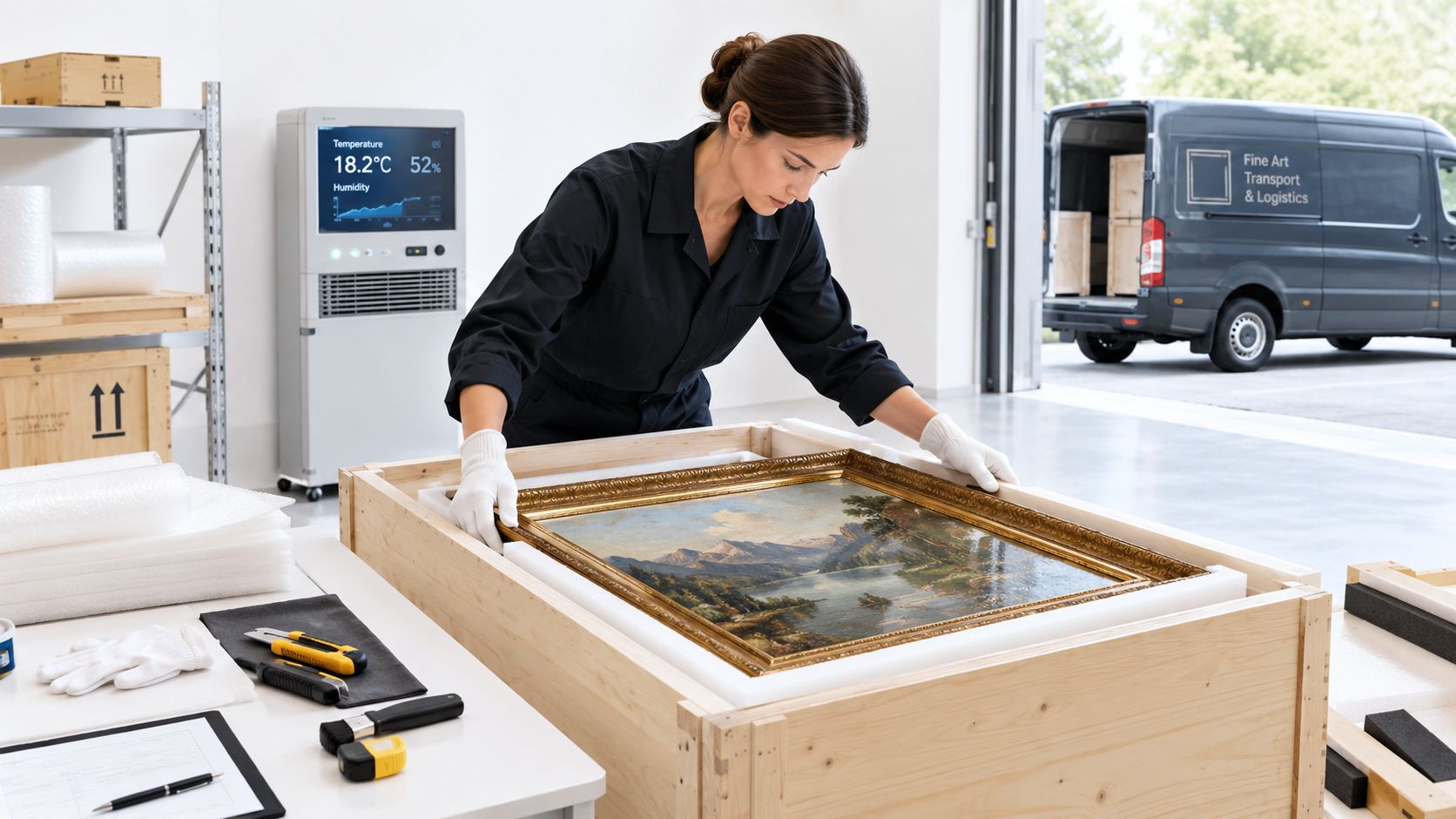
You've found the perfect Sydney apartment, arranged the removal date, and started labelling boxes. Then you look at the framed painting in the hallway, the antique mirror in the dining room, or the sculpture that doesn't fit neatly into any carton. A sofa can usually tolerate ordinary lifting and road movement. Artwork often can't.
That's where art handling services become useful. They treat a collection as a series of individual objects with different materials, risks and handling requirements, rather than as general household freight. For homeowners, renters, galleries and businesses planning Home removals Sydney, the right approach may include condition checks, custom packing, travel frames, crating, controlled transport, secure storage and careful installation.
Australia's collections environment shows why this is a specialised operational field. The Australian Institute for the Conservation of Cultural Material estimates 41 million objects across Australian museums, art galleries and historical collections, with transport practices designed around object support, vibration and impact protection, and climatic extremes. Its guidance also identifies road transport as the most common transport mode in Australia, which makes planning for Sydney streets, loading areas, vehicle movement and careful crating particularly important. (Australian Institute for the Conservation of Cultural Material guidance)

This guide takes you through the decisions in practical order. You'll see what specialist handling covers, how professionals move a work from assessment to installation, why climate and vibration matter, how insurance declarations work, what affects a quote, and how to compare providers for a Sydney or NSW move.
Introduction to Art Handling Services in Sydney
A first-time collector often assumes the most valuable part of a move is the transport itself. In practice, risk begins before the truck leaves. A painting may be exposed when someone removes it from a wall, a frame can be damaged while it travels through a narrow stairwell, and poor packing can create a problem that no careful driver can undo.
Sydney homes create familiar access challenges. Terraces may have tight corridors and steep stairs. Apartment buildings can involve lifts, loading bays and shared public areas. Offices may require movement around desks, glass partitions and staff. A specialist plan accounts for those conditions before the artwork is lifted, rather than improvising after the crew arrives.
The scale of Australian lending activity also shows that art movement involves more than occasional private relocations. The National Gallery of Australia loaned 1,093 works of art in 2005–06, including 379 loans to exhibitions in Australia and 14 loans to international exhibitions. By 2010–11, the annual total had reached 1,673 works loaned nationally and internationally. (National Gallery lending data in the referenced heritage document)
A different approach to a familiar move
Standard Furniture removals Sydney customers use are designed for household items such as beds, tables and lounges. Those services remain important, but a framed work, sculpture or antique may need a different sequence: inspection, documentation, surface protection, structural support, controlled loading and final placement.
That doesn't mean every print needs a museum-style crate. It means the handling method should match the object. A framed poster may require careful padding and vertical positioning, while an old oil painting, fragile gilded frame or delicate sculpture may need a travel frame, custom crate and specialist installation.
Practical rule: If replacing the object would be difficult, expensive or impossible, ask for an artwork-specific handling plan rather than assuming ordinary removalist protection will be enough.
Sydney customers also need to think beyond a local move. Interstate removals add distance, road exposure and possible storage or transfer points. Office relocations can add scheduling pressure and public-access risks. A clear art-handling plan gives everyone, including the owner, the crew and the insurer, the same understanding of what will happen.
What Art Handling Services Really Mean
Art handling is best understood as precision logistics for irreplaceable or fragile objects. Moving a sofa is mainly a question of weight, access and protection from ordinary knocks. Moving a delicate musical instrument requires more control because its shape, finish and internal components respond differently to pressure. Artwork sits in the same category of careful work, but each piece has its own materials and vulnerabilities.
A professional service commonly combines several functions:
- Assessment: The handler considers the medium, frame, dimensions, weight, condition and access route.
- Documentation: The team records identifying details, existing marks and relevant photographs before packing.
- Protection: Materials and support systems are selected for the specific object, not pulled from a general moving kit.
- Transport: The work is secured against movement and handled with suitable equipment and vehicle planning.
- Placement: Delivery includes controlled unpacking, inspection and, where arranged, installation.
The distinction matters because “wrapped” doesn't automatically mean “protected”. A painting can be wrapped in a way that presses against the paint layer. A sculpture can be cushioned but still left free to shift inside its container. A large frame can be padded and yet remain unstable if it travels flat or leans against another object.
Three practical service levels
The right level depends on the item and the move, not on a label alone.
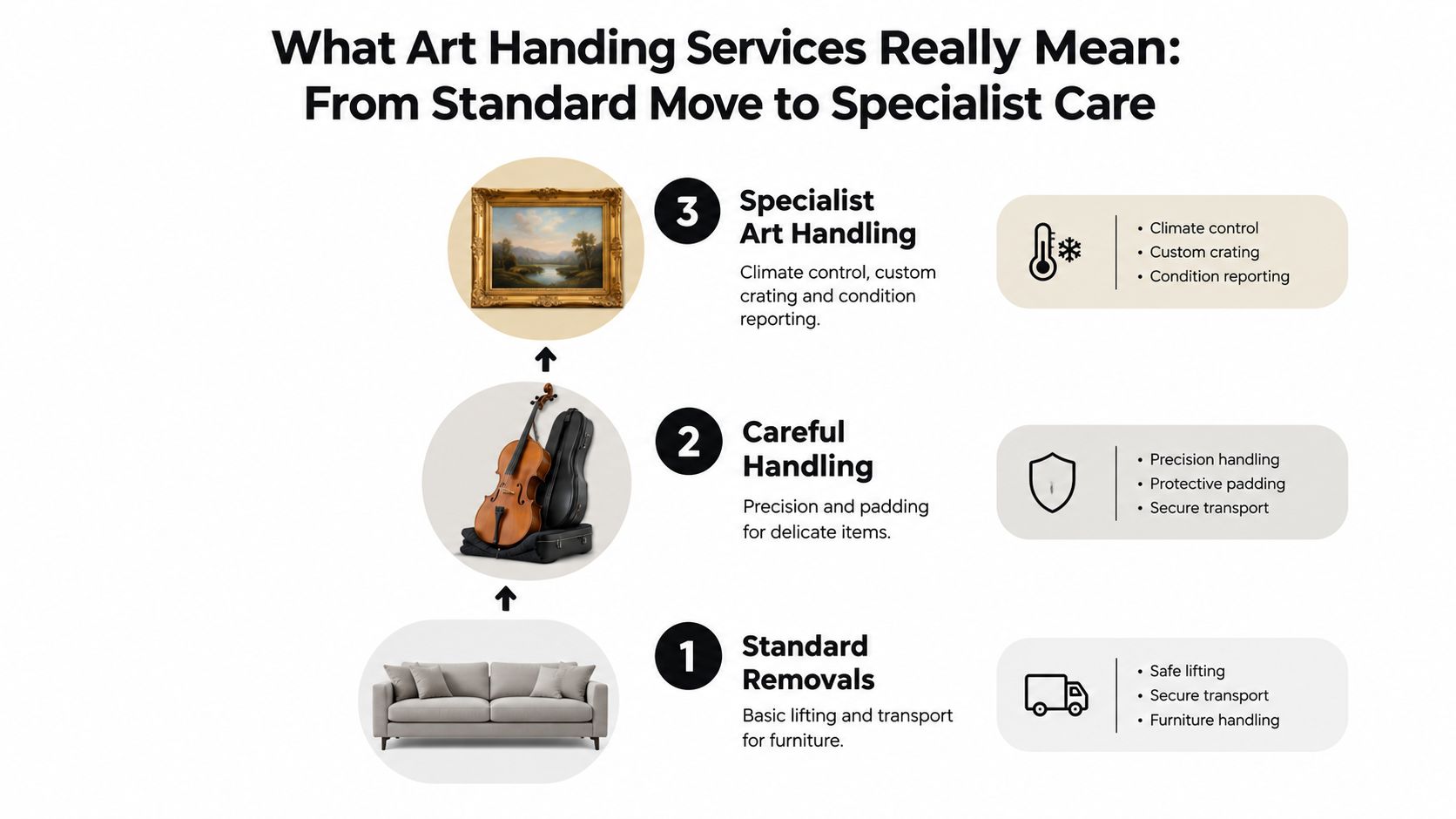
Standard removals may suit ordinary household objects and decorative items with low replacement risk. Careful handling is appropriate for delicate furniture, mirrors, framed pieces and objects that need added padding, controlled lifting or separate placement. Specialist art handling is the more suitable choice for valuable paintings, antiques, fragile works on paper, sculptures, ornate frames and objects with known environmental sensitivity.
NSW institutional policy provides a useful benchmark. The Art Gallery of NSW says artwork and archive movements should involve considered planning, minimal and careful handling, appropriate equipment and techniques suited to each material, and qualified or experienced staff and contractors. It also states that methods should be reviewed against industry standards, research and technology developments. (Art Gallery of NSW Collection Management Policy)
A quick self-check before booking
Ask yourself three questions:
- Could ordinary contact damage the surface? This applies to paint, gilding, glazing, polished finishes and fragile mixed media.
- Could the shape or weight create a handling problem? Protruding elements, unstable bases and oversized frames need more than a standard carton.
- Would an existing mark be difficult to distinguish from moving damage? If so, condition documentation is valuable before pickup.
If the answer to any of these is yes, tell the provider before requesting a quote. A specialist can then plan equipment, crew size, packing and access instead of treating the item as an afterthought.
How Professional Art Handling Works From Pack to Install
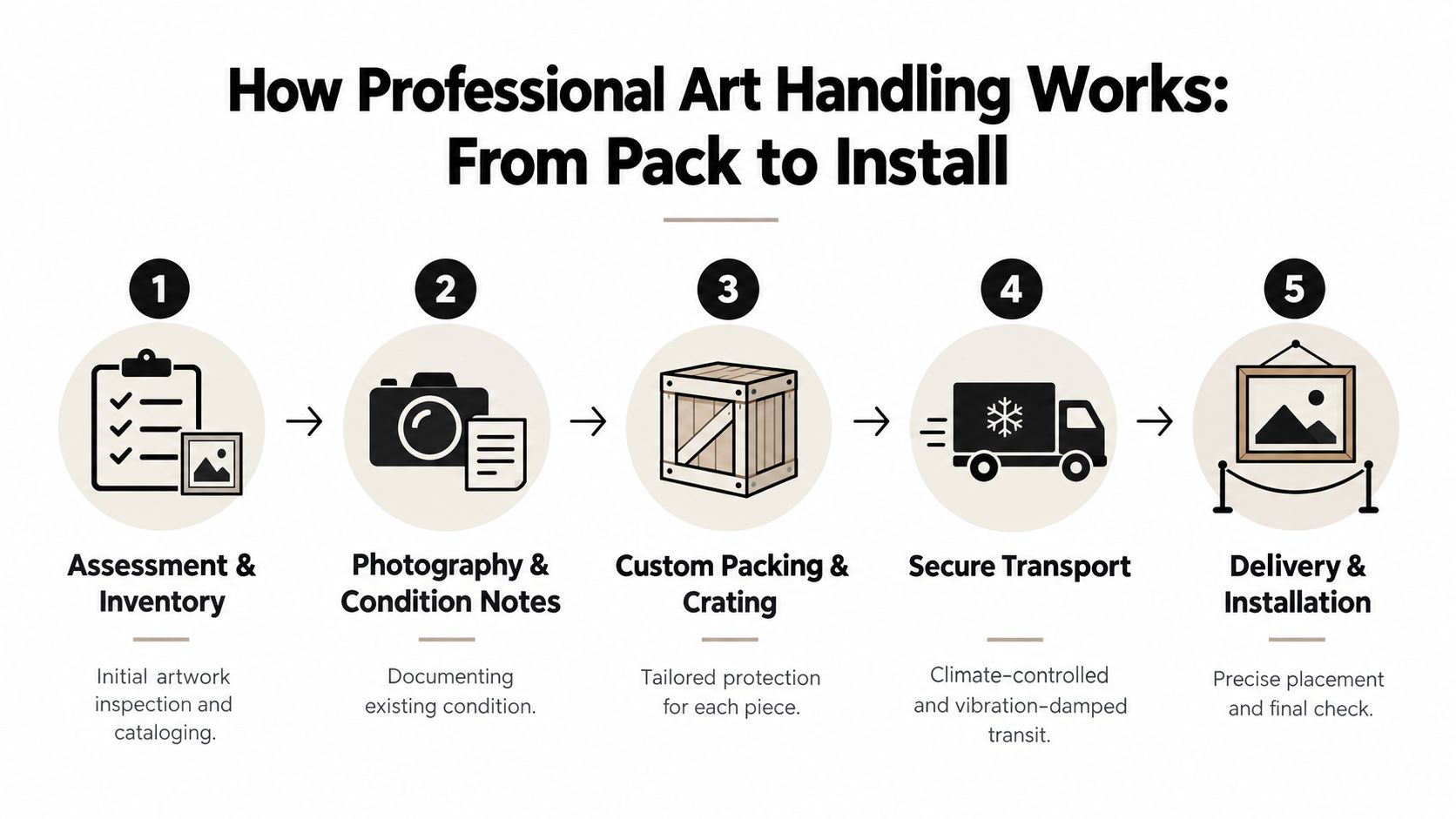
A well-managed move follows a clear chain of responsibility. The crew should know what each object is, what condition it was in at collection, how it will be protected, where it will travel and how it will be checked at delivery.
Assessment and inventory
The process starts with an inventory. The provider records the work, its dimensions, frame or base, visible condition and destination. Photographs and condition notes help separate pre-existing marks from anything noticed after transport, which is especially helpful when several people handle the move.
The team also reviews the route. A Sydney apartment lift, a narrow terrace staircase, a loading dock or a busy office entrance can change the equipment and staffing required. Australian museum guidance recommends a spotter ahead of an object moving through public space, enough people for large or heavy works, and a team leader who gives clear instructions. Mechanical aids such as trolleys, dollies, A-frames and pallet jacks can reduce reliance on human strength and limit avoidable errors. (Bendigo Region collection management manual)
Packing and crating
Packing should follow the object's material and structure. Fragile paintings may travel vertically in a travelling frame or crate. A very fragile work may need a support board, while a sculpture may require shaped cushioning that supports its base and prevents movement.
The packing team should keep unsuitable materials away from sensitive surfaces. Direct bubble wrap contact with painted surfaces is avoided because it can mark or catch the paint layer. Inert cushioning, moisture barriers, rigid supports and non-contact packing create separation between the artwork and external pressure.
For a practical household reference, this guide to packing artwork for moving can help you understand the preparation questions to raise with a provider. Collectors who are sourcing new pieces may also find a curated selection of transportation art prints useful when thinking about how different print formats and frames may need to travel.
Loading, transport and installation
Loading is a coordinated operation. Handlers secure each piece so it cannot slide, tip or press against another object. Road transport is central to Australian domestic movement, so vehicle choice, suspension, route planning and loading order all matter.
The destination process is just as deliberate. The team checks the package, removes protection in a suitable area, compares the work with the pre-move record and places or installs it according to the agreed plan. This short video gives a visual introduction to the wider role of professional art handling and installation:
Why Specialist Handling Protects Your Artwork
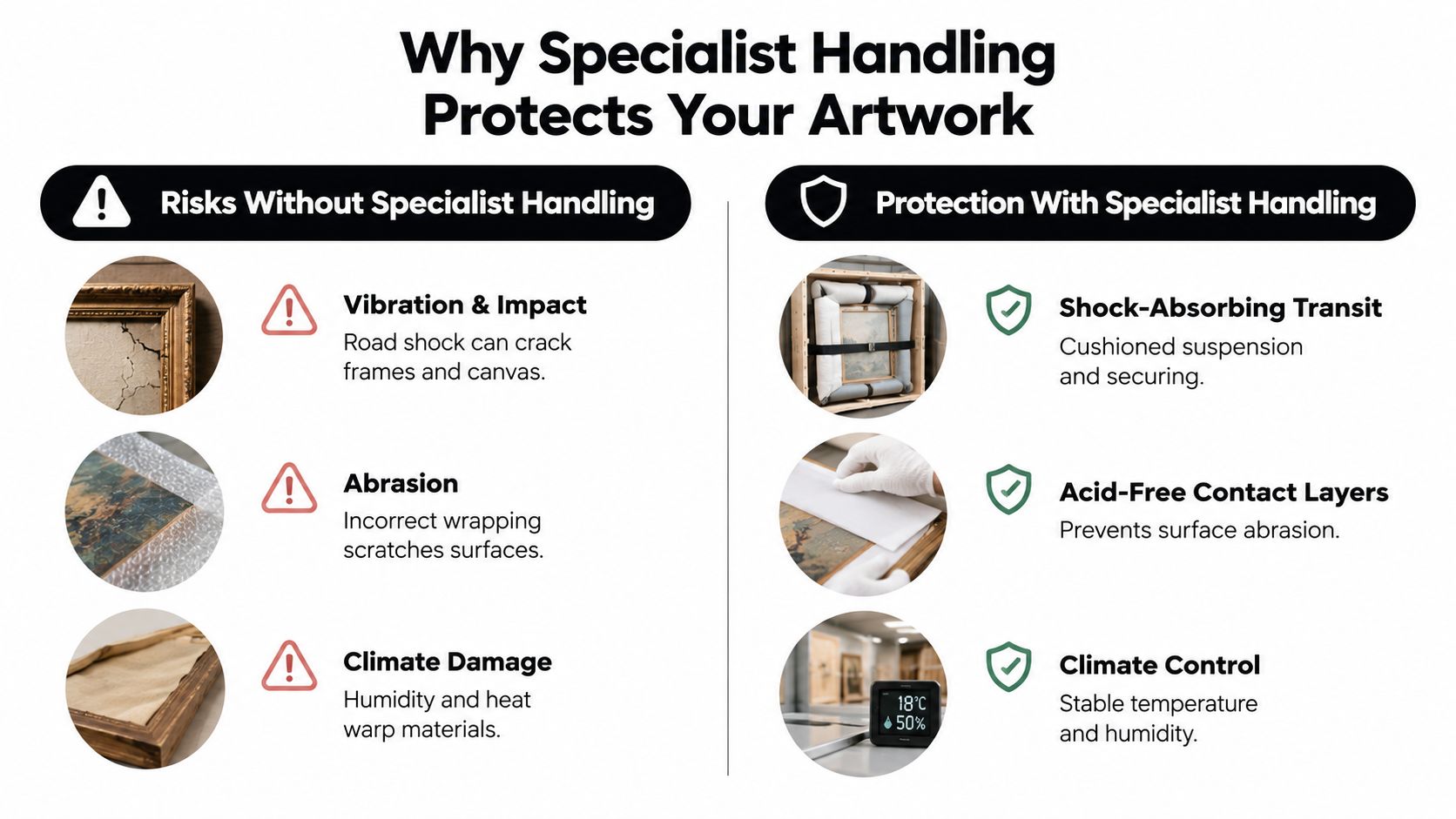
The value of specialist handling becomes clearer when you connect each method to a particular risk. A road journey exposes an artwork to vibration, braking, cornering, loading shocks and contact with other objects. The frame may appear solid, but repeated movement can stress joints, glazing and delicate finishes.
Australian museum guidance recommends travelling frames or crates for fragile artworks, vertical movement where possible and support boards for works that are too fragile to stand safely. It also advises that objects shouldn't rest with other objects against their front or back surfaces. (Western Australian Museum handling guidance)
Vibration and impact
A general vehicle can carry furniture safely without providing the same level of support needed by an artwork. Specialist handling may use air-ride transport, suspension-aware loading, inert cushioning and secure restraints to reduce movement. These methods don't remove every road shock, but they help prevent the work from shifting or receiving a concentrated impact.
A framed painting placed flat beneath heavy items faces a different risk from one kept upright in a properly supported travel frame. A sculpture with a narrow base needs its weight distributed so the object doesn't rock against its packing.
Abrasion and contact
Surfaces can suffer damage even when a work never falls. Rough paper, unsuitable wrap, loose fasteners or direct contact with cushioning can rub against paint, gilding, varnish or polished materials. Bubble wrap should not touch painted surfaces directly because it may mark or catch the paint layer. A specialist packer creates a safe contact layer and keeps protective materials from pressing on vulnerable areas.
Climate and route conditions
Temperature and relative humidity changes can affect materials differently. Australian preservation guidance recommends gradual acclimatisation between climatic zones, minimising environmental changes and using travelling frames, stillages, crates and archival materials where appropriate. Artbank states that it uses recognised specialist art carriers for local, national and international collection transport. (Artbank Preservation Policy)
For extremely valuable works, shock, vibration and temperature or relative humidity data loggers can provide a record of conditions during movement. Secure storage, moisture barriers and controlled loading areas add another layer of protection when a direct move isn't possible.
Collectors researching broader collection protection can also read this practical overview of methods used to protect museum artifacts. The same principle applies at home or in an office. Restrict unnecessary access, assign responsibility and keep the object's movement organised.
Insurance Security and Peace of Mind for Art Moves
A painting can arrive without a scratch and still have an insurance problem. A careful pack does not automatically cover under-declared value, unsuitable storage or damage outside the policy's conditions. Standard removalist cover may also exclude certain artworks, especially where value, packing or installation falls outside the agreed arrangement.
Specialist transit insurance may cover the journey from pickup to delivery, including road, air, sea, registered post, temporary storage and exhibition periods of up to 60 days. Policies differ, and some involve membership requirements, minimum premiums or claim excesses. (Transit and Exhibition Insurance Factsheet)
For a Sydney move, insurance works like a route plan. The declared value, packing standard, climate-controlled storage and handover points must match the actual trip. A framed work travelling across Australia needs a different discussion from one moving across the same suburb.
What to confirm before collection
Ask what the policy requires before the provider takes possession. “Is the move insured?” is too broad to answer safely.
- Valuation: List each work separately and confirm how its declared value will be assessed. If an artwork is valued above A$5,000, ask whether it must be identified before transit and recorded on the policy.
- Paperwork: Check whether the insurer requires an invoice, valuation, ownership record, photographs or a condition report.
- Packing standard: Confirm whether coverage depends on a travel frame, crate, specialist materials or professional packing.
- Storage: Ask whether temporary storage is included, for how long and under what security conditions.
- Responsibility: Identify who accepts liability during collection, loading, road transport, unloading, storage and installation.
Review our removalist insurance overview before collection day. A provider should explain the policy in plain language and show the relevant wording before you commit. Business owners can also read this bailee coverage guide for moving firms to understand why responsibility must be defined while an item is in another party's possession.
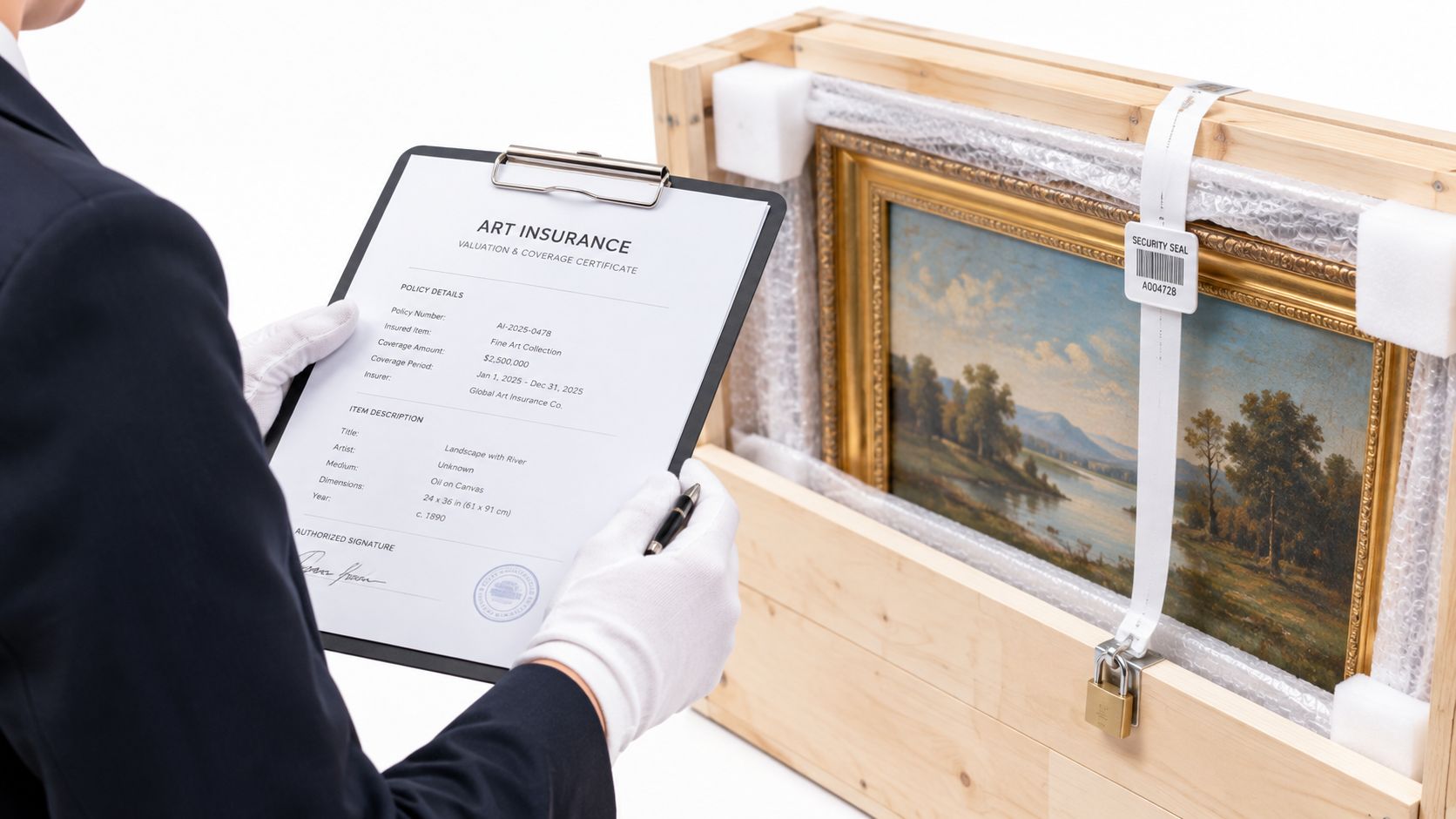
Security during storage and installation
Insurance records should follow the artwork through each handover. Controlled access, documented condition checks, named staff and secure storage make it easier to establish what happened if a problem arises. Ask who may access the work and what supervision the facility provides.
For Sydney homeowners, businesses and collectors, keep the paperwork specific. Record each work's condition, agree on the declared value, and obtain written confirmation of the packing, storage and installation arrangements.
What Affects the Cost of Art Handling Services
A Sydney art-handling quote is a risk-control plan expressed as a price. The provider assesses the artwork, the road journey and the property access before deciding how many people, what equipment and which packing materials are needed. A small framed print may need padded protection, while a large painting or sculpture could require a travel frame, custom crate, extra handlers or mechanical equipment.
Access can change the estimate as much as distance. A ground-floor pickup with clear vehicle access is different from an apartment requiring lift bookings, a long carry, stairs or restricted loading. Interstate removals also involve longer road exposure and route planning. An office relocation may require work outside business hours so staff can continue working.
Home Removals Sydney publishes pricing starting at $120 per hour plus GST, with quotes available through a fast form. That figure is a general starting point, not a complete artwork price. Specialist packing, crating, climate-aware storage, access restrictions and extra labour must be assessed for the particular move.
Key Cost Drivers for Art Handling Services
| Cost Factor | What It Means for Your Quote | Tip to Keep Costs Clear |
|---|---|---|
| Artwork size and weight | Larger or heavier pieces may need more handlers, stronger packing and mechanical aids. | Provide dimensions, weight if known and photographs before quoting. |
| Fragility and value | Sensitive surfaces, antique frames and high-value works can require specialist materials and documentation. | State the medium, frame type, known condition and declared value. |
| Packing and crating | A basic protective wrap differs from a travel frame, stillage or custom crate. | Ask for packing and crate costs as separate line items. |
| Distance and route | Sydney metro movement differs from interstate transport in road exposure and scheduling. | Confirm pickup, delivery, storage and any transfer points. |
| Access | Stairs, lifts, narrow corridors and restricted loading can increase labour and time. | Tell the provider about access at both addresses. |
| Storage and climate needs | Temporary storage may require secure access and environmental planning. | Ask what storage conditions and insurance extensions apply. |
| Timing and labour | Short notice, fixed installation windows or extra crew members can affect the estimate. | Agree on the arrival window and required team before booking. |
Climate planning matters because Australian road conditions and storage environments can vary. Ask whether the packing method, vehicle arrangements and temporary storage suit the artwork's materials, rather than treating every item like ordinary household furniture.
A clear quote should separate included work, optional services and assumptions that could change the final amount. It should show whether packing, crating, storage, delivery and installation are priced separately. Compare the full handling plan, not only the hourly rate.
How to Choose a Trusted Art Handling Provider in Sydney
A Sydney collection may include a framed painting, a bronze sculpture and a piano in the same move. Each object needs a different route plan, packing method and risk assessment. Choose a provider by asking how it would handle your specific items, access points and travel conditions.
A practical provider checklist
- Relevant experience: Ask for examples involving similar materials, sizes and access problems, without requesting confidential client details.
- Equipment: Confirm that the vehicles and tools suit the work, including protective vehicles, trolleys, A-frames, stillages or crates where needed.
- Packing options: Check whether the team provides professional packing, custom crating and unpacking.
- Insurance clarity: Request the declared-value process, exclusions, excesses and storage conditions in writing.
- Communication: A named coordinator should record the inventory, access details, timing and installation requirements.
- NSW practices: Ask how staff minimise handling and select techniques for the artwork's material, frame and condition.
A provider that also handles pianos and antiques should still assess every artwork separately. A heavy piano creates risks around weight and access, while a fragile painting may be more vulnerable to vibration, pressure and changing conditions during an Australian road move. The related specialty item moving service can help you prepare questions about unusual or delicate possessions.
Home Removals Sydney is a family-owned removalist based in Fairfield, NSW, serving Sydney and interstate routes. It offers professional packing, furniture assembly and secure storage with 24/7 access. Its fleet includes vehicles from 4-tonne vans to 62-tonne trucks, supporting different move sizes. Artwork handling is offered alongside care for pianos and antiques. Treat these details as one part of your comparison, and request a personal assessment rather than assuming a standard household quote includes specialist work.
Before booking, send photographs, dimensions, both addresses, access notes, preferred dates and declared values. The provider can then set out the packing method, crew, vehicle, insurance paperwork and installation plan. Clear answers at this stage help reveal whether the team has a workable plan for Sydney streets, loading restrictions, interstate road exposure and temporary storage.
Home Removals Sydney can coordinate packing, artwork movement, furniture assembly, storage and Sydney or interstate relocation planning around your collection. Share the artwork and access details when requesting a quote, so the proposed service reflects the actual risks.
