

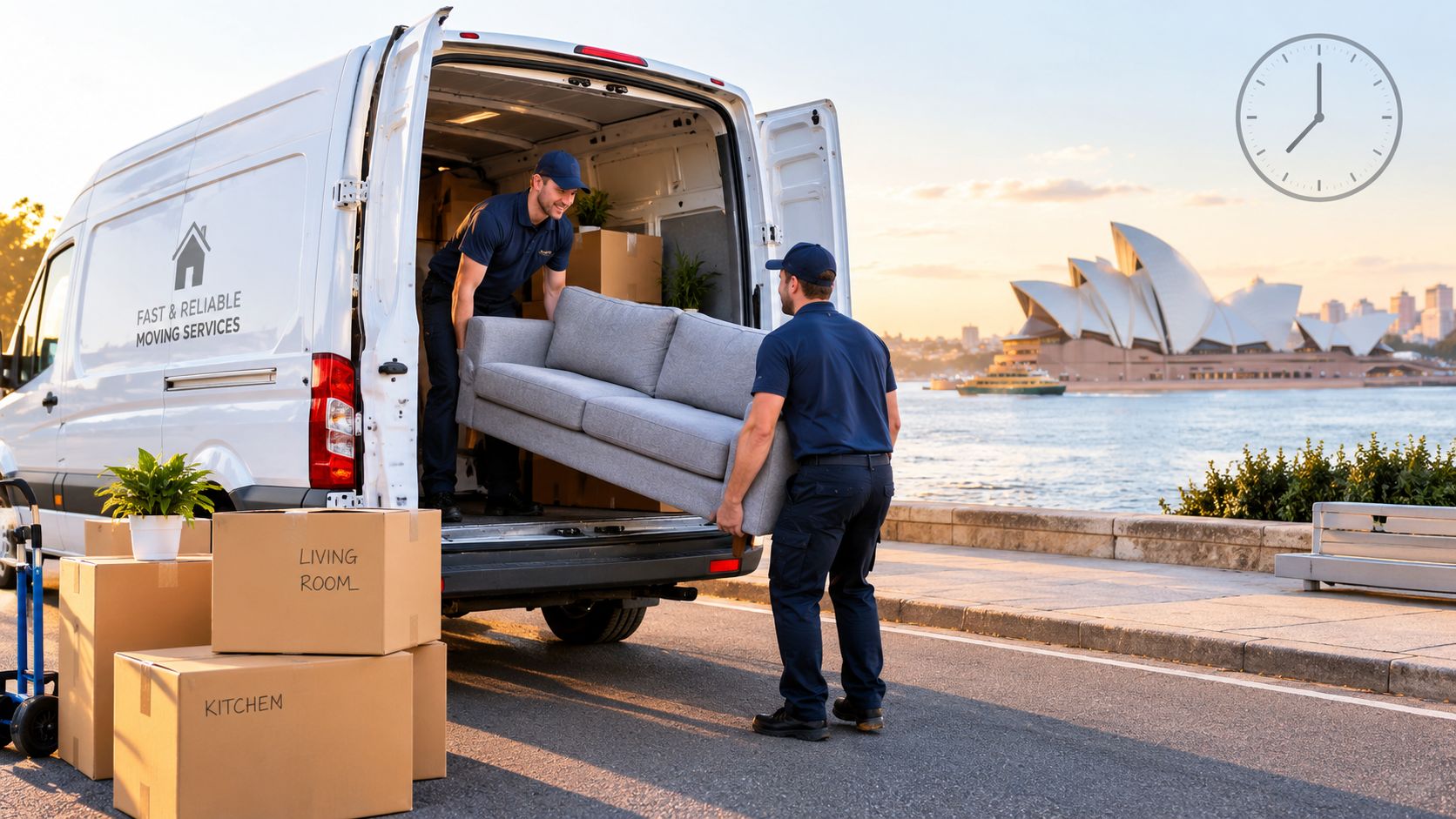
You've got keys changing hands this afternoon, the old tenancy is ending, or another removalist has cancelled at the worst possible time. In Sydney, a same-day move can still work, but only when the job is treated as a carefully managed dispatch rather than a promise that any load can be picked up immediately.
The deciding factors are usually practical: how early you call, how clearly you describe the inventory, and whether the crew can access both properties without waiting. Parking, stairs, lift bookings, long carries and building rules can turn a straightforward furniture removal into a much longer job, so this guide focuses on what can realistically move today and how to give it the best chance.
What Same Day Removals Really Mean in Sydney
A same-day removal means the booking is made and the move is completed within the same calendar day. The service is designed for urgent situations such as a settlement change, a lease deadline, a mover no-show or a sudden change of plans. It doesn't mean a crew is guaranteed at any hour, or that every household load can be completed before the day ends.
A typical urgent call starts with three pieces of information: the pickup address, the delivery address and a rough inventory. The dispatcher then checks crew availability, vehicle suitability and the practical distance between the properties. Sydney traffic, apartment access and loading restrictions matter just as much as the kilometres between suburbs.
Why same-day work succeeds or fails
A small, organised load from a ground-floor unit may be workable when a suitable crew is nearby. The same booking becomes far less predictable if the team has to wait for a loading bay, carry furniture down several flights of stairs, share a slow lift or park a long distance from the entrance.
Australian hospital data provides a useful operational comparison. The AIHW defines a same-day separation as an admission and discharge on the same date, and in 2008–09, same-day separations represented 55.5% of all hospital separations nationally, equivalent to 4.5 million same-day acute separations after an annual increase of 4.5%. That example shows how same-day services depend on planned execution and established processes, not urgency. AIHW hospital activity data also recorded a same-day acute separation rate of 204 per 1,000 population, with public hospital rates ranging from 90 per 1,000 in New South Wales to 308 per 1,000 in the Northern Territory.
Practical rule: A same-day booking is realistic when the load, access and time window are clear enough for a dispatcher to allocate the right crew and vehicle without repeated clarification.
Have the essentials ready
Before calling, confirm whether keys are available, whether settlement or handover timing is fixed, and whether both addresses permit loading. Take quick photos of large furniture, narrow hallways, staircases and lifts if you can. Those details help the removalist judge whether the job needs extra labour, protective equipment or a different truck.
Same-day care is already a familiar part of Australian elective treatment, but the figures vary sharply by procedure. In 2017–18, cataract procedures had a 97.3% same-day rate in Australia, compared with an OECD average of 69.1% in 2016, while only 13.6% of tonsillectomies were performed on a same-day basis, below the OECD average of 32.8%. AIHW elective surgery reporting illustrates the point. Same-day outcomes depend on the type and complexity of the work.
How to Arrange Same Day Removals Without Delays
A same-day move can fail before the truck leaves the depot. A blocked loading zone, unbooked lift or vague inventory can consume the time that looked available when you made the call. Contact providers early, with enough detail for a dispatcher to judge whether the job fits the crew, vehicle and access conditions. Availability remains subject to crew availability, and pricing and conditions vary between providers.
Use this sequence during the first conversation:
State the deadline first. Say that the move must be completed today. Give the preferred loading time and the latest acceptable delivery time. The dispatcher can then assess the actual working window instead of treating the request as a general urgent move.
Provide both full addresses. Include suburbs, parking instructions, unit or suite numbers, access codes and loading-zone restrictions. For an office, add the floor, reception contact and whether computers, cabinets or workstations need dismantling.
Describe the inventory clearly. List beds, sofas, dining tables, whitegoods, outdoor furniture, fragile items and the approximate number of packed boxes. Include anything that will not be ready when the crew arrives. Understating the load can result in a vehicle that is too small, a second trip or important items left behind.
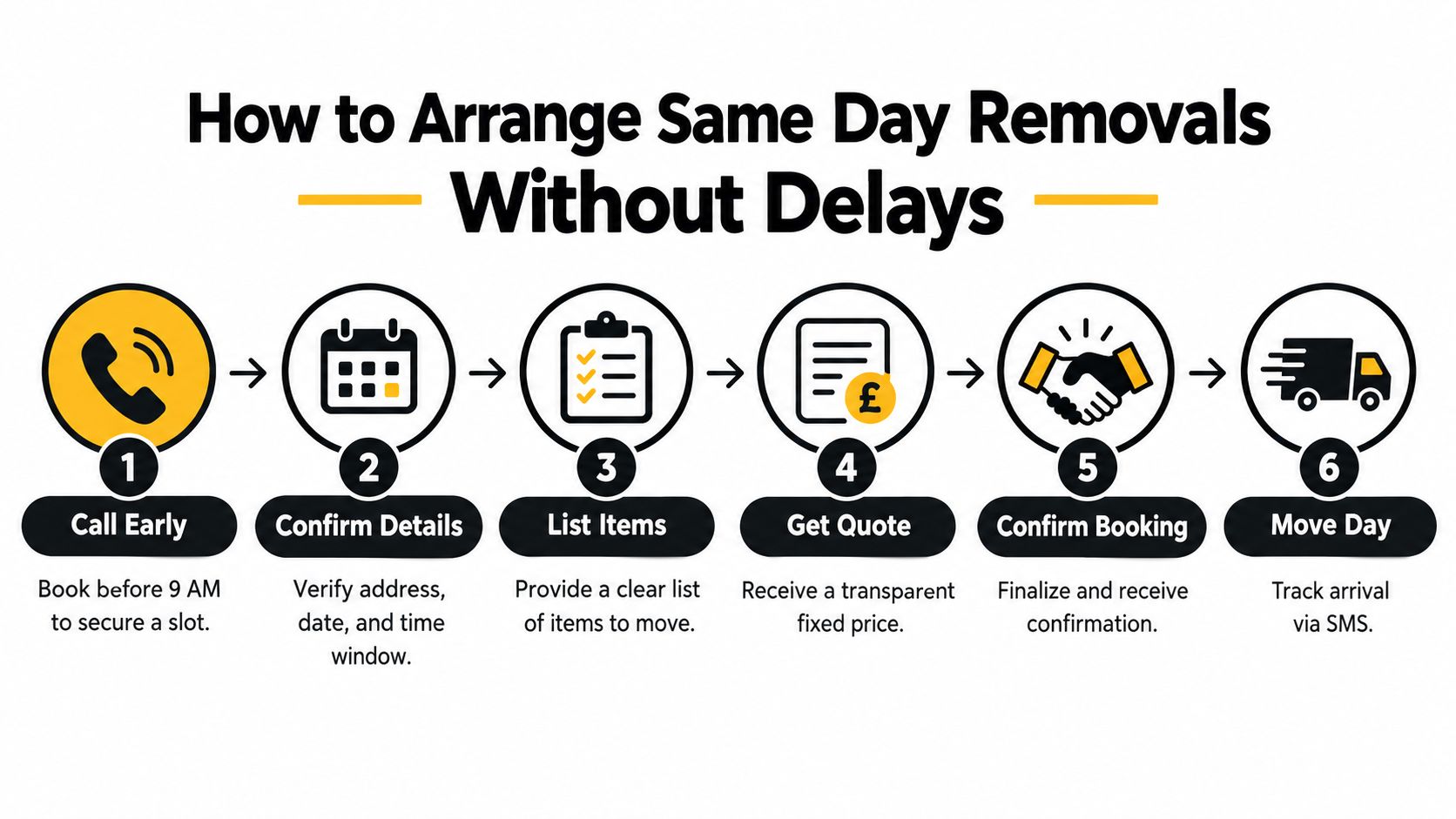
Explain access before focusing on the clock. Report stairs, lifts, long walks from the truck, steep driveways, narrow gates and restricted building hours. Apartment lift bookings need confirmation before the crew arrives. A removal team cannot recover time spent waiting for access.
Confirm how the price is calculated. Ask about the hourly rate or fixed price, minimum charge, travel time, tolls, stairs, packing, dismantling and difficult-access fees. Requesting removalist quotes online helps organise the job details, but urgent work still requires direct confirmation that a crew and suitable vehicle are available.
Get the booking in writing. Keep the agreed addresses, crew size, vehicle type, inclusions, estimated arrival window and payment terms in a text or email. If live tracking or an arrival notification is provided, confirm the mobile number that should receive it.
A practical decision rule is simple: proceed when the inventory is clear, parking and building access are confirmed, and the loading and delivery windows leave room for delays. If one of those points is uncertain, split the move, remove non-urgent items or reset the delivery expectation before booking. Complete information speeds triage. Vague information creates questions when the remaining time is already limited.
What You Can Realistically Move on the Same Day
The best same-day candidates are small to medium loads with uncomplicated access. A studio, one-bedroom unit, a partial household load, a storage transfer or a few large furniture items can often be managed when the inventory is ready and the pickup and delivery windows are compatible.
Small furniture removals might include a sofa, bed, tables, chairs and boxed belongings for one or two rooms. A small office may be suitable if the work is limited to desks, chairs, monitors and computers, with cables and personal items already packed. Single-item work can also be practical, although pianos, oversized appliances and delicate antiques require specialist handling rather than a rushed general move.
A useful load filter
Ask three questions before committing:
- Can the essentials be identified? If you can separate the furniture and boxes that must arrive today from items that can go to storage later, the dispatcher has more options.
- Can the crew reach the doors efficiently? Ground-level access, legal parking close to the entrance and a clear path reduce handling time.
- Can the load fit the vehicle in one trip? A partial move may be sensible when a full-house move isn't.
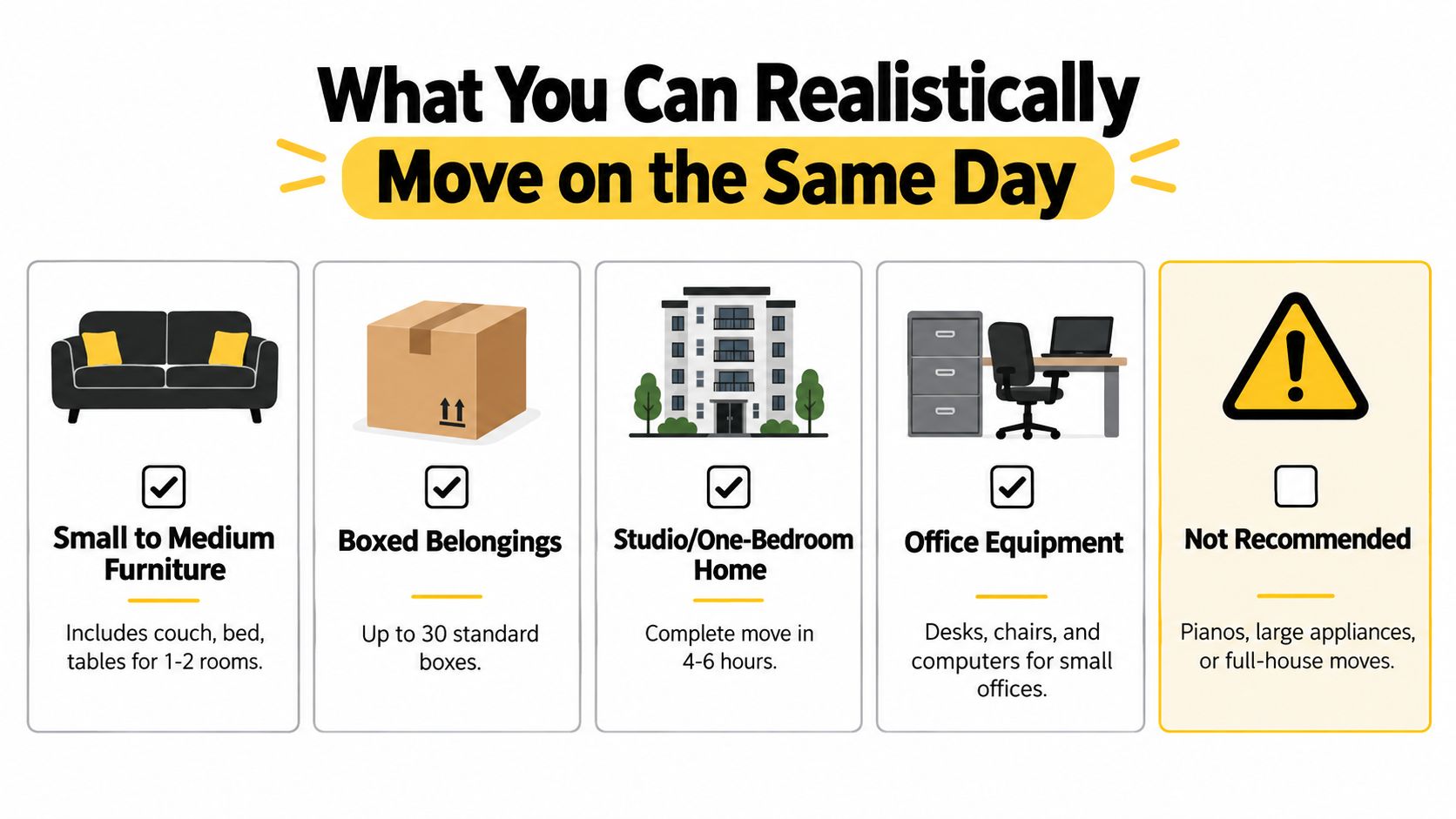
A full home with multiple bedrooms, a garage, a large shed and substantial outdoor furniture is a different proposition. Warehouse relocations, interstate removals, fragile art, pianos and moves involving dismantling, packing and assembly should generally be planned ahead. They may still begin urgently, but the realistic outcome could be a prioritised first load, temporary storage or completion over more than one day.
Vehicle and crew decisions
Vehicle capacity should match the inventory, not the customer's estimate of how much space the furniture “looks like” it needs. Home Removals Sydney operates a fleet ranging from 4-tonne vans to 62-tonne trucks, which demonstrates why a dispatcher needs item details before assigning a vehicle. The right choice may be a smaller van for a compact apartment, a larger truck for a family load or additional crew when stairs and long carries dominate the work.
Same-day success is also shaped by geography. AIHW data recorded 55.5% of hospital separations as same-day in 2008–09, while public hospital same-day acute rates ranged from 90 per 1,000 in New South Wales to 308 per 1,000 in the Northern Territory. The AIHW analysis of same-day activity also found that nearly three-quarters of same-day separations were elective and 97.7% were acute. For removals, the practical lesson is simple. Planned, well-defined jobs are better candidates than complex work assembled reactively.
Pricing and Availability Expectations for Urgent Moves
Same-day removals trade planning time for urgency. Availability does not guarantee a straightforward job. In Sydney, access details, parking, lift bookings and an accurate inventory can affect both the quote and whether the move can finish that day.
The service may not carry a separate emergency surcharge, yet the final cost can rise with travel, tolls, stairs, bulky items, long carries, packing or waiting time. A compact, accessible apartment with a clear inventory is easier to price than a large home where the truck size and handling requirements remain uncertain.
| Factor | Same Day Booking | Scheduled Booking |
|---|---|---|
| Crew availability | Depends on who is free and how close the crew is | More opportunity to reserve a preferred crew |
| Rate structure | May use the standard hourly rate, with minimums and travel charges | Often easier to compare options before confirming |
| Access complications | Less time to resolve parking, lifts and building rules | More time to obtain permits and reserve loading areas |
| Inventory accuracy | A rushed estimate can lead to the wrong vehicle or crew size | More time for a detailed survey and itemised list |
| Flexibility | Useful when settlement or lease timing changes suddenly | Better for coordinating multiple parties and destinations |
| Risk control | Written inclusions are required because details are arranged quickly | More time to review insurance, exclusions and conditions |
Read the quote line by line
Removalists may charge by the hour, including travel time, and may apply call-out fees or additional costs for difficult access, bulky items or subcontracting. CHOICE guidance on removalist charges and contracts explains why an apparently low hourly figure should not be treated as the full cost.
Ask specifically about:
- Travel and tolls: Confirm when the clock starts and whether toll roads are charged separately.
- Stairs and lifts: Check whether access fees apply and whether lift delays are billable.
- Packing and dismantling: Establish whether beds, desks and other furniture will be taken apart and reassembled.
- Protection and insurance: Ask what cover applies to furniture, walls, floors and fragile goods.
- Subcontracting: Confirm who will perform the work and who handles complaints.
A scheduled move gives you more control over these variables. A same-day booking can still provide good value when it prevents a missed settlement, storage complication or lease handover problem. Base the decision on the complete scope, not the hourly rate alone. For further context, compare the inclusions explained in this Sydney removalist cost guide.
Quick Preparation Tips to Maximise Same Day Success
The fastest way to help a same-day crew is to remove avoidable handling before they arrive. You don't need a perfect house. You need a clear path, a truthful inventory and furniture that is ready to lift.
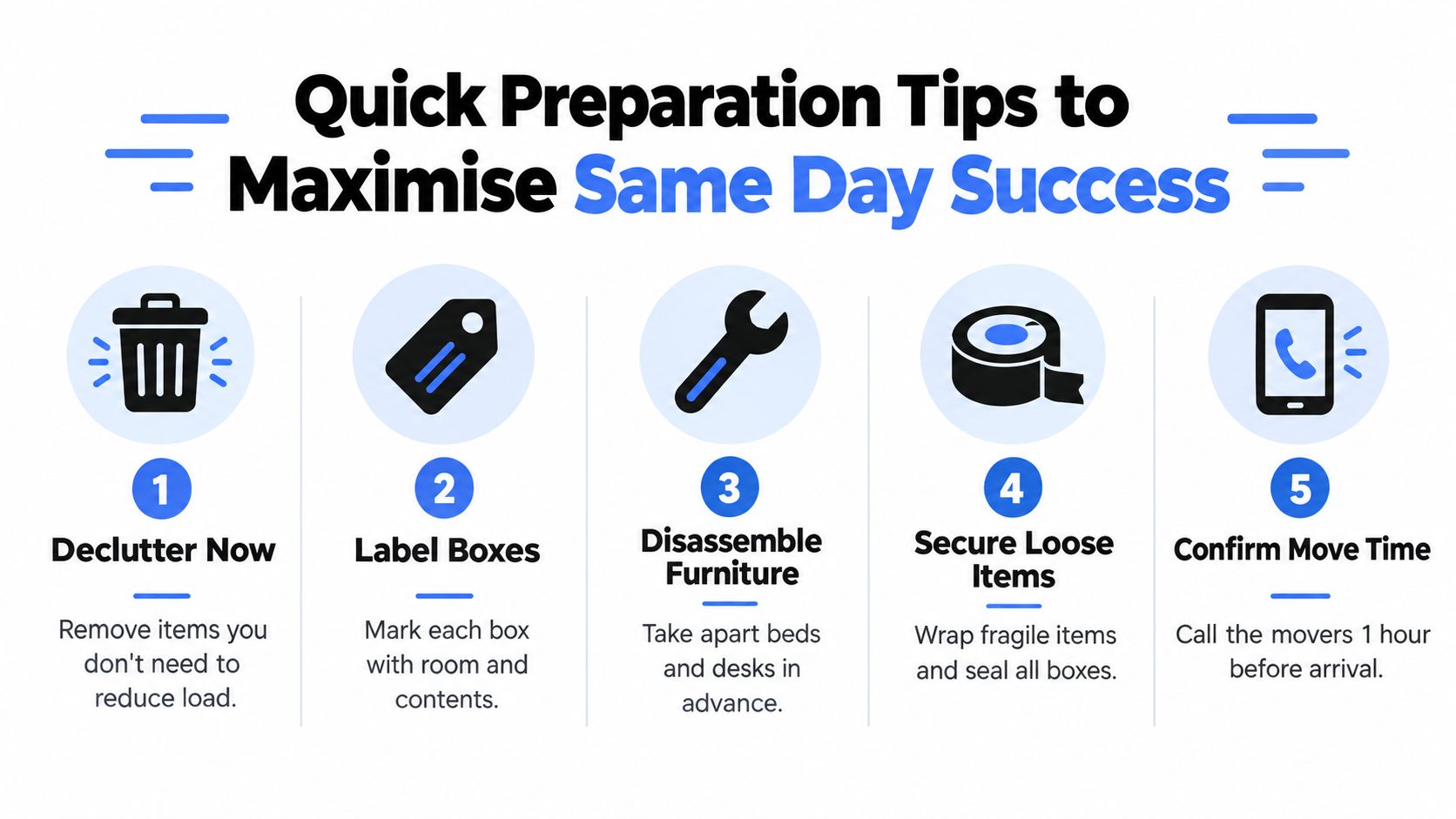
Use the next hour well
- Declutter immediately. Put rubbish, donations and items staying behind in a separate area. Don't make the crew decide what belongs on the truck.
- Stage furniture near the exit. Keep doorways, corridors and lift lobbies clear. Items should be grouped by room without blocking the route.
- Strip and dismantle what you can. Remove shelves, legs and detachable parts from desks and bed frames, then tape the hardware to the matching item.
- Seal every box. Use proper packing tape, close the top flaps and reinforce weak cartons. Loose bags and open boxes slow loading and increase the chance of items falling.
- Label by destination. Write the room and a short contents description on two sides of each box. Mark fragile cartons clearly, but don't rely on labels alone for delicate goods.
- Reserve building access. Contact the strata manager, concierge or building manager about the lift and loading zone. If parking is restricted, arrange the legal option rather than assuming the truck can stop at the front door.
- Protect high-risk items. Wrap glass, mirrors and screens separately. Empty drawers, secure doors and remove anything that could shift inside cabinets.
For an apartment, keep the lift booking confirmation and access code beside your phone. For a house, open gates, clear the driveway and move pot plants or outdoor obstacles. For a small office, back up important files, unplug equipment safely and label desks so the crew can place them correctly at delivery.
Tell the crew about every access problem before loading starts. A five-minute briefing is cheaper than discovering a narrow staircase after the truck is full.
Use practical packing tips for moving house when there is time to prepare boxes properly. If the booking was made urgently, focus on safe packing, a clear route and accurate communication, rather than trying to make every carton look identical.
Keep your phone available, respond to calls from the dispatcher and confirm any change in timing with the building or receiving party. At delivery, direct the crew to rooms before items come off the truck. That avoids unnecessary rehandling and helps the team finish with the essentials in the right places.
Your Next Move with Home Removals Sydney
A same-day move in Sydney depends on more than finding an available truck. Confirm the load, access and parking before accepting a time slot. Those details determine the vehicle size, crew allocation and route the dispatcher can arrange.
For a unit move, check whether the lift requires a booking, protective padding or an access code. Confirm where the truck may legally stop and whether the loading zone has a time limit. If the crew cannot park near the entrance, extra carrying time can change what fits into the booking.
Give the dispatcher a usable inventory, not a rough description such as “a two-bedroom unit.” List large furniture, appliances, stairs, narrow entries, fragile items and anything already packed. A family may need one full load, a split move or storage for items that cannot be collected within the available window. An office may need desks, computers and files moved in a sequence that limits disruption.
The same decision applies to furniture removals, office relocations and warehouse work. The practical question is whether the property, access conditions and inventory support a complete move today, or whether a priority load should go first.
Interstate removals require separate planning. Same-day collection may be possible, but completing an interstate delivery on the same day is different from an urgent local move. Request clear collection and delivery expectations, along with a written list of inclusions, before confirming.
Home Removals Sydney is a family-owned removalist based in Fairfield, NSW, serving Sydney and interstate customers with home, office and warehouse relocation support. Services include packing and unpacking, furniture assembly, secure storage with 24/7 access, fully insured moves and additional removalists when the inventory requires more labour. The fleet ranges from 4-tonne vans to 62-tonne trucks, and published pricing starts at $120 per hour plus GST, with custom quotes and responses within 30 minutes during business hours. Home Removals Sydney can review the inventory and access details, then advise whether to move everything, split the load or use storage.
Before calling, have both addresses, the item list, access notes, preferred timing and building contact details ready. Ask the quote to identify labour, vehicle, travel and any conditions that could alter the final amount.
