


You're probably staring at a half-packed kitchen, a garage full of awkward items and a move date that's arriving faster than expected. The truck is only one part of the job. Packing determines how efficiently the crew loads, how safely belongings travel and how much control you retain over damage claims.
For Sydney homeowners, renters and businesses, removals with packing service can mean anything from wrapping artwork to packing an entire property, but those options aren't interchangeable. Australia's established removal-services market included 8,310 businesses in 2025, with sector revenue estimated at about A$2.6 billion in 2026, according to IBISWorld's Australian removal-services data. That scale gives customers plenty of choice, but it also means service definitions and quality can vary.
The practical advice is simple: choose the packing tier that solves your actual risk. Don't pay a crew to pack items you can handle easily, but don't self-pack fragile, high-value or liability-sensitive goods just to reduce an estimate.
Understanding Professional Packing Tiers
Move-day fatigue changes the way people pack. You rush, overload cartons, leave empty spaces and assume a towel around a wine glass counts as protection. Professional packers approach the same room as a handling problem, selecting materials and methods according to the item, its weight and its position in the load.
Australia Post reports that around 1.14 million Australians move house each year, and about 84% of those movers use Mail Redirection in its movers statistics. That recurring relocation volume supports a mature market for home removals Sydney, furniture removals Sydney and interstate removals. Packing isn't an exotic extra. It's a normal part of the relocation service customers use to control time and damage risk.
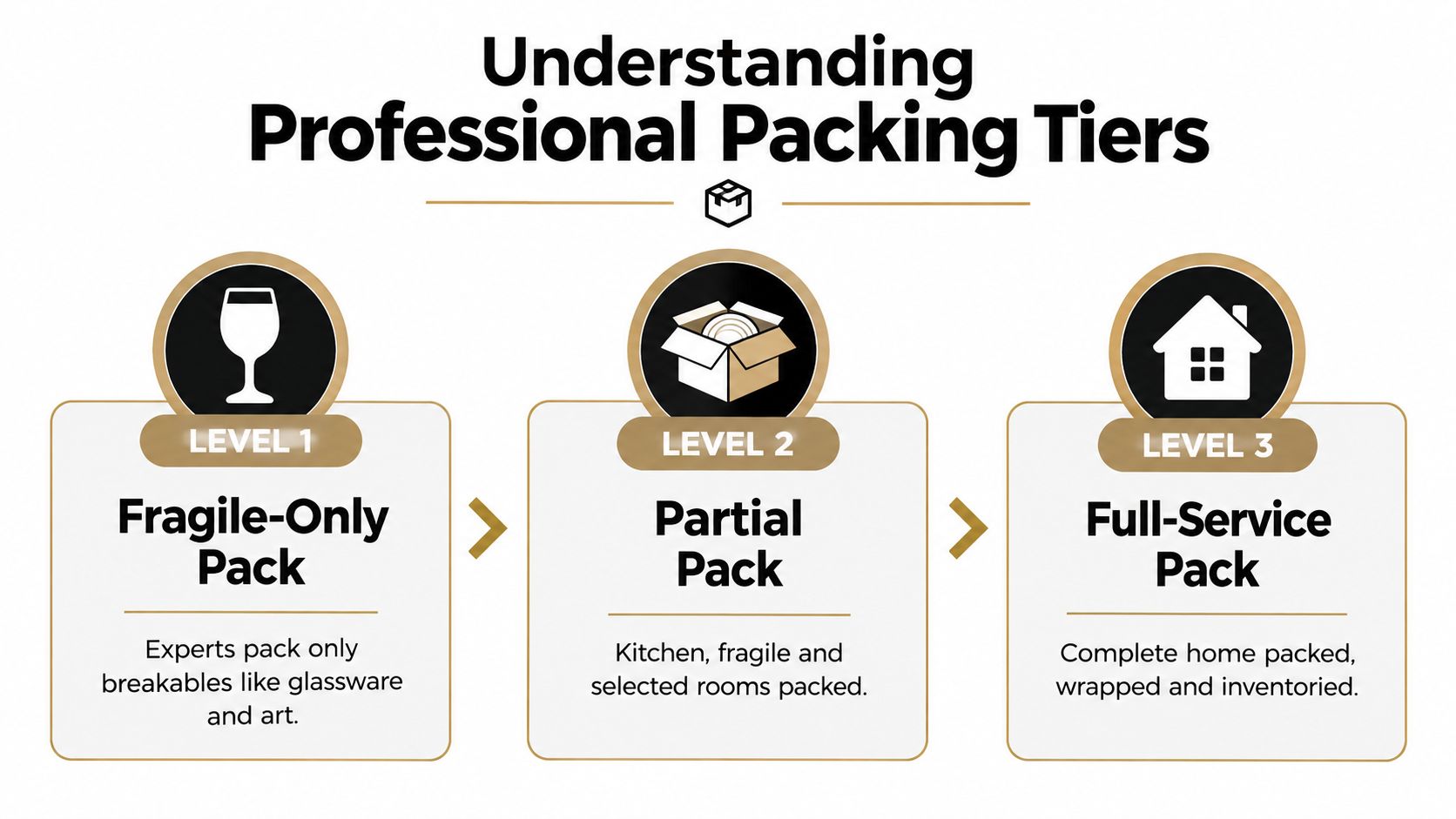
Fragile-only packing
This is the most targeted option. The crew handles glassware, ceramics, mirrors, artwork, collectibles and delicate electronics, while you pack clothing, books and ordinary household items.
Choose it when your main concern is technical protection, not labour. A Sydney apartment with a manageable amount of furniture may need only the kitchen, display cabinet and framed pieces handled by professionals. Flag these items during the quote, not when the truck arrives.
Partial packing
Partial packing is the sensible middle ground for many households. You pack straightforward rooms and ask the removalist to handle the kitchen, garage, home office or other areas that contain awkward, fragile or time-consuming belongings.
For a Hills District family home, that might mean leaving bedrooms and linen to the household while professionals pack kitchenware, appliances and wall art. For an office relocation, the equivalent could be packing archives, monitors and shared equipment while staff secure personal desk contents.
Full-service packing
A full pack covers the agreed contents of the property. Packers wrap, carton, label and prepare items room by room, with the scope recorded in the quote. Confirm whether wardrobe boxes, furniture protection, dismantling, reassembly, unpacking and materials are included, because “full service” isn't a universal term.
The service can also be paired with unpacking. If you're comparing premium relocation support, this practical explanation of what white glove service means helps clarify the difference between basic transport and careful end-to-end handling.
Practical rule: Pick a tier by risk and available time, not by bedroom count alone. A small home with extensive glassware may need more specialist packing than a larger, lightly furnished property.
Commercial Materials and Wrapping Techniques
A supermarket carton and household tape may hold a light load, but they're poor substitutes for a packing system designed around stacking, vibration and repeated handling. Sydney traffic creates constant movement inside a truck, while interstate removals add longer handling chains and more opportunities for a weak carton or poorly wrapped item to fail.
Commercial materials matter because they create predictable protection. Independent Australian packing guidance recommends commercial-grade moving boxes, dismantling furniture where possible and using crushed butcher's paper for breakables. These choices improve cube efficiency and load stability, not just appearance. A useful reference for customers comparing supplies is this guide to packing materials for moving.
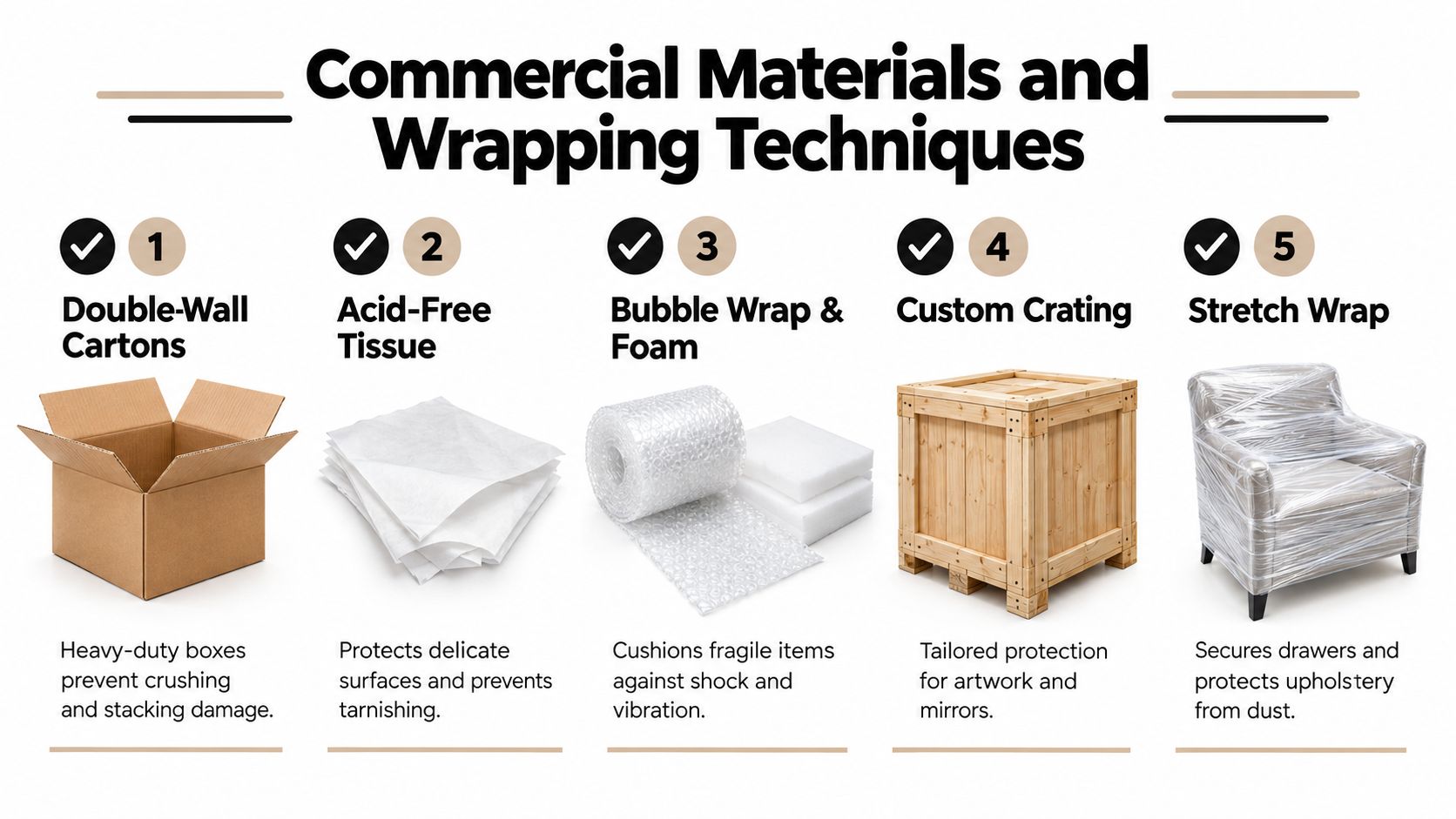
How professionals protect fragile items
Start with the item, not the box. Packers wrap each piece individually, place cushioning around vulnerable edges and use packing paper to prevent movement. They eliminate void space so objects can't collide, then label cartons clearly so the loading team knows which boxes need careful placement.
Fragile goods may need double-boxing. The inner carton protects the item, while the outer carton creates another buffer against compression and impact. Artwork and mirrors often require heavy-duty picture cartons or custom crating, especially when a standard carton leaves exposed corners.
Crushed butcher's paper is useful for filling gaps and cushioning breakables. Bubble wrap and foam have a role too, particularly around surfaces vulnerable to scratching or shock, but wrapping alone doesn't stop an item moving inside an oversized carton.
Furniture, electronics and load stability
Furniture should be dismantled where practical. Removing legs, shelves or detachable panels can improve the load shape and reduce pressure on joints. Packers then use stretch wrap and furniture pads to protect upholstery, drawers and finished surfaces from dust, scuffs and contact with other items.
Electronics need more than a quick blanket. Secure loose components, protect screens and identify cables so reconnection at the destination doesn't become a second problem. Office relocations benefit from item labels that match a floor plan or workstation list, particularly when several teams share the same loading area.
Ask the removalist whether materials are included, supplied at a separate charge or available for purchase. That single detail can change the apparent difference between two quotes.
Pricing Models and Hidden Fee Avoidance
The cheapest hourly rate isn't automatically the cheapest move. A quote becomes expensive when the customer discovers that packing materials, travel, stairs, long carries, bulky items or extra labour sit outside the initial estimate.
Sydney packing services commonly use hourly or service-based pricing. A public Sydney guide lists local moving rates from $120 per hour plus GST, while NSW packing guidance lists professional packing at $130 to $300 per packer and full-house packing for a standard three-bedroom home at $400 to $800. These figures are published in the Sydney packing service cost guide, and they should be treated as estimate ranges, not promises for your property.
| Service Type | Estimated Cost (AUD) | Pricing Model |
|---|---|---|
| Local moving service | From $120 per hour plus GST | Hourly |
| Professional packing | $130 to $300 per packer | Hourly or service-based |
| Full-house packing for a standard three-bedroom home | $400 to $800 | Service-based estimate |
Hourly quotes
Hourly pricing gives flexibility when the scope is uncertain. You pay for labour time, but the final amount depends on how quickly the crew can pack, carry and load. Access conditions can make a major difference. A lift booking, narrow staircase, difficult parking location or long path from the truck to the door can extend the job.
Ask whether the clock starts at the depot or at your property. Confirm whether travel time, minimum charges, stairs, heavy items and additional crew members are included.
Fixed-fee quotes
A fixed fee offers stronger budget control when the removalist has inspected the property or received an accurate inventory. It's only useful if the inclusions are detailed. A vague “packing and moving” description leaves room for disagreement about cartons, tape, wardrobe boxes, dismantling, reassembly and unpacking.
Before signing, get these points in writing:
- Packing scope: List the rooms and item categories the crew will handle.
- Materials: Confirm whether boxes, paper, bubble wrap, tape, cartons and protective covers are included.
- Access charges: Ask about stairs, lifts, parking distance, difficult access and bulky items.
- Travel and timing: Check travel charges, arrival windows, overtime rules and delays.
- Third parties: Find out whether subcontractors will perform any part of the move.
- Changes: Ask how additional cartons, rooms or services are approved and priced.
NSW consumer guidance also recommends checking whether the price is flat-fee or hourly and whether travel, packing, stairs and bulky goods cost extra. It's sensible advice in a fragmented market where two companies can use the same service label but offer different inclusions.
Insurance Liability and Damage Claims
Professional packing is a liability decision as much as a convenience decision. If you pack a carton yourself, the removalist may transport it but have limited responsibility for how its contents were prepared. Damage-claims guidance for Australian movers often excludes self-packed boxes, particularly where the crew can't verify the internal protection.
Professional packers create a clearer chain of responsibility. They choose the carton, wrap the item, fill voids, label the package and record the agreed scope. That doesn't guarantee every item will arrive perfectly, but it gives you stronger evidence about who controlled the packing process.
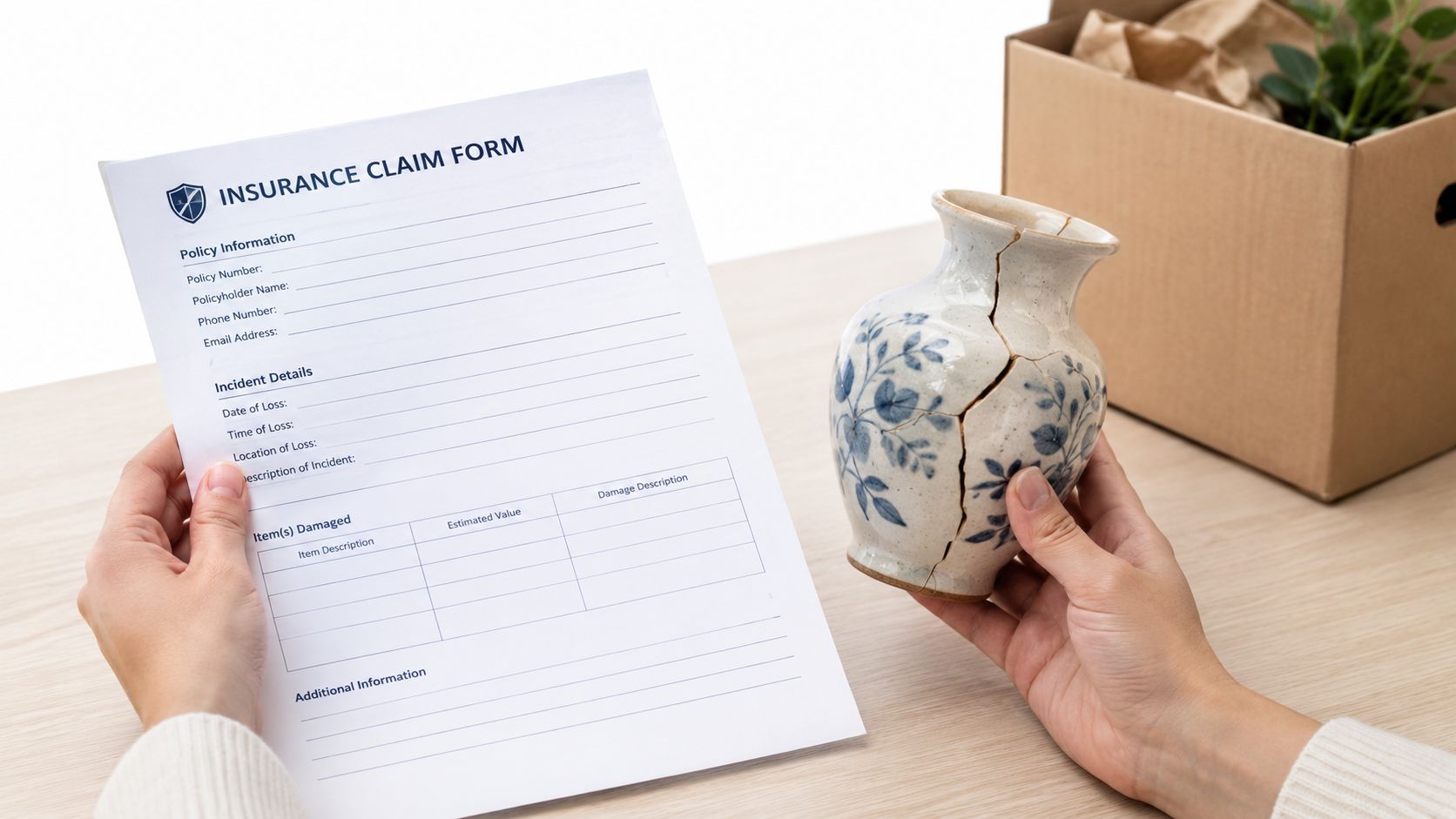
Don't assume your home policy covers transit
In NSW, removalists aren't legally required to provide insurance for your property during a move. NSW Fair Trading recommends arranging your own cover, and its guidance on choosing a removalist explains the importance of checking insurance arrangements.
If a removalist is accredited with AFRA, it should have public liability insurance and may provide transit insurance for goods while they're being packed, moved and stored. A storage extension may be available for an additional premium. Don't confuse public liability insurance with cover for your household contents. They protect different interests.
For high-value artwork, antiques, instruments and electronics, ask for the policy wording before moving day. Check exclusions, valuation requirements, excesses, storage coverage and whether self-packed goods are excluded. A general overview of insurance for removal can help you identify the questions to raise with your provider.
Inventory protects your position
Photograph valuable items before packing. Record existing marks, serial numbers and condition, then keep the inventory with your move documents. Important documents, cash, jewellery and irreplaceable personal items should travel with you unless the removalist has explicitly agreed to handle them under suitable cover.
A professional pack is valuable because it makes the packing process visible, documented and attributable.
Lead Times and Move Day Preparation
Packing-inclusive moves need early coordination, particularly when a household, office or warehouse has access restrictions. A 2026 industry report says the average lead time for a three-bedroom move is now four to six weeks, compared with two to three weeks in 2022, as reported by R2G's State of Australian Removalists 2026. Treat that as a planning signal. Don't wait until the keys are nearly available before booking packers.
Four to six weeks before
Book the packing team and confirm the service tier. Provide the property addresses, inventory, access details and preferred dates. For interstate removals, confirm the collection window, delivery arrangements, storage handoff and transit insurance before you accept the quote.
Office relocations need a separate access plan. Speak with the building manager about loading docks, lift protection, loading hours and security procedures. If a council permit or temporary parking arrangement is needed, organise it early.
Two weeks before
Declutter before the crew arrives. Donating, selling or disposing of items reduces packing materials, labour and truck space. Separate passports, contracts, medicines, chargers, jewellery, cash and irreplaceable documents into a clearly marked personal bag that stays with you.
Create a simple room-by-room inventory. Mark items that need dismantling, items requiring special handling and anything that won't travel. Remove hazardous goods, perishables and plants from the moving plan unless the removalist confirms an approved arrangement.
The day before and move day
On packing day, keep children and pets away from active work areas. Tell the crew about fragile heirlooms, access hazards and items that must remain accessible. Packers should label cartons by room and identify priority boxes, while you check that the agreed scope has been completed before loading starts.
Arrange lift access and keep pathways clear. At the final walkthrough, inspect cupboards, sheds, balconies and storage areas. Record meter readings and photograph property condition if you're leaving a rental.
Cleaning deserves separate coordination. If you want the old property prepared for handover or the new one ready before unpacking, organise home cleaning for new tenants as a separate service and schedule it around access.
Specialty Items and Relocation FAQs
Standard cartons work for books and linen. They're not enough for a grand piano, antique clock, pool table, server rack or valuable artwork. These items need a separate handling plan because their weight, balance, dimensions and sensitivity can affect every stage of the move.
A piano may require protective wrapping, specialist equipment and a route assessment. An antique clock needs careful preparation of moving parts. A pool table often needs dismantling and controlled reassembly, while a server rack requires cable documentation, equipment protection and a clear downtime plan. Artwork and mirrors may need heavy-duty cartons or custom crating rather than ordinary household packaging.
Tell the removalist about specialty items before the quote. If the crew learns about a piano or oversized safe on move day, the team may lack the right equipment, labour or access plan.
Common questions
Can I pack some rooms myself?
Yes. Fragile-only and partial packing let you retain control over simple items while handing technical or labour-intensive areas to professionals. Agree on the boundary in writing so there's no confusion about what the crew is expected to pack.
Will the removalist unpack everything?
Unpacking is usually a separate service. Confirm whether it includes placing items into cupboards, assembling furniture, removing cartons and taking away packing waste. If you want the home operational quickly, prioritise kitchens, bedrooms and essential office workstations.
What happens if storage is needed?
Ask whether the same crew can load directly into storage, whether items remain wrapped and inventoried, how access works and whether transit insurance extends through the storage period. A storage handoff should be documented rather than treated as an informal stop between addresses.
Are interstate logistics different?
Yes. Longer transit creates more planning pressure around delivery windows, access, insurance and essential belongings. Keep important documents and personal necessities with you, and confirm what happens if the destination property isn't ready when the truck arrives.
How do I choose between tiers?
Use fragile-only when protection is the priority, partial packing when selected rooms create the bottleneck, and full service when time, staffing or move-day certainty matters more than doing the work yourself. For a business, reducing downtime may justify packing more than the office's entire contents.
Home Removals Sydney provides packing and unpacking support, removalist labour, furniture assembly, materials such as boxes and bubble wrap, storage options and handling for residential, office, warehouse and interstate moves. Request a quote that lists your packing tier, access conditions, insurance arrangements and specialty items before you commit by visiting Home Removals Sydney.
