

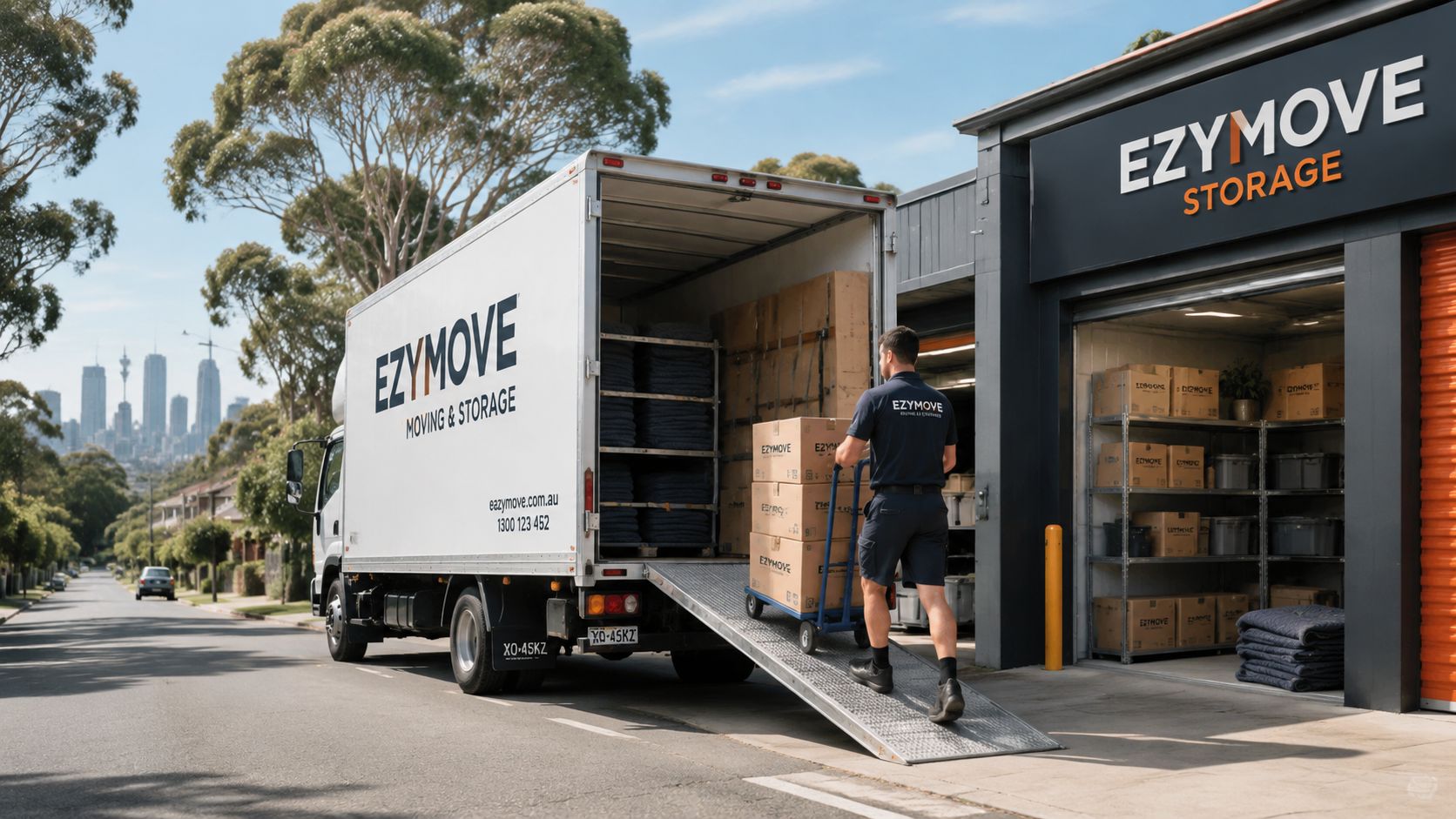
You've moved out of your Sydney rental, but the settlement date on the new home has slipped. Or your renovation has started before the replacement property is ready. Perhaps your office fit-out is running behind schedule and your furniture, files and equipment are still sitting in the wrong building. These are the moments when a moving company with storage stops being a convenience and becomes part of the move itself.
The right choice depends on the gap between properties, the volume of goods, how often you need access and whether the destination is ready. A combined service can remove a difficult hand-off between a removalist and a separate storage operator, but only if the inventory, insurance and access terms are clear from the start.
Sydney's storage sector is substantial enough to support this approach. The Self Storage Association of Australasia's 2025 industry snapshot recorded 3,380 facilities, 7.5 million square metres of net storage area, average occupancy of 85%, and roughly one storage unit for every 17 households across Australia and New Zealand. Storage is no longer an afterthought for home removals Sydney customers, office relocations or interstate removals.
When You Actually Need a Moving Company with Storage
Storage becomes necessary when your move has a timing problem that transport alone can't solve. Settlement delays are the obvious example. Your removalist can clear the old property on the agreed date, place everything into secure storage, and deliver it once the new address is available.
Lease overlaps create a different problem. You might have access to both properties, but moving in stages can mean paying for extra labour, repeated truck visits and temporary clutter. A planned storage intake gives you control over the sequence, especially if the new home needs painting, flooring or repairs before furniture arrives.
The Sydney situations that justify storage
- Delayed settlement: Move out on time, then hold the household contents until the property is ready.
- Renovation work: Remove furniture, artwork and appliances before trades arrive, rather than protecting everything room by room.
- Downsizing: Store selected items while the household decides what will move permanently. Customers managing a significant property transition may also find a compassionate downsizing service Liverpool useful for organising the broader process.
- Interstate relocation: Reduce the pressure of choosing a permanent home immediately after leaving Sydney.
- Short-term office moves: Keep desks, archive boxes and equipment together while a new workplace is fitted out.
The main advantage of one provider is fewer handovers. If a third-party facility can't accept the truck on moving day, your goods may need to sit overnight, travel twice or wait in an unsuitable vehicle. Each extra handling point increases the chance of confusion, damage or a disagreement over which policy applies.
Treat storage as a logistics decision based on timeline, volume and destination readiness. Ask who loads the truck, who records the inventory, who places goods into storage and who will deliver them later. If one team manages those stages, the job is easier to track and the instructions are less likely to be lost.
The Storage Options Most Sydney Movers Offer
Sydney removalists generally offer four practical storage models. None is automatically right. The cheapest option can become poor value if you need frequent access, while a premium warehouse may be unnecessary for sturdy household goods held briefly.
| Storage Model | Best For | Typical Duration | Access | Relative Cost |
|---|---|---|---|---|
| Containerised depot storage | Household goods held without regular access | Short to medium term | Usually arranged in advance | Usually lower for short periods |
| Warehouse racking | Fragile, valuable or sensitive items | Medium to long term | Scheduled access or redelivery | Higher |
| Mobile storage pod | Ground-floor homes with suitable driveway access | Short term | Easy while on site, restricted after collection | Variable |
| Shared container space | Smaller interstate consignments | Move-dependent | Usually requires notice | Can suit partial loads |
Containerised depot storage
Containerised storage usually wins for a straightforward gap of a couple of weeks. The removal team loads your goods once, seals the container and stores it at the depot. You won't generally have walk-in access to individual items, so pack essentials separately.
This model works well for a home move where the entire load will eventually go to one destination. It works less well if you expect to retrieve a cot, filing cabinet or specific carton during the storage period.
Racked warehouse storage
Racked warehouse storage suits fragile furniture, antiques, artwork, documents and electronics that need more controlled handling. A facility may place items on shelving or pallets, keep an inventory and arrange access through staff rather than offering unrestricted unit entry. For customers comparing environmental protection, climate-controlled storage in Sydney deserves particular attention.
Mobile pods and shared space
Mobile pods only make sense when the property can accept them safely. A ground-floor Sydney home with driveway access may be suitable. An apartment in a dense suburb, a narrow street or a building without loading space usually isn't. Confirm council, building and vehicle access requirements before paying for delivery.
Shared container space can suit a smaller interstate consignment, but ask about minimum charges, loading dates and the possibility of delays while other freight is coordinated. Depot access isn't automatically unlimited. Operators in commercial areas such as Alexandria and Silverwater may impose appointment windows, security procedures or notice requirements.
Questions to Ask Before You Sign Anything
A polished quote isn't enough. Before you book, find out who controls the storage, how the goods are documented and what happens if your plans change.

Confirm the operator and the facility
Ask whether the removalist owns the warehouse or uses a subcontracted storage provider. You need the legal trading name, physical location and contact process for the facility, not just a salesperson's mobile number.
Then clarify the handling chain:
- Crew continuity: Will the crew loading your home also manage the storage intake and later delivery?
- Inventory records: Will staff create an itemised list, barcode, carton count or condition report?
- Photographs: Are pre-existing marks and the condition of valuable items recorded before storage?
- Retrieval process: How much notice is required if you need one item returned during the storage period?
The intake record matters because memory is unreliable after a busy moving day. A written inventory gives both sides a reference point if a carton is missing or furniture arrives with a disputed mark.
Treat insurance as a separate decision
Ask whether the policy covers transit only, storage only or both. NSW consumer guidance explains that transit cover can include storage, but storage often requires a separate premium and policy conditions vary by provider. Read the NSW guidance on choosing a removalist before accepting a bundled explanation.
Check whether cover is based on full replacement, an agreed value or depreciated value. Ask specifically about owner-packed cartons, water, pests, mould, fragile goods and unattended access. A low headline price means little if the policy excludes the items you're most concerned about.
Practical rule: If the storage cover isn't written into the quote and contract, assume it hasn't been confirmed.
Screenshot the clauses that change the price
Save the liability limit per item, storage extension rate, access fee, redelivery charge, cancellation terms and any lien rights. Also record the exact storage start date, the expected delivery window and the notice period for access. These details prevent a verbal promise from disappearing when the job passes from sales to operations.
How Moving and Storage Pricing Really Works
Storage quotes usually combine several cost structures rather than using one simple rate. Sydney movers may price the transport by the hour, quote the relocation as a fixed amount or calculate the load by volume. Storage then adds its own rental, handling and access conditions.
| Pricing Model | Best For | Watch Out For |
|---|---|---|
| Hourly | Flexible local moves with a clear scope | Delays, stairs, traffic and extra handling extend the bill |
| Fixed price | Organised moves with a surveyed inventory | Variations can apply when the inventory or access differs |
| Per-cubic-metre | Partial loads and selected furniture | Volume estimates can change if goods are added or packed inefficiently |
A worked Sydney example
Consider a three-bedroom Marrickville home moving into storage for four weeks. The quote should separate truck and crew time from the storage charge, then identify intake handling, inventory checking and the later delivery.
An hourly structure can work when the access is simple and the inventory is reliable. It becomes less predictable if the building lift is delayed, parking is unavailable or the crew must rewrap and reposition goods before storage. A fixed quote gives better budget control when a survey has captured stairs, narrow corridors, fragile pieces and the final delivery requirements.
A per-cubic-metre model can look attractive for a partial household load, but ask how the provider measures volume. Disassembled furniture, protective wrapping and irregularly shaped items can affect the usable space. If you visit mid-month, an access or handling fee may apply even though you're already paying the storage rate.
For a broader explanation of local charges, review how much storage costs in Sydney, then ask the provider to apply the same logic to your inventory.
Look beyond the headline quote
Check for fuel levies, after-hours surcharges, minimum storage billing, collection fees, warehouse handling, redelivery and changes to the final destination. A quote that merges every stage into one number is difficult to audit.
Choose hourly pricing when the inventory and access are simple. Choose a fixed quote when storage introduces extra handling, timing risk or multiple delivery requirements.
Real Scenarios Where Storage Saves the Day
A combined service earns its keep when the removal date and delivery date cannot sit next to each other. The value isn't just the storage space. It's the coordinated handover between addresses, crews and dates.

A Parramatta family waiting for settlement
A family leaving an apartment in Parramatta had a three-week settlement delay. Their practical sequence was straightforward:
- Complete the inventory before moving day and identify essentials needed during the temporary rental.
- Load the remaining furniture, appliances and cartons directly into climate-controlled Sydney storage.
- Keep the temporary accommodation clear of bulky goods.
- Book one delivery date after settlement and place furniture room by room.
The main cost drivers were the initial removal, storage for the agreed period, the final delivery and any special handling for items that couldn't be stacked safely. The family avoided arranging a separate truck to collect goods from a storage facility, but they still needed to confirm that the storage policy covered the entire holding period.
Next time, they'd separate documents, clothing, medication and kitchen basics before the crew arrived. They'd also confirm the delivery window earlier, because a settlement date can move again.
A Surry Hills design firm between offices
A small Surry Hills design firm had left its old premises while the new office fit-out was still underway. The business packed workstations, samples, archive material and equipment, then used container storage for six weeks.
The firm's booking sequence started with an inventory split into three groups: items needed immediately, items safe to store and items requiring careful protection. The removal team completed the office clearance, recorded the stored goods and delivered everything after the fit-out reached handover stage.
The major cost drivers were the amount of handling, equipment protection, access restrictions at both buildings and the final delivery timing. The firm's lesson was clear: don't store essential files or daily-use equipment without a retrieval plan. It would also mark priority cartons more clearly and appoint one person to approve any mid-storage access.
Combined moving and storage handled both situations because one operational plan connected the first pickup with the later delivery. That connection is what customers should pay for, not a room or container.
Contract and Insurance Clauses Worth Reading Twice
The quote describes the price. The contract determines responsibility. Read it before the deposit, particularly when goods will remain under the mover's control after the truck leaves your property.

Clauses that affect responsibility
First, identify whether you're dealing with the carrier, a broker or both. Interstate moves in Australia don't use a federally mandated released-value system like the United States, so the removalist contract and any optional transit or marine cargo policy carry particular weight. The interstate moving insurance explanation provides useful context, but your signed terms still control the booking.
Look for the liability limit per item. A carrier liability clause may not equal full replacement insurance, and it may exclude owner-packed cartons, pre-existing damage or items listed as prohibited in storage. Ask for the exclusions in writing, not just a general statement that goods are insured.
Storage terms deserve equal attention
Your agreement should state:
- Storage coverage: Whether protection continues throughout storage or stops after transit.
- Access notice: How far ahead you must request a visit or item retrieval.
- Extension pricing: What rate applies after the initial storage period.
- Lien rights: Whether the provider can retain goods when invoices remain unpaid.
- Disputes: Which process and location apply if the parties disagree.
- Condition records: How photographs and damage reports are created and retained.
For higher-value furniture, antiques, artwork or office equipment, paying for broader cover can be sensible. A declared-value model is used by some Australian providers, with market examples showing premiums around 1.75% to 2.5% of declared value for interstate transit cover, plus separate monthly storage extensions, as described by Transcorp Removals and Storage. Confirm the actual premium, excess and storage extension rather than relying on a general percentage.
Customers who hire specialist trades may also benefit from reading a cleaning liability insurance guide to understand how service liability differs from cover for goods held in storage. For removal-specific terms, compare the inclusions described in storage with insurance before selecting an upgrade.
Booking Your Move and Storage the Smart Way
Book the move in sequence, not as one vague request for “removal and storage”. A good plan gives the operator enough information to price the handling, reserve the correct storage model and protect the delivery date.

Start with an accurate survey
Arrange an in-home or video survey. Walk through every room, garage, balcony, storage cage and office area. Show oversized furniture, pianos, artwork, fragile electronics, stairs, lifts and parking restrictions. A survey is far more useful than a rough carton guess.
Create a written inventory before the quote is final. Separate items that will be stored from items travelling directly, and label essentials that must remain accessible. If the destination isn't ready, identify the likely delivery date and the conditions that could change it.
Require an itemised quote
Your written quote should separate:
- Labour and transport: Crew size, truck, loading and delivery work.
- Storage: Storage model, start date, billing period and extension rate.
- Insurance: Transit cover, storage cover, excess and exclusions.
- Ancillary charges: Access visits, redelivery, stairs, lifts, parking, fuel and after-hours work.
Sydney and NSW costs can change when a metro pickup becomes a regional delivery, so ask the provider to identify those variations before payment. Confirm the storage start date, facility location, access window, pickup window and single point of contact in writing.
A business move needs the same discipline. Sydney office churn creates real relocation demand. In one reporting period, the Property Council of Australia recorded 35,948 square metres of withdrawn office stock, 23,983 square metres of net absorption and 29,430 square metres of supply additions in Sydney, as reported by Green Street News. Those conditions make fit-out timing and temporary storage planning especially important for office relocations.
Booking standard: Don't pay a deposit until the inventory, dates, storage terms and insurance scope match what you discussed.
The Australian storage market continues to expand. IBISWorld's Australian self-storage services profile estimated the industry at $2.5 billion in 2026, with 1,417 businesses and growth at a 4.4% CAGR between 2021 and 2026. Independent market research projected growth from USD 1,260.9 million in 2025 to USD 1,899.0 million by 2034, at a 4.66% CAGR, reinforcing why availability, access and contract terms deserve attention rather than an afterthought.
For safety, ask how the crew separates vehicle loading, aisle movement and pedestrian access. Transport, postal and warehousing recorded 81 worker fatalities from vehicle incidents, 42% of traumatic work-related deaths, and 26 fatalities from being hit by moving objects, 13%, in 2022, according to IBISWorld's removal services industry information. Safe Work Australia data also recorded 9,100 serious workers' compensation claims in transport and storage in 2011–12, with body stressing responsible for 41%, and 280 worker deaths from 2007–08 to 2011–12, of which 94% involved vehicles, as summarised by R2G's Australian removalists report. A professional booking should include controlled lifting, suitable trolleys, exclusion zones and clear pedestrian access.
Home Removals Sydney coordinates local home removals, furniture removals, office relocations, warehouse moves and interstate removals with storage options for short or long holding periods. Request a quote from Home Removals Sydney with itemised labour, transport, weekly storage, insurance options and any access or redelivery charges for your Sydney metro or NSW regional move.
