


You've signed a new lease or settlement date is coming up, boxes are half packed in the hallway, and you're realising your Dee Why building only lets you book the lift for a short window. Meanwhile the street outside has timed parking, your lounge won't fit through the lobby without being dismantled, and every quote you've received prices a different job. That's typical here, and it's why good Dee Why removalists treat access as part of the quote, not as an afterthought on moving day.
For Removalists Sydney work, and especially Furniture removals Sydney in apartment buildings, the cheapest hourly rate isn't always the cheapest move. A crew that can't park legally, can't use the lift when planned, or arrives without knowing about stairs will still be on the clock while problems get sorted. This guide shows you what to check about cost, kerbside access, strata rules, packing and cover, so your Home removals Sydney quote matches the move you'll have.
What Removalists in Dee Why Typically Charge
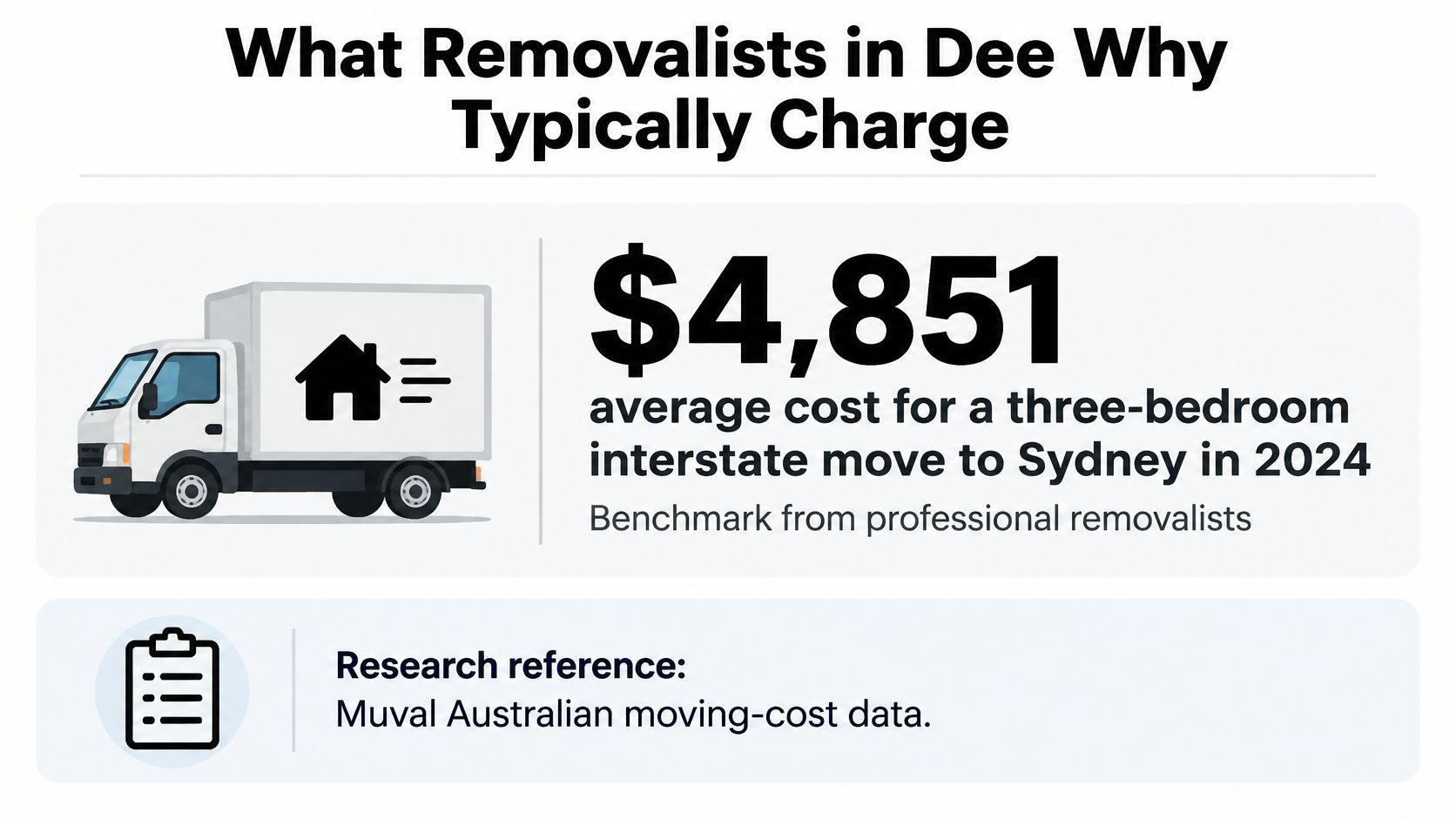
Start with the only firm benchmark worth anchoring on, and label it correctly. An average three-bedroom interstate move to Sydney cost $4,851 in 2024 when using professional removalists, according to Muval's Australian moving-cost comparison. That's an interstate benchmark, not a Dee Why local price. It tells you what long-distance transport, driver time and transit add up to for a mid-sized home. It doesn't tell you what a two-bedroom unit move across the Northern Beaches should cost.
Local moves are usually priced on crew hours and truck size rather than distance. Two homes with the same bedroom count can therefore cost quite differently. A ground floor unit with a driveway and everything dismantled loads fast. A third floor unit with a booked lift, a long corridor and beds still assembled doesn't, even if the furniture list looks identical on paper.
Why bedroom count alone gives a weak estimate
Dwelling size tells a removalist roughly how much volume to expect. It doesn't capture tenure-related access conditions, lift booking windows, parking distance, how much is already packed, or the share of furniture that needs dismantling. Each of those changes labour hours, and labour hours drive most local invoices. If you want a realistic range, separate the drivers below and price them line by line, using the approach set out in this guide to the cost of removalists in Sydney.
| Cost driver | How it changes the price | What to tell your removalist |
|---|---|---|
| Home size | More rooms mean more crew hours and a larger truck | Number of bedrooms and a rough item count |
| Stairs and lift access | Carrying distance and lift waiting time add labour | Floor level, lift size and any booking window |
| Carry distance from the truck | Long walks from kerb to door add time | Metres from the kerb to the entrance |
| Packing service | Adds labour hours and packing materials | Whether you will pack, partly pack or want a full packing service |
| Storage | Adds a separate fee for the storage period | Number of days or weeks needed |
| Interstate distance | Adds fuel, driver time and transit cover | Destination suburb, state and preferred dates |
| Heavy or specialist items | Needs extra handlers or equipment | Pianos, safes, pallets, artwork or antiques |
Budget rule: Build your range from hours, access and extras. Don't build it from bedrooms alone.
Ask every operator the same three questions before you compare totals. First, is the quote hourly or fixed, and what crew and truck size does that price assume? Second, does it include stairs, packing materials and fuel, or are those separate charges? Third, what hourly rate applies beyond the booked window if access delays push the job longer? Clear answers turn a vague estimate into a budget you can defend when the final invoice arrives.
Parking, Loading Zones and Truck Access on Dee Why Streets
A Dee Why move can stall before the first box reaches the truck. Northern Beaches Council's parking areas information states that on-street parking across the region is controlled by time limits ranging from 1 to 4 hours, with compliance monitored by parking rangers. A truck that overstays its signed limit can be fined or moved on mid-job, which breaks the loading sequence and adds handling time. That range is regional, so it doesn't prove every Dee Why street has the same limit. Check your exact frontage.
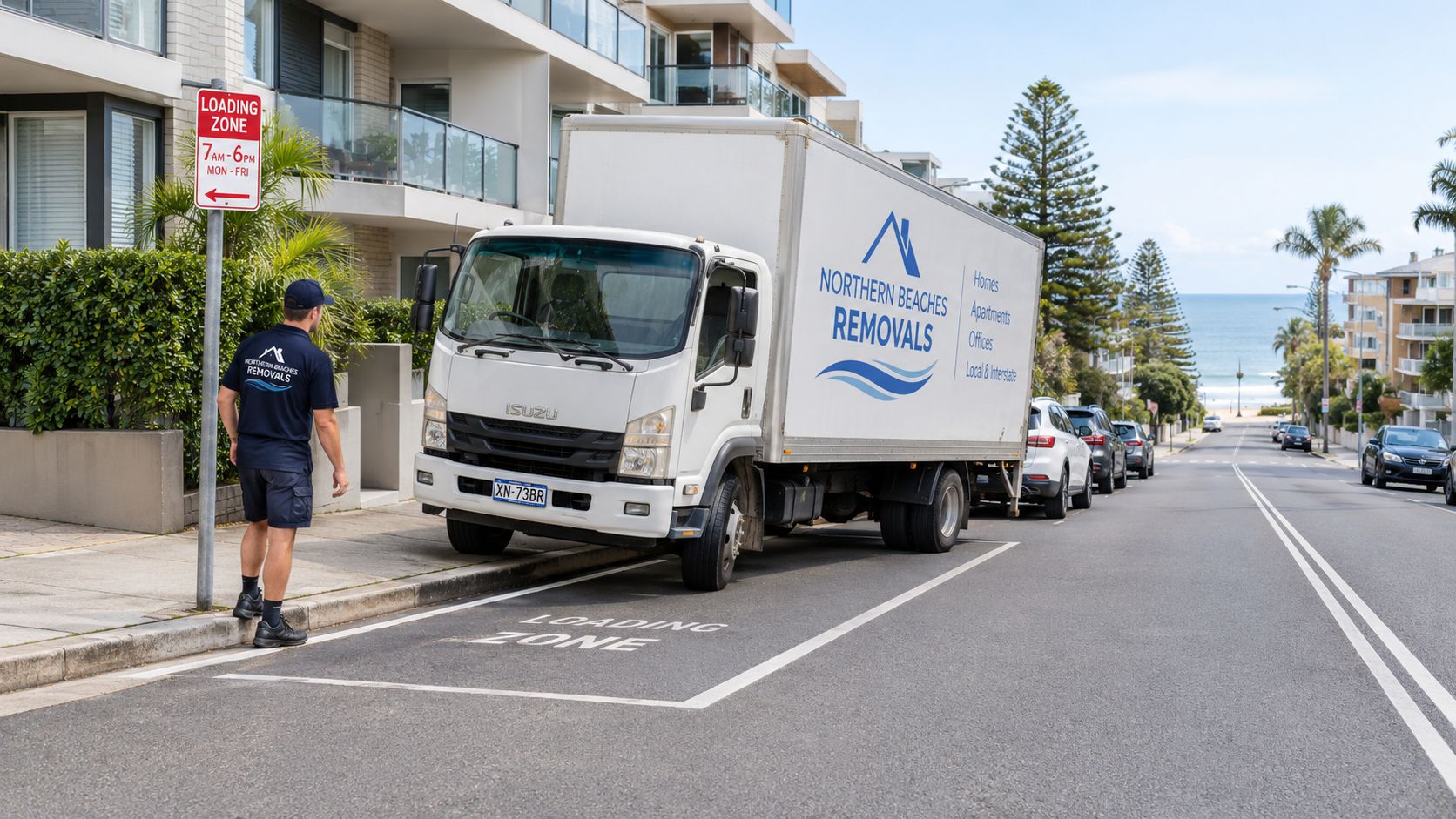
Five access checks to do before you book
- Inspect the exact frontage: Photograph every parking sign on both sides of the street and note the time limit and days it applies.
- Confirm loading zone rules: Ask whether a loading zone applies to a removal truck, and for how long you can legally stay there.
- Measure the carry: Pace the distance from the likely truck position to your door, including lobbies, corridors and lift waits.
- Check overhead height: Look for awnings, low driveway entries and basement ramps that could block a tall truck.
- Name a backup position: Pick a second legal loading spot in case your first choice is taken when the crew arrives.
Height deserves its own check. Transport for NSW heavy vehicle guidance states that heavy vehicles higher than 4.3 metres have restricted travel conditions and must use approved road networks. You probably won't need a vehicle that tall, but the principle applies at building level too. If the truck can't clear an entry, the crew may need a smaller vehicle, a staged move or an alternative loading point, and each option changes time and cost.
Sequence the work around the bay while you've got it. Load high-volume boxes and standard furniture first while access is secure and the lift is booked. Keep fragile or oversized pieces for when the truck position is confirmed and the route is clear. That order keeps the crew productive if you have to shift the truck later.
A bigger truck doesn't fix a one-hour parking bay. Access planning decides whether labour stays productive for the whole booking.
Apartment and Strata Access to Confirm Before You Book
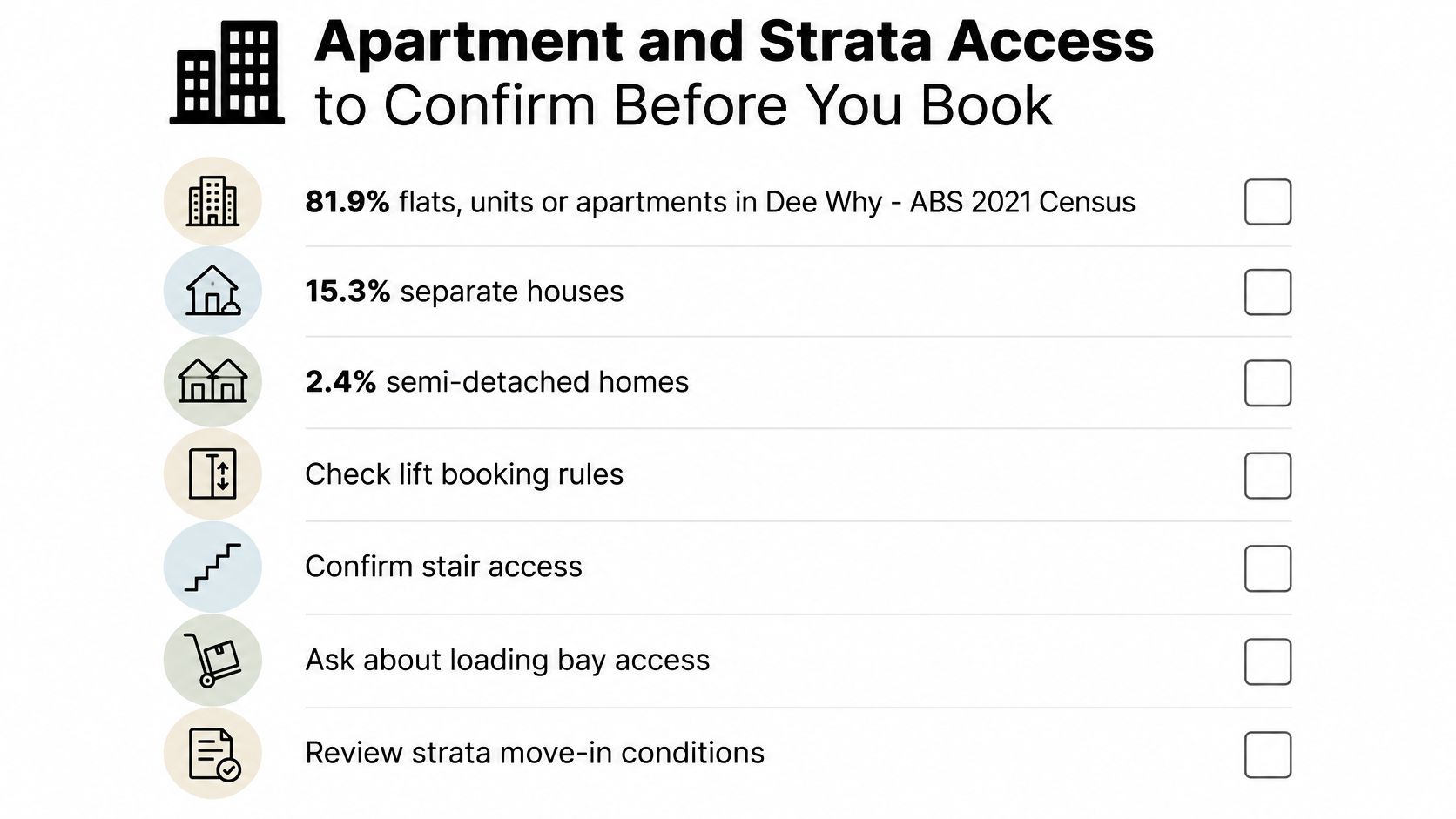
Most Dee Why moves aren't house moves. The ABS 2021 Census QuickStats for Dee Why recorded that 81.9% of occupied private dwellings were flats, units or apartments, while only 15.3% were separate houses and 2.4% were semi-detached dwellings. In practice, your move will likely run through a shared lobby, lift, corridor and common driveway. The strata manager and building manager control much of that route.
Don't assume a driveway or loading bay is yours to use because it looks empty and wide enough. Council permission and strata approval solve different problems. Council rules govern parking on the public road. Strata approval governs private building access, lift use and common property. You may need both, and having one doesn't replace the other.
There's an objective reason to verify rather than guess. Northern Beaches Council guidance on driveway and vehicle crossings says driveway crossings must serve an approved off-street parking facility, authorised through a development approval or complying development certificate. A physically usable crossing isn't automatically an approved truck access point, so confirm with building management during the quote process, not on arrival.
What to confirm with strata and building management
- Lift booking windows: Start and finish times, whether the lift can be held, and what happens if you overrun.
- Loading bay rules: Which bay to use, height or weight limits, and whether you need a key, fob or staff escort.
- Building access hours: Earliest crew entry, noise limits and weekend restrictions.
- Protective coverings: Whether lift pads, floor protection and door jamb guards are required, and who supplies them.
- Visitor parking: Where a second vehicle or your own car should go so it doesn't block the truck.
- Damage to common property: Who is responsible, how existing marks are recorded, and whether a bond or condition report applies.
If you're renting, get written approval from your landlord or agent as well as the building manager. They answer for different parts of the property, and a verbal okay from one won't settle a dispute with the other. Send the confirmed times and rules to your removalist in writing so crew size and start time match the window you've been given.
Careful coordination cuts moving time and reduces argument risk over scratched lifts or blocked driveways. It won't make a tight building easy, but it removes the surprises that turn a half day job into a full day one.
Packing, Insurance and Items Removalists Will Not Carry
Packing quality decides how fast the truck loads and how well things survive it. Declutter first, then pack room by room so you're not paying to move items you'll throw out at the other end. Label each box with its destination room, not the room it came from, and keep heavy items like books in small boxes you can lift. Use wardrobe boxes for hanging clothes, and don't overload kitchen boxes, which get heavy fast.
Small steps that prevent slow unpacking
Bag and tag the bolts and screws from every bed and table you dismantle, then tape the bag to the frame it belongs to. Photograph cable connections before you disconnect a TV or computer setup. For breakables, wrap pieces individually rather than stacking them with a sheet between, this practical advice on packing glassware with protective paper from Packaging Panda shows the wrapping technique clearly. Keep one essentials box in your own car with medication, chargers, bedding, toiletries, a change of clothes and basic tools for the first night.
Insurance is not one thing
A removalist's public liability cover is not cover for your goods in transit. Those are separate protections, and assuming one includes the other is a common and expensive mistake. Ask for a certificate of currency, then ask whether goods in transit are covered, up to what value, and what excess applies. This overview of insurance options for removalist moves is a useful starting point for the questions to raise. We offer insurance options to protect customers' belongings during a move, so declare high-value art, instruments or antiques in writing before the crew arrives and record a dated photo or video inventory of their condition at pickup.
| Item | Who should carry it | Why it needs care |
|---|---|---|
| Cash, jewellery and valuables | You | High loss risk and usually excluded from cover |
| Important documents and passports | You | Irreplaceable and needed immediately after the move |
| Medication | You | Needed on the day and during the first night |
| Perishable food | You | Spoils quickly and may be excluded from transit |
| Plants | You, or agree a plan with the removalist | Can be damaged in the truck and may be restricted |
| Flammable liquids, gas bottles and paint | Usually excluded, confirm with the removalist | Safety rules restrict what can be transported |
| Pianos, safes and artwork | Specialist crew | Needs extra handlers, equipment and specific cover |
Exclusions vary by company, so don't treat any general list as the final word. Ask for the operator's own list, confirm it in the written quote, and sort restricted items before packing day. Fuel in mowers and tools needs draining, chemicals need a council drop-off plan, and pets travel with you, never in the truck.
How to Choose a Reliable Removalist in Dee Why
The best test of a removalist is simple. Does the quote reflect the access you've already documented? If you've supplied a lift window, floor level, parking limit and carry distance, and none of it appears in the written estimate, you're comparing a generic price against a specific job. That gap is where extra hours come from.
Use the same check for Interstate removals, Office relocations and local unit moves. The move type changes, but the discipline of matching crew, truck and schedule to real access doesn't. A reliable operator asks questions that sound like your building and your inventory, not like a script.
A repeatable shortlist process
- Shortlist three operators: Confirm each one covers your Dee Why address and your move type, whether that's local, interstate, office or storage.
- Request an itemised written quote: It should name crew size, truck size, estimated hours, packing, stairs, storage and any travel charges as separate lines.
- Ask how access is charged: Pin down how stairs, lift waits and long carries are billed before you agree to a start time.
- Verify cover: Request a certificate of currency and confirm in writing what goods-in-transit cover includes and excludes.
- Test communication: Note how quickly they respond and whether a named contact follows up with the details you sent.
- Read reviews for specifics: Look for comments about care with furniture, timing and how damage claims were handled, rather than star ratings alone.
- Confirm payment terms: Get the deposit and balance terms in writing, and don't pay a large amount upfront before a written quote exists.
If a quote could have been written without knowing your street, floor or lift, it hasn't priced your move yet.
Home Removals Sydney is one option to test against this checklist. We're a family owned and operated business with more than 10 years of industry experience in removalist services, and we serve both residential and commercial clients. Put us through the same seven steps as anyone else. Send the access notes, ask for the itemised lines, and confirm we cover your specific Dee Why address and dates before you book. Service areas and availability can change, so a general Sydney listing isn't a booking promise.
I'd also weigh how the operator handles a small complication during quoting. Say you mention a piano, a low basement entry or a lift that can't be held. A careful removalist will adjust crew numbers, equipment or vehicle choice and explain the trade-off. One who waves it away is telling you how moving day will feel.
Choose the company whose questions, paperwork and price all point to the same job. That's a stronger signal than the lowest hourly figure on its own.
Request a Quote Before You Lock In a Move Date
Don't lock a date first and discover the lift is unavailable later. Gather the details that let Dee Why removalists price the job accurately, then request the quote with a small range of workable dates. That order gives you more flexibility, because the crew can be matched to the building instead of squeezed around it.
Here's a short visual checklist to work through before you submit anything.
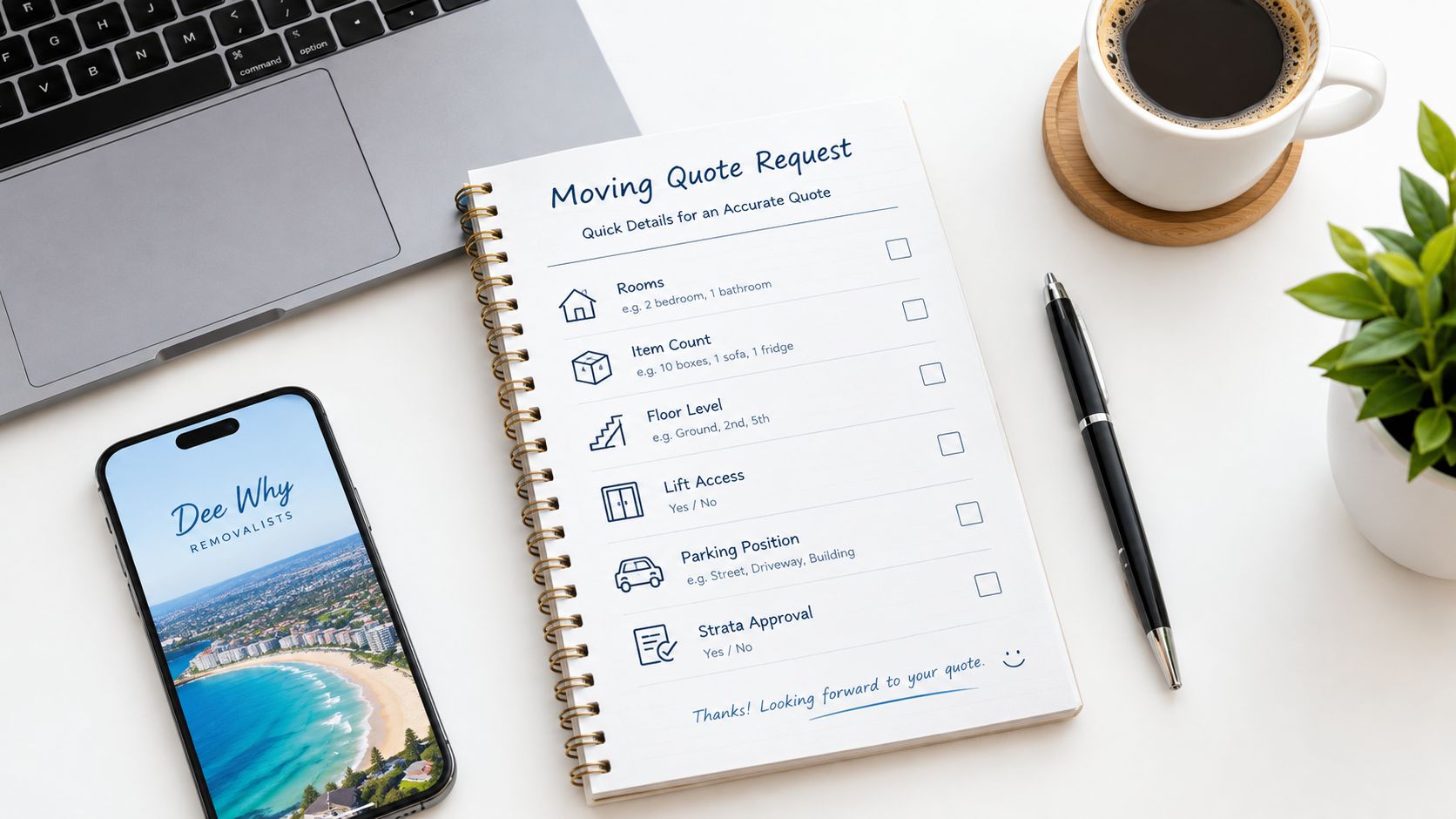
What to gather before you request a quote
- Rooms and item count: Bedrooms, living areas, garage or storage cage contents, and anything oversized.
- Level and lift details: Floor, lift dimensions if known, booking window and stair count if there's no lift.
- Parking position: Signed time limit, loading zone details, carry distance and your backup loading spot.
- Strata rules: Access hours, protective covering requirements and who to contact on the day.
- Dates with flexibility: Your earliest and latest acceptable dates, checked against lift windows and kerbside limits.
- Packing and storage needs: Whether you'll pack yourself, need a full or partial service, or need storage for a set period.
- Heavy or specialist items: Pianos, safes, pallets, antiques or artwork that need extra handlers or cover.
We offer a free online quote, and a specialist gets in touch shortly after the form is filled in, so you can talk through your access notes without sitting in a phone queue. You can start with our page for online removalist quotes and attach the same details you'd send any operator. Our pricing has no hidden costs, which makes line-by-line comparison against your checklist straightforward rather than a guessing exercise.
If you're leaving the state, we provide Interstate removals for clients moving from Sydney to anywhere in Australia, so say so upfront. Interstate work needs transit scheduling and destination access checks, not just a local hourly estimate with distance added. If you're also arranging a vacate clean to protect your bond, it can help to compare local housekeeping quotes from Aquastar Cleaning Services, LLC at the same time, so cleaning and final inspection don't collide with loading hours.
Watch this short video before you submit, then use it as a prompt to double-check your date against the building rather than the calendar alone.
Flexibility helps more than you might expect. If you can move on a weekday, or start earlier to suit a lift window, tell the removalist in the request. A crew scheduled around your building's rules will usually finish sooner than a cheaper crew booked at a time your building won't allow. Share the access notes before moving day, reconfirm them close to the date, and keep the building manager's contact in your phone.
Request your free quote today with your room count, lift and parking notes, preferred date range and any specialist items included. Lock in the date only once the quote, the lift booking and the kerbside plan all agree with each other.
Home Removals Sydney offers local, office and interstate moving support with itemised quoting, packing, insurance options and loading help matched to your Dee Why access notes. If you're planning a unit, house or business move and want a price built around your lift window, parking position and inventory, request a free quote from Home Removals Sydney and send those details with your preferred dates.
