

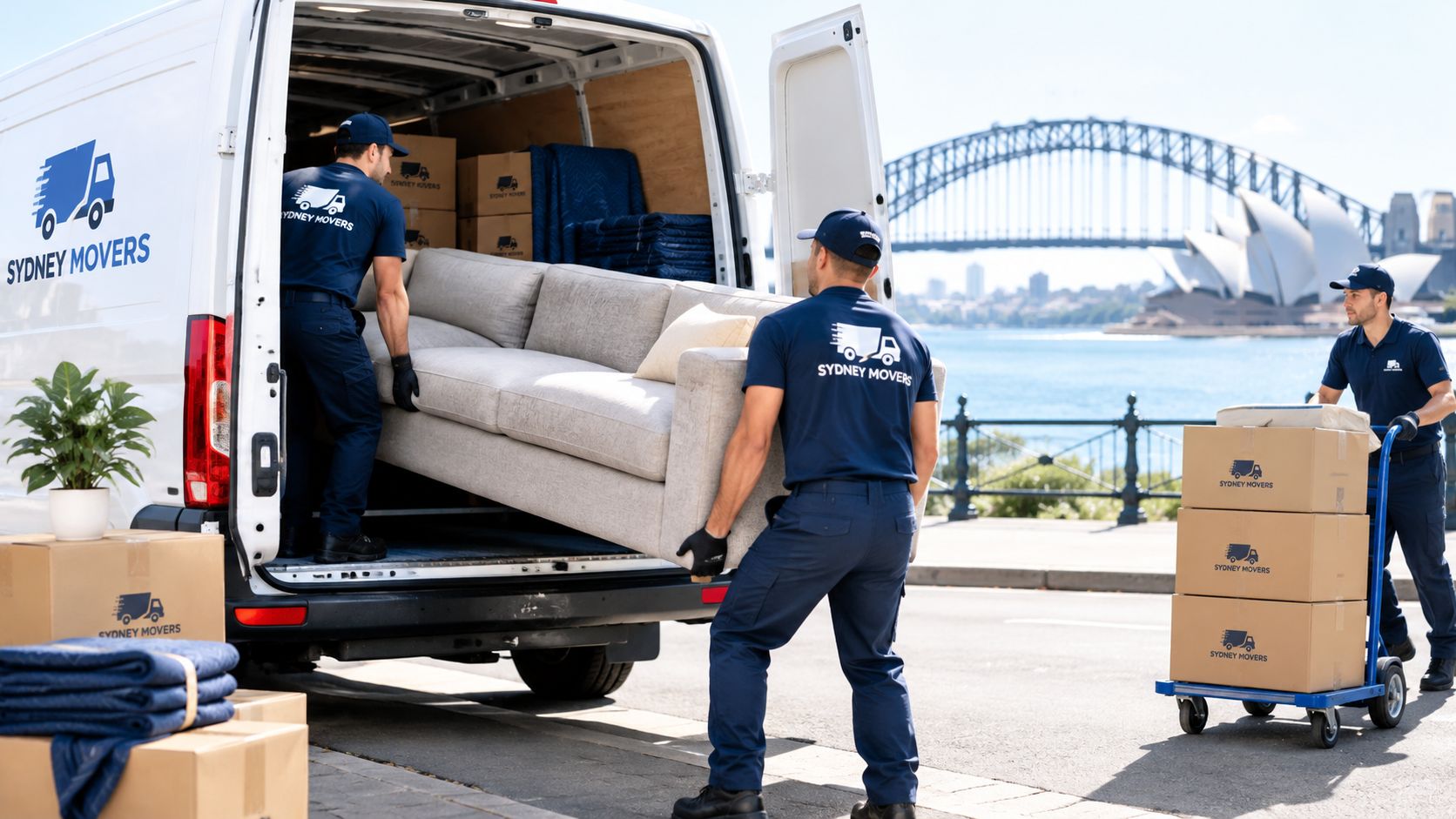
Your settlement date has been brought forward, the lease ends sooner than expected, or an office handover has suddenly been confirmed. The truck still needs to arrive, but the usual preparation window has disappeared. That's where express furniture removals make sense, provided the booking, access arrangements and loading plan move as quickly as the furniture.
When Sydney Homes Need Furniture Moved in a Hurry
The settlement date has moved forward, a tenant is waiting for the keys, or an apartment must be cleared before the end of the day. A family in Parramatta might lose a week of preparation overnight. A renter in Newtown may have only a few hours to remove furniture. Express furniture removals suit these situations, but speed still depends on access, crew capacity and a workable loading plan.
Express service can provide same-day or next-day availability, a larger crew, a truck assigned ahead of lower-priority work and faster communication with the removal manager. Those arrangements reduce waiting time, not the need for careful handling. The inventory, access points and furniture protection still need attention before loading begins.
The Australian Bureau of Statistics household mobility data records that 1.14 million Australian households, or 12% of all households, moved at least once during the previous 12 months in 2019–20, while 65% relocated within NSW but outside their previous suburb. That level of movement helps explain why Sydney crews handle local, metropolitan and longer-distance jobs throughout the year.
What express changes on the day
A normal move allows more time for packing, disposal and access planning. An express job compresses those decisions. You may need supplied boxes, extra movers, short-term storage or a firm decision about what will travel.
Reuse should also be settled before the truck arrives. Separate furniture for donation, resale or another room first, then identify anything destined for council collection or disposal. Council bulky-waste rules differ, and leaving those decisions until loading can add delays or send usable pieces to landfill.
Difficult items need the right equipment. Dollies, lifting straps, ramps and other material handling equipment for moving heavy furniture reduce strain and help the crew control awkward pieces. Speed comes from preparation, equipment and a sensible loading order, not from rushing a lift.
Parking restrictions, apartment lift bookings, council collection rules, load restraint and truck sequence can all create delays. An express booking works only when those details are dealt with early.
Booking Your Express Move From First Call to Confirmed Crew
The fastest useful booking starts with accurate information. Use the quick quote form on the Home Removals Sydney website and have both addresses, the preferred date, access conditions and a realistic inventory ready. Mention stairs, lifts, narrow driveways, loading bays, long carries and any large or fragile pieces in the first message.
A useful inventory doesn't need to list every kitchen utensil. It should identify beds, sofas, wardrobes, dining tables, whitegoods, outdoor furniture, pianos, antiques and artwork, along with the approximate number of packed boxes. That gives the removal manager enough information to consider crew size, truck capacity and handling equipment before confirming availability.

During business hours, the expected flow is a prompt response, a review of the details, and a formal quote or clarification call. A customer might say, "The pickup is an apartment in Surry Hills, the service lift is available, and the new address is in Canterbury. We have two bedrooms, a sofa, a dining suite and one flight of stairs at delivery." That exchange is far more useful than saying "small house move".
Once the inventory and access notes are confirmed, the manager can match the work to an appropriate vehicle and crew. A larger crew may finish within a compressed handover window, while a more suitable truck can reduce repeated handling and the risk of leaving items behind.
Securing the slot
A small deposit may be required to reserve the express time slot, particularly during busy periods. The important point is to receive written confirmation showing the date, arrival window, addresses, agreed scope and any special conditions.
If settlement shifts, tell the removalist immediately. Flexible scheduling can help when another booking is moved, but an express slot is still a limited operational resource. A clear update gives the manager a chance to adjust the crew and vehicle instead of discovering the change when the team is already travelling.
The Australian Bureau of Statistics Census snapshot recorded that 40.7% of people, or 9,751,422 Australians, had changed address during the five years before the 2021 Census, including 920,982 interstate movers. That level of mobility makes fast, well-coordinated local and interstate removals a practical service requirement, not a novelty.
Preparing Your Home the Day Before the Crew Arrives
The day before an express move is when you remove decisions, obstacles and unnecessary handling from the loading path. Sort furniture into keep, donate and dispose. A broken appliance, unwanted shelving unit or outdoor setting should not reach the truck if it already has another destination. Contact a charity or arrange disposal while there is still time, and check council bulky-waste rules before placing anything outside.

Photograph valuable, antique or easily marked items before wrapping. Record timber surfaces, glass, stone, artwork and whitegoods, then keep the images with your inventory. This gives both sides a clear record of pre-existing marks without delaying the handover.
Remove avoidable obstacles
Dismantle flat-pack furniture that cannot pass through a doorway, unless the removalist has agreed to do it. Put screws, brackets and instructions in a labelled bag taped to the relevant item. Leave sturdy furniture assembled when it can be moved safely, because unnecessary dismantling adds handling and reassembly time.
Label boxes by destination room, not only by contents. “Kitchen”, “main bedroom” and “study” tell the crew where each box belongs. “Miscellaneous” usually creates questions and leaves a box in the first cleared space.
Clear hallways, landings and doorways. Roll up loose mats, secure pets elsewhere and remove wall ornaments near tight turns. Move the household car away from the loading point. If a driveway or kerb is blocked, the crew may need to carry furniture farther, costing time and increasing strain.
Check access before arrival. Confirm whether a parking permit, building booking or lift reservation applies, and tell the manager about stairs, narrow turns or fragile flooring. Under time pressure, the crew still needs a stable route and enough space to protect furniture, use lifting equipment and secure the load correctly in the truck.
Younger renters and frequently relocating households benefit from a repeatable routine. The ABS mobility release found that 46% of households whose reference person was aged 15 to 24 had moved three or more times in the previous five years. Packing materials can be supplied, but separate essentials from surplus items before the crew arrives.
Council Collection vs Express Removal Which One Fits
Council bulky-waste collection and an express removal service solve different problems. Council collection is generally designed for unwanted items placed at an approved collection point. An express removalist takes furniture from inside the property, handles access and transports it to an agreed destination, which may be a new home, storage facility, charity or disposal point.
| Criterion | Express Removal Service | Council Bulky-Waste Collection |
|---|---|---|
| Lead time | Organised around urgent availability and a confirmed crew | Requires advance booking |
| Labour | Crew removes items from the property | Resident generally places items at the collection point |
| Access | Handles apartments, stairs, lifts and internal rooms when agreed | Kerbside process may not cover internal access |
| Cost | Paid service based on labour, vehicle and handling requirements | May be free or council-subsidised, but conditions apply |
| Destination | New address, storage, donation or disposal destination | Council collection and processing route |
The City of Sydney requires residents to book bulky-item collection in advance, place items out only the night before, and arrange building-manager or nominated-representative coordination where an apartment is involved. That makes the service poorly suited to a same-day move from an upper-floor unit, particularly when the furniture must be stored rather than discarded.
The labour and access difference
A council service doesn't usually replace the work of getting a sofa down a stairwell or through a lift. The resident remains responsible for moving items to the required collection point and following local placement rules. An express crew can plan the internal route, protect common areas and load furniture directly from the room.
“Free” can still carry a time cost. If a lease handover depends on clearing an apartment today, waiting for a collection slot, negotiating kerbside access and moving furniture twice may be more expensive in lost time and effort than booking a paid service.
Check the correct council
City of Sydney rules aren't automatically the rules for every Greater Sydney suburb. Parramatta, Blacktown, Canterbury-Bankstown and other councils may set different booking, placement and accepted-item conditions. Check the relevant council before assuming a household bulky-waste programme covers commercial furniture, internal removal or an urgent move.
How the Crew Loads Restrains and Protects Your Furniture on the Day
A professional crew shouldn't start by carrying the nearest item to the truck. The lead mover first walks through the property, confirms fragile pieces, checks the route and identifies pinch points, overhead hazards, floor-protection needs and the safest exit path.
The team then allocates work. Heavy or awkward furniture may require a dolly, stair-climbing equipment, lifting straps or a ramp. If the item can't be controlled close to the body, a two-person or multi-person lift is safer than trying to save time with one mover. The lead person coordinates the lift so nobody turns unexpectedly or releases weight without warning.
Loading for stability, not convenience
Inside the truck, furniture is classified by mass, height, fragility and centre of gravity. Dense items go low, weight is distributed across the vehicle, and tall pieces are blocked against the headboard or sidewalls. Suitable dunnage fills voids, while padded blankets, corner protection and plastic wrap reduce contact damage.
Rated webbing straps are used to restrain the load. Australian national guidance sets useful acceptance tests for an expedited move: restraint systems should withstand forces equivalent to 80% of load weight forward, 50% sideways and rearward, and 20% upward where applicable. The National Transport Commission Load Restraint Guide explains the standard behind those figures.
Practical rule: A fast loading sequence is acceptable only when the final load is stable, the doors close properly and the vehicle remains balanced.
Unfilled gaps, poorly placed heavy pieces and unsecured tall furniture can shift during braking or cornering. The crew should recheck lashings after the first section of the journey and whenever the load is rearranged. Customers should also receive a signed inventory for high-value or antique items, along with confirmation of the agreed insurance arrangements.
For customers arranging professional furniture wrapping and moving, the useful question isn't whether blankets are available. Ask which items will be wrapped, how glass and timber will be separated, and whether the crew records condition before loading.
What Drives the Express Premium in Sydney
An express move costs more because the crew, vehicle and scheduling must be available inside a compressed window. Labour is usually the largest variable. A larger crew costs more upfront, but can shorten the carry time for wardrobes, beds and appliances, particularly where stairs, narrow corridors or long walks from the truck slow the job.
Vehicle choice affects the quote as well. A 4-tonne van may suit a studio or small apartment, while a 62-tonne truck can handle a full household or larger relocation when the access route allows it. Floor area alone is an unreliable guide. Inventory volume, driveway clearance, loading restrictions and the distance from the truck to the front door all influence the vehicle required.
Where the quote changes
After-hours and weekend loading can increase the price because staffing and scheduling are harder to arrange. Short-term storage may also be needed when settlement and vacancy dates do not align. Packing, unpacking, furniture assembly and specialist handling for pianos, antiques or artwork add separate workloads, so each should appear clearly in the quote.
A transparent starting rate of $120 per hour plus GST gives customers a reference point. A formal quote should then account for access difficulty, distance, stairs, inventory volume and agreed extras. The furniture removal prices guide explains why a starting rate may differ from the final price for a specific job.
Express service makes practical sense when settlement moves forward, a lease ends before the next property is ready, an office must return its premises, or an interstate pickup cannot wait. Standard scheduling is usually more cost-effective when the date is flexible and temporary storage or accommodation will not cause serious disruption.
The disposal decision affects cost too, especially during office relocations and warehouse clear-outs. The City of Sydney draft strategy reports that Australia generates at least 30,000 tonnes of commercial furniture waste annually, with 95% sent to landfill (City of Sydney draft strategy). Before booking the truck, sort furniture into reusable, repairable, confidential and end-of-life groups. That triage can reduce the load, carrying time and disposal work, while giving usable items a chance to avoid landfill.
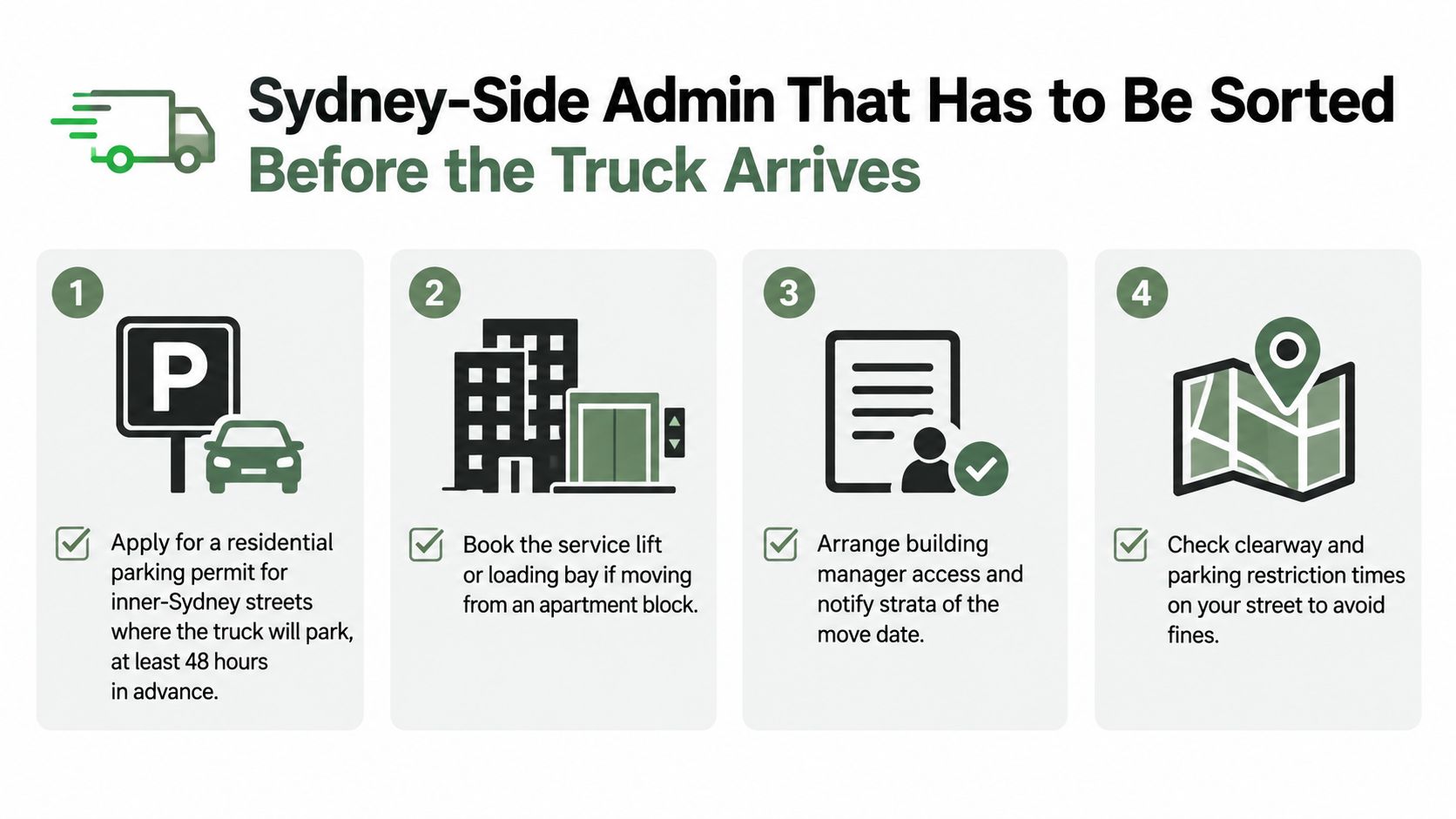
Sydney-Side Admin That Has to Be Sorted Before the Truck Arrives
A truck can be ready, a crew can be allocated, and the move can still lose time because nobody arranged lawful parking or a service lift. Inner-Sydney streets often require more coordination than a suburban driveway, so handle the administrative details as soon as the address is confirmed.
For a residential parking permit in the City of Sydney area, applicants need documents showing their name and residential address. Post-office-box documents aren't accepted. Tenants or owners who have moved but haven't updated vehicle registration may receive an interim permit, while an annual permit generally requires the NSW vehicle registration and NSW driver licence to be updated within three months. The City of Sydney residential parking permit information sets out the documentation requirements.
A visitor permit is different. The City of Sydney uses single-use, one-day scratch permits that apply only to the numbered area shown on the permit and the relevant parking signs. Applicants need two current documents verifying the residential address, such as a utility bill, lease, driver licence, rates notice or bank statement. The visitor parking permit requirements should be checked when family, contractors or temporary vehicles need access around the move.
Interstate arrivals and government records
People arriving with interstate-registered vehicles can apply for a three-month interim resident parking permit under the City of Sydney neighbourhood parking policy. The same policy requires the vehicle registration details to be changed to a NSW address within three months of the move. The neighbourhood parking policy is particularly relevant to interstate removals, where parking support may be needed immediately after arrival.
For a NSW move, a MyServiceNSW account can help update driver licences, vehicle registrations, boat licences and vessel registrations, RSA or RCG competency cards, and seniors or Senior Savers Cards through one process. Service NSW also explains that compulsory third-party insurance is linked to vehicle registration, so changing the vehicle address updates the associated CTP details. Use the Service NSW moving-house checklist rather than leaving each record until after unpacking.
Apartment, strata and office access
Ask the building manager about the service lift, loading bay, protective coverings, move-in hours and any booking form. Confirm whether the removal truck needs to wait in a particular bay or whether a concierge must release access. For offices, notify building management, security and neighbouring tenants where shared loading areas are involved.
Express service is the right call when a settlement has been brought forward, a lease-end deadline is fixed, an office relocation has been approved at short notice, or an interstate pickup must happen within a narrow window. Standard scheduling is the better choice when dates are flexible, the property is already vacant, and a work-from-home handover can absorb a delay.
The most useful action is simple: submit a fast quote with accurate access and inventory details. Home Removals Sydney offers local home removals, office relocations, interstate removals, packing, storage and furniture handling, with responses to bookings made within business hours stated as arriving within 30 minutes.
Home Removals Sydney can match crew size, vehicle capacity and handling support to your express furniture removal, whether you're clearing a flat, relocating an office or moving interstate. Visit Home Removals Sydney to submit the 60-second quote form with your addresses, inventory and access details, then request a clear booking plan for your preferred date.
