

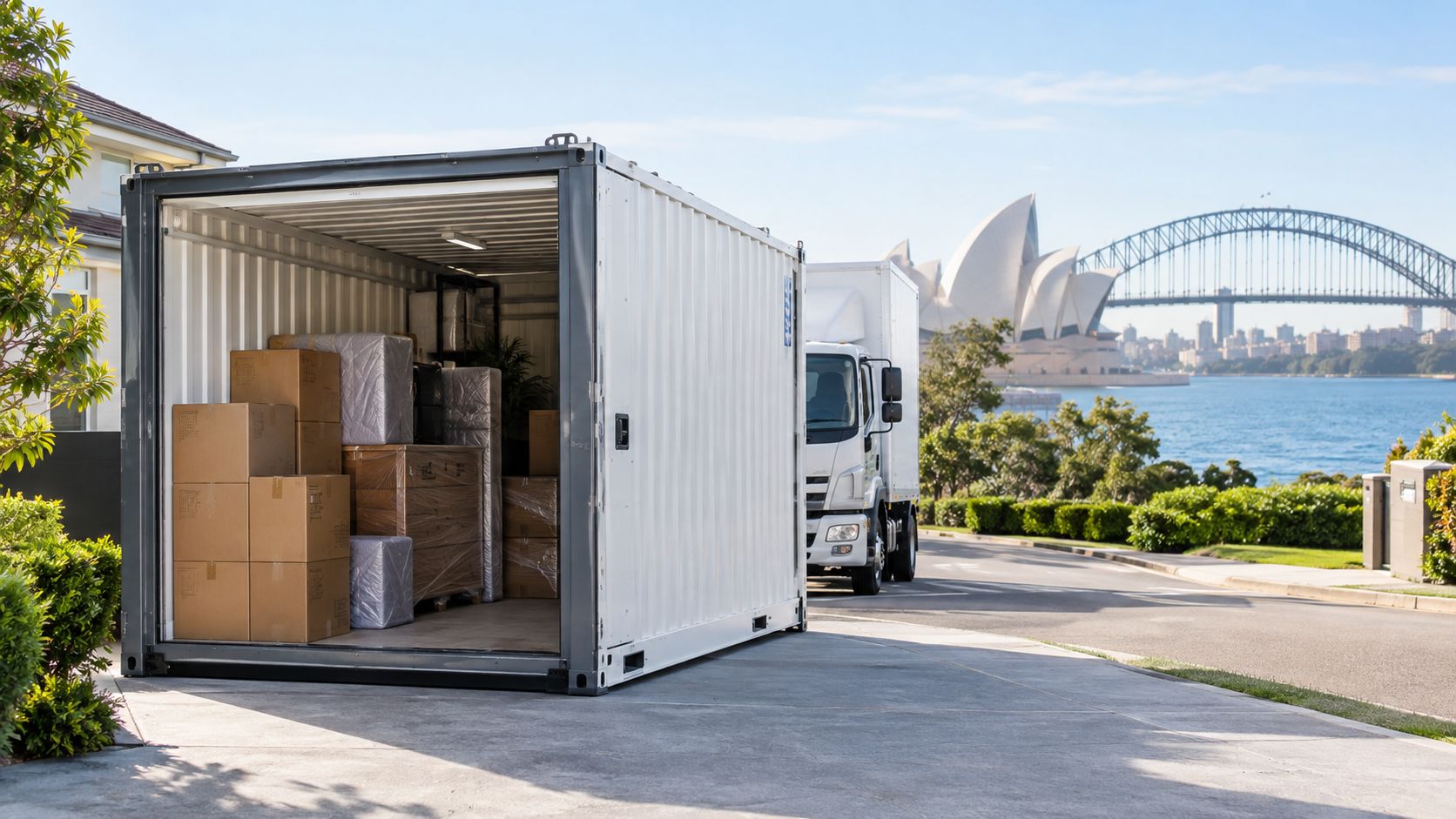
You've handed back the keys in Marrickville, but the renovation in Castle Hill has run over. Or your settlement date has shifted, your lease ends before the new place is ready, and the furniture is still sitting in the driveway. In Sydney, the difficult part of moving often isn't transport. It's the gap between two addresses.
Sydney mobile storage can bridge that gap, but only if you understand what you're buying. Access rules, collection timing, redelivery fees, insurance and truck capacity matter more than a polished website. This guide gives you the straight answer for local moves, renovations, office relocations and interstate removals.
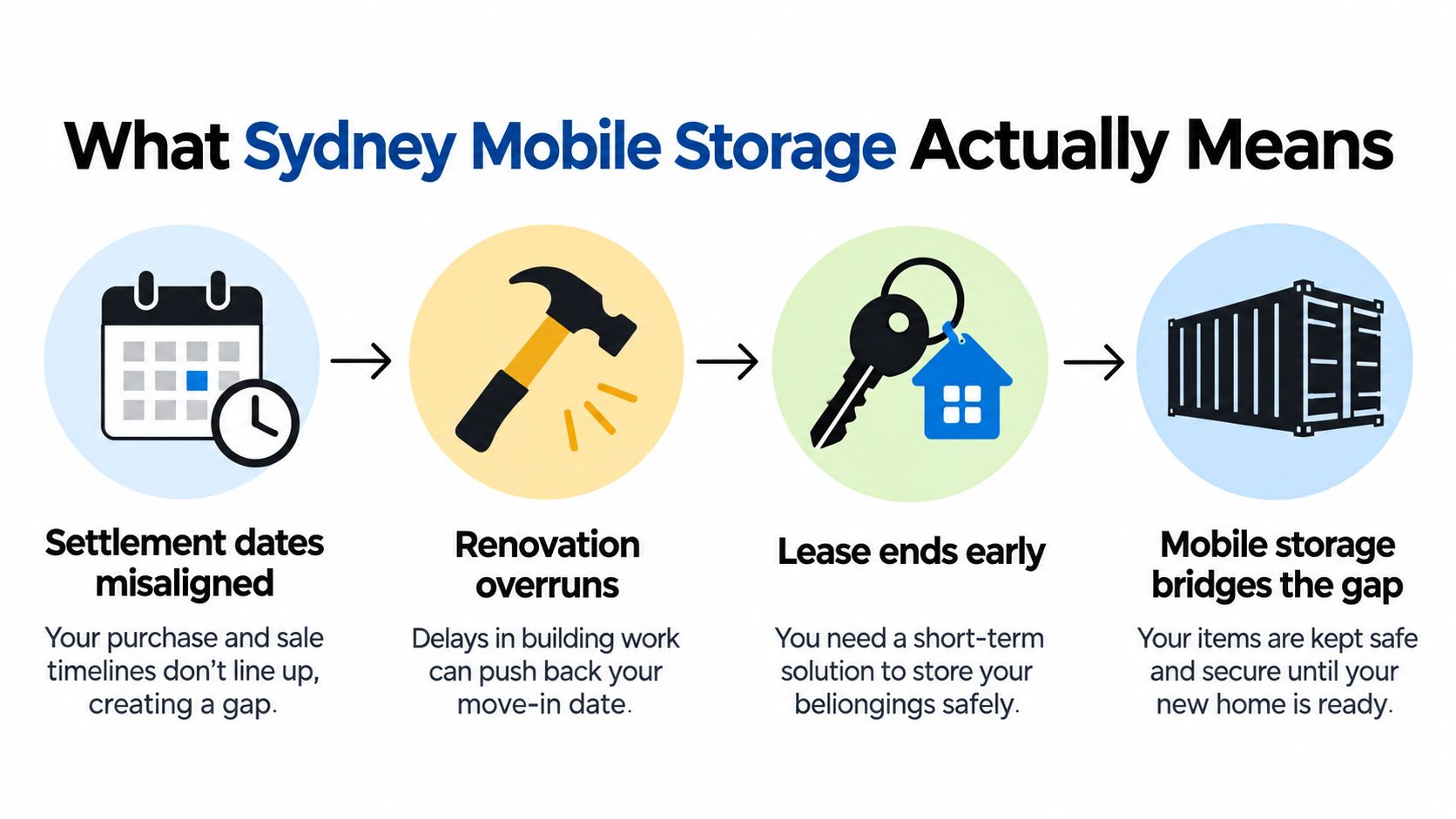
What Sydney Mobile Storage Actually Means
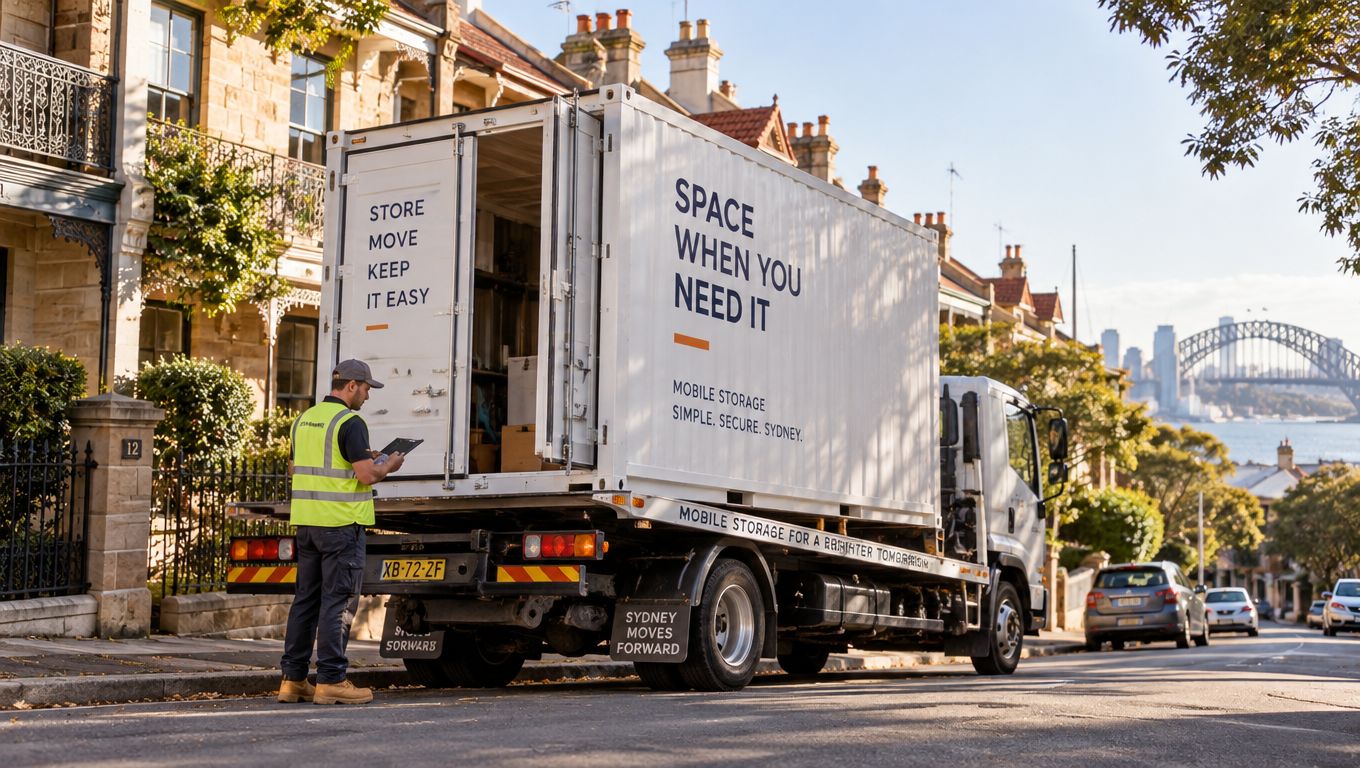
Mobile storage is a door-to-door storage service. A provider delivers a container to your property, you or your removalists load it, the provider collects it by truck, and the container stays at a secure off-site facility until you request redelivery.
That makes it useful when your move-out and move-in dates don't line up. A family may leave a rental in Parramatta before a renovation finishes in Ryde. A homeowner may need furniture removed before an open home. A business may need stock cleared from an office while new premises are fitted out.
The model is different from hiring a removalist to carry goods straight from one property to another. A removalist controls the transport and handling. Mobile storage adds a holding stage, which can save you from paying a crew to wait for keys or make repeated trips between temporary addresses.
It also differs from a conventional self-storage unit. With self-storage, you usually take your own goods to a facility and can visit the unit according to its access rules. With mobile storage, the container normally remains under the provider's control after collection. That's convenient for belongings you won't need regularly, but inconvenient if you need a laptop, stock carton or tool urgently.
The right fit for a Sydney move
The sensible way to choose capacity is to start with your inventory, not the container label. A one-bedroom apartment with flat-packed furniture and a modest number of cartons needs a different solution from a four-bedroom home with outdoor furniture, appliances and a garage full of boxes.
Ask the provider to assess a room list, floor plan, photographs or an inventory. Include bulky items, not just cartons. Sofas, mattresses, wardrobes and refrigerators determine loading efficiency, while stackable boxes determine how much vertical space can be used.
Practical rule: Mobile storage suits low-access storage. If you need to walk in and retrieve items throughout the week, choose an access-based facility instead.
The demand is not limited to rare interstate relocations. Australian Bureau of Statistics data for 2019–20 recorded 1.14 million households, or 12% of all Australian households, moving at least once during the preceding 12 months, with more than 40% moving within the previous five years. (Australian Bureau of Statistics housing mobility data) That pattern supports flexible storage for local moves between Sydney suburbs, renovations and staged settlement arrangements.
How the Process Works from Booking to Redelivery
A mobile-storage job should feel predictable. If the quote doesn't explain who delivers the container, who loads it, when collection happens and how redelivery is booked, you haven't received a usable quote yet.
The booking sequence
Describe the inventory. Give the provider a property type, room list, furniture measurements and carton estimate. A basic inventory prevents an undersized container and reduces loading-day surprises.
Check the delivery location. The truck needs safe access and enough room to position the container. Narrow streets, steep driveways, low branches and apartment loading zones can change the plan.
Confirm the loading window. Some services give you a set period to load. Others offer a removalist team that packs, wraps and loads everything for you. Don't assume labour is included because the service is described as “full service”.
Collection follows loading. The provider returns with the truck, checks the container and transports it to the storage facility. Ask whether the container is locked by you, by the provider, or by both.
Storage takes place off-site. Your goods may not be individually accessible during this period. That's why the inventory should record carton contents and retrieval priority before the doors are closed.
Redelivery is scheduled. Confirm whether you book a fixed delivery window, give advance notice, or pay for an urgent return. Ask whether the whole container returns or whether selected items can be retrieved.
For example, a three-bedroom home in Parramatta is being renovated for four weeks. The owners need the furniture removed before trades begin, but they don't want to move everything into a second rental. A storage-only quote covers the container, collection and four-week holding period. A pack-and-store quote adds wrapping and removalist labour. A store-and-ship quote may also coordinate transport to an interstate destination once the renovation or sale is complete.
The Australian storage market is established, not experimental. The Self Storage Association of Australasia's 2025 industry snapshot reported 3,380 self-storage facilities across Australia and New Zealand, about 730,000 storage units and average occupancy of 85% by area. (SSAA industry snapshot) For customers, that means plenty of choice, but also a reason to compare operating terms rather than choosing on branding alone.
A provider that already handles removals may be easier for a staged move because one team manages wrapping, loading, storage and delivery. Compare the service carefully with a specialist mobile-storage operator. For a broader removal and storage arrangement, see this guide to a moving company with storage.
Mobile Storage Compared With Other Sydney Options
There isn't one correct storage product for every Sydney move. The right choice depends on whether you need access, how many times your belongings will be handled, and whether the same removalist is managing the entire move.
Mobile storage wins when you want belongings collected once and left alone. It works well for a renovation, a settlement gap or a household moving interstate where access during the holding period is unlikely.
Drive-up self-storage wins when access matters. If you're running a trade business, managing office records, selling stock or replacing furniture room by room, walking into your unit is worth paying for. You control the retrieval rather than waiting for a container to be returned.
Removalist warehouse storage wins for staged moves. If a removalist already has your inventory, warehouse storage can reduce duplicated handling. This can suit office relocations, warehouse transitions and moves where goods will be delivered in planned stages.
Sydney's market conditions also make efficient capacity important. In the September 2025 update to the Self Storage Performance Index, Sydney occupancy increased by 2.91%, Sydney revenue per available square metre also rose 2.91%, and average achieved storage fees softened by 0.20%. (Sydney self-storage performance data) Those figures don't tell you what your quote should cost, but they reinforce the need to compare the actual space, access and handling included.
| Option | Access | Typical Cost | Handling Stages | Best For |
|---|---|---|---|---|
| Mobile storage | Usually by request, often with advance notice | Container or volume fee, plus delivery and return charges | Load, collect, warehouse store, redeliver | Renovations, settlement gaps and low-access household storage |
| Drive-up self-storage | Customer access under facility rules | Unit fee, plus possible fees for insurance, locks or access | Customer transports and handles goods | Frequent access, tools, stock and records |
| Removalist warehouse | Usually arranged through the removalist | Storage fee, handling and delivery charges | Removalist loads, stores, retrieves and delivers | Staged moves, office relocations and warehouse changes |
Short-term container hire sits between these options. You may control the container at your property, but you also carry more responsibility for placement, security, weather exposure and loading. If you're comparing container sizes, waste capacity and associated logistics, a resource such as compare 8 yard dumpster prices can help you think about volume and access, although waste containers aren't a substitute for furniture storage.
For customers moving goods interstate, read the transport terms separately from the storage terms. A mobile container may be useful in Sydney, while a linehaul removal service may be more practical for the final destination. If you're considering a container-based move, review the options for moving with shipping containers before committing.
Sydney Pricing Models and How to Estimate Your Cost
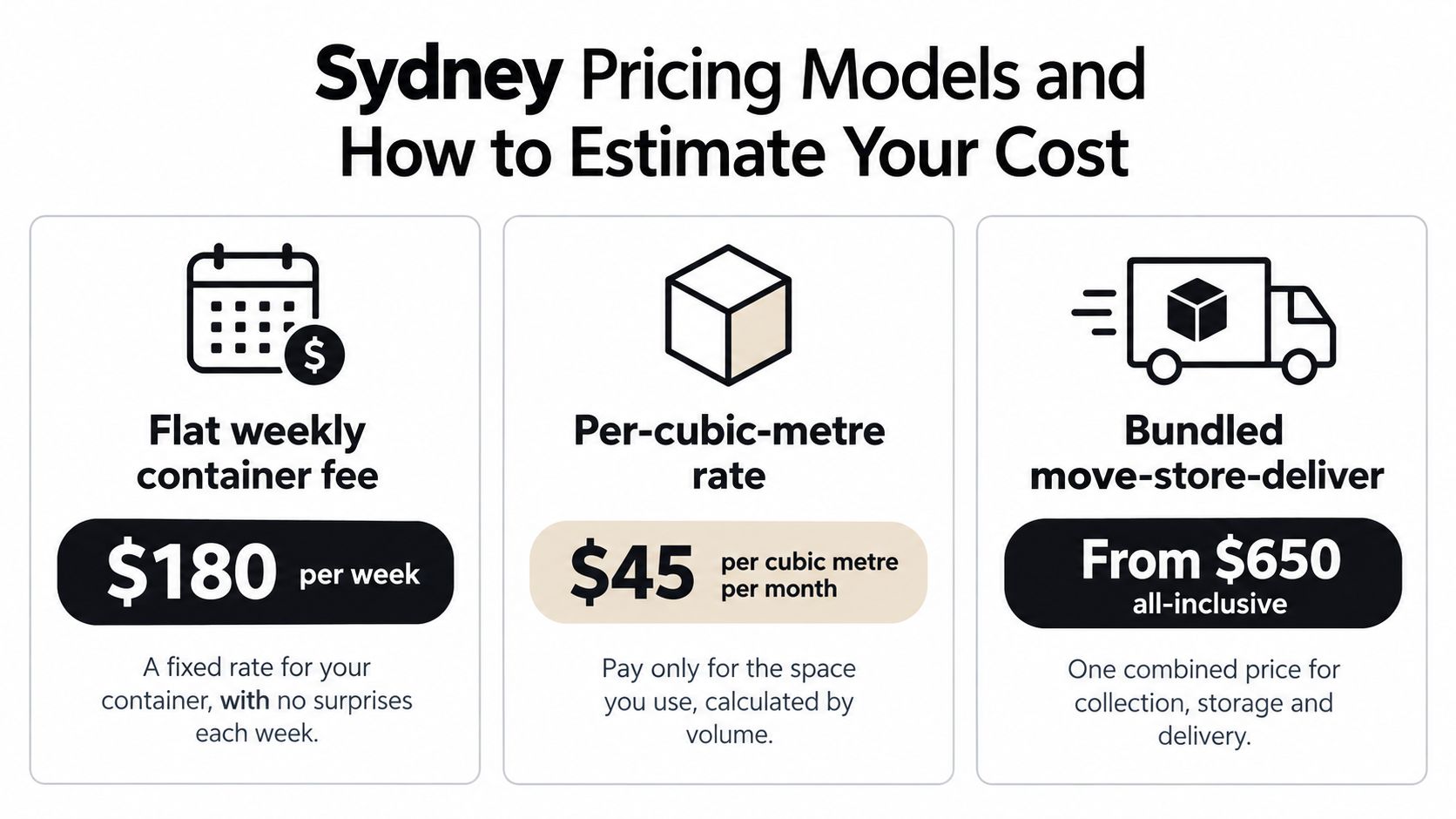
Sydney mobile-storage quotes usually use one of three structures.
A flat weekly container fee charges for the container and storage period. It's easy to understand, but delivery, collection, redelivery, weekend work and insurance may sit outside the headline price.
A per-cubic-metre rate charges according to the volume stored. This is often the fairest comparison for a mixed household because you pay for the inventory rather than an oversized container. It only works if the provider measures volume consistently and explains whether handling is included.
A bundled move-store-deliver price combines labour, transport and storage. It can be convenient for a renovation or office move, but insist on a written breakdown. “All-inclusive” is meaningless if the quote excludes stairs, long carries, packing materials, waiting time or a second delivery.
Build the estimate from the inventory
Take a two-bedroom apartment needing eight weeks of storage. List each room, estimate the cubic volume of furniture and cartons, then ask for two versions of the quote:
- Storage only: container or cubic-metre storage, collection, storage period and redelivery.
- Removalist managed: packing, protection, loading, storage, unloading and placement at the destination.
Add the items providers commonly separate from the base price:
- Delivery and collection: Confirm whether the first drop-off and later pickup are included.
- Redelivery: Ask whether return transport is priced per trip, per container or by distance.
- Access or retrieval: Mobile storage may charge for a return visit or special retrieval.
- Timing: Weekend windows, waiting time and restricted building access can change labour costs.
- Insurance: Check whether cover is included, optional or left to your own policy.
Don't treat “unlimited loading time” as unlimited labour. It may mean you can keep the container for a stated window, while the truck, crew or site booking remains restricted. Ask exactly when the clock starts and what happens if loading runs late.
A 2025 Australian market analysis reported Sydney occupancy at 89.4%, Sydney RevPAM at $353.07 per square metre per annum, and RevPAM increasing 7.3% over the measured period. (Australian self-storage market analysis) RevPAM isn't a household quote, but it shows why efficient capacity matters in a busy market. Oversizing your space or storing poorly stacked furniture can cost more without giving you better service.
Use the Sydney storage cost guide as a comparison starting point, then request an itemised quote based on your own inventory. The practical budgeting rule is simple: measure first, separate transport from storage, and price the full journey to the final room, not just the weekly holding fee.
Access, Security, and Who Really Bears the Risk
The most important mobile-storage question is often ignored: what happens when you need one item?
In many mobile-storage arrangements, customers don't enter the off-site warehouse whenever they like. The provider retrieves or returns the container, potentially with advance notice and an additional fee. That makes the service efficient for furniture, seasonal items and renovation storage, but awkward for stock, documents, tools and anything you may need tomorrow.
Traditional self-storage has the opposite trade-off. You usually accept more responsibility for transport and loading, but you can access your unit under the facility's opening or access rules. Neither model is automatically safer. Choose based on how often you'll need to touch the goods.
“Fully insured” needs a written explanation
That phrase doesn't tell you who bears the risk. Ask for the policy wording and check whether it covers theft, water damage, mould, fire, vermin, forced entry, handling damage and transport. Look for exclusions involving damp goods, poor packing, unattended premises, prohibited items and customer loading.
You should also clarify the claim process. Find out whether the cover is replacement-value or limited liability, what evidence you need, and whether a claim must be made within a stated period. Photograph furniture and valuable items before loading, keep an inventory, and record existing marks.
Sydney's humidity and storm exposure make preparation important. Don't store damp mattresses, wet cartons or garden equipment with residual moisture. Wrap furniture properly, keep airflow in mind, and ask what ventilation and pest-control measures the facility uses.
Your pre-booking checklist
- Access: Ask who can open the container, how much notice retrieval requires, and whether selected items can be removed.
- Responsibility: Confirm when liability transfers from your removalist to the storage provider and back again.
- Condition: Check how the provider protects against rain, moisture, pests and handling damage.
- Evidence: Photograph the load, label cartons clearly and keep a copy of the inventory.
- Privacy: Ask how names, addresses, access instructions and inventory records are stored and deleted.
- Prohibited goods: Confirm what can't be stored, including hazardous, flammable, perishable or illegal items.
Privacy deserves attention because a storage company may hold your address, contact details, access instructions and a detailed list of your possessions. OAIC guidance on APP 11 requires reasonable steps to protect personal information from misuse, interference, loss and unauthorised access, modification or disclosure, including inventory and access records held by mobile-storage providers. (OAIC APP 11 guidance)
Before signing: Get the access policy, insurance wording, prohibited-goods list and privacy information in writing. A secure container doesn't replace a clear contract.
Choosing the Right Sydney Mobile Storage Provider
Start with the facility, not the discount. A cheap weekly rate is poor value if the provider can't explain where goods are stored, how they control moisture, or how quickly they can redeliver.
Ask to see evidence of the following:
- Container condition: Doors should close properly, seals should be intact and floors should be suitable for furniture and cartons.
- Weather protection: Ask how the provider manages rain, condensation and humidity once the container is inside or outside the facility.
- Pest controls: Confirm inspection and treatment procedures, particularly for timber furniture, fabrics and food-adjacent business stock.
- Site security: Check whether the facility uses controlled entry, surveillance and locked storage areas.
- Access terms: Get retrieval notice, delivery windows, charges and responsibility for handling in writing.
- Pricing: Require the storage rate, collection fee, redelivery fee, labour rate and possible surcharges in dollars.
A provider that won't identify the storage suburb should explain why. You don't need unrestricted warehouse access, but you do need to know the general location, operating arrangements and retrieval process. Walk away from cash-only deposits, vague “fully insured” promises, missing contracts and prices that change when you ask about stairs or restricted loading zones.
The wider removalist matters too. For a large home move, office relocation or warehouse reload, ask what truck will be used and whether the proposed load complies with NSW and national heavy-vehicle requirements. NHVR guidance states that Higher Mass Limits vehicles on triaxle groups must be accredited under the Mass Management pathway, and a permit is required when a journey travels outside the approved HML network. (NHVR HML permit guidance)
Truck size alone doesn't determine legal capacity. The vehicle must remain within its manufacturer ratings, and the route must be suitable. That matters for interstate removals where a warehouse reload or changed delivery address can affect the planned journey.
Good communication also reduces missed windows and incorrect inventory instructions. If you're assessing systems for a larger operation, information about communication software for logistics teams provides useful context on how dispatch, drivers and customers can share updates. For a household move, a clear written email and a named contact may be enough.
Your Next Steps and How to Lock In a Quote
Measure your belongings before calling. Record furniture dimensions, carton quantities, appliances, access restrictions and the items you may need during storage. A provider can then compare cubic-metre storage, a mobile container and removalist-managed warehouse storage on the same inventory.
Decide how often you'll need access. If the answer is “probably never until the renovation finishes”, mobile storage may be appropriate. If you need stock, tools or records regularly, choose a facility that gives you practical access.
Get two written quotes. Request one from a mobile-storage specialist and one from a removalist offering bundled storage. Compare collection, storage, redelivery, labour, insurance, access notice and exclusions line by line. Storage is commonly used for decluttering, security, flexibility, renovations and sentimental belongings, and sentimental-storage use rose from 32% in 2022 to 39% in 2024. (Australian portable-storage motivations)
The right quote isn't the one with the lowest headline rate. It's the one that tells you exactly who handles your furniture, where it stays, how you retrieve it and who pays if something goes wrong.
Home Removals Sydney provides local and interstate removal services, packing, furniture handling and secure storage options for households, offices and warehouses. Request a quote through Home Removals Sydney, with responses within 30 minutes during business hours, and get a clear plan for your collection, storage period and final delivery.
