

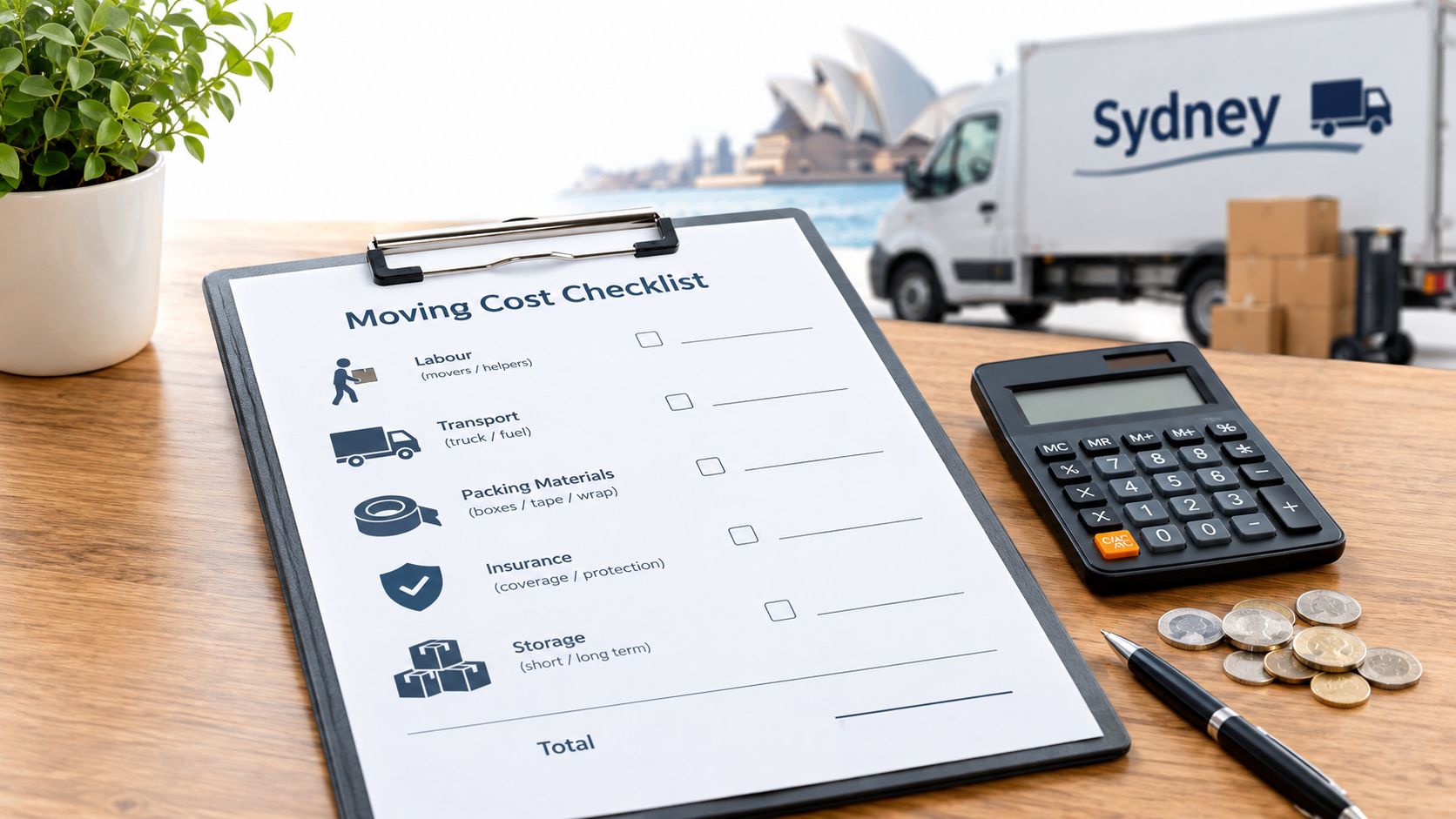
Local Sydney moves typically range from A$300 to A$3,500, but the true economic cost for buyers averages A$47,472 when lost time, leave and downstream expenses are included. Renters face a lower average total of A$7,676 once those wider costs are counted, yet neither figure resembles a simple hourly truck rate.
That gap is why household moving costs need a wider lens. The removalist invoice matters, but so do packing, cleaning, storage, access delays, utility connections, parking arrangements and the working time you lose. A careful budget separates those items before moving day, rather than discovering them when the truck is already booked.
Sydney logistics make this especially important. Apartment lifts, narrow streets, long carries, loading zones and peak booking periods can all change the price. Whether you need Removalists Sydney, home removals, furniture removals, office relocations or interstate removals, the sensible approach is to price the whole move, not just the vehicle.
The True Economic Cost of Moving House
The hourly rate is the wrong starting point. It only covers labour and truck time. The full bill includes the friction around the move, and that is where Sydney households get hit.
A 2026 Australian moving-cost study put the average at A$5,128 for renters and A$44,881 for buyers. Once lost time was counted, those totals rose to A$7,676 and A$47,472 respectively (Airtasker's Australian moving report). That gap is the point. Removalist fees are only one part of the cost. Leave from work, organising the move, and the money spent while you are between homes all add up fast.
The same report found Australians spend about 720 hours, or 30 days, moving house over a lifetime, and the average moving process uses 4.45 days of annual leave. Those hours are not abstract. They are box runs, cleaner bookings, utility calls, parking checks, and the time lost waiting for settlement, keys, or a lift that nobody has reserved properly.
The invoice is only the visible layer
For a Sydney renter, the visible bill often sits next to cleaning, cartons, internet connection, mail redirection, and bond overlap. For a buyer, the exposure is bigger. Repairs, furniture purchases, temporary accommodation, and settlement delays can land at the same time.
A 2024 finance summary cited industry estimates of about A$1,581 for removalists and A$1,451 for boxes, cleaning and packing services, or roughly A$3,000 overall. People moving to a new state were reported to spend upward of A$4,180 on average (Jacaranda Finance's moving-house cost guide).
Do not stop at the headline quote.
Treat the removalist invoice as one line in the budget, then add separate allowances for access delays, packing, cleaning, storage, and settling costs. If you are shifting tools, equipment, or other valuable items in transit, check transport insurance for builders before you assume standard cover will be enough.
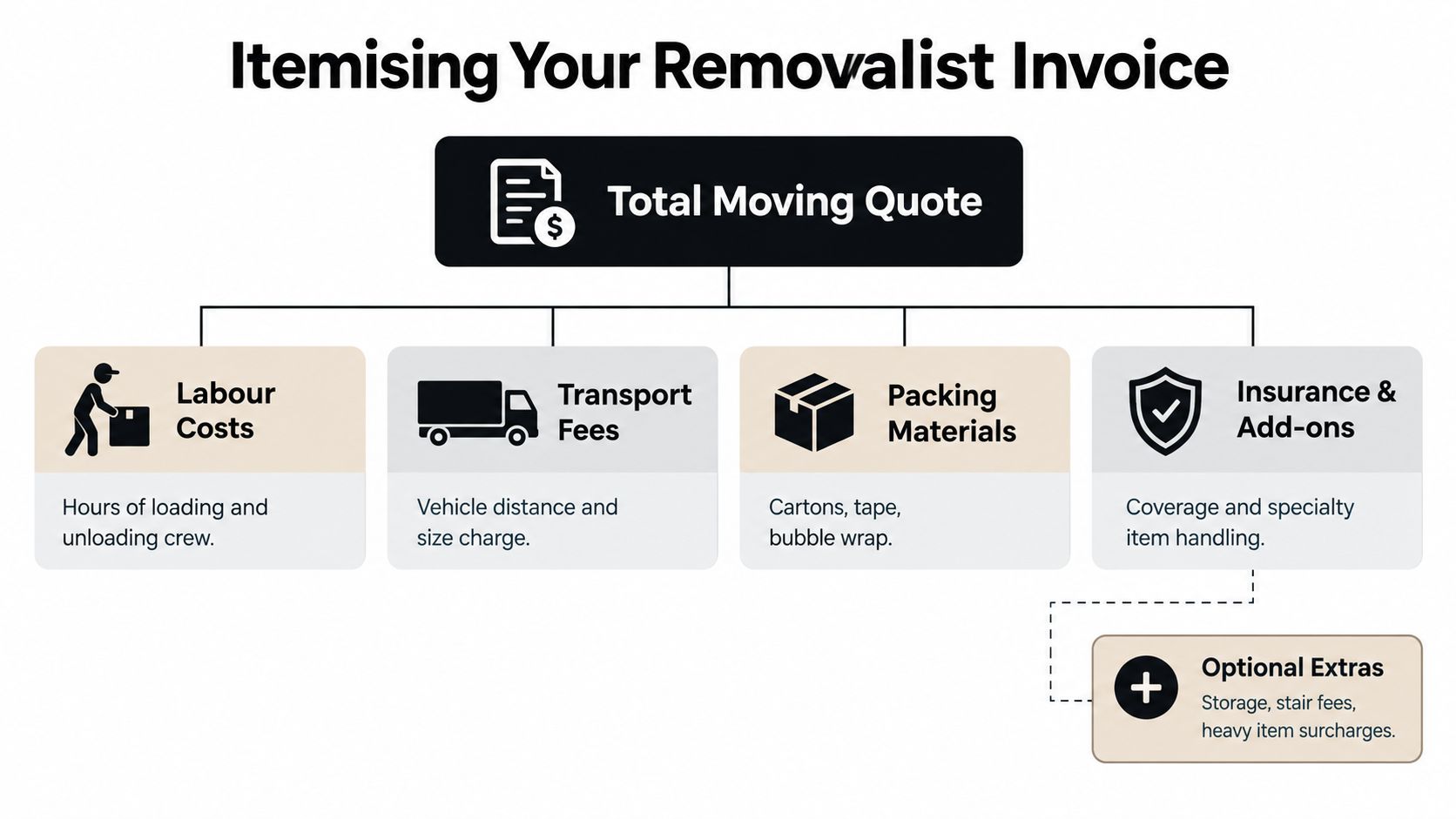
Itemising Your Removalist Invoice
A professional quote should make it clear what you're paying for. If the estimate only shows a headline total, ask the company to separate labour, transport, materials, access conditions, insurance and optional services.
Local Sydney moves are usually time-led
For a local move, the core calculation is generally based on the number of movers, the vehicle used and the time required. Sydney pricing commonly starts around A$125 per hour for a one-bedroom apartment with two movers, while a small three-bedroom apartment with three movers is about A$175 per hour (Canstar's removalist cost guide).
That doesn't mean the cheapest hourly rate produces the cheapest move. A low rate can become expensive if the crew spends extra time walking furniture from the building, waiting for a lift or navigating stairs. Ask whether the quote includes travel time, minimum booking periods, tolls, stair access, long carries and furniture disassembly.
The main local line items are:
- Labour: Loading, protecting, carrying, unloading and placing furniture.
- Transport: The truck or van, travel between properties and route-related costs.
- Packing materials: Cartons, tape, protective wrap, mattress covers and specialty packaging.
- Access charges: Stairs, narrow corridors, lift reservations, long walks and difficult parking.
- Special handling: Pianos, antiques, artwork, gym equipment and unusually heavy items.
- Optional services: Packing, unpacking, furniture assembly, storage and disposal.
Interstate pricing follows volume
Interstate removals are often priced by the space your belongings occupy rather than by local labour hours. Muval reports an average of about A$172 per cubic metre and an average interstate removal job price of roughly A$2,822 (Muval's interstate removalist pricing information).
Cubic-metre pricing makes inventory accuracy critical. A lightly furnished home may use much less truck space than a crowded property of the same bedroom count. Extra furniture, packed wardrobes, outdoor equipment and stored cartons increase the load, and therefore the transport requirement.
For a full household moving from Melbourne to Brisbane, RealEstate.com.au cites approximately A$5,500 to A$10,500 plus insurance (RealEstate.com.au's moving-cost guidance). That example shows why interstate quotes should be compared by inventory, service level and insurance, not by a local hourly figure.
A useful external reference is MG Self Storage removals advice, particularly if your move involves packing, storage or coordination between two dates. The principles are transferable, even though Sydney access conditions and routes are different.
Example Budgets by Home Size and Distance
Use the table below to set a working budget, not to treat a quote as guaranteed. Bedroom count indicates likely volume, while distance determines whether the job is priced by local labour or interstate transport. Packing, fragile items and difficult access can move the final figure sharply.
Australian guidance places local moves broadly between A$300 and A$3,500, while interstate moves commonly range from A$2,000 to A$8,000 or more (Jacaranda Finance's Australian moving-cost benchmarks). For Sydney households, a three-bedroom interstate move may be quoted anywhere from about A$2,500 to A$8,000 or more, depending on the route and service level (Canstar's interstate moving-cost guide).
| Property Size | Local Sydney Move | Interstate Relocation |
|---|---|---|
| Studio or one-bedroom apartment | A$300 to A$1,600 | A$2,000 to A$4,180+ |
| Two-bedroom home or apartment | A$625 to A$2,000 | A$2,500 to A$6,000+ |
| Three-bedroom home | A$1,500 to A$3,500 | A$2,500 to A$8,000+ |
| Four-bedroom family home | A$2,000 to A$3,500+ | A$5,500 to A$10,500+ plus insurance |
The lower local figures suit compact jobs with easy truck access and ready-to-move furniture. A studio may fit that profile. In an inner-Sydney apartment with a booked lift and a carry of more than 30 metres, expect a quote near the top of the local range even for a studio.
Why distance changes the calculation
Interstate removals carry transport costs that local jobs avoid. The quote can depend on cubic volume, route, scheduling, loading efficiency, insurance and whether the carrier combines your freight with another load. A modest interstate inventory can therefore cost more than a larger local move.
Cubic-metre pricing makes inventory accuracy important. Two homes with the same bedroom count can use very different truck space. Packed wardrobes, outdoor equipment, stored cartons and extra furniture all increase the load.
Give the removalist a room-by-room inventory and identify anything that will not travel. Decluttering before measurement can change the volume category. Remove garden equipment, old appliances and unused furniture before the estimator calculates the load.
Use the table as a challenge to your quote
If an estimate exceeds the relevant range, ask for the specific cost drivers. The explanation may be access, professional packing, a specialty item, storage, the route or an unusually large inventory. Keep comparing if the company cannot explain the difference plainly.
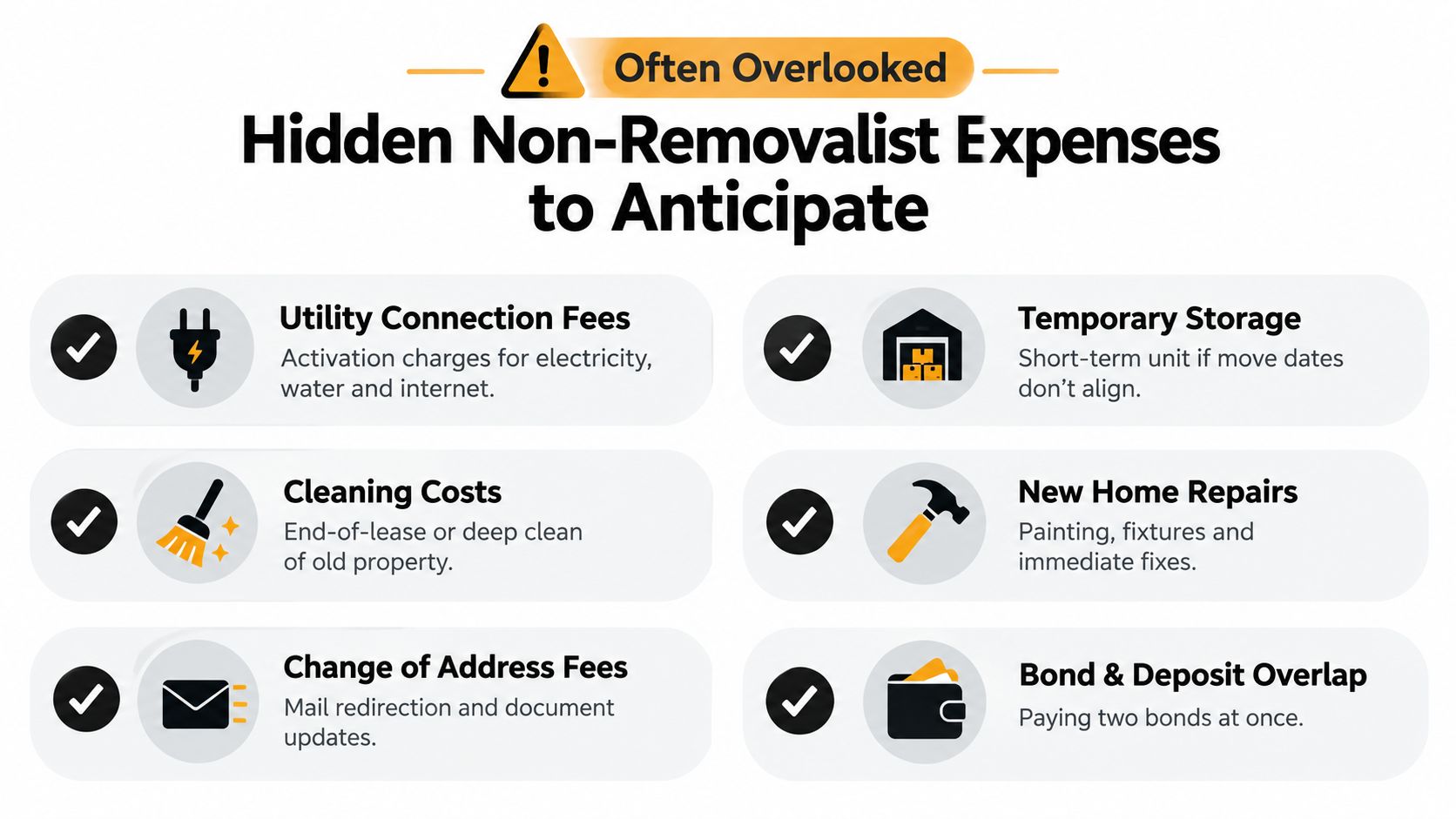
Hidden Non-Removalist Expenses to Anticipate
The removalist invoice is visible, which makes it easy to blame the truck when the budget fails. In practice, many surprises happen before loading begins or after the crew leaves.
Independent Australian moving guides identify boxes and packing materials, end-of-lease cleaning, utility and internet connections, and mail redirection as common extras (Selectra's Australian moving-cost advice). Add temporary storage when settlement dates don't align, immediate repairs at the new property and the possibility of paying two bonds during a rental transition.
Build a separate non-removalist list
- Cleaning: End-of-lease cleaning, carpet treatment and a deep clean before furniture enters the new home.
- Utilities: Electricity, water, gas and internet activation or connection arrangements.
- Address changes: Mail redirection, licences, subscriptions, banks and business records.
- Storage: A short-term unit if sale settlement, lease dates or renovations create a gap.
- Immediate repairs: Paint, locks, fixtures, minor plumbing and other jobs that become obvious during the first inspection.
- Bond and deposit overlap: Money tied up in an outgoing rental bond while the next property requires another payment.
Cleaning is a common source of last-minute pressure. If you're hiring help, you can browse move-in move-out cleaning to compare the type of service needed for the old and new property. Don't assume a standard tidy-up meets a lease condition or prepares a vacant home for delivery.
Sydney access can create a separate problem
A truck needs a safe, legal place to load. In NSW, a truck over 4.5 tonnes GVM may stop or park in some signed areas to drop off or pick up goods, subject to the applicable signs and rules (NSW parking rules). That permission isn't a guarantee that your particular street, building or loading area will work.
Check building rules, strata requirements, lift bookings and council arrangements early. A blocked loading zone can turn a smooth booking into a long carry, a delayed crew or a rescheduled move. For a detailed list of expenses beyond labour and transport, use this Sydney guide to hidden moving costs.
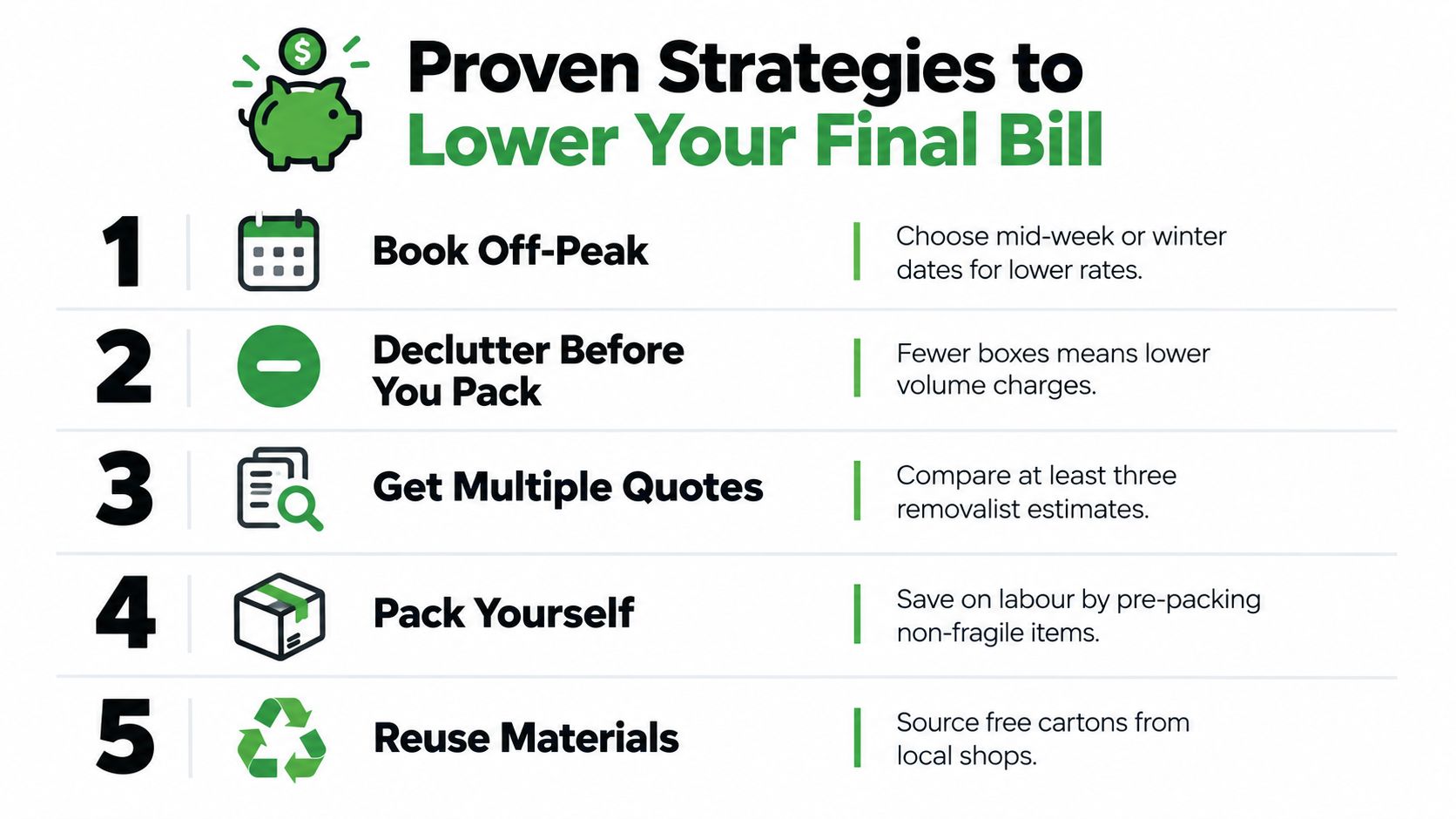
Proven Strategies to Lower Your Final Bill
The most reliable way to reduce household moving costs is to reduce the work the crew must do. That means less volume, fewer obstacles and a clearer plan before the clock starts.
Cut volume before it reaches the truck
Declutter first. Sell, donate or dispose of unwanted furniture before the inventory is measured, especially bulky items that occupy valuable truck space. Interstate customers should be particularly strict because cubic-metre pricing makes volume a direct part of the transport calculation.
Pack non-fragile items yourself if you have the time and can seal every carton properly. Leave pianos, antiques, artwork, large glass pieces and awkward valuables to experienced handlers. Reuse clean cartons from local shops, but buy proper protection for breakables rather than gambling with thin or damaged boxes.
Make the booking easier to execute
- Choose flexible dates: Mid-week, mid-month or quieter seasonal dates may give you more booking options and can improve pricing.
- Prepare the property: Have cartons sealed, walkways clear and furniture ready for disassembly before the crew arrives.
- Reserve access: Confirm lifts, loading areas, visitor parking and building time windows before moving day.
- Measure early: A room-by-room inventory gives interstate carriers a better basis for cubic-metre pricing.
- Compare like for like: Review labour, travel, materials, insurance and access terms rather than choosing the lowest headline rate.
Backloads can suit customers with flexible interstate timing because the carrier may use spare capacity on an existing route. They aren't appropriate for every move, particularly when delivery must happen on a fixed date, so ask how the schedule works before accepting a lower quote.
For a practical Sydney-focused list of savings ideas, review these ways to keep moving costs down.
Use this short video as a visual reminder to plan the sequence, protect access and reduce unnecessary handling:
Your Checklist for Getting Accurate Quotes
A quote is only as reliable as the information you give the removalist. If you leave out stairs, parking difficulty or a piano, the estimate may look attractive because it doesn't describe the actual job.
Start with a complete inventory. Walk through every room, cupboard, garage, balcony and storage area. Record large furniture, appliances, outdoor items and anything requiring dismantling. Photos or a video walkthrough can help the estimator understand volume and access without relying on vague descriptions.
Tell the removalist about access
Provide these details for both addresses:
- Property type: Apartment, townhouse, terrace, house, office or warehouse.
- Floor level: State the floor and whether a lift is available.
- Stairs and corridors: Mention flights, tight turns, narrow hallways and long carries.
- Parking: Explain where the truck can stop, including loading restrictions and distance to the entrance.
- Building rules: Confirm lift bookings, loading windows, certificates or protective requirements.
- Heavy or fragile items: List pianos, antiques, artwork, safes, gym equipment and large stone or glass pieces.
- Furniture services: State whether beds, wardrobes or desks need disassembly and reassembly.
- Timing: Give the preferred date, flexibility and any settlement or lease deadline.
- Storage needs: Identify whether goods must be collected, held and delivered later.
- Packing scope: Separate items you'll pack from items requiring professional materials and labour.
Compare the terms, not just the total
Ask whether the estimate is hourly, fixed-price or based on cubic metres. Check travel charges, minimum hours, materials, insurance, tolls, access fees and cancellation terms. A responsive company that asks detailed questions is giving you a better opportunity to receive a realistic estimate than one that sends a vague number without inspecting the job.
Use a structured move-in quote request to give the company the information it needs from the beginning. Before booking, ask for written confirmation of what's included and what could trigger an additional charge.
The right question isn't “Can you beat this price?” It's “What exactly would make this price change?”
Planning Your Stress-Free Sydney Relocation
A move can cost more than the removalist invoice. Set three budgets before booking: the moving service, non-removalist expenses and the value of your own time. Sydney local moves commonly use hourly labour, while interstate jobs depend more on inventory volume, route and service level. Compare the total economic burden, not just the truck rate.
Access constraints can change that total quickly. Confirm whether the truck can stop near each entrance, whether lifts require bookings, and whether loading windows or strata rules limit the crew's working time. Measure bulky items and estimate volume accurately, because a cubic-metre quote can rise when the inventory exceeds your declared space.
Businesses need a separate plan. Include equipment, pallets, downtime and staged delivery for an office or warehouse relocation. Do not price it like a standard household move.
Home Removals Sydney handles local and interstate home removals, office relocations, warehouse moves, packing, furniture assembly and storage. Its published pricing starts at A$120 per hour plus GST, with custom quotes available through a 60-second online form and responses within 30 minutes during business hours (Home Removals Sydney).
Before accepting the quote, add three lines to your total-cost budget: non-removalist expenses, access fees confirmed with strata, and one day of leave valued at your daily rate. Then ask the removalist to confirm which assumptions would change the price. This exposes the costs that hourly pricing alone misses.
