

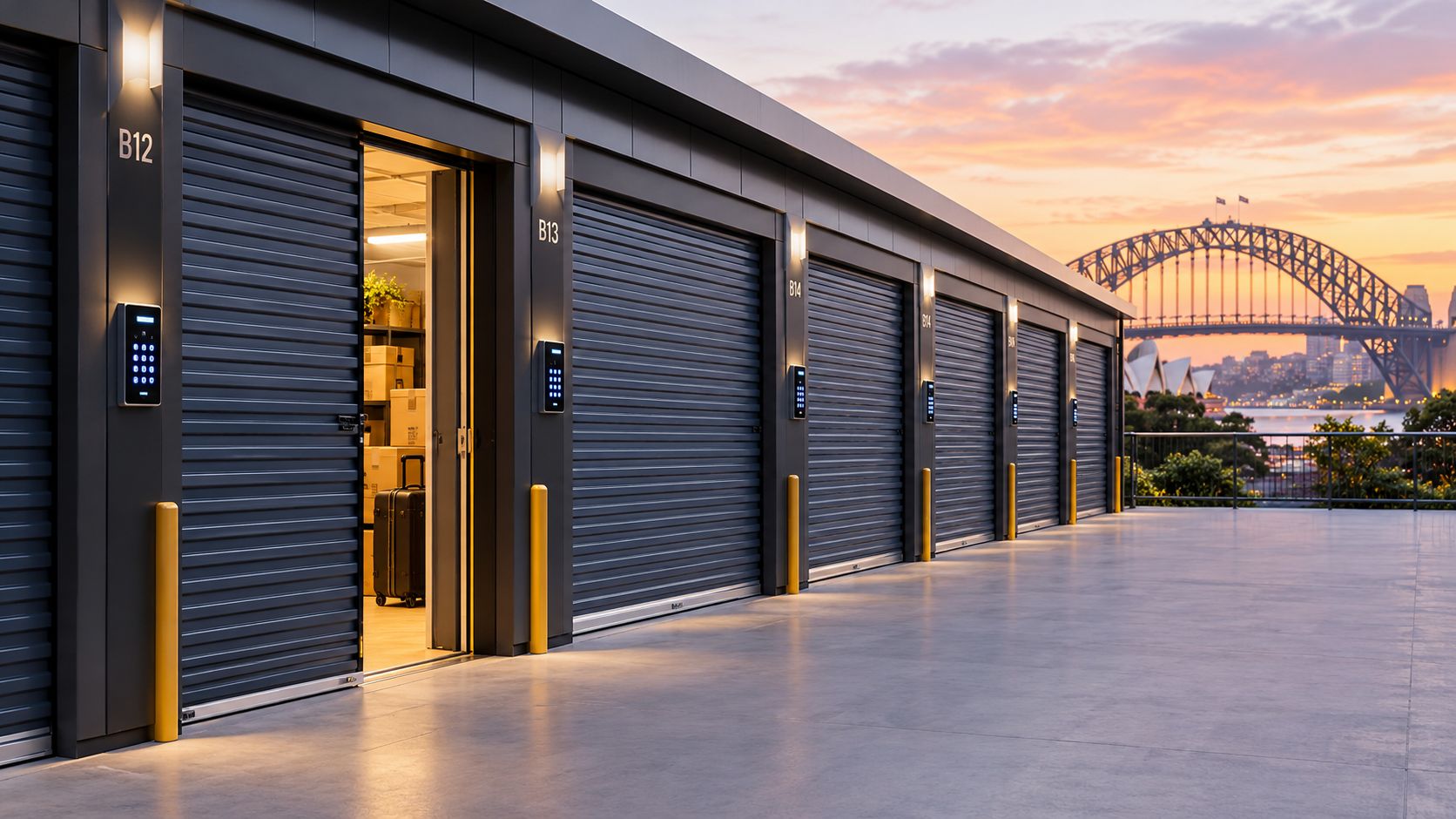
You're in the Inner West, the settlement dates don't line up, and the cot is in storage while your family spends the night at the new place. At 11 pm, "24/7 access" stops being a marketing phrase and becomes a practical question: can you get through the gate, reach your unit and retrieve what you need?
The answer changes what you book. It applies whether you're arranging a move with Home Removals Sydney, relocating an office, or organising interstate removals. Sydney households move often: the ABS housing mobility report found that 1.14 million Australian households, or 12% of all households, moved at least once during the 12 months covered by its 2019–20 survey, and that more than 40% of households had moved within the previous five years.
High moving volume doesn't make overnight entry an automatic upgrade. Cameras recording at midnight are not the same as a gate that opens for you, and a site that lets you in at any hour can still be the wrong call if it sits a long drive from where your furniture is. Pay for genuine unit entry when your move needs it; take the closer staffed site when it doesn't.
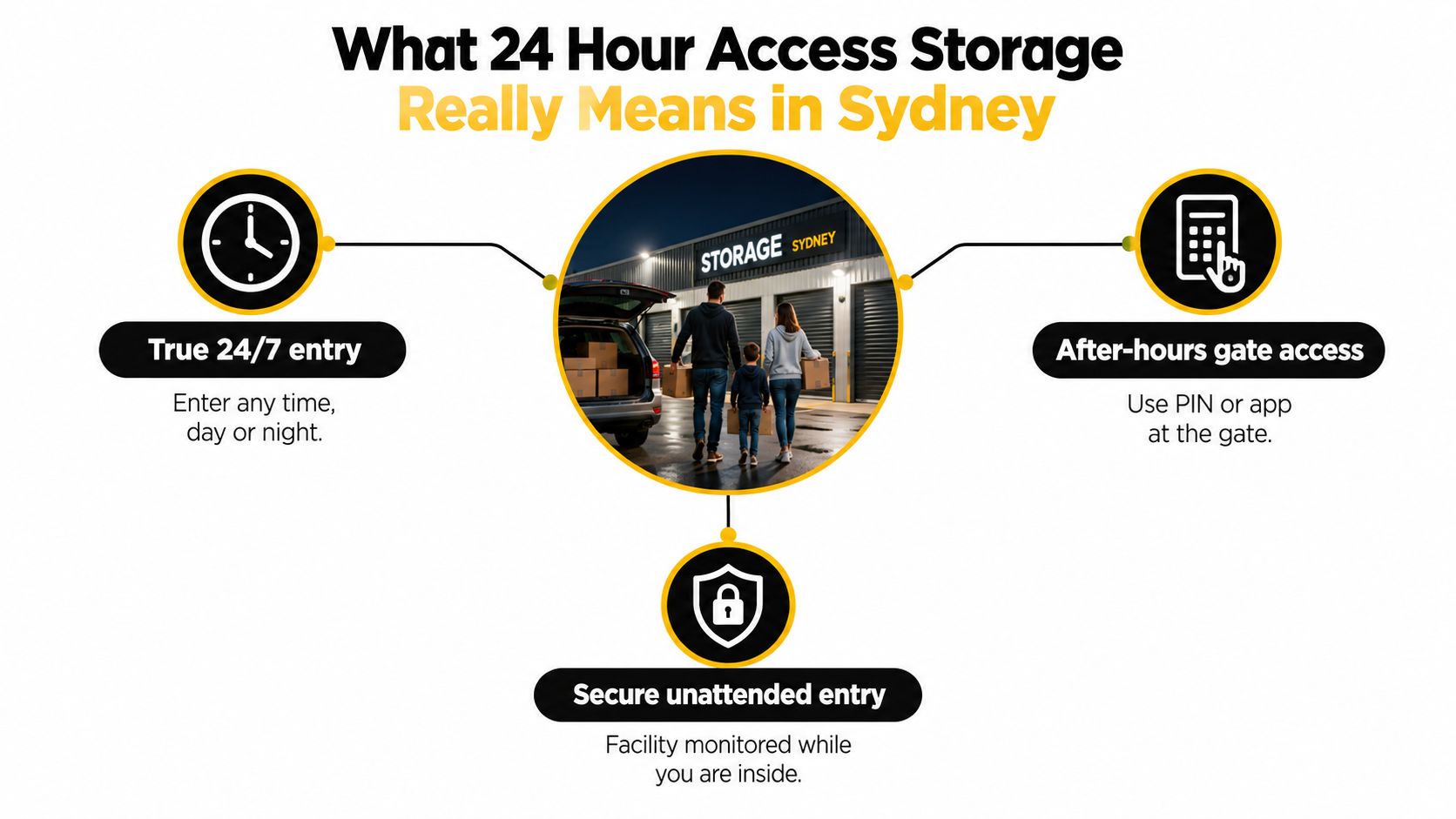
What 24 Hour Access Storage Really Means in Sydney
A facility can advertise “24-hour access” while delivering something far more limited. Genuine 24/7 unit entry means you can enter the site and reach your own storage space at any hour, using a credential such as a personal PIN, swipe card or app. By contrast, 24/7 CCTV means the cameras operate overnight, not that customers can get in. Some sites run monitored buildings but restrict customer entry to staffed hours, or require an appointment before anyone lets you through the gate.
For the family with the cot, the details decide everything. Can they enter at 11 pm, open the gate and reach the unit without calling an employee? Is the lift running? Does the same credential open the building and the unit, or only the front gate? If the site is unattended, who responds when an access code fails at 2 am?
Round-the-clock entry suits renters between leases, homeowners mid-renovation and businesses collecting stock outside ordinary hours. Treat it as an option, not an upgrade you buy by default. A staffed site ten minutes from your new place often beats a 24-hour facility forty minutes away, especially when you need a hand with a heavy item or a trolly that works.
The ABS found that private renters move far more often than homeowners: 29% of renter households had lived in their current dwelling for less than one year, compared with 5% of homeowner households. The same ABS housing mobility report records that 52% of renter households had lived in their current home for less than five years, compared with 23% of homeowners. That mobility explains the demand for flexible storage hours.
Access control systems in other industries show what good after-hours entry looks like. This overview of how businesses cut staffing costs with access control offers useful context on unattended entry done properly. For storage, the test is practical: what you can reach, when you can reach it, and who picks up the phone when something goes wrong.
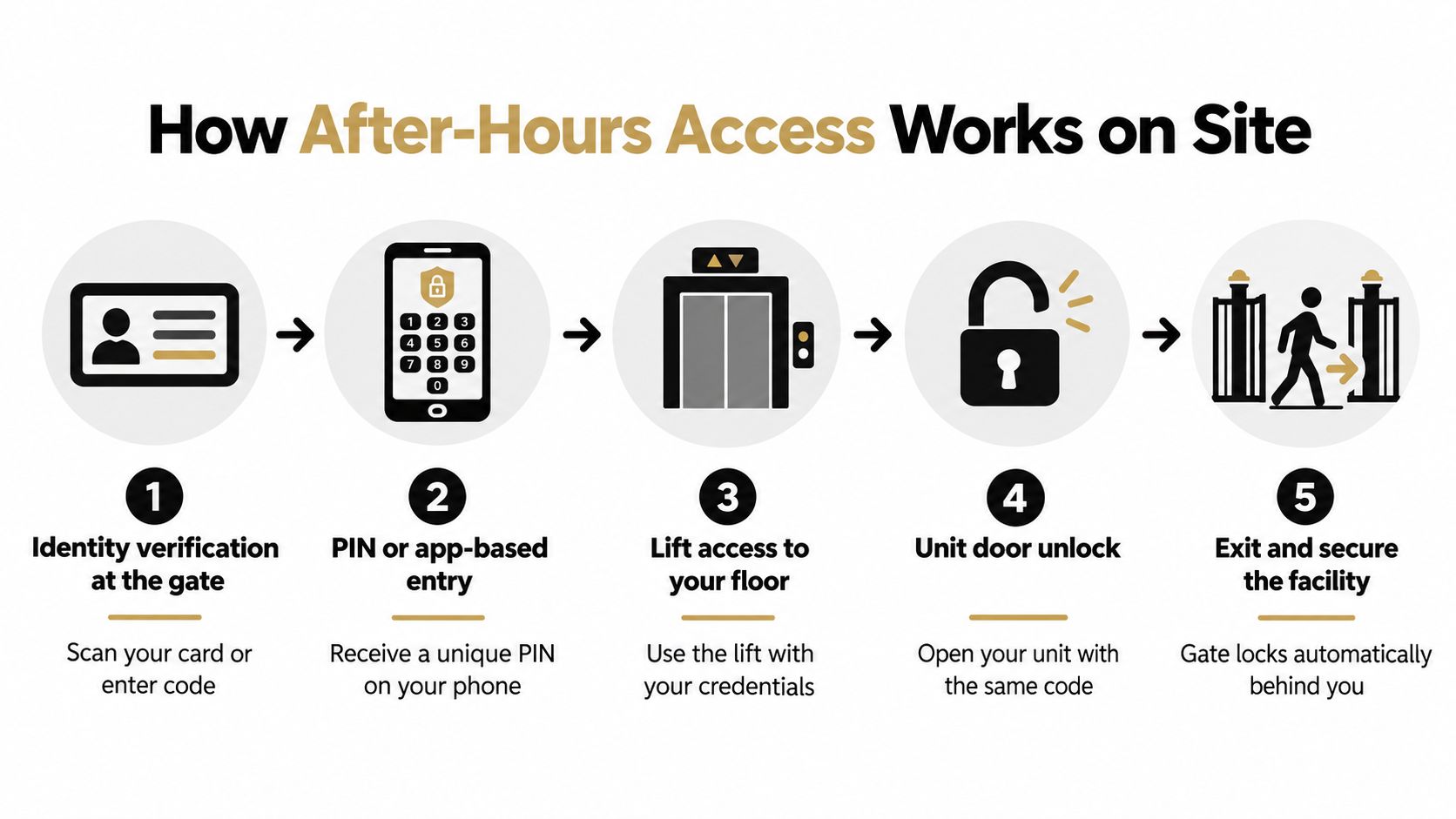
How After-Hours Access Works on Site
At a well-run facility, an after-hours visit should follow a clear process. Don't assume the steps from one site apply to another. Ask the manager to walk you through the full route, from the vehicle entrance to your unit and back out again.
Check the route before you book
Start at the gate. The facility may require you to scan a card, enter a PIN or use an app to confirm your identity. Find out whether the credential is unique to you, whether it opens the building as well as the gate, and whether the system records each entry. A shared code is harder to trace if there's a security problem.
Then check how you reach the unit. Some sites require a second credential for the lift or internal door. Others limit lift access to certain floors or use a separate loading entrance. Ask whether the route is lit throughout, whether the lift operates after hours and whether you can load or unload a vehicle at night.
Ask before signing: What happens if your phone battery dies, the app fails or you lose your access card? Get the backup process and overnight contact details in writing.
The loading rules need equal attention. A facility might allow entry at any hour but prohibit late-night vehicle movements, restrict access to a loading bay or suspend entry during maintenance. Ask whether access is temporarily disabled during a security incident, and how emergency responders can enter if the facility is unattended. Don't treat “24/7” as a promise that every service remains available overnight.
For a useful comparison of the different systems businesses use to control entry, see this explanation of access control choices for UK premises. The systems aren't a substitute for a site visit, but the comparison can help you ask specific questions about credentials and access points.
Security Features That Matter for Unattended Entry
A PIN isn't a security plan by itself. At an unattended site, access control, surveillance, fire protection and emergency procedures need to work together. Fire and Rescue NSW warns that self-storage facilities can present special hazards under the National Construction Code 2022: combustible contents can help fire spread between units, while internal barriers can make access harder for firefighters. Its position statement recommends automatic sprinklers compliant with AS 2118.1 and fire-hose reels for Class 7b self-storage facilities. Fire and Rescue NSW's position statements are a practical reference when checking a facility's fire-safety arrangements.
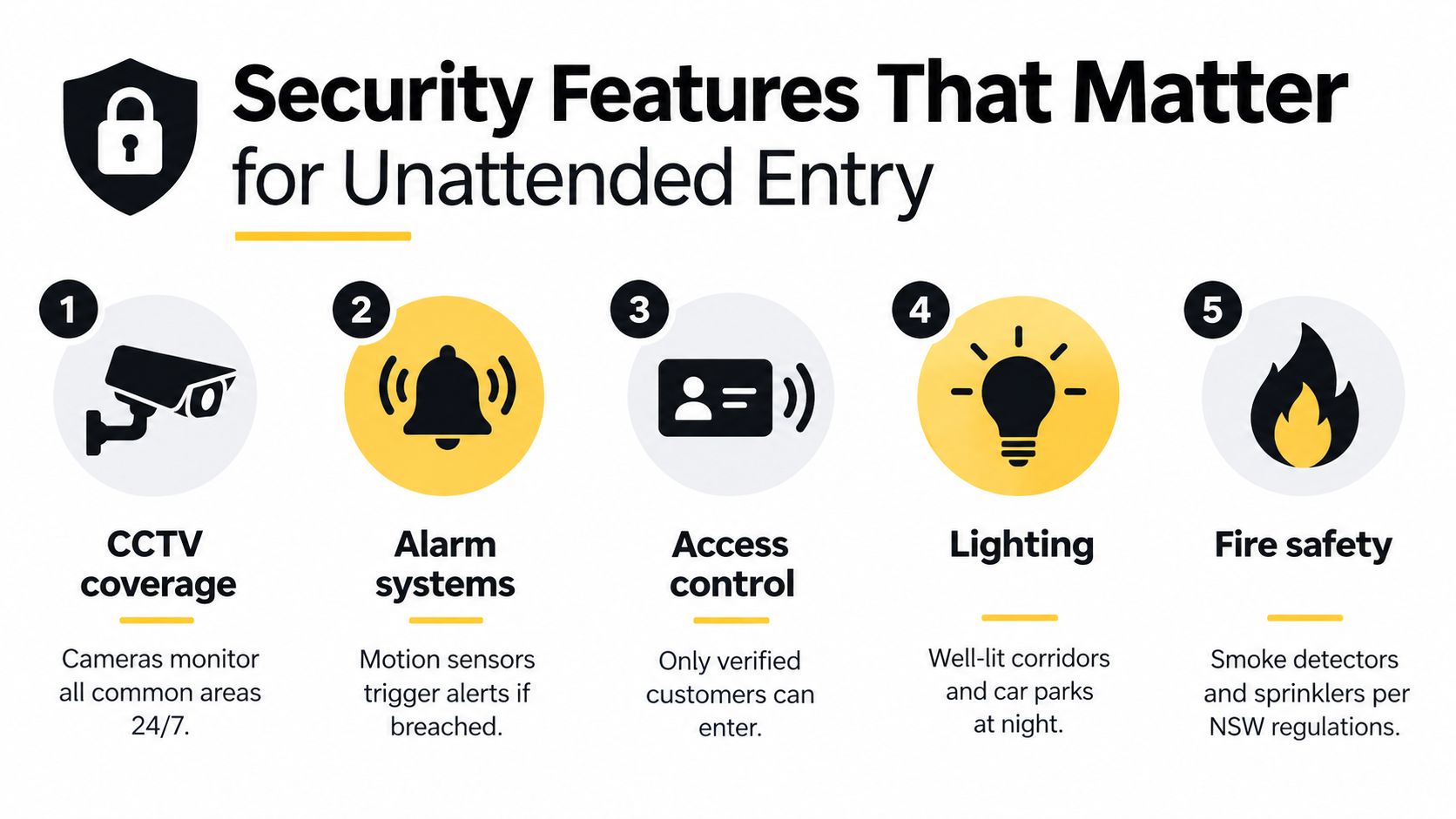
When you inspect a site, check these layers rather than relying on claims such as “secure” or “monitored”:
- Individual entry credentials: Each customer should have their own PIN, card or app credential. Ask whether staff can review access logs if something goes missing.
- CCTV and alarms: Check whether cameras cover entrances and common areas, and ask how alarms are monitored and acted on.
- Lighting and emergency communication: Walk the route after dark if possible. Confirm that corridors, car parks and loading areas are lit, and that you can contact someone during an incident.
- Fire protection and evacuation: Ask about sprinkler coverage, fire-hose reels, fire detection and clearly marked evacuation routes. Find out how emergency crews gain access.
- Prohibited goods and compartmentation: Get the exclusion list in writing. Confirm that flammable and dangerous goods aren't permitted, and ask how fire barriers and unit separation are maintained.
This is especially important if you're storing furniture, appliances, office equipment or warehouse pallets. Ask who inspects and maintains the fire systems, and how the site suspends customer access during an emergency. Unrestricted entry is useful only if the facility can control it safely.
Sydney Climate Conditions and Storage Environment
A clean unit can still be a poor place for belongings if it traps damp air or gets exposed to temperature swings. Upholstery, timber, paper, artwork and electronics can all be affected by changing temperature and relative humidity. Ask how the facility manages ventilation and condensation, not just whether the unit looks tidy on inspection day.
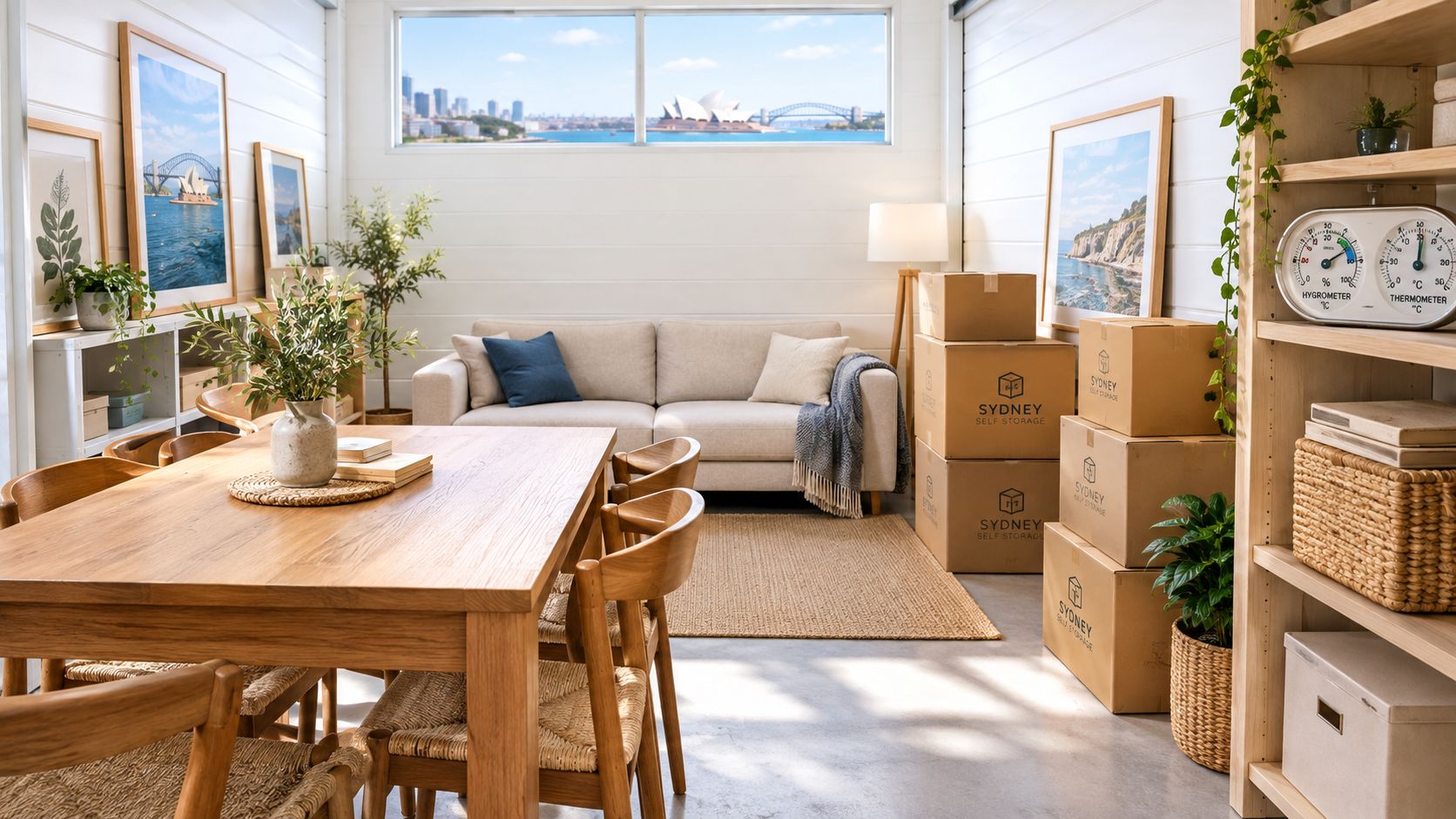
For paper-based materials, the State Library of NSW gives Sydney's temperate-climate target as 15°C–25°C and 45%–55% relative humidity. The State Library's preservation guidance provides a useful technical benchmark when you're comparing storage conditions. State Records NSW also advises that storage environments should be stable, monitored and well ventilated, with direct sunlight avoided and facilities kept secure and weatherproof. Its physical-storage principles are relevant when you're deciding whether a unit is suitable for sensitive household goods or business stock.
Use those standards as a screening guide, not as a promise that every self-storage unit is climate controlled. Ask whether the facility logs temperature and humidity, how it prevents condensation, and whether the units are ventilated or actively climate managed. For items that need more stable conditions, compare the details in this guide to climate-controlled storage.
Pack to reduce exposure. Use breathable covers on furniture rather than wrapping damp items in sealed plastic, leave air gaps around cartons, and raise boxes off the floor where possible. Keep goods away from external walls, and don't store wet textiles or recently cleaned upholstery before they're fully dry. These steps help, but they can't make an unsuitable environment safe for sensitive items.
24/7 Self-Storage Compared With Staffed Warehouse Storage
A 24/7 unit gives you flexible entry, but it may leave you to manage loading and unloading alone. Staffed warehouse storage can offer hands-on coordination, which matters when you're moving a full household or bulky commercial goods. The right choice depends on what you need to retrieve, how often you'll visit and how close the facility is.
| Factor | 24/7 self-storage | Staffed warehouse storage |
|---|---|---|
| Access | Suits irregular hours and frequent retrieval if genuine unit entry is available | Usually planned around staffed access arrangements |
| Handling | You organise your own lifting and unit layout | Staff may assist with coordinated handling, subject to the service offered |
| Furniture and pallets | Check lift dimensions, vehicle access and loading rules | Ask about loading bays, pallet handling and forklift access |
| Proximity | A nearby unit is most useful for repeated visits | A closer staffed site may save time during a large move |
| Support | Overnight help may be limited or unavailable | Staff can provide assistance during operating hours |
| Best fit | Stock rotation, irregular schedules and smaller loads | Full home removals, office relocations and bulky goods |
Location can outweigh access hours. ABS analysis of the 2016 Census found that moves between local districts inside the same capital city increased nationally between 2011 and 2016, with Sydney recording a 10% increase. The ABS analysis of internal migration shows that many people move within the metropolitan area, so storage often needs to fit between local addresses, not just interstate legs.
For a small business that rotates stock outside normal work hours, convenient self-storage may be the sensible option. For a household moving a piano, antiques or a full set of furniture, a staffed warehouse with a suitable loading setup may be easier to manage. Choose the facility that fits the job and your route, not the one with the flashiest access claim.
Pricing Drivers and How Sydney Quotes Are Built
Compare the full bill, not just the advertised unit rate. Storage quotes can depend on unit size, access hours, climate management, insurance, administration and lock fees, plus any minimum stay or notice terms. If removalist transport is included, check whether the quote covers collection, delivery and handling into storage or only the move itself.
Ask for the total cost across the period you expect to store your belongings. A smaller unit can cost less, but only if the goods fit without blocking access to items you'll need. A unit with round-the-clock entry may carry different conditions or charges, so get any access-related fees in writing.
Moving and storage are connected costs. Home Removals Sydney lists transparent removalist rates starting at $120 per hour plus GST, with quotes through a fast form and a response within 30 minutes during business hours. Ask how the removalist time is calculated, whether waiting or travel affects the charge, and whether the team can move goods directly into the storage space.
For a more detailed breakdown of the factors behind a local storage bill, use this guide to storage costs in Sydney. Then compare quotes on the same basis: same storage period, similar unit size, access conditions, insurance cover and transport scope. Check whether your policy covers goods in storage, and don't assume a facility's security measures replace insurance. If you're booking late-night loading, confirm that the site allows it and that your removalist can work within those rules.
A Sydney Provider Checklist Before You Sign
Take this checklist to the facility or use it on a phone call. If a provider can't answer basic questions clearly, don't sign until you have the details in writing.
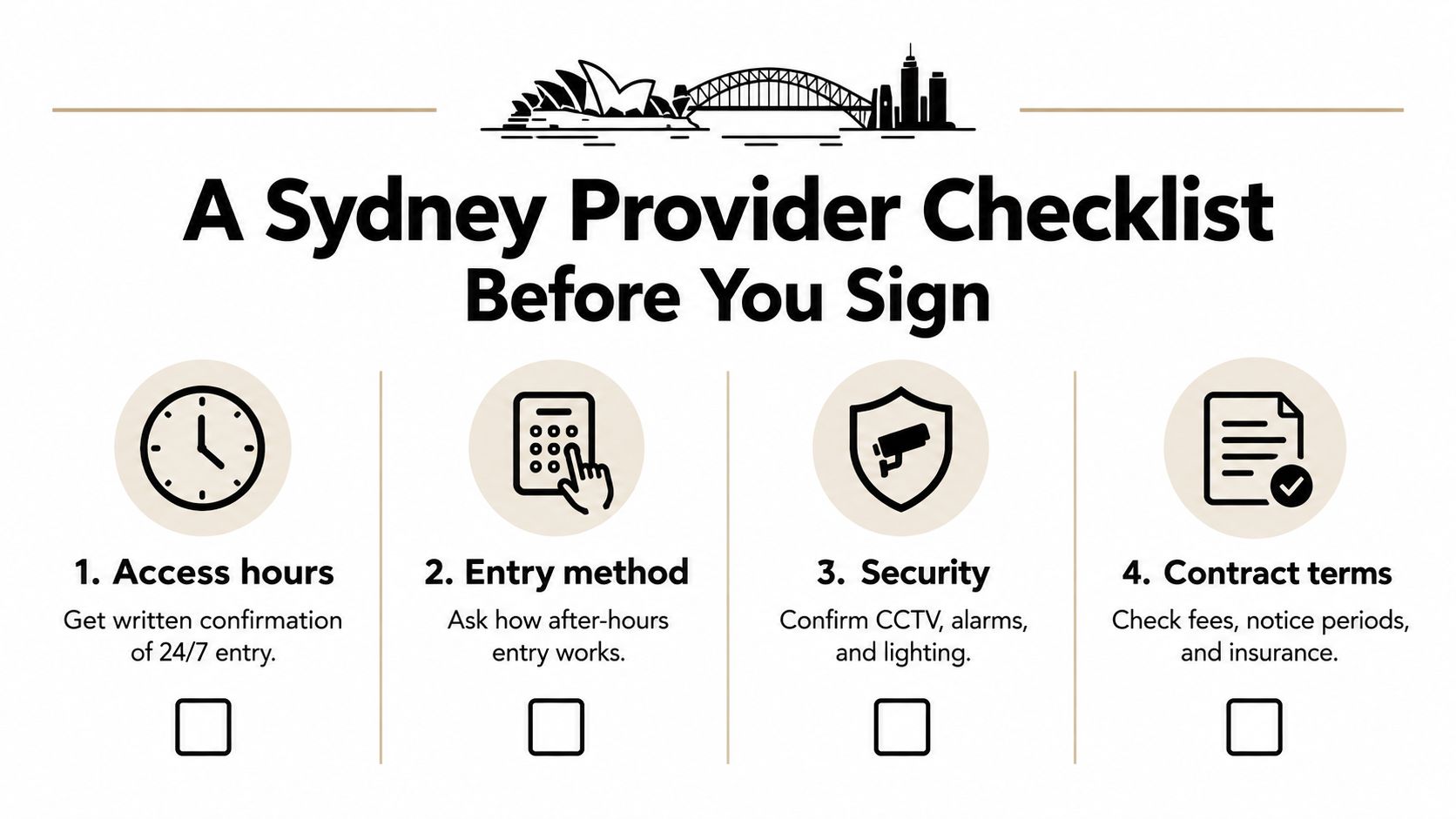
- Access hours: Confirm whether you can enter the site and your unit at any time, or whether the facility only offers overnight CCTV.
- Entry method: Ask how PIN, card or app credentials work, what happens if they fail, and whether access is logged.
- Security and fire safety: Check camera coverage, alarms, lighting, emergency communication and evacuation arrangements. Ask about sprinklers compliant with AS 2118.1 and fire-hose reels for Class 7b self-storage.
- Environment: Ask whether temperature and humidity are recorded, and how the facility manages ventilation, condensation and water ingress.
- Insurance and fees: Confirm what your own policy covers, any facility requirements, and all administration, lock, access and minimum-stay costs.
- Vehicle and handling access: Check parking, lift dimensions, truck restrictions, loading-bay bookings and whether pallets or forklifts are accepted.
- Excluded goods: Get the prohibited-items list in writing, especially for flammable or dangerous goods.
- Regulated items: If the move involves firearms, don't treat them as ordinary household contents. NSW Police says owners must take all reasonable precautions to keep firearms safe and prevent access by unauthorised people under section 39 of the Firearms Act 1996. Storage requirements depend on firearm class and approved arrangements. The NSW Police safe-storage fact sheet outlines relevant security measures, and a change to the registered safe-storage address must be reported to the Firearms Registry within 14 days.
Parking needs its own check, particularly for dense inner-city addresses. The City of Sydney lists visitor parking permits at $30 with an estimated processing time of about five days. Check the City of Sydney parking permit requirements, and remember that a permit doesn't override road signs, clearways, loading restrictions or no-stopping zones. Check the council responsible for both your collection and delivery addresses.
For a move spanning different suburbs or property types, check the available Sydney storage locations against your collection route and destination before you commit.
Matching the Choice to Your Move and Next Steps
Use a simple rule. Choose genuine 24/7 access when your work hours are irregular or you'll be retrieving stock frequently. Choose a nearby staffed warehouse when your move involves heavy furniture, pallets, forklifts or hands-on assistance. If you're unsure, visit both sites and test the route from the parking area to the unit. A facility that looks convenient online may be awkward when you arrive with a removal truck.
Then confirm the essentials: written access terms, a working backup for failed credentials, suitable security and fire protection, conditions that fit the goods, and a quote that includes the storage and moving work you need. For a local home move, office relocations or interstate removals, coordinate collection and storage dates before booking the truck. That helps prevent a gap between your move-out and move-in plans from becoming a last-minute scramble.
Home Removals Sydney provides removal, packing and storage options for moves across Sydney and interstate, including secure storage with 24/7 access. Request a quote through its 60-second form and ask the team to coordinate transport and storage as one insured job.
If you're planning a Sydney move, contact Home Removals Sydney for a quote covering removal, transport and secure storage with 24/7 access. Share your dates, addresses and the items you need to store so the team can help you plan the right service and access arrangement.
