


The moving truck is booked, the lease starts on Friday, and the keys to your new place are still a few states away. At that point, an interstate move stops being a bigger version of moving across Sydney. It becomes a tightly coordinated job involving road access, loading weight, driver rest, delivery timing and clear arrangements for your belongings.
A reliable quote should explain more than an hourly rate. Before you book long distance removalists, check how the company plans the load, manages driver fatigue, protects goods in transit and handles storage if your new home isn't ready. Those details are what make a Sydney interstate move safer and more predictable.
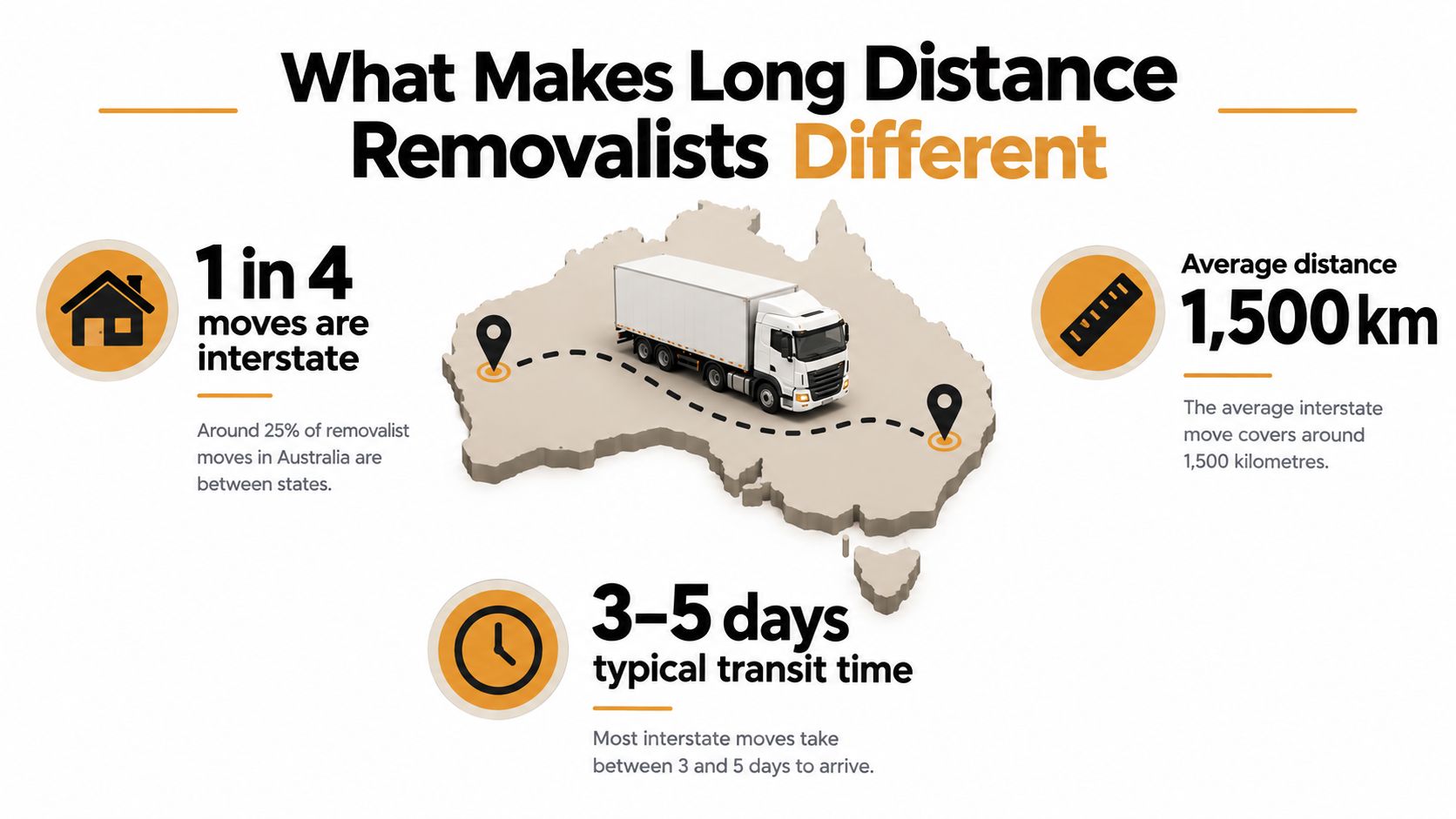
What Makes Long Distance Removalists Different
Interstate removals need a delivery plan that survives the journey. Once your goods leave Sydney, changes to access, handover dates or the shipment itself become harder to accommodate. Give the crew a usable inventory and access details before collection, then agree on who will receive the load and what happens if the destination isn't ready.
Of households that had moved within the preceding five years, 65% moved within the same state or territory but outside their suburb or locality, 25% moved within their suburb or locality, 7% moved interstate, and 3% moved to Australia from overseas, according to the Australian Bureau of Statistics' Housing Mobility and Conditions data. Interstate customers make up a distinct part of that picture, with journeys that need coordination across state boundaries and often coincide with work, study or family changes.
The job continues after the truck leaves
A local crew can often collect and deliver within a working day. An interstate job can involve overnight travel, scheduled driver rest and a separate delivery team. Ask who remains responsible for communicating with you throughout the journey. Collection and delivery should run from the same inventory and agreed instructions.
Truck capacity also depends on weight, load placement, legal vehicle limits and route restrictions. A truck with spare floor space may still have limits on what it can carry. Supply accurate details about heavy furniture and appliances before the vehicle is assigned.
Access deserves the same attention. Narrow Sydney streets, stairs and limited truck parking affect collection; equivalent problems at the destination affect unloading. Send those details early so the removalist can arrange suitable handling rather than discover the problem at the kerb.
Work-related relocation is also examined in the ABS analysis of the HILDA survey. For a Sydney-to-Melbourne move tied to a new job, agree on the delivery window before loading day. Your start date won't change because the furniture is late.
Confirm that you can receive the goods. For a NSW rental handover or new-build move, check key availability and permission to occupy before committing to delivery. If dates don't align, agree on storage arrangements and establish where transit cover ends and storage cover begins.
Practical rule: Choose a mover who can explain the route, loading plan, delivery window and handover process.
On collection day, walk through the inventory with the crew, confirm the addresses and flag special-handling items. Resolve discrepancies before the truck leaves.
How Sydney Interstate Move Costs Are Built
An hourly rate tells you what labour costs while the crew is working. It doesn't, by itself, tell you what a Sydney-to-interstate move will cost. A quote also needs to account for the shipment, route, vehicle, access, packing, travel arrangements and any gap between collection and delivery.
Home Removals Sydney's stated starting price is $120/hr + GST, but that's a starting point, not a guaranteed total for every interstate job. A Sydney home moving to Brisbane, Melbourne or Perth presents different route and scheduling requirements, and the home's contents can change the vehicle and crew plan. Ask the removalist to explain which parts of the estimate are fixed, which may change and what could trigger an extra charge.
| Cost driver | What it covers | Why it changes the price |
|---|---|---|
| Distance and route | Travel between Sydney and the destination, plus route logistics | Longer routes require more travel time and planning |
| Shipment size and weight | Furniture, cartons, appliances and other contents | A larger or heavier load may need a different vehicle or loading plan |
| Crew and labour | Loading, carrying, unloading and any requested packing | Stairs, long carries and difficult access can add work |
| Packing and specialty handling | Materials, packing labour and careful handling of fragile or bulky goods | Pianos, antiques and artwork may need special preparation |
| Storage and timing | Temporary holding, warehouse handling or a split delivery | A gap between collection and occupancy adds coordination and handling |
| Road-related charges | Route-specific tolls or other access costs, if applicable | The route and vehicle requirements affect what applies |
Ask for the assumptions in writing
A useful quote describes what the company believes it's moving. Give the estimator a realistic inventory, including bulky furniture, appliances, packed boxes, fragile pieces and any items that need dismantling. Flag stairs, lifts, narrow driveways, parking restrictions and delivery access at both addresses. If a piano or antique is involved, ask how it'll be protected and whether any separate handling charge applies.
Don't accept “we'll sort it on the day” for important cost details. Ask whether packing, storage, waiting time and return-load arrangements are included, and how a change to the inventory affects the estimate. If your dates are flexible, tell the mover early so they can explain any scheduling options.
For a useful overview of how transport quotations can be structured, Peak Transport's pricing guide offers another point of comparison. You can also review interstate removalist costs for Sydney moves before assessing what's included in a specific quote.
Compare scope, not just totals. A lower figure can leave packing, storage or difficult access outside the quoted work. A transparent estimate gives you a clearer basis for comparing providers and deciding which services you need.
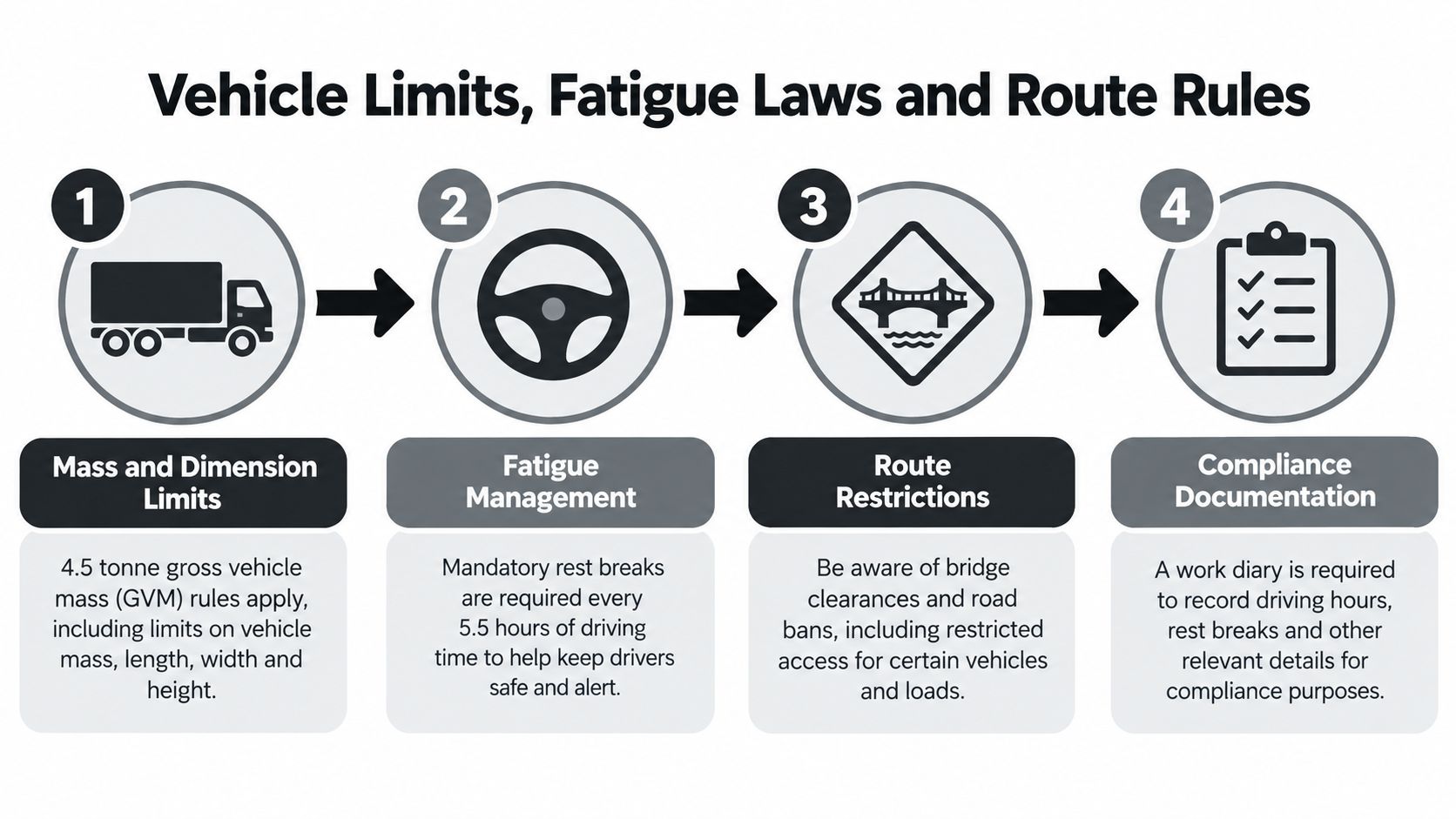
Vehicle Limits, Fatigue Laws and Route Rules
A truck can look as though it has room for one more cabinet and still be too heavy to travel lawfully. For interstate removals, legal carrying capacity depends on the controlling limits, not the empty space left in the vehicle. That's why a professional load plan starts with the shipment, the truck and the route.
Check the vehicle and load together
Under Australia's Heavy Vehicle National Law, a loaded vehicle must stay within its manufacturer-rated Gross Vehicle Mass (GVM), and axle and axle-group limits also apply. A concentrated load can exceed an axle limit even when the truck hasn't reached its total GVM. Dense furniture and packed cartons therefore need to be distributed sensibly, not just squeezed into spare space.
Before dispatch, the removalist should confirm the vehicle's GVM, axle ratings, dimensions and route restrictions. Higher Mass Limits aren't an automatic workaround: operating under them depends on the applicable accreditation and access requirements, as set out in the NHVR guidance on General Mass Limits. Signposted limits and road-access conditions can also affect which route is suitable.
Build fatigue management into the schedule
Loading, driving, unloading and return travel all contribute to the work involved. A schedule that treats loading as separate from driving can place a driver under unsafe pressure, even if the travel time looks manageable on paper. The NHVR guidance on fatigue-management exemptions explains that maximum work and minimum rest rules apply, and any exemptions or alternative schedules still require formal controls and records.
The practical response is straightforward: plan work and rest before loading begins, allow for traffic and unloading delays, and avoid promising a delivery time that depends on unlawful or unsafe driving. Route-specific checks matter because fatigue requirements can differ by schedule and jurisdiction. A relief driver, scheduled rest stops or overnight warehousing may be needed to keep the service both safe and realistic.
If the truck uses a different vehicle class for a particular leg, confirm that its route access remains suitable. Customers can ask their mover how driver records are managed, and this overview of paper log book versus ELD requirements can help explain the broader role of driver documentation. For a general overview of 10-tonne truck options, vehicle size should still be matched to the actual load and route.
The video below provides another look at vehicle compliance and road-safety considerations.
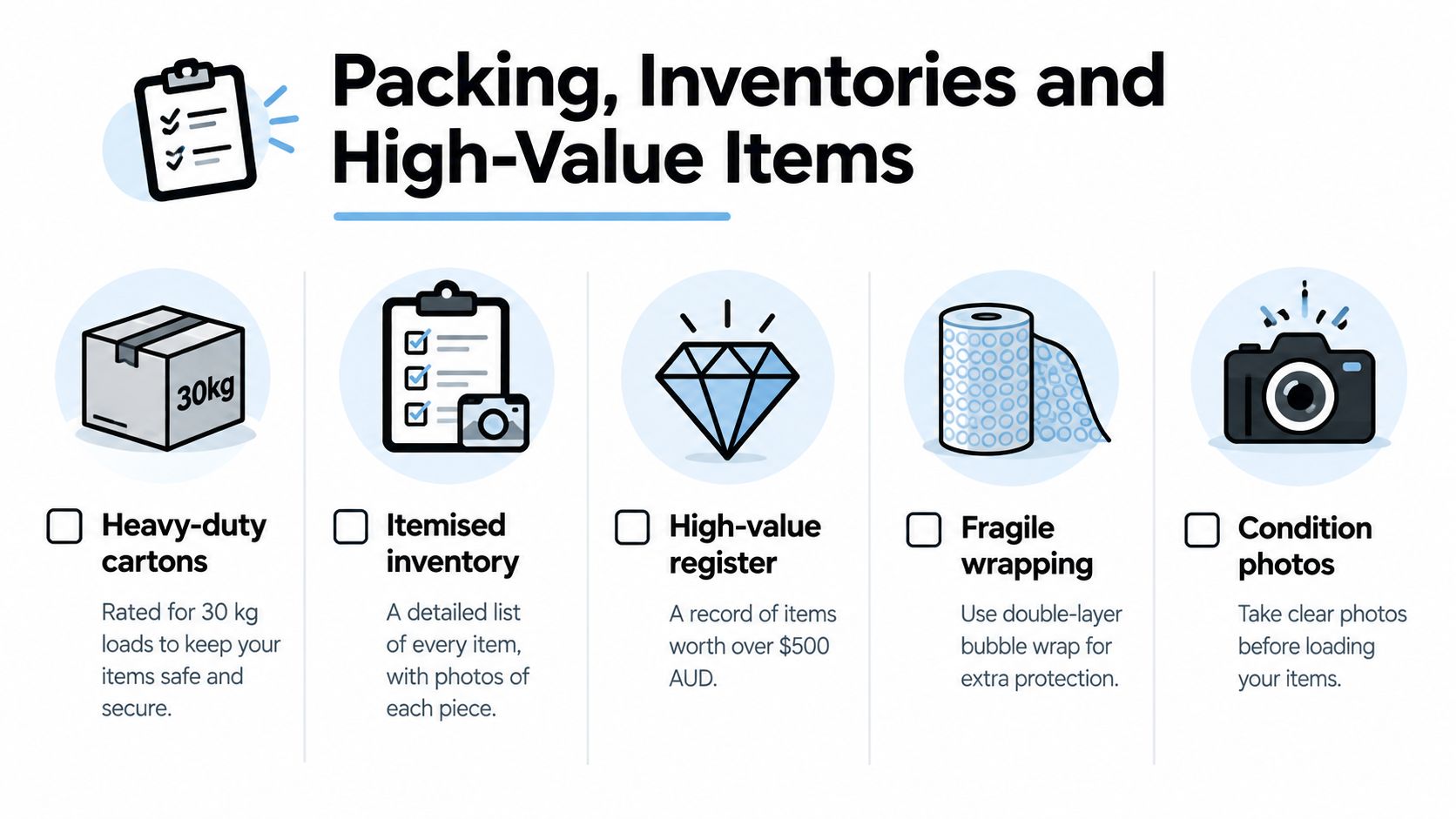
Packing, Inventories and High-Value Items
A loosely packed carton leaving Sydney can arrive interstate with its contents rubbing together, even when the outside looks intact. Pack for repeated lifting, loading and movement inside the truck. Before collection, settle what's going, record its condition and identify anything that needs special handling.
Make the inventory useful to the crew
List furniture, appliances and cartons by destination room. Flag fragile, bulky and high-value pieces, then use matching room labels on the cartons. Add handling instructions where needed. The crew should be able to match your inventory to the load without opening boxes or guessing where they belong.
Give the estimator an accurate picture of the shipment.
A studio, a three-bedroom home and a larger household need different carton counts, packing arrangements and vehicle space. If you're packing yourself, say what will be ready for collection and what still needs the crew's attention. Confirm who supplies cartons, wrapping and furniture blankets before accepting the quote.
The ABS HILDA survey analysis provides background on relocation distances. For your shipment, focus on how the cartons will withstand the journey: tape the base and top, support heavy contents and fill gaps so items cannot slide into each other. Keep cartons manageable to lift rather than filling a large box with dense contents.
Declare special-care items before quote approval
Tell the removalist about pianos, artwork, antiques, electronics and anything that ordinary handling could damage. Send photos, dimensions and details of existing marks or faults before the quote is approved. Ask the mover to specify the wrapping, crating or handling arrangements for those pieces in writing.
Keep condition photos with your inventory, including views that show existing damage. A clear record helps distinguish pre-existing marks from changes noticed at delivery.
- Use sound cartons: Replace weakened boxes, secure their bases and distribute heavy contents across manageable loads.
- Keep fragile pieces supported: Wrap items separately, cushion them on all sides and label the carton clearly.
- Photograph valuable items: Record condition before wrapping and loading, while surfaces and identifying details remain visible.
- Separate essentials: Carry important documents, medication and personal valuables yourself.
- Confirm the plan: Check which materials and special-care packing services are included in the quote, and who performs each task.
Good wrapping protects surfaces; a clear inventory lets the crew prepare the right handling arrangements. Have both ready before collection. Discovering an undeclared piano or unfinished packing on moving day leaves the crew solving problems that should have been settled before the truck arrived.
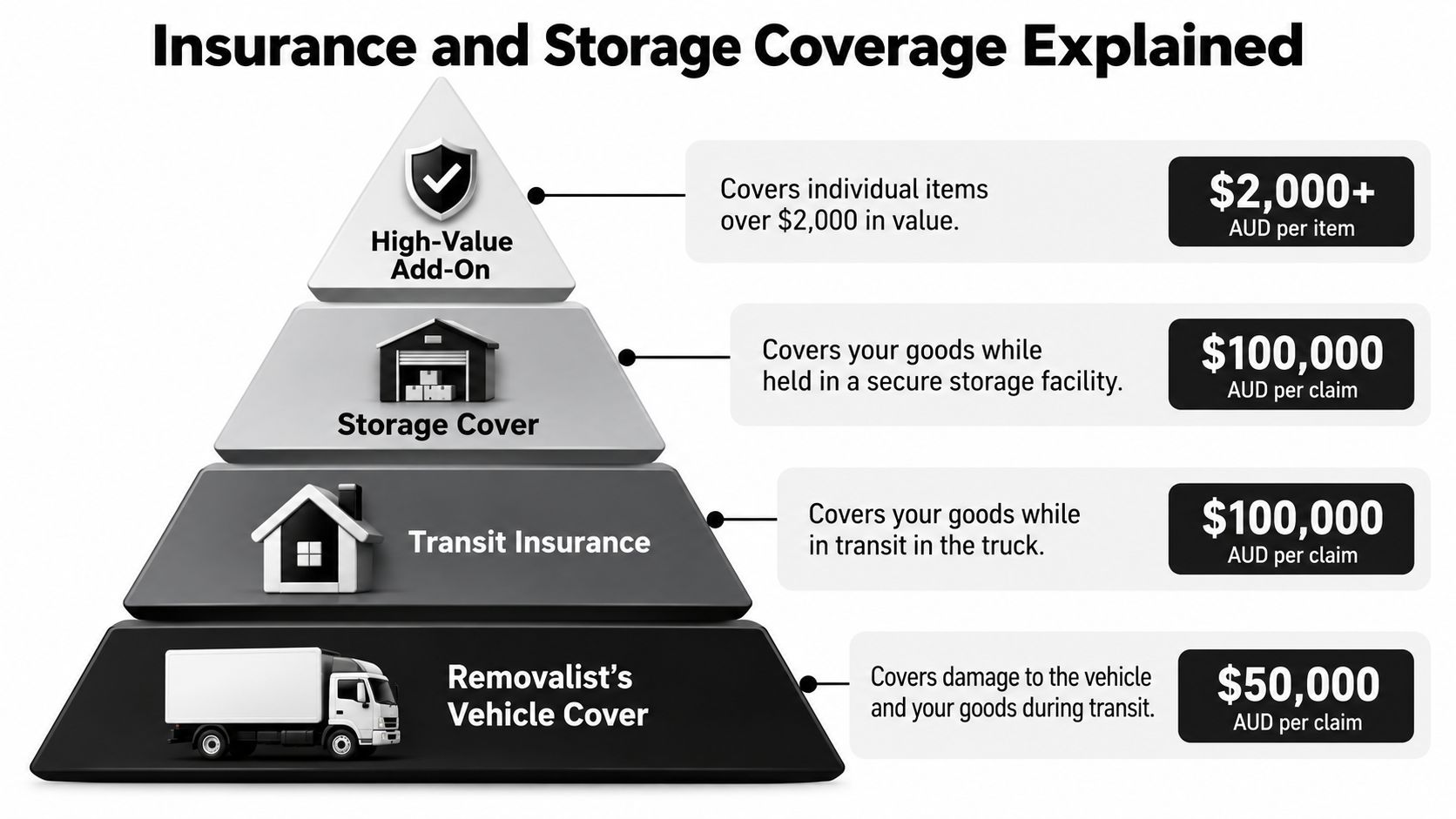
Insurance and Storage Coverage Explained
Don't assume that “insured” means your belongings are covered for every part of a move. The word can refer to different policies, and the important question is what each one covers, when it applies and what exclusions or evidence requirements the insurer sets.
Map the coverage across the move
NSW Government guidance says removalists aren't legally required to insure customers' belongings. Transit insurance may cover goods during packing, transport and storage only if the policy includes those stages, and storage coverage can require a separate premium. Read the NSW guidance on choosing a removalist before relying on a general statement that goods are insured.
Think about the move as a chain of custody. Your belongings might be collected in NSW, held overnight, loaded into a warehouse, transferred between vehicles and delivered interstate. Ask which policy applies at each point, especially if your lease dates leave a gap between pickup and delivery.
There are four different questions to ask:
- Vehicle and public-liability cover: What risks does the removalist's own business insurance cover, and does it cover your goods?
- Transit cover: Are your belongings covered while being packed, loaded and transported?
- Accidental-damage cover: What applies if an item is damaged during handling?
- Storage cover: Are goods covered while held in a warehouse, and does that require a separate premium?
Put the answers in writing
Ask for policy details, exclusions, excesses and claim requirements before moving day. Check whether high-value items such as artwork, antiques, electronics or pianos need to be declared separately, and keep a pre-move inventory with condition photos. If storage is part of the job, confirm in writing when storage cover starts and ends.
Australian Consumer Law requires services to be delivered with due care and skill, fit for an agreed purpose and within a reasonable time. Those consumer guarantees don't automatically replace a dedicated property-insurance policy. They're not a substitute for understanding what your own insurer or a transit policy will cover.
A simple coverage map can prevent misunderstandings: write down each stage, the person responsible and the policy that applies. For more detail on interstate moving insurance, use the information to frame questions about your specific route, packing arrangements and storage needs. Don't rely on a verbal promise when a clear written answer is available.
NSW-Side Tasks That Gate an Interstate Move
The truck can arrive on schedule and still be unable to complete the delivery if the property isn't ready. That's particularly relevant for renters and people moving into a new build. Confirm the paperwork, utilities and access date before you lock in unloading arrangements.

Renters should coordinate the handover
Once a rental application succeeds in NSW, the tenant needs to pay the bond, sign the lease, complete the condition report and connect utilities. The tenant must return a copy of the completed condition report to the landlord or agent within 7 days of receiving possession, according to NSW guidance on starting a residential tenancy.
Electricity, gas and water are essential services. Telephone and internet are generally the tenant's responsibility, and written permission from the landlord is required before installing a new phone or internet line. Arrange utility activation around the move-in date so you can inspect the property and complete the condition report promptly.
New builds need a confirmed occupation certificate
A new home must have utilities connected to existing infrastructure before an occupation certificate can be issued. The certificate must be issued before the owner moves in, as explained by the NSW Planning Portal guidance on occupation certificates. Confirm the certificate, utility connection and access date before booking furniture delivery or assembly.
Businesses arranging office relocations or warehouse moves should retain invoices, contracts and payment records. The ATO says employees can't claim a deduction for removal or relocation costs incurred to transfer for work, while businesses must keep records of transactions relating to their tax, superannuation and registration affairs. Get tax advice before treating a business move as deductible, and check the ATO guidance on removal and relocation costs.
Delivery planning starts at the destination. Confirm that someone can receive the truck and that the property is legally ready to occupy.
Your Interstate Move Checklist and Next Step
Use this checklist to keep the move on track. The key is to settle the decisions that affect the quote and delivery first, then prepare the shipment and destination around them.
Book and quote
- Describe the move accurately: Share origin and destination postcodes, a realistic inventory, access details and your preferred dates.
- Compare written scope: Check what the quote includes for labour, packing, storage, special handling and travel costs.
- Confirm the schedule: Ask how the company plans the route, delivery window, rest periods and handover.
Pack and prepare
- Finish the inventory: Label cartons by destination room and identify fragile or high-value pieces.
- Agree on packing: Confirm what materials and packing services are included.
- Document condition: Photograph valuable items and share special-care requirements before loading.
Deliver and settle
- Check the destination: Confirm access, keys, parking and who'll meet the crew.
- Organise the home: Renters should coordinate lease paperwork, utilities and their condition report; new-build owners should confirm the occupation certificate and service connections.
- Plan for a date gap: If your home won't be ready, discuss storage and consider practical options for temporary housing during a move.
Insure and document
- Ask what each policy covers: Get clear answers for packing, transit, handling and storage.
- Keep the paperwork: Save the quote, inventory, condition photos, insurance details and payment records.
- Confirm the final plan: Recheck addresses, dates and access with the removalist before dispatch.
A custom quote is more useful than a headline rate. Give the estimator your origin and destination postcodes, inventory size, access notes and preferred dates so the team can price the actual job and identify any storage or special-handling needs.
Home Removals Sydney provides Sydney and interstate home, office and warehouse relocations, with packing, furniture assembly and secure storage options. Request a quote through the 60-second form at Home Removals Sydney, and the team aims to respond within 30 minutes during business hours.
