

You're staring at a staircase in Marrickville, a loading bay in North Sydney, or a tight apartment forecourt in Parramatta, and the truck you booked is either going to make the move clean or turn it into a mess. In Sydney, the wrong furniture delivery truck doesn't just waste space, it creates parking headaches, delays at the kerb, and sometimes a second trip you never budgeted for. If you need a quick benchline on parts or body options before you book, a practical starting point is the UK truck dismantler for DAF, especially when you're trying to match a body to a particular chassis setup.
| Truck class | Typical Sydney use | Access profile | Best fit |
|---|---|---|---|
| Furniture van | Single items, studio moves | Easiest to park and turn | Tight streets, short jobs |
| 4-tonne truck | One-bedroom to compact two-bedroom moves | Good balance of size and access | Apartment moves, light home removals Sydney |
| Medium rigid truck | Three-bedroom homes, small offices | Needs more room, stronger planning | Furniture removals Sydney with decent access |
| Large rigid or combination | Bigger homes, office relocations, interstate removals | Best for volume, hardest on access | Long-haul and warehouse transfers |
Sydney customers usually ask three things without saying it outright, what size should I book, can that truck really get in, and how much will the wrong call cost me? Get those wrong and the day slips. Get them right and the move feels controlled instead of chaotic.
Why the Right Furniture Delivery Truck Changes Everything
A couple in Leichhardt can spend weeks packing, only to have the day unravel because the truck they booked can't sit legally near the building. I've seen a move stall while one crew member hunted for kerb space, another waited on a strata contact, and the customer kept asking why a “bigger” truck wasn't the answer. Bigger is only better when the street, the building, and the load all agree with it.
The job of a furniture delivery truck is not just carrying volume. It has to fit the road, clear the height restriction, work with the loading zone, and let the crew move items without wasting time lifting twice or walking too far from the vehicle. That's why smart Removalists Sydney operators think about access before they think about cubic space.
What matters before you book
You should be looking at three decisions, not one. First, choose the truck size that suits the inventory. Second, check whether the site can accept that vehicle. Third, budget for the extra time and access work that come with Sydney streets, strata rules, and building controls.
Practical rule: if the truck can't get close to the front door, you're paying for wasted labour.
The other mistake is assuming every truck is interchangeable. A rigid truck that suits interstate removals might be a nuisance on a narrow terrace street. A smaller vehicle may take a second trip, but it can still beat a larger truck that spends half the morning trying to find legal space. That's the logic most guides skip, and it's why the vehicle choice changes the whole job.
Australian Truck Classes and Legal Limits Explained
Before you compare sizes, you need the legal frame around every furniture delivery truck in Australia. Furniture removalists are recognised as a distinct occupation, not just generic freight operators, and that matters because these trucks are built to move bulky household and office items, not just palletised goods. The classification also lines up with the transport reality that these vehicles are handling sofas, wardrobes, appliances, desks, and awkward pieces that don't stack neatly.
The National Heavy Vehicle Regulator's general-access benchmark sets a clear envelope for a rigid truck, 12.5 m length, 2.5 m width, 4.3 m height and 31 t mass. Those numbers include the truck and the load, so the usable payload is always less than the headline figure. The NHVR also makes it clear that dimension rules apply whether the truck is loaded or empty, so an oversized vehicle doesn't become legal just because it's travelling light.
Plain-English rule: if the truck, the load, or both sit outside the legal envelope, the move needs a different plan.
Gross vehicle mass, or GVM, is the other term you need to understand. It's the tare mass plus the load mass, and the combined weight can't exceed the vehicle's rating. That's where furniture moves get tricky, because dense items can overload an axle group long before the body looks full. For Sydney work, especially in older suburbs and apartment streets, that means weight distribution matters as much as total payload.
| Limit | Value | Why It Matters for Furniture |
|---|---|---|
| Length | 12.5 m | Affects turning room and street fit |
| Width | 2.5 m | Critical for narrow lanes and accessways |
| Height | 4.3 m | Important for garages, awnings, and low bridges |
| Mass | 31 t | Sets the upper legal envelope for general access |
The practical takeaway is simple. Pick the truck after you've checked the site, the load, and the access route, not before.
Vans, 4-Tonne and Medium Trucks Compared
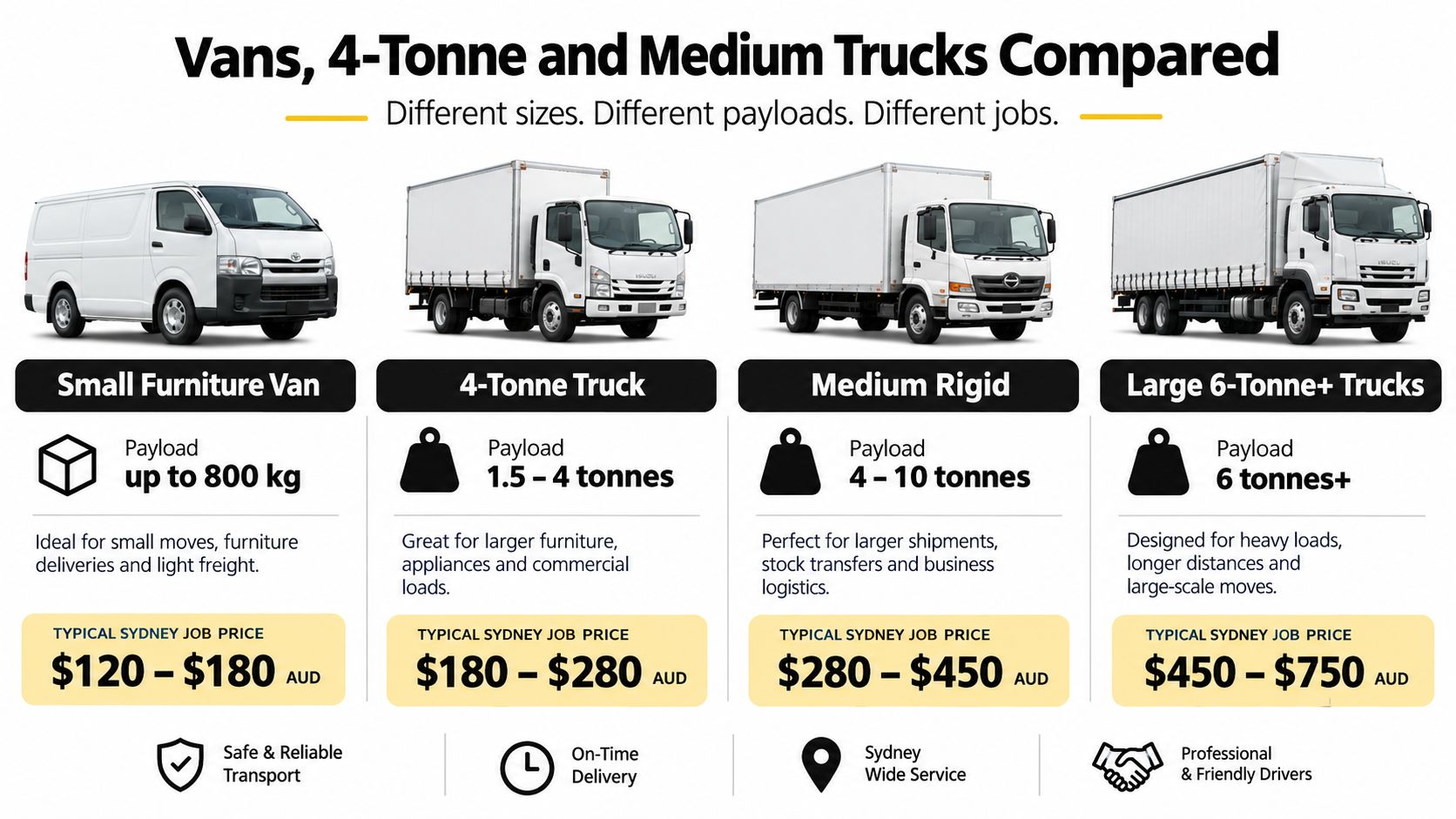
A lot of customers bunch every moving vehicle into “small” or “big”. That's how people end up overbooking a truck or underbooking it. A better approach is to match the vehicle to the move type, the access profile, and the amount of walking the crew will have to do once they get on site.
| Vehicle | Approx Payload | Best For | Access Profile |
|---|---|---|---|
| Small furniture van | Up to 800 kg | Single items, student flats, tight inner-city pick-ups | Easiest to park and turn |
| 4-tonne truck | 1.5 to 4 tonnes | One-bedroom to compact two-bedroom moves | Strong balance between size and access |
| Medium rigid truck | 4 to 10 tonnes | Three-bedroom homes, small offices, mixed furniture loads | Needs more clearance and planning |
| Large 6-tonne-plus truck | Above 6 tonnes | Bigger homes, warehouse transfers, interstate loads | Best when access is open and predictable |
A small van is the sensible call for one or two pieces, especially if you're moving through an inner-city street where parking is tight. A 4-tonne truck is the sweet spot for lots of Sydney apartment jobs, because it gives you room without making kerb access a nightmare. Medium rigids suit fuller houses and office relocations where you need stronger capacity but still want decent routing options.
Large trucks solve a different problem. They reduce the number of trips when the access is open and the load is substantial, but they're not a magic fix for every move. On a narrow road or a building with a tricky driveway, a smaller truck can be faster in practice.
For rough volume checks, a simple calculator helps. If you're estimating space before you book, use a cubic metre guide like the one at Home Removals Sydney's cubic meter calculator rather than guessing from the number of boxes alone.
What Each Truck Size Costs in Real Sydney Money
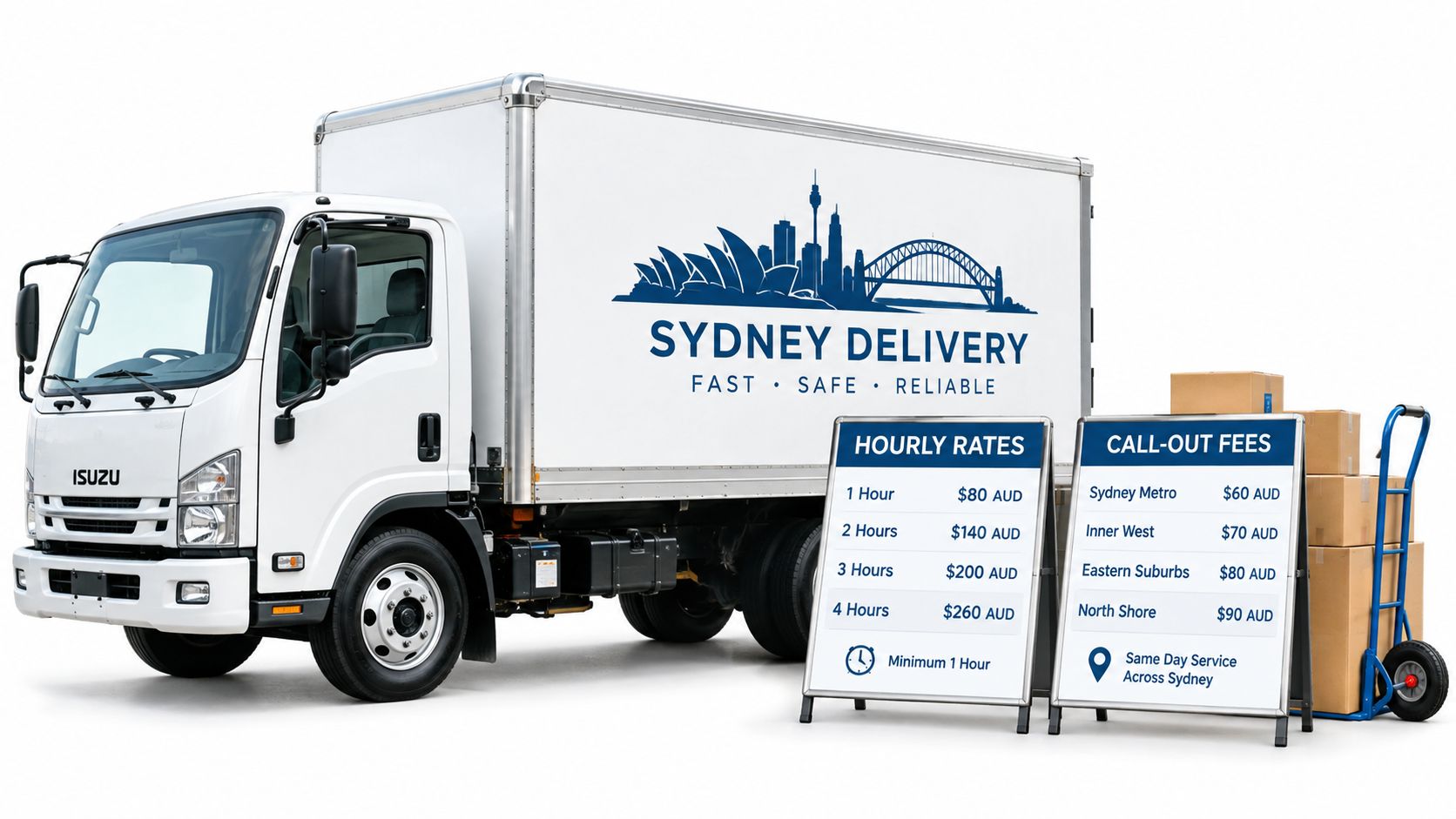
The wrong truck usually costs more than the right one, even if it looks cheaper at the quote stage. That's because the bill isn't only about the vehicle, it's about labour, access, waiting time, parking friction, and whether the truck can finish the job in one run. In Sydney, those extras matter more than in a wide-open regional move.
A van looks cheap until the crew needs a second trip. A 4-tonne truck often lands in the best value zone for local moves because it's big enough to reduce back-and-forth but not so large that it creates access drama. Medium and larger trucks make sense when the load is real, the route is open, and the building can handle them without delays.
Where the surprise charges come from
The usual budget traps are easy to miss. Loading-zone bookings, lift reservations, after-hours work, tolls, and parking pressure all add friction. If the truck is the wrong size, the biggest hidden cost is the return trip, because you pay again for the same labour and the same access problems.
The most common shock for first-time movers is not the hourly rate, it's the second visit they didn't plan for.
A smaller truck can absolutely be cheaper when the move is light and the access is tight. A larger one is worth paying for when the inventory is substantial and the site can take it. That's the trade-off, and it's why the cheapest quote on paper is often the most expensive move by the end of the day.
If you want a Sydney-specific price structure before you lock in the truck, compare vehicle time, access complexity and booking conditions against the examples on furniture removal prices. You'll get a better read on whether the quote is realistic or just optimistic.
Sydney Access Checks Before You Book a Truck
Start with the building, not the truck. If there's a loading zone, a tight driveway, a low garage entrance, or a strata-controlled forecourt, that usually decides the vehicle class before the furniture list does. I'd rather have a smaller truck with clean access than a larger truck stuck half a block away.
Check these points before moving day
- Measure the access height: Garages, awnings and basement entries can rule out taller trucks quickly.
- Confirm the loading position: A proper loading bay beats illegal kerbside guessing every time.
- Ask about strata approval: Some buildings control delivery windows, lift use and vehicle entry.
- Look at the street width: Narrow inner-west streets punish trucks that are too long or awkward to swing.
- Check lift and hallway size: If the building can't take a sofa upright, the truck size won't save you.
- Brief the crew properly: Stairs, slopes, broken pavement and shared driveways change the booking.
Sydney apartment and commercial sites often rely on controlled entry systems, so access control can be just as important as street access. If the building uses a managed entry setup, a service like apartment access control gives you a sense of how tightly some sites regulate movement, and why the truck booking has to match the site rules.
The hard truth is that access failures happen more often than payload failures. A 4-tonne truck is often the practical ceiling for dense apartment areas, not because the load is huge, but because the street and forecourt won't forgive a bigger vehicle. For houses with decent frontage and less congestion, a larger truck can be the efficient choice.
If you're trying to match a vehicle to a typical Sydney house move, the house moving lorry page is a useful reference point for the kind of truck that suits fuller residential loads. But the site always wins over the marketing label, so keep the measurements first.
Matching the Truck to Your Move Type
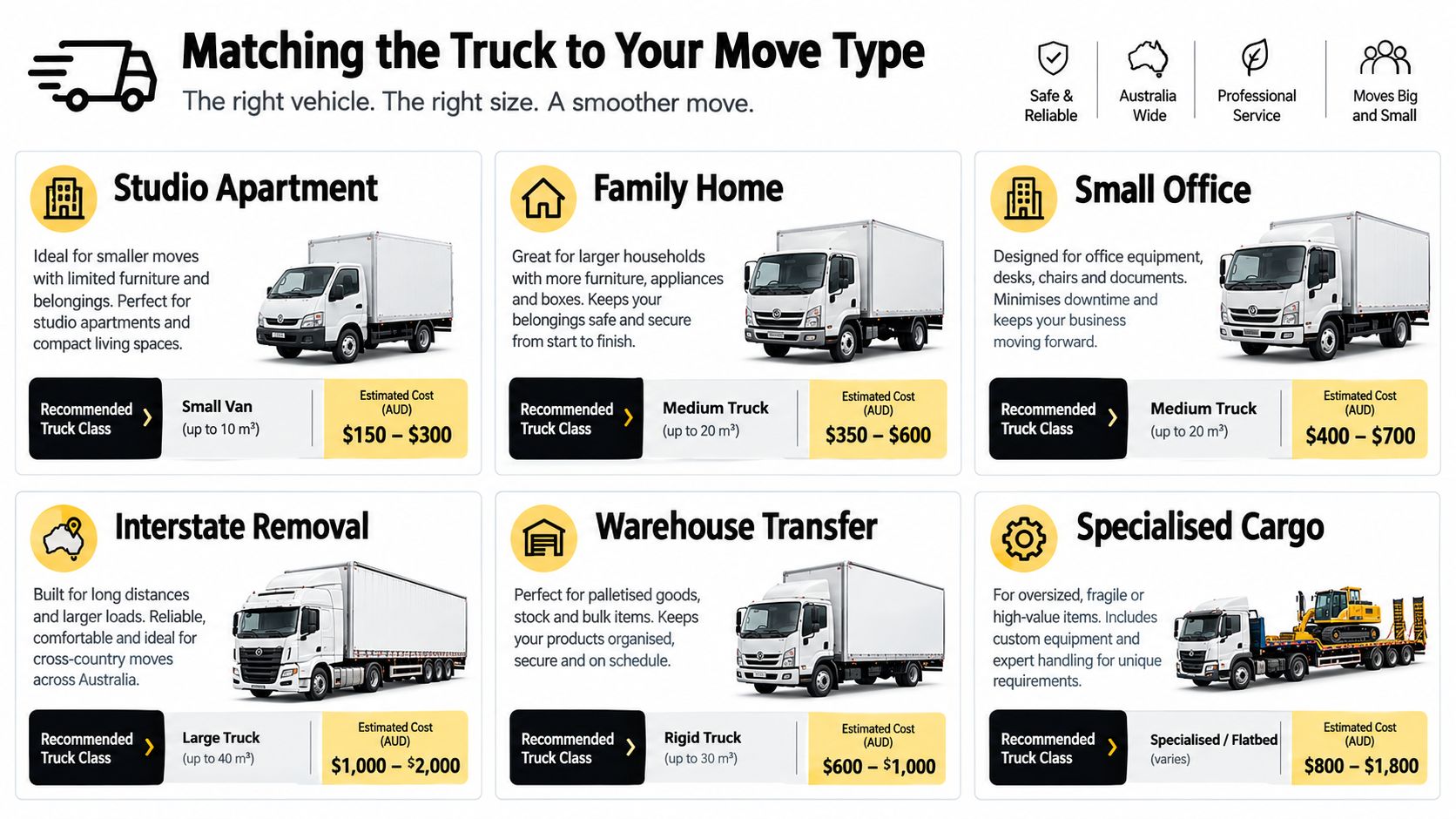
The cleanest way to choose is by move type. Once you stop arguing about tonnage in the abstract, the right vehicle becomes obvious.
| Move Type | Recommended Truck | Why |
|---|---|---|
| Studio apartment | Small van or 4-tonne truck | Easier access, fewer items, less wasted space |
| Family home | 4-tonne to medium rigid | Better balance of capacity and Sydney street fit |
| Small office | Medium rigid | Handles desks, chairs and equipment without overdoing size |
| Interstate removal | Medium rigid or larger truck | Better for consolidated loads and staged travel |
| Warehouse transfer | Large rigid or combination | Best when volume and site access both justify it |
For a studio, the small van wins if access is awkward and the inventory is light. A 4-tonne truck is smarter if you've got furniture, a bed base, and multiple appliances. For a family home, I'd lean toward a medium rigid if the property has open access and a fuller load, but I'd drop back to a 4-tonne truck when the street is tight or parking is limited.
Small offices are a different animal. They rarely need the biggest truck on the yard, they need the truck that can park, unload fast, and keep the job moving around staff and building rules. Interstate removals usually call for a larger, more disciplined vehicle choice because the load needs to travel farther without rehandling, while warehouse transfers often justify the biggest rig only when the site can absorb it efficiently.
The one rule that beats every other consideration in Sydney is simple, if access is bad, the truck size has to shrink before the quote gets bigger.
When a Bigger Truck Is Not the Safer or Greener Choice
The idea that more space means fewer trips only works if the street, driveway, and loading point can take the vehicle. In Sydney, that assumption falls apart often. A truck that looks efficient on paper can become a headache at kerbsides, under low bridges, or in buildings with strict strata rules.
Heavy vehicles also carry a bigger emissions burden. Infrastructure Australia notes that heavy vehicles account for about 23% of Australia's transport emissions. That does not make every smaller truck the greener option by default, but unused capacity and extra running still waste fuel.
Fatigue rules matter once a vehicle crosses the heavy-vehicle threshold. The NHVR defines a fatigue-regulated heavy vehicle as one with a GVM of more than 12 tonnes, and the National Driver Work Diary is required at 100 kilometres or more from base under standard hours. On longer Sydney-to-interstate furniture runs, that changes the schedule, the handover points, and how long the job can realistically take.
A bigger truck still makes sense when the route is clear and the load is consolidated. It can cut handovers, reduce repeat loading, and keep the move to one planned run. Sydney access is where that logic breaks down. A large truck on a narrow street can create more reversing risk, slower unloading, and more time waiting for approval or a gap at the kerb.
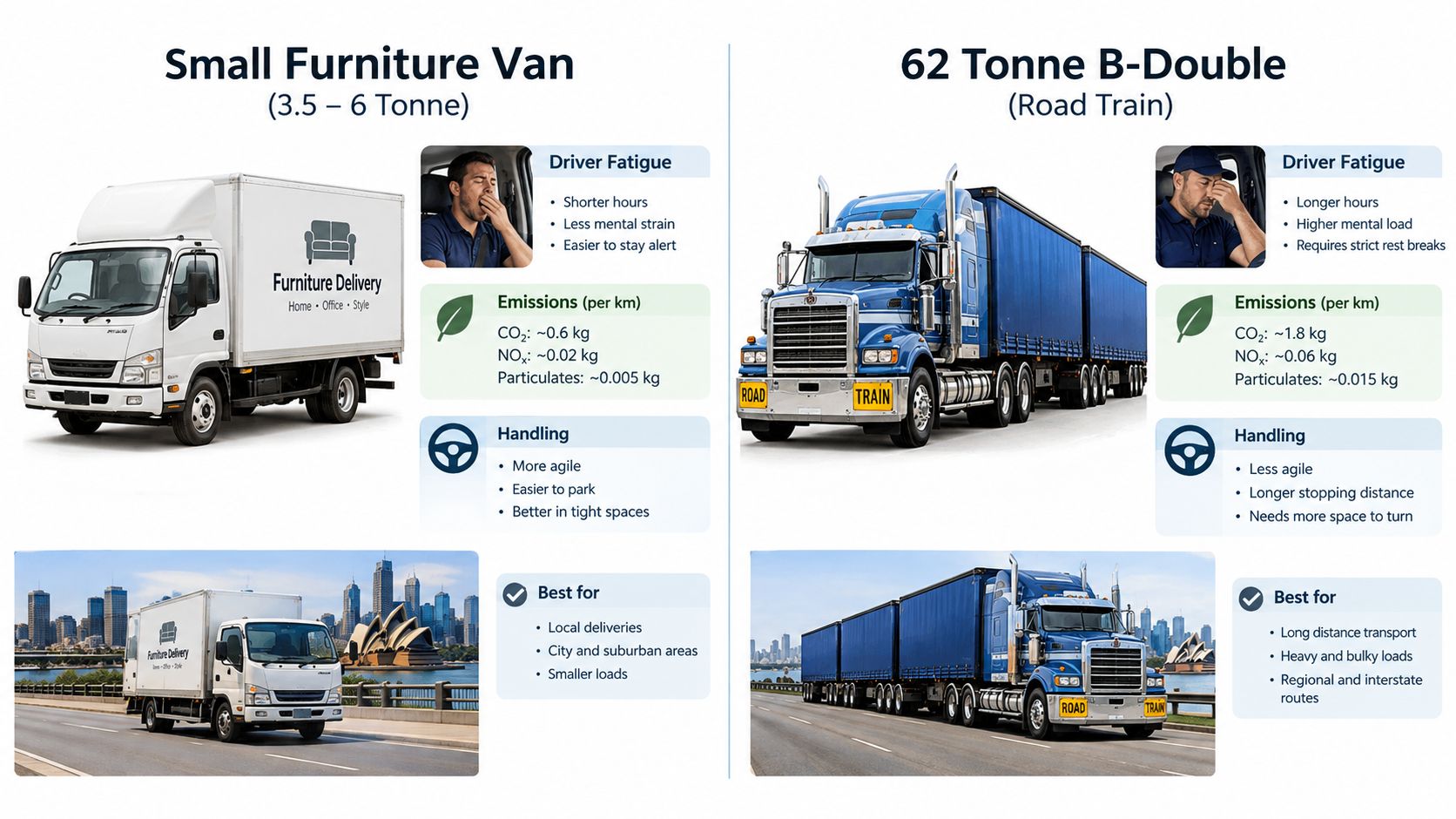
My view is blunt. Book the smallest truck that can finish the move safely, legally, and in one run. If a larger truck forces extra handling, tight turns, or long waits outside the building, it is not the safer choice and it is rarely the greener one.
Quick Questions Sydney Customers Ask About Furniture Delivery Trucks
Will interstate work need a diary? Yes, once the vehicle and trip fall under the fatigue-regulated rules, the driver's work and rest record matters, and long-distance Sydney moves need realistic timing. Do loading zones solve access? Only if the truck fits the zone and the building lets you use it properly.
What should you tell the removalist before booking? Give them the street type, the garage height, the lift size, the stairs, and whether strata approval is needed. That's the difference between a clean booking and a messy one.
If you want a truck matched to your move instead of guessed from a size label, ask for a custom quote and spell out the access details. That saves time, money and a lot of backtracking.
Home Removals Sydney handles furniture pickup, home moves, office relocations and interstate work with a fleet that suits different access conditions across Sydney and NSW. If you want the truck size chosen properly for your building, street and inventory, visit Home Removals Sydney and request a quote with your access details included.
